









Plot Explained Spoilers guaranteed!
Plot Explained

Browse by genre

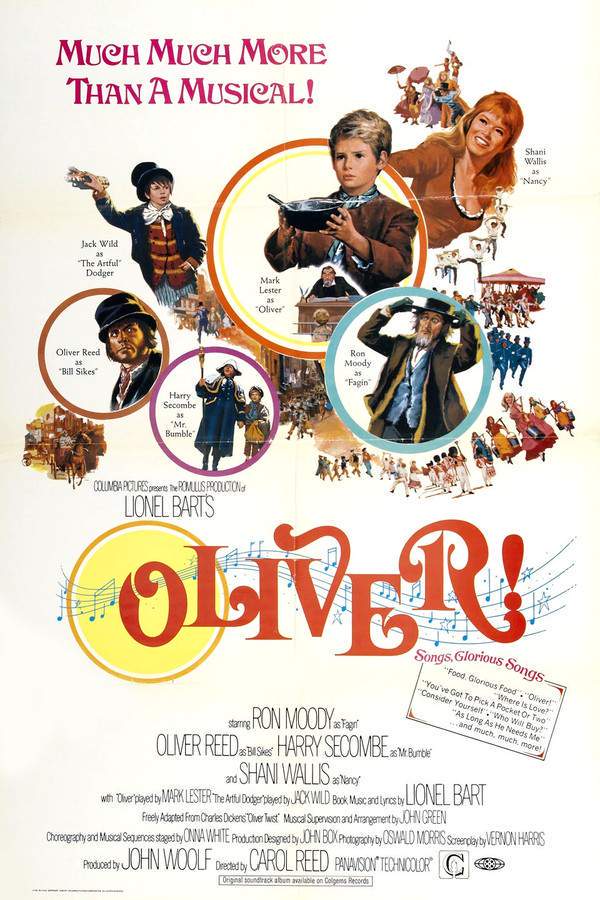
Oliver! (1968) movie poster

Timeline

Oliver! (1968) Timeline Explained – Every Event in Order

Release, runtime and language
1968 · 153 min · English
Directed by
Carol Reed
Starring
Oliver Reed, Leonard Rossiter, Harry Secombe, Hugh Griffith, Jack Wild, Joseph O'Conor

A young orphan named Oliver Twist escapes his workhouse and finds himself navigating the dark and dangerous streets of Victorian London. He falls in with a group of pickpockets led by the manipulative Fagin, and mentored by the quick-witted Artful Dodger. Offered a chance at a better life with the benevolent Mr. Brownlow, Oliver finds himself pursued by the menacing Bill Sikes, who will do anything to protect Fagin's criminal enterprise.

On this page (6)
  1. 1 Where to watch
  2. 2 Events in order (14)
  3. 3 Timeline questions answered
  4. 4 Movie threads
  5. 5 Movies like Oliver!
  6. 6 Every angle

Where to watch

Where to Watch Oliver! (1968)

Where can you watch Oliver!? Stream, rent or buy it in the US, including on Fawesome, Tubi TV and YouTube Free: current JustWatch availability with up-to-date prices.

Streaming availability powered by JustWatch

14 events in order · contains spoilers

Oliver! Timeline: Events in Chronological Order

Every key event of Oliver! (1968) in order, scene by scene, with when and where it takes place. Use it to untangle flashbacks, time jumps and parallel storylines, to refresh your memory before the sequel or to find the exact scene you are thinking of.

  1. Workhouse Life

    The film opens in 1837 amidst the grim realities of the New Poor Law. A group of thin, young boys are confined in a workhouse where they sing a hopeful tune about their desire for more food, setting a somber tone for their plight.

    When
    1837
    Where
    Workhouse
  2. The Plea for More

    During mealtime, tension rises as Oliver Twist draws the longest straw among the boys. With courage, he approaches the authorities and famously asks, 'Please Sir, I want some more,' sparking outrage from Mr. Bumble who decides that Oliver must be punished.

    Where
    Workhouse
  3. Oliver's Rejection

    After his plea, Oliver's life takes a turn as Mr. Bumble drags him out of the workhouse. Orphaned and in rags, Oliver is sent out into the cruel world, leading to a desperate search for shelter.

    Where
    London Streets
  4. Meeting Mr. Sowerberry

    In their search, Oliver and Mr. Bumble encounter undertaker Mr. Sowerberry. Reluctantly, Sowerberry agrees to take Oliver in, forcing him into an unwanted role as a coffin follower, showcasing the desperation of the boy's situation.

    Where
    Mr. Sowerberry's Undertaking
  5. The Confrontation with Noah

    Oliver's spirit is tested when he retaliates against fellow apprentice Noah, who insults his mother. After this outburst, Oliver is punished and locked away in a cellar where he sings a sorrowful song about longing for his mother's love.

    Where
    Sowerberry's House
  6. Escape to London

    After pouring his heart out in song, Oliver manages to escape from the cellar. He cleverly climbs aboard a passing carriage, his journey leading him to the bustling streets of London, filled with uncertainty but also hope.

    Where
    London
  7. Meeting the Artful Dodger

    Once in London, Oliver encounters Jack Dawkins, known as the Artful Dodger. Jack reassures Oliver that he can introduce him to a kind gentleman who offers shelter, drawing Oliver deeper into London’s underbelly.

    Where
    London
  8. Introduction to Fagin

    The Artful Dodger takes Oliver to Fagin, who runs a gang of child pickpockets. This marks Oliver's introduction to a new and dangerous life of crime, as Fagin teaches him the tricks of the trade in a catchy musical number.

    Where
    Fagin's Den
  9. Life of Crime

    As the boys are initiated into Fagin's world, they sing about the art of pickpocketing. Oliver is drawn deeper into this dark new reality, learning to navigate the streets as part of a band of young thieves.

    Where
    London Streets
  10. Fagin's Tavern Encounter

    While the boys sleep, Fagin visits a local tavern and meets the infamous Bill Sikes. Their meeting is tense and illicit, showcasing the criminal connections that Fagin maintains in London, which adds to the peril surrounding Oliver.

    Where
    Local Tavern
  11. Nancy's Lament

    Sikes' lover Nancy expresses her struggles through a poignant song at the tavern. She reveals her conflicted feelings about her turbulent life with Sikes, reflecting the darker aspects of life on the streets for those involved.

    Where
    Tavern
  12. The Cruel Streets

    As Oliver integrates into Fagin's gang, he faces the harsh realities of street life. The camaraderie among the boys is overshadowed by the constant threat of violence and the lure of crime as they navigate the struggles of survival.

    Where
    London
  13. Oliver's Innocence

    Through all the turmoil, Oliver’s innocence shines through as he grapples with the moral implications of his new life. His longing for a family and a better life adds depth to his character, making him a poignant symbol of hope.

    Where
    Undisclosed
  14. New Challenges Ahead

    As the story progresses, Oliver continues to face numerous challenges in London, testing his spirit and resilience. The relationships he forms within the gang and the looming threats from Sikes will create a complex web of danger and desire for change.

    Where
    London

Last updated: November 15, 2024 at 20:07

Was this helpful?

Timeline questions answered

Oliver! Timeline Explained: Your Questions Answered

When does it happen, and why in that order? The questions people ask about the chronology of Oliver! (1968): time jumps, flashbacks, cause and effect between scenes and the correct order of events, each answered with spoilers.

Q1

Why does Oliver ask for more food at the workhouse?

Oliver asks for more food because the boys at the workhouse are severely underfed. During mealtime, the children sing about their desperate longing for food, and when Oliver draws the longest straw in a lottery, he must approach the governors. His simple plea of 'Please Sir, I want some more' is not an act of rebellion but a childlike expression of genuine hunger, reflecting the brutal conditions of the workhouse under the New Poor Law of 1837.

Foreshadowing: The opening song 'Food, Glorious Food!' establishes the desperate hunger that drives Oliver to make his fateful plea.

  • oliver twist
  • workhouse
  • hunger
  • new poor law
  • plea for more
Q2

Why does Mr. Bumble decide to get rid of Oliver after his plea?

Mr. Bumble views Oliver's request as a dangerous challenge to authority. In the rigid hierarchy of the workhouse, asking for more food is seen as insolence and ingratitude. The governors interpret Oliver's request as a sign of his 'unmanageable' spirit, and they quickly decide to 'get rid of him' rather than deal with what they perceive as a rebellious disposition. This sets the tone for Oliver's journey through institutions that fail to protect vulnerable children.

Foreshadowing: Mr. Bumble's eagerness to sell Oliver to the undertaker shows his character as someone who prioritizes order and profit over child welfare.

  • mr bumble
  • workhouse
  • governors
  • punishment
  • rebellion
Q3

Why does Oliver decide to run away to London?

Oliver escapes to London after being locked in the cellar following his fight with Noah. Several factors drive his decision: he has been punished for defending his mother's honor, he is trapped in the degrading role of a coffin follower, and he has no one to turn to for help. The song 'Where Is Love?' reveals his emotional breaking point, he longs for maternal love and a better life. Seeing an opportunity when the cellar door is left unlocked, he climbs aboard a passing carriage headed toward London, seeking the hope that the city might offer him a chance at a different life.

Foreshadowing: Oliver's emotional song about his mother foreshadows his ongoing search for family and belonging throughout the film.

  • escape
  • london
  • cellar
  • noah
  • coffin follower
  • hope
Q4

Why does the Artful Dodger help Oliver when they first meet?

The Artful Dodger approaches Oliver because he recognizes the naive newcomer as a potential recruit for Fagin's pickpocket gang. When Oliver arrives in London bewildered, Dodger tells him about 'an old gentleman' who offers free shelter, a manipulative pitch designed to lure vulnerable children. Dodger brings Oliver to Fagin not out of kindness but because Fagin pays the boys for bringing new recruits. Dodger's friendliness is transactional; he sees Oliver as an asset to the criminal enterprise.

Foreshadowing: Dodger's claim that Fagin provides 'shelter without charge' conceals the exploitative nature of the den, which becomes clear once Oliver arrives.

  • artful dodger
  • jack dawkins
  • fagin
  • recruitment
  • london
  • child criminals
Q5

Why does Fagin take Oliver into his criminal gang?

Fagin takes Oliver in because he sees potential value in the naive boy. Fagin runs a school for young pickpockets and constantly needs new recruits to maintain his operation. Oliver, being new to London and visibly desperate, is an ideal candidate, innocent-looking enough to avoid suspicion while pickpocketing, and malleable enough to be trained. The song 'You've Got To Pick A Pocket Or Two' shows Fagin's philosophy that crime is a survival skill for street children, and he views teaching Oliver as 'preparing him for the real world.'

Foreshadowing: Fagin's training of Oliver in pickpocketing techniques directly sets up the scene where Oliver is accused of theft, placing him in grave danger.

  • fagin
  • pickpocket gang
  • recruitment
  • child exploitation
  • london underworld
Q6

Why is Bill Sikes considered a dangerous figure in the story?

Bill Sikes is introduced as Fagin's most dangerous criminal associate, and his presence introduces a threat of physical violence that overshadows Fagin's manipulation. When Fagin meets Sikes at the tavern to exchange stolen goods, the tension is palpable, Sikes is described as 'notorious' and 'menacing.' Sikes represents the violent, ruthless end of London's criminal underworld. His relationship with Nancy adds complexity, but his capacity for brutality makes him a severe threat to anyone who might jeopardize the gang, including the innocent Oliver.

Foreshadowing: The ominous tavern encounter between Fagin and Sikes foreshadows the danger that later escalates when Oliver's situation becomes intertwined with Sikes's criminal activities.

  • bill sikes
  • danger
  • violence
  • tavern
  • fagin
  • nancy
  • criminal underworld
Q7

Why does Nancy stay with Bill Sikes despite his violence?

Nancy remains with Sikes because she is trapped in a cycle of fear, dependency, and complicated emotional attachment. Her song 'It's A Fine Life' reveals her turbulent existence, she knows Sikes is violent and criminal, yet she has no other options or support system. Nancy represents the harsh reality of women in Victorian London's underworld: trapped by poverty and limited choices, she clings to whatever security (however dangerous) Sikes provides. Her love, though toxic, is the only connection she has to belonging somewhere.

Foreshadowing: Nancy's conflicted lament establishes the emotional stakes that will drive her later actions to protect Oliver, at great personal risk.

  • nancy
  • bill sikes
  • love
  • domestic violence
  • tavern
  • london streets
Q8

Why does Oliver remain innocent despite joining Fagin's gang?

Oliver remains innocent because he has not yet actively participated in theft, he has only been trained and taken along on jobs. The narrative establishes that Oliver is 'different' from the other children: he is horrified by the criminal lifestyle and never chooses to steal. His character represents inherent goodness triumphing over corrupting environment. Even when surrounded by young criminals, Oliver's moral compass stays intact, which is why he will later be mistaken for a thief when he is actually the victim of circumstances, a dramatic irony that defines his journey toward salvation.

Foreshadowing: Oliver's innocence throughout his time in the den sets up the pivotal moment when he is falsely accused, leading to his rescue by Mr. Brownlow.

  • oliver innocence
  • fagin gang
  • moral compass
  • victim of circumstances
  • pickpocketing

Movie threads

More Movies Like Oliver!, by Mood & Story

Curated lists built around what makes Oliver! tick: the same mood, the same kind of story or the same emotional payoff. Each list explains why these movies belong together.

Bittersweet musicals in harsh worlds like Oliver!

Uplifting songs meet grim realities in stories of resilience and found family. Find movies like Oliver! that blend a grim setting with hopeful musical numbers. These similar films often feature characters finding joy and community through song while navigating poverty, danger, or social injustice, creating a powerful bittersweet tone.

  • hopeful
  • melancholic
  • uplifting
  • grim
  • communal
  • resilient
  • Tone: bittersweet, hopeful
  • Pacing: steady, rhythmic
Why these movies?

The story pattern: Stories typically follow a central character, often an innocent or outsider, entering a difficult environment. The narrative alternates between the bleakness of their circumstances and invigorating musical sequences that express hope, defiance, or camaraderie, leading toward a resolution that offers redemption or a better future.

Why they belong together: They are grouped by their unique tonal blend: using the musical format to process serious themes, creating an emotional rhythm that swings between despair and elation. The core similarity is the contrast between a dark setting and the light provided by music and human connection.
Victorian child survival stories like Oliver!

Innocent young protagonists navigate the dangers and injustices of 19th century life. Discover more movies like Oliver! that follow a child's perilous journey through the gritty streets and social hardships of the 19th century. These similar dramas focus on themes of orphanhood, poverty, and the quest for a loving home.

  • lonely
  • dangerous
  • hopeful
  • grim
  • historical
  • emotional
  • Tone: grim, hopeful
  • Pacing: steady, character-driven
Why these movies?

The story pattern: The narrative pattern centers on a child, often an orphan, who is thrust into a harsh adult world. They encounter both cruelty and kindness, navigating dangers like crime and exploitation, with the plot driven by their struggle to find a place of safety and genuine care.

Why they belong together: They share a specific historical setting, a central child protagonist, and core themes of survival against societal neglect. The emotional journey is defined by the contrast between the child's innocence and the grim reality they must overcome, often culminating in a hopeful resolution.

If you liked this

Movies Like Oliver!

Similar movies to Oliver!: the same genre, themes or kind of story. Each one comes with its own plot summary, timeline and ending explained.

Browse all movie summaries

Every angle

Oliver! (1968) Explained: Plot, Timeline & Characters

Everything about Oliver! in one place: what happens in the plot summary, the timeline in chronological order, the characters and meaning and a spoiler-free summary. What's After the Movie adds the cast, box office and post-credit scenes.

Coming soon on iOS and Android

The Plot Explained Movie Summary App

Plot summaries, endings explained and timelines on your phone. Catch up on any movie in minutes, save your favorites and never miss a twist again.

Be the first to know when we launch. Your email stays private, always.

Learn more about the app