Plot Explained Spoilers guaranteed!
Plot Explained

Browse by genre

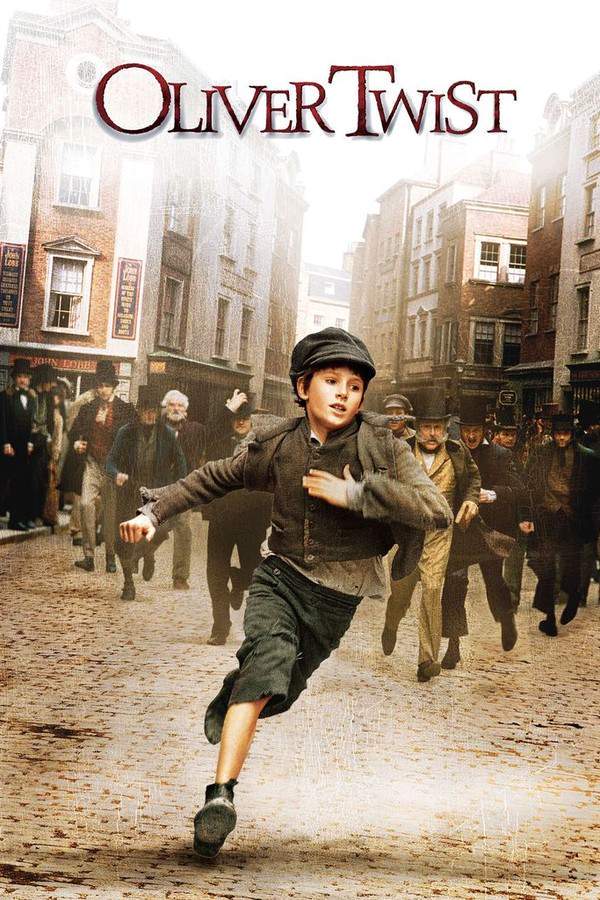
Oliver Twist (1997) movie poster

Plot Summary

Oliver Twist (1997) Plot Summary Explained

Release, runtime and language
1997 · 91 mins · English
Directed by
Tony Bill
Starring
Richard Dreyfuss, Ned Dennehy, Elijah Wood, Christopher Doyle, David O'Hara, Alan Devlin

Set in 1837 England, this new adaptation of Charles Dickens’s classic follows orphan Oliver, who flees a harsh sweat‑shop and journeys to London in search of family. There he falls under the sway of the cunning pick‑pocket leader Fagin, played by Richard Dreyfuss, while Alex Trench portrays the hopeful boy. The screenplay was penned by John Sacksteder.

On this page (5)
  1. 1 What happens: full plot
  2. 2 Plot questions answered
  3. 3 Movie threads
  4. 4 Movies like Oliver Twist
  5. 5 Every angle

Full plot summary · contains spoilers

What Happens in Oliver Twist: Full Plot Summary

The whole story of Oliver Twist (1997) explained, from the opening scene to the final frame: every key event, every twist and what it all adds up to. Read it as a quick recap before the sequel, to check a scene you missed, or to finally understand what really happened.

In a grim London workhouse run by Widow Corney, Maria Charles, a dying mother brings a baby into the world and passes on a small locket containing her own mother’s portrait before she passes away. The locket lands in Corney’s hands, and the boy is christened Oliver Twist by the workhouse staff, a name chosen from a rotating alphabet of options. Seven years old becomes six years old, and Oliver, still living within the harsh walls of the institution, asks to see the cherished keepsake. Corney makes a cold promise: he can have the locket when he turns twelve. The years pass in a cycle of toil, hunger, and neglect, dragging the boy deeper into a life he does not want but cannot escape.

On the eve of Oliver’s twelfth birthday, the tension boils over at dinner when the boys draw straws to decide who must ask Corney for more gruel. Oliver draws the shortest straw and is brutally expelled from the workhouse for daring to plead for food, without his locket in hand. That night, he sneaks back to reclaim the talisman and sets off for London, where a different kind of danger awaits. There, a young, confident thief named Jack Dawkins, better known as the Artful Dodger, intercepts the frightened newcomer and explains the world he’s stepping into: a band of young pickpockets led by the wily old master, Fagin, Richard Dreyfuss. Oliver is brought into their circle, and the Dodger introduces him to the routine of stealing, while Fagin quickly seizes Oliver’s locket, the symbol of the life he’s just begun to understand he’s missing.

Oliver’s arrival at the gang’s lair marks a turning point. The Artful Dodger begins teaching him the craft, and Fagin keeps a close, watchful eye on the new boy, even threatening him over the locket when the temptation to betray the trust of the group arises. Three months pass, and Oliver’s first trial as a thief looms: a pickpocket assignment. The plan goes awry when Oliver is caught in the act of stealing a watch, but Dodger, quick on his feet, substitutes the watch for Oliver and makes a hasty escape, shielding the boy from immediate blame. Oliver, however, is mistaken for the culprit, and the situation escalates until Dodger hurries to the courtroom to support him. Rose, the niece of the victim, testifies that Oliver is not the thief, and Oliver finds himself invited to the Brownlows’ grand home in Grosvenor Square.

At the mansion, Oliver’s life shifts in a new direction, and he begins to glimpse a different world through the eyes of Rose Maylie, Olivia Caffrey, who shares in the warmth of the Brownlows’ hospitality. In the gallery, a portrait on the wall mirrors the locket’s circulating secret: it is the portrait of Mr. Brownlow’s late wife, and the Brownlow family reveals that they once had a daughter who carried that very same locket. Could Oliver truly be Mr. Brownlow’s grandson and Rose’s cousin? The discovery awakens a glimmer of belonging in the orphan, a possibility that he had never dared to dream.

Yet danger remains close behind. The Dodger, while still connected to the crew, is traced by the suspicious Bill Sikes, a ruthless thief and murderer who owes a great debt to Fagin. Sikes convinces Fagin to permit a kidnapping, bringing Oliver back into the perilous orbit of crime, this time with Dodger and Nancy, Sikes’s devoted partner who harbors private questions about the life they lead. Nancy, though uneasy, agrees to help, while Dodger himself resists placing Oliver in danger, refusing to trap him in the bag intended for their raid. Back at the hideout, Oliver reaffirms his loyalty and his affection for the Brownlows, insisting that he would never betray them—even in the face of backstabbing and fear.

The pursuit tightens when Sikes learns that Oliver knows where Fagin’s hidden treasure is kept, and the plan to abduct the boy escalates into a late-night trap. Sikes stages a dangerous assault at the Brownlows’ home, forcing Oliver to help steal from the family, but Oliver’s quick action and Rose’s steadfast presence begin to unravel the scheme. Nancy, venturing to the Brownlows herself to warn them and to return Oliver, becomes a casualty of Sikes’s rage when she is murdered at London Bridge after a tense sequence of miscommunication and double-crossing. Dodger, alerted to the danger, hurries to intervene, but the net closes around the fugitives and their captors.

The chase culminates at the gang’s hideout, where the police close in and Sikes locks the door behind him. Oliver, now a hostage, climbs with the locket and the stolen box toward the rooftop in a desperate bid for safety. The struggle ends in tragedy as Sikes’s rope catches and he dies, his body swinging above the crowd of witnesses and pursuing lawmen. Dodger is arrested for his broader pilfering, while Fagin negotiates a final, uneasy ending: he returns Oliver’s locket after confirming its truth, the locket itself proving the connection to Mr. Brownlow’s family.

With the mystery resolved and the bond to the Brownlows proven, Oliver—now recognized as Mr. Brownlow’s rightful grandson—finds a place of safety, love, and belonging at last. The tale closes on the image of a hopeful future as Oliver sleeps soundly in his new home, surrounded by the people who have chosen to care for him and the knowledge that he is finally part of a family.

Last updated: October 09, 2025 at 11:01

Was this helpful?

Plot questions answered

Oliver Twist Plot Explained: Your Questions Answered

The questions people ask most about Oliver Twist (1997): what happens in the confusing scenes, why the characters do what they do, the twists, hidden details and what the ending means. Each answer contains spoilers.

Q1

Why was Oliver kicked out of the workhouse?

Oliver was expelled after drawing the shortest straw at dinner, which forced him to ask Widow Corney for more gruel. This request was seen as defiance, and Corney brutally expelled him on the spot, right before his twelfth birthday, denying him the locket she had promised him years earlier. This harsh rejection directly pushes Oliver toward London and sets the entire story in motion.

  • workhouse
  • corney
  • expelled
  • gruel
  • orphan
Q2

Why does Fagin take Oliver's locket?

Fagin immediately recognizes the locket as valuable, both monetarily and because it represents a connection to Oliver's past that could be exploited. He seizes it from Oliver upon arrival at his lair, keeping it as collateral to ensure Oliver's loyalty and to prevent him from running away. The locket becomes a tool of control over the boy.

  • fagin
  • locket
  • stolen
  • treasure
  • control
Q3

Why is Oliver mistaken for a thief?

During Oliver's first pickpocket assignment, he is caught with a stolen watch while Dodger successfully swaps the watch and escapes. Police identify Oliver as the culprit because he is physically holding the watch, and he cannot explain his involvement with the thieves. The mistake leads to his arrest and courtroom appearance.

  • arrest
  • pickpocket
  • dodger
  • watch
  • court
Q4

How does the locket reveal Oliver's family connection?

At the Brownlow mansion, Rose notices the portrait hanging in the gallery matches the one inside Oliver's locket, the portrait of Mr. Brownlow's late wife. This visual match leads the Brownlows to realize Oliver could be their missing grandson, connecting him to their family through his mother's lineage.

  • locket
  • portrait
  • brownlow
  • rose
  • family connection
Q5

Why does Nancy help Oliver escape from Sikes?

Nancy decides to warn the Brownlows and return Oliver after witnessing Sikes plan to use the boy for a dangerous kidnapping and forced theft. Despite her life in the criminal underworld, Nancy has developed genuine affection for Oliver and cannot stomach seeing him harmed. Her moral choice to betray Sikes ultimately leads to her murder.

  • nancy
  • sikes
  • help
  • oliver
  • brownlows
Q6

How does Sikes die at the hideout?

As police close in on Fagin's hideout, Sikes attempts to flee across the rooftop while holding Oliver hostage. During the pursuit, Sikes slips and a rope catches around his neck, causing him to hang and die above the crowd of witnesses and officers. His death serves as both a dramatic climax and poetic justice for his crimes.

  • sikes
  • death
  • rooftop
  • hang
  • pursuit
Q7

Why does Sikes kill Nancy at London Bridge?

Sikes murders Nancy because he believes she has betrayed him by going to the Brownlows to warn them and return Oliver. During the confrontation at London Bridge, Sikes attacks Nancy in a rage, striking her repeatedly until she dies. Her death raises the stakes dramatically and underscores the violence of Sikes's character.

  • nancy
  • murder
  • london bridge
  • sikes
  • betrayal
Q9

Why is the locket important to the story's resolution?

The locket proves Oliver's true identity as Mr. Brownlow's grandson by matching the portrait of Brown's late wife. After Fagin returns it, the Brownlows confirm the connection, allowing Oliver to be recognized as their family and giving him the loving home he has sought throughout the story.

  • locket
  • resolution
  • proof
  • grandson
  • brownlow

Movie threads

More Movies Like Oliver Twist, by Mood & Story

Curated lists built around what makes Oliver Twist tick: the same mood, the same kind of story or the same emotional payoff. Each list explains why these movies belong together.

Coming of age stories like Oliver Twist

Young protagonists endure hardship to find their place and hope. For viewers seeking movies like Oliver Twist, this thread gathers gritty coming-of-age tales. These films follow young characters facing social injustice and adversity, often with a steady pace and a hopeful conclusion. Find similar dramas about orphans, found family, and the quest for belonging.

  • hopeful
  • gritty
  • heartwarming
  • melancholic
  • anxious
  • tender
  • Tone: hopeful, melancholic
  • Pacing: steady, character-driven
Why these movies?

The story pattern: Narratives typically follow a linear journey where a young, often orphaned or disadvantaged, protagonist is thrust into a challenging world. They face external threats and moral tests, but the core of the story is their internal growth and the search for a true home or family, usually ending on a redemptive or uplifting note.

Why they belong together: These movies are grouped by their shared focus on a child's-eye view of a harsh reality, blending gritty settings with a fundamentally hopeful character arc. They share a medium emotional weight, balancing sorrow with triumph, and a steady pacing that allows for character development amidst adversity.

Victorian-era dramas like Oliver Twist

Stories exposing the grim realities and class struggles of the 19th century. If you liked the setting of Oliver Twist, explore these Victorian-era social dramas. This collection features films with a similar gritty, historical atmosphere, focusing on poverty, crime, and the struggle for dignity. Discover stories with a steady pace, medium intensity, and a focus on social commentary.

  • gritty
  • oppressive
  • melancholic
  • atmospheric
  • heartwarming
  • anxious
  • Tone: gritty, hopeful
  • Pacing: steady, atmospheric
Why these movies?

The story pattern: The plot often revolves around a central character's journey through the stratified layers of society, exposing the cruelty of workhouses, the desperation of the criminal underworld, and the vast gap between the rich and poor. The narrative uses this historical setting to explore timeless themes of justice, redemption, and human resilience.

Why they belong together: These films are united by their specific historical setting and thematic focus on social commentary. They share a gritty, sometimes oppressive mood, a medium intensity reflecting the serious subject matter, and a steady pacing that allows for immersion in the period world and its complex social dynamics.

If you liked this

Movies Like Oliver Twist

Similar movies to Oliver Twist: the same genre, themes or kind of story. Each one comes with its own plot summary, timeline and ending explained.

Browse all movie summaries

Every angle

Oliver Twist (1997) Explained: Plot, Timeline & Characters

Everything about Oliver Twist in one place: what happens in the plot summary, the timeline in chronological order, the characters and meaning and a spoiler-free summary. What's After the Movie adds the cast, box office and post-credit scenes.

Coming soon on iOS and Android

The Plot Explained Movie Summary App

Plot summaries, endings explained and timelines on your phone. Catch up on any movie in minutes, save your favorites and never miss a twist again.

Be the first to know when we launch. Your email stays private, always.

Learn more about the app