Plot Explained Spoilers guaranteed!
Plot Explained

Browse by genre

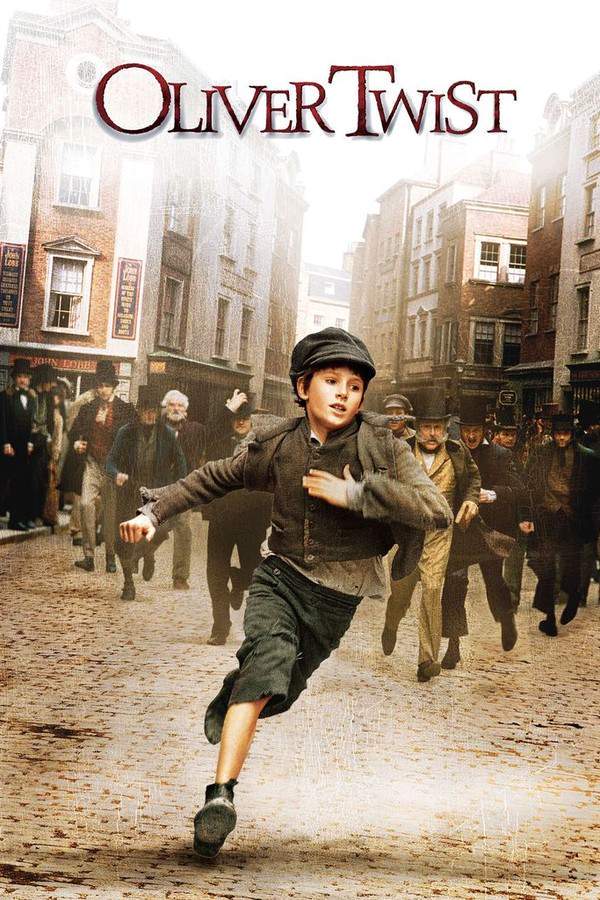
Oliver Twist (1982) movie poster

Plot Summary

Oliver Twist (1982) Plot Summary Explained

Release, runtime and language
1982 · 103 mins · English
Loading streaming availability…
Directed by
Clive Donner
Starring
Eileen Atkins, George C. Scott, Michael Hordern, Timothy Spall, Tim Curry, Cherie Lunghi

A compelling new adaptation of Dickens’s beloved Victorian classic, following an orphan boy who flees the grim conditions of an orphanage and finds himself drawn into the world of a ruthless gang of thieves and pickpockets. The film captures the harsh social realities and the boy’s struggle for survival and hope.

On this page (6)
  1. 1 Where to watch
  2. 2 What happens: full plot
  3. 3 Plot questions answered
  4. 4 Movie threads
  5. 5 Movies like Oliver Twist
  6. 6 Every angle
Loading streaming availability…

Full plot summary · contains spoilers

What Happens in Oliver Twist: Full Plot Summary

The whole story of Oliver Twist (1982) explained, from the opening scene to the final frame: every key event, every twist and what it all adds up to. Read it as a quick recap before the sequel, to check a scene you missed, or to finally understand what really happened.

In a bleak Victorian setting, a pregnant woman makes her way to a harsh workhouse, where she dies giving birth to a baby boy. The stern beadle, Mr. Bumble, names the child Oliver Twist. That single act sets in motion a life shaped by the cruelty of institutions and the hope of find­ing someone who will treat him with humanity. The years that follow harden the boy’s early innocence, and Oliver’s journey becomes a test of resilience in a world that often means him harm.

Years pass, and Oliver’s simple request for more gruel becomes a pivotal moment. After he asks for more, he faces punishment and is sold away as an apprentice to a local undertaker named Sowerberry. There he is pressed into service as a mute at the funerals of children, a cruel duty that deepens his sense of isolation. This sparks resentment from Sowerberry’s older apprentice, Noah Claypole, who taunts Oliver’s mother and enrages the boy, who reacts with a rare act of defiance. The fallout leads Sowerberry to send him back to the workhouse, yet Oliver seizes a chance to escape and undertakes a grueling seven‑day trek toward London, seeking a life beyond the walls he has known.

On the streets of the great city, Oliver meets a streetwise pickpocket named Jack Dawkins, better known as the The Artful Dodger. Dodger introduces him to his wily master, Fagin, who trains a cadre of boys in the arts of theft. Oliver also crosses paths with Bill Sikes, a brutal associate who becomes entwined with the group, and with Nancy, who begins to feel something like maternal care for the frightened newcomer. Under pressure from Sikes, Oliver is forced to participate in a burglary that goes disastrously, leaving him wounded while Sikes escapes. The upheaval brings Mr. Brownlow, a kindly guardian, and his niece Rose Maylie into Oliver’s life, and they nurse him back to health, recognizing a striking resemblance between him and a portrait of Agnes Fleming.

Behind the scenes, ominous family ties pull tight the threads of Oliver’s fate. Fagin is working with a dark figure named Monks, Oliver’s supposed half‑brother, whose father left a will that favored Oliver—provided Oliver does not fall into crime. Monks visits Mr. and Mrs. Bumble and procures a locket stolen from Oliver’s mother, then tries to seal Oliver’s doom by offering money to murder him. The scheming intensifies when Nancy overhears plans and warns Mr. Brownlow and Rose, though she herself becomes a casualty of the feud when Bill Sikes brutally murders her, driven by fear and anger. Meanwhile, Fagin is arrested as the net tightens around him, and Monks is later confronted by Mr. Brownlow, who reveals a long‑hidden truth: he was once a close friend of Oliver’s father and fell in love with Agnes Fleming, the woman who bore Oliver.

As the web unravels, Oliver, still on the run, must confront the implications of his birthright and the choices that have led him here. He begins to recognize Monks from earlier encounters, and the weight of family secrets presses in from every side. The chase ends in tragedy for Sikes, who, haunted by Nancy’s memory, hanges himself on a rooftop while pursued by an angry mob. In the aftermath, Mr. Brownlow, Oliver, and Rose visit Fagin in jail, where the criminal hints at treasure hidden away for Oliver in his hideout. The truth comes to light at the workhouse, where the Bumbles are stripped of their power and Monks is imprisoned. Oliver’s life finally shifts toward stability as he leaves to build a future under Mr. Brownlow’s guardianship, his early trials giving way to the possibility of belonging and a chance at a kinder path.

Last updated: November 29, 2025 at 00:47

Was this helpful?

Plot questions answered

Oliver Twist Plot Explained: Your Questions Answered

The questions people ask most about Oliver Twist (1982): what happens in the confusing scenes, why the characters do what they do, the twists, hidden details and what the ending means. Each answer contains spoilers.

Q1

Why does Monks want to destroy Oliver?

Monks is Oliver's half-brother. Their father left a will that would favor Oliver, but only if Oliver never fell into crime. Monks schemed to have Oliver convicted of theft so he would be disinherited, and when that failed, he offered money to Fagin to murder Oliver. His goal was to ensure the entire inheritance would go to him alone.

Foreshadowing: Monks is first introduced as a shadowy figure working with Fagin, and his obsession with Oliver's criminal record becomes clear early in their scheme.

  • monks
  • oliver twist half brother
  • inheritance
  • will
  • conspiracy
Q2

What is the significance of the locket?

The locket belonged to Oliver's mother, Agnes Fleming. Mrs. Bumble stole it from her at birth, and Monks later bought it from the Bumbles as proof of Oliver's parentage. He kept it hidden to prevent anyone from discovering Oliver's true identity until he could destroy the boy's chances of inheriting.

Foreshadowing: Mr. Brownlow notices Oliver resembles a portrait of Agnes Fleming, hinting at the maternal connection the locket represents.

  • locket
  • agnes fleming
  • mother
  • identity
  • stolen
Q3

Why does Bill Sikes kill Nancy?

Nancy overhears Monks plotting to murder Oliver and warns Mr. Brownlow and Rose. When Fagin confronts Nancy about her betrayal, Charlie Bates reports what he heard. Sikes, fearing Nancy's revelation will bring the police down on the gang and expose his own crimes, murders her in a fit of rage and fear.

Foreshadowing: Nancy's growing concern for Oliver and her conversations with Rose hint at her eventual decision to defy the gang.

  • nancy
  • bill sikes
  • murder
  • betrayal
  • gang
Q4

How is Mr. Brownlow connected to Oliver?

Mr. Brownlow was a close friend of Oliver's father and was in love with Agnes Fleming, Oliver's mother. This explains why he takes such an interest in Oliver, rescues him after the botched burglary, and works to uncover the truth about his parentage and the conspiracy against him.

Foreshadowing: Brownlow immediately notices Oliver resembles a portrait of Agnes Fleming, revealing his emotional connection to the boy's family.

  • mr brownlow
  • agnes fleming
  • father
  • connection
  • rescue
Q5

What was in Oliver's father's will?

Oliver's father left a will that divided his estate between Oliver and Monks, but with a crucial condition: if Oliver ever fell into crime, he would be disinherited and Monks would receive everything. This is why Monks worked so hard to frame Oliver and force him into criminal activity.

Foreshadowing: Monks' desperation to prove Oliver is a criminal becomes clear when he offers Fagin money to murder the boy.

  • will
  • inheritance
  • father
  • estate
  • monks
Q6

Why does Fagin agree to help Monks murder Oliver?

Monks offers Fagin a large sum of money to murder Oliver. Fagin considers the offer but ultimately hesitates. While he runs a criminal operation, killing a child represents a line he is reluctant to cross, though his willingness to entertain the plan shows his corruption.

Foreshadowing: Fagin's training of young thieves and his exploitation of Oliver for the burglary already establish his moral compromise.

  • fagin
  • monks
  • murder plot
  • money
  • bribe
Q7

How does Nancy help Oliver despite being part of the gang?

Nancy feels maternal protection toward Oliver and is disturbed by Monks' plot to murder him. She risks her life by secretly warning Mr. Brownlow and Rose about the danger, providing them with information that helps protect Oliver. This act of conscience leads to her murder by Sikes.

Foreshadowing: Nancy's early kindness to Oliver and her discomfort with the gang's plans for him foreshadow her eventual betrayal of Fagin's trust.

  • nancy
  • help
  • warn
  • brownlow
  • protective
Q8

What happens to Bill Sikes at the end?

Sikes flees London after murdering Nancy, pursued by an angry mob who witnessed his crime. Cornered on a rooftop, haunted by Nancy's memory and with no escape, Sikes hangs himself rather than be captured.

Foreshadowing: Sikes' brutal nature and the gang's turning against Nancy foreshadow his violent end.

  • bill sikes
  • death
  • suicide
  • rooftop
  • mob
Q9

Why is Oliver rescued by Mr. Brownlow after the burglary?

Oliver is shot during the burglary and left behind by Sikes. Mr. Brownlow and his niece Rose Maylie discover the wounded boy at the scene and take him in to recover. Their compassion stems from Oliver's striking resemblance to a portrait of Agnes Fleming, which sparks their interest in his background.

Foreshadowing: The burglary is orchestrated to force Oliver into crime, setting up his rescue by those who will uncover the truth.

  • brownlow
  • rose
  • rescue
  • burglary
  • shot
Q10

Why does Oliver's request for more gruel matter?

Oliver's simple request for more food at the workhouse is portrayed as an act of desperate courage in a life of near-starvation. This moment defines his character as someone willing to defy authority even when powerless. The request leads directly to his punishment and sale to the undertaker, which propels the entire plot forward.

Foreshadowing: This early act of defiance establishes Oliver's moral compass and his refusal to accept mistreatment.

  • gruel
  • workhouse
  • punishment
  • defiance
  • bumble
Q11

Why does Oliver join Fagin's gang in London?

After escaping the undertaker and walking for seven days to London, Oliver is befriended by the Artful Dodger, who appears friendly and offers food and shelter. Oliver has no money, no connections, and no knowledge of the city's dangers. He unknowingly walks into Fagin's criminal operation and is trained as a pickpocket.

Foreshadowing: Dodger's friendly demeanor hides the predatory nature of Fagin's operation, foreshadowing the exploitation to come.

  • fagin
  • dodger
  • london
  • recruitment
  • innocent
Q12

What happens to Fagin at the end of the story?

Fagin is arrested by police during the crackdown following Nancy's murder and Sikes' death. He is later visited in jail by Mr. Brownlow, Oliver, and Rose, where he hints at treasure hidden for Oliver in his hideout. His fate is imprisonment, though the exact sentence is not detailed.

Foreshadowing: Fagin's criminal empire and exploitation of children have been building toward legal consequences throughout the story.

  • fagin
  • arrest
  • jail
  • prison
  • hidden treasure
Q13

Why does Rose Maylie look like Oliver?

Rose Maylie is actually the sister of Agnes Fleming, Oliver's mother. This makes her Oliver's aunt. The family resemblance explains why Rose feels an immediate connection to Oliver and why Mr. Brownlow's household is drawn to protect him.

Foreshadowing: The resemblance is first noted when Brownlow sees Oliver and compares him to the portrait of Agnes Fleming.

  • rose maylie
  • agnes fleming
  • aunt
  • resemblance
  • family

Movie threads

More Movies Like Oliver Twist, by Mood & Story

Curated lists built around what makes Oliver Twist tick: the same mood, the same kind of story or the same emotional payoff. Each list explains why these movies belong together.

Gritty historical survival stories like Oliver Twist

Following vulnerable characters through the harsh realities of a bygone era. If you liked the harsh Victorian setting and Oliver's desperate fight for survival in Oliver Twist, you'll find similar immersive experiences here. These movies explore the brutal realities of the past, often through the eyes of a vulnerable protagonist, creating a powerful and emotionally heavy drama.

  • gritty
  • oppressive
  • desperate
  • melancholic
  • hopeful
  • anxious
  • Tone: dark, grim, desperate
  • Pacing: steady, methodical
Why these movies?

The story pattern: The narrative typically follows a protagonist, often a child or marginalized individual, navigating a hostile and unforgiving historical world. The plot is driven by the character's struggle for basic needs—safety, food, and dignity—against a backdrop of societal oppression. The journey is linear and steady, moving from one dire situation to the next, testing the character's endurance and hope.

Why they belong together: Movies in this thread share a commitment to historical verisimilitude and a dark, gritty tone. They are united by a focus on survival as the central plot driver, an emotionally heavy weight, and a pacing that allows the audience to fully absorb the oppressive atmosphere and the protagonist's arduous journey.

Movies with bittersweet redemption like Oliver Twist

A hard-won hope emerges from the depths of darkness and betrayal. Fans of Oliver Twist's blend of dark criminal underworlds and a ultimately hopeful, if bittersweet, ending will appreciate these films. They feature protagonists who endure great hardship but find a measure of redemption or safety, though not without paying a heavy emotional price.

  • grim
  • hopeful
  • melancholic
  • redemptive
  • anxious
  • desperate
  • Tone: dark, bittersweet
  • Pacing: steady
Why these movies?

The story pattern: The narrative arc follows an innocent or morally tested character through a corrupt system or environment. They encounter villainy and face betrayal, but their inherent goodness or resilience eventually leads them toward salvation. However, this salvation is tempered by the losses suffered along the way—often the death of a sympathetic ally—resulting in a conclusion that is hopeful yet profoundly sad.

Why they belong together: This thread groups movies based on a specific emotional trajectory: a dark tone with high intensity that leads to a bittersweet ending. The shared experience is one of enduring a heavy emotional journey where light is found, but the cost of that light is clearly and painfully shown.

If you liked this

Movies Like Oliver Twist

Similar movies to Oliver Twist: the same genre, themes or kind of story. Each one comes with its own plot summary, timeline and ending explained.

Browse all movie summaries

Every angle

Oliver Twist (1982) Explained: Plot, Timeline & Characters

Everything about Oliver Twist in one place: what happens in the plot summary, the timeline in chronological order, the characters and meaning and a spoiler-free summary. What's After the Movie adds the cast, box office and post-credit scenes.

Coming soon on iOS and Android

The Plot Explained Movie Summary App

Plot summaries, endings explained and timelines on your phone. Catch up on any movie in minutes, save your favorites and never miss a twist again.

Be the first to know when we launch. Your email stays private, always.

Learn more about the app