


Plot Explained Spoilers guaranteed!
Plot Explained

Browse by genre

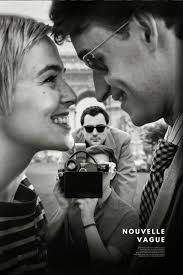
Nouvelle Vague (2025) movie poster

Plot Summary

Nouvelle Vague (2025) Plot Summary & Ending Explained

Release, runtime and language
2025 · 1 h 45 m · English
Echo score 83
JustWatch #13,111 658
Directed by
Richard Linklater
Starring
Zoey Deutch, Alix Bénézech, Laurent Mothe, Frank Cicurel, Jade Phan-Gia, Pauline Belle
Budget
$9.9M

After writing for the influential film journal Cahiers du cinéma, a young Jean‑Luc Godard concludes that the most effective form of criticism is to make movies himself. He persuades the wealthy patron Claude Beauregard to finance a low‑budget feature and, together with fellow critic François Truffaut, drafts a treatment for a gritty gangster‑couple drama.

On this page (8)
  1. 1 Where to watch
  2. 2 What happens: full plot
  3. 3 Plot questions answered
  4. 4 How it ends
  5. 5 Movie threads
  6. 6 Movies like Nouvelle Vague
  7. 7 Categories
  8. 8 Every angle

Where to watch

Where to Watch Nouvelle Vague (2025)

Where can you watch Nouvelle Vague? Stream, rent or buy it in the US, including on Netflix and Netflix Standard: current JustWatch availability with up-to-date prices.

Streaming availability powered by JustWatch

Full plot summary · contains spoilers

What Happens in Nouvelle Vague: Full Plot Summary

The whole story of Nouvelle Vague (2025) explained, from the opening scene to the final frame: every key event, every twist and what it all adds up to. Read it as a quick recap before the sequel, to check a scene you missed, or to finally understand what really happened.

Last updated: December 04, 2025 at 15:32

Was this helpful?

Plot questions answered

Nouvelle Vague Plot Explained: Your Questions Answered

The questions people ask most about Nouvelle Vague (2025): what happens in the confusing scenes, why the characters do what they do, the twists, hidden details and what the ending means. Each answer contains spoilers.

Q1

Why did Jean-Luc Godard decide to become a film director?

After harshly criticizing the film La Passe du diable at its premiere afterparty in 1959, Godard concluded that the most effective form of criticism was to make movies himself rather than just write about them. The success of Truffaut's The 400 Blows at Cannes that same year inspired him to pursue his own project, marking a deliberate shift from being a critic to becoming a director.

Foreshadowing: This ambition was foreshadowed by his vocal criticism of existing films at the afterparty.

  • godard director
  • cahiers du cinema
  • film criticism
  • breathless origin
Q2

How did Jean-Paul Belmondo become the lead in Breathless?

Godard selected Belmondo for the role of Michel Poiccard after Belmondo completed his military service in early 1959. The casting choice suited Godard's vision for a spontaneous, street-level style, and Belmondo's screen presence anchored the film's energy.

  • jean-paul belmondo
  • michel poiccard
  • casting
  • breathless lead actor
Q3

Why was Jean Seberg cast as Patricia in Breathless?

Godard met Jean Seberg through her husband after she promoted her film Bonjour Tristesse. He cast her as Patricia, aligning his lead actress with his evolving project and bringing an American presence to the French gangster narrative.

Foreshadowing: This casting choice would later carry tragic weight given Seberg's real-life fate.

  • jean seberg
  • patricia
  • casting
  • breathless actress
Q4

What caused the tension on the Breathless set?

Godard's emphasis on spontaneity led to constant script rewrites and short shooting days, which frustrated the cast. The fluid, rapidly changing plans undermined continuity and bewildered performers. Seberg briefly considered leaving, and Belmondo was warned that his career could be jeopardized by the chaotic process.

  • film set tension
  • script rewrites
  • breathless production problems
  • godard directing style
Q5

Why did Georges Beauregard threaten to cancel the film?

When Godard suspended filming for a day in the second week, claiming he wasn't feeling well, the financier Georges Beauregard arrived furious about the delays and threatened to cancel the project entirely. Under this pressure, Godard accelerated production and continued filming.

  • georges beauregard
  • film financing
  • budget problems
  • breathless production
Q6

Why did Godard cast himself as the informant in Breathless?

After Truffaut declined the role of the informant in the film, Godard cast himself in the part during the second week of filming. The decision reflected his willingness to blur fiction and reality within the project, adding a meta-casting element to the production.

  • godard cameo
  • informant role
  • self casting
  • meta filmmaking
Q7

What was the controversy over jump cuts in editing?

In post-production, Godard urged editor Cécile Decugis to use jump cuts, which provoked disagreement. The jump cuts would become a defining stylistic choice of the film, breaking traditional continuity and contributing to Breathless's revolutionary approach to editing.

  • jump cuts
  • cécile decugis
  • breathless editing
  • film editing innovation
Q8

Why did critics initially dismiss Breathless?

When Godard screened Breathless for Truffaut, Chabrol, Schiffman, and Beauregard, they dismissed it outright. The unconventional style, jump cuts, and break from traditional filmmaking conventions did not immediately resonate with the French New Wave critics themselves.

  • breathless initial reception
  • critics reaction
  • french new wave response
Q9

How did Breathless become so influential?

Despite its initial dismissal, Breathless became hugely influential due to its innovative jump cuts, spontaneous style, and break from conventional French cinema. The film's lean approach to storytelling and on-the-street shooting influenced generations of filmmakers.

  • breathless influence
  • french new wave legacy
  • film innovation
  • cinema impact
Q10

What was Jean-Pierre Melville's cameo in the film?

During the second week of filming, Godard filmed a cameo of Jean-Pierre Melville near an airport. Melville was an established filmmaker whose presence added a layer of insider reference and self-referentiality to the production.

  • jean-pierre melville
  • cameo
  • airport scene
  • breathless appearance
Q11

What advice did Roberto Rossellini give Godard?

Roberto Rossellini visited Cahiers du Cinéma and urged the staff to avoid artistic artifice and shoot efficiently. This guidance pushed Godard toward a lean, practical workflow and reinforced his preference for realism over polish in the project.

  • rossellini advice
  • realism
  • shooting efficiently
  • film technique

Ending explained

What Happens at the End of Nouvelle Vague?

How Nouvelle Vague (2025) ends, in short: the final scene, the last twist and what it means for the characters. The full ending explained, with every spoiler, lives on its own page.

Read the full ending explained

In the last moments of Nouvelle Vague we finally see the scene Godard envisioned for Breathless: Michel (Jean‑Paul Belmondo) is gunned down on a Parisian street, collapses, and the police swarm around him. As the officers move to confiscate his belongings, Godard asks Patricia (Jean Seberg) to take Michel’s wallet. She hesitates, then deliberately refuses, turning her gaze straight into the camera. Her expression is flat, her lips barely move, and she mirrors the small, habitual gesture Belmondo’s character used throughout the film. The shot lingers on her silent stare, leaving Michel’s final words and Patricia’s fate unresolved.

Godard’s decision to end on that ambiguous, almost frozen tableau is a direct result of his New‑Wave ethos. Instead of providing a tidy resolution, he lets the image speak, using jump‑cuts and a stark lack of sync‑sound to force the audience to linger on the moment and draw their own conclusions. The abruptness and the open‑endedness of the closing frame embody his belief that cinema should provoke thought rather than comfort, cementing Breathless—and the chaotic making‑of shown in Nouvelle Vague—as a turning point in film history.

Nouvelle Vague ending explained in full

Movie threads

More Movies Like Nouvelle Vague, by Mood & Story

Curated lists built around what makes Nouvelle Vague tick: the same mood, the same kind of story or the same emotional payoff. Each list explains why these movies belong together.

Movies about artistic creation and struggle like Nouvelle Vague

Films that dive deep into the messy, determined work of making art. If you enjoyed the detailed look at filmmaking in Nouvelle Vague, explore more movies like it. This section features similar stories about determined artists, creative friction, and the biographical drama behind influential works in cinema, music, and other arts.

  • creative
  • determined
  • frustrating
  • collaborative
  • inspiring
  • methodical
  • Tone: neutral, observational
  • Pacing: steady, methodical
Why these movies?

The story pattern: The narrative pattern typically follows a linear, process-driven structure, chronicling the journey from an initial idea to its final realization. Conflicts arise from creative differences, logistical hurdles, and the pressure to succeed, culminating in a resolution that acknowledges both the triumph of creation and its personal costs.

Why they belong together: These movies are grouped together because they share a central focus on the 'how' of art-making. They possess a steady, observational tone, a medium emotional weight from the professional stakes involved, and a mood that blends frustration with the inspiration of creative momentum.
Bittersweet historical dramas with a legacy like Nouvelle Vague

Historical stories where a major achievement is shadowed by poignant aftermath. For viewers who appreciated the bittersweet ending of Nouvelle Vague, this section highlights similar movies where a historical triumph is intertwined with a poignant footnote. These films blend inspiration with melancholy, exploring the complex legacy of real-life events and figures.

  • inspiring
  • historical
  • reflective
  • poignant
  • somber
  • legacy
  • Tone: bittersweet, reflective
  • Pacing: steady, chronological
Why these movies?

The story pattern: Stories in this thread often follow a straightforward chronological path toward a clear victory or achievement. However, the narrative includes an epilogue or perspective that introduces a counterpoint of sadness, loss, or complex consequences, creating a layered and reflective ending feel.

Why they belong together: These films share a specific emotional mix: the inspiration of accomplishment tempered by the sobering weight of history. They typically have a medium intensity, a steady pacing suitable for historical recounting, and a bittersweet ending that gives their stories a resonant, thoughtful quality.

Movies about creative tension like Nouvelle Vague

Stories about ambitious creators wrestling with their vision against all odds. If you liked the behind-the-scenes friction in Nouvelle Vague, you'll enjoy these movies about artistic creation under pressure. This collection features films and dramas that explore the struggles and triumphs of filmmakers, artists, and innovators as they bring their vision to life against practical constraints.

  • behind the scenes
  • creative
  • frustrated
  • tense
  • pioneering
  • collaborative
  • Tone: neutral, tense
  • Pacing: steady, procedural
Why these movies?

The story pattern: The narrative typically follows a creator or a collaborative team through the lifecycle of a project, from initial inspiration to final realization. The central conflict arises from the gap between an uncompromising artistic vision and the realities of production, leading to tense negotiations, spontaneous problem-solving, and moments of breakthrough.

Why they belong together: Movies are grouped here because they share a focus on the creative process itself, emphasizing the medium-intensity drama of collaboration, frustration, and the pioneering spirit required to make something original. They balance a neutral, observational tone with the inherent tension of ambitious deadlines and artistic differences.

Movies with a bittersweet legacy like Nouvelle Vague

Stories where great achievements are shadowed by personal cost or tragedy. Fans of the bittersweet ending in Nouvelle Vague will appreciate these stories about legacy and its costs. This selection includes dramas and historical films where monumental achievements are intertwined with personal loss or tragic echoes, offering a nuanced look at success and its consequences.

  • bittersweet
  • reflective
  • tragic
  • historic
  • legendary
  • melancholy
  • Tone: bittersweet, reflective
  • Pacing: steady, chronological
Why these movies?

The story pattern: The narrative arc follows the pursuit and attainment of a major goal, but the conclusion reframes this success within a broader, more sobering context. The ending feels bittersweet, acknowledging the achievement while also highlighting a profound personal sacrifice, an unforeseen negative outcome, or the tragic fate of a key figure involved.

Why they belong together: These movies are grouped by their distinctive emotional payoff—a mix of triumph and melancholy. They share a medium emotional weight and a straightforward-to-moderate narrative complexity that allows the bittersweet ending to land with reflective power, rather than sheer despair or uncomplicated joy.

If you liked this

Movies Like Nouvelle Vague

Similar movies to Nouvelle Vague: the same genre, themes or kind of story. Each one comes with its own plot summary, timeline and ending explained.

Browse all movie summaries

Categories

Movie Lists Featuring Nouvelle Vague

Nouvelle Vague appears in these hand-built movie categories. Each one groups movies by a specific mood, theme or story type, with their plot summaries and endings explained.

View all movie categories

Every angle

Nouvelle Vague (2025) Explained: Plot, Ending, Timeline & Characters

Everything about Nouvelle Vague in one place: what happens in the plot summary, the timeline in chronological order, the characters and meaning, the ending explained and a spoiler-free summary. What's After the Movie adds the cast, box office and post-credit scenes.

Coming soon on iOS and Android

The Plot Explained Movie Summary App

Plot summaries, endings explained and timelines on your phone. Catch up on any movie in minutes, save your favorites and never miss a twist again.

Be the first to know when we launch. Your email stays private, always.

Learn more about the app