Plot Explained Spoilers guaranteed!
Plot Explained

Browse by genre

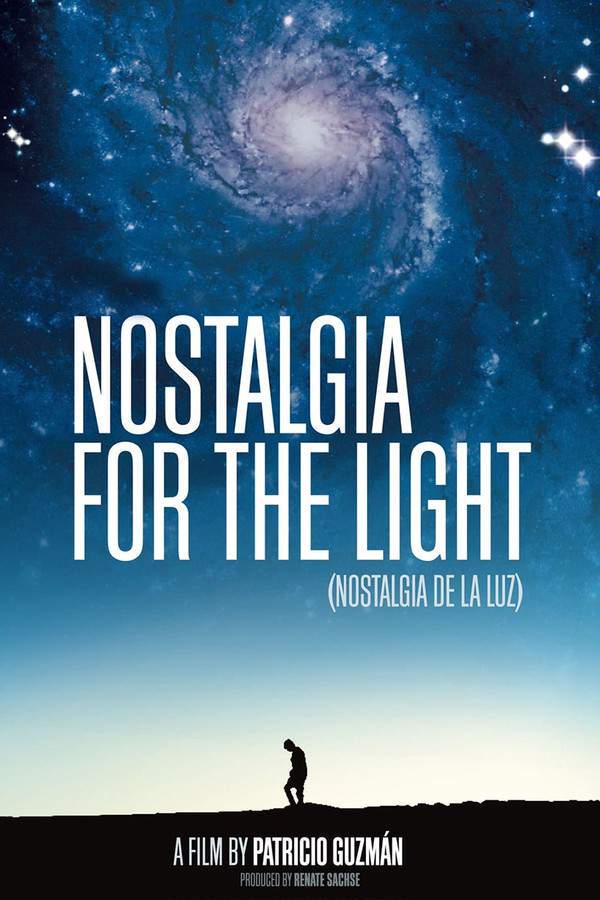
Nostalgia for the Light (2011) movie poster

Timeline

Nostalgia for the Light (2011) Timeline Explained – Every Event in Order

Release, runtime and language
2011 · 90 min · Spanish
Loading streaming availability…
Directed by
Patricio Guzmán

Amidst the stark beauty of Chile's Atacama Desert, a group of women search for fragments of their husbands and sons, lost during the years of the Pinochet dictatorship. These widows meticulously gather pieces of metal and debris, remnants of the telescopes and the men who operated them, creating a poignant and visually stunning meditation on loss, memory, and the enduring impact of political upheaval.

On this page (6)
  1. 1 Where to watch
  2. 2 Events in order (12)
  3. 3 Timeline questions answered
  4. 4 Movie threads
  5. 5 Categories
  6. 6 Every angle
Loading streaming availability…

12 events in order · contains spoilers

Nostalgia for the Light Timeline: Events in Chronological Order

Every key event of Nostalgia for the Light (2011) in order, scene by scene, with when and where it takes place. Use it to untangle flashbacks, time jumps and parallel storylines, to refresh your memory before the sequel or to find the exact scene you are thinking of.

  1. Introduction to Astronomy

    The film opens with stunning visuals of the Moon and the universe captured through a powerful telescope. The narrator, Patricio Guzmán, reflects on his childhood fascination with astronomy and the significance of living in the present moment.

  2. Exploring the Atacama Desert

    Guzmán journeys into the Atacama Desert, which is highlighted as a unique landscape with its Mars-like dryness. This area holds remnants of ancient life, including fossils and mummified humans, serving as a testament to the preservation capabilities of extreme aridity.

    Where
    Atacama Desert, Chile
  3. Astronomy and History

    Astronomer Gaspar Galaz discusses the connection between astronomy and our understanding of the past. He emphasizes that studying the universe enables us to revisit our origins through the lens of science.

  4. The Quest for Knowledge

    Lautaro Núñez draws a fascinating parallel between archaeologists and astronomers. Both groups painstakingly reconstruct history from remnants, underlining the shared pursuit of understanding our world through different yet complementary lenses.

  5. A Survivor's Story

    Luís Henríquez, a survivor of the Chacabuco concentration camp, recounts his experiences under Pinochet's regime. Together with fellow inmates, he delved into astronomy, using stargazing as a means of finding freedom during oppressive times.

    Where
    Chacabuco Concentration Camp, Chile
  6. The Military's Fear

    The military's reaction to the inmates' astronomical studies reveals their fear of knowledge and enlightenment. They believed that learning about the cosmos could potentially aid in facilitating escape from the harsh conditions of the camp.

  7. The Architect's Legacy

    Miguel Lawner, known as the ‘architect,’ meticulously memorized the layout of Chacabuco and created a scale model. He hid his drawings and documents, showcasing the importance of preserving memory even in dire circumstances.

    Where
    Chacabuco Concentration Camp, Chile
  8. A Metaphor for Chile

    Guzmán uses his own life as a metaphor for Chile’s story, juxtaposing the remembrance of trauma with the fading memories of his wife, Anita, who suffers from Alzheimer's. This contrast highlights the struggle between memory and forgetfulness.

  9. Family Trauma

    Valentina Rodríguez shares her family's painful history with detention and betrayal during the dictatorship. Her grandparents were forced to betray her parents, which adds to the legacy of suffering experienced by many Chilean families.

  10. Hope for the Future

    Despite the trauma, Valentina maintains hope for her son, wishing he will not face the dictatorial violence that plagued earlier generations. She reflects on the idea of being made from the universe's recyclable matter, finding solace in this connection.

  11. The Significance of Memory

    In the film's closing thoughts, Guzmán emphasizes the power of memory in navigating life. He asserts that those who remember can exist in the delicate present, while those without memories struggle to find their place in the world.

  12. Reflection on Existence

    The documentary's overarching message is a call to honor the past while embracing the present. By reflecting on history, the film encourages viewers to understand their own existence and the stories that shape their identity.

Last updated: November 16, 2024 at 18:36

Was this helpful?

Timeline questions answered

Nostalgia for the Light Timeline Explained: Your Questions Answered

When does it happen, and why in that order? The questions people ask about the chronology of Nostalgia for the Light (2011): time jumps, flashbacks, cause and effect between scenes and the correct order of events, each answered with spoilers.

Q1

Why did prisoners at Chacabuco concentration camp study astronomy?

The inmates studied astronomy as an act of resistance and mental escape. Led by Doctor Alvarez, who knew astronomy, they used stargazing to temporarily transcend the brutal conditions of the camp. Luís Henríquez described it as experiencing profound freedom while looking at the cosmos. The military feared this knowledge because they believed astronomical understanding could help prisoners navigate and potentially escape using the stars.

  • astronomy
  • Chacabuco
  • concentration camp
  • Pinochet
  • prisoners
  • resistance
Q2

Why was the military afraid of the prisoners studying astronomy?

The military feared that knowledge of astronomy could aid the prisoners in escaping. They believed that understanding celestial navigation would give inmates the tools to find their way out of the desert camp. This fear reveals how the Pinochet regime viewed education and intellectual pursuits as threats, even when the knowledge seemed purely scientific.

  • military
  • astronomy
  • escape
  • fear
  • Pinochet
  • knowledge
Q3

What does Anita's Alzheimer's represent in the film?

Anita, Guzmán's wife suffering from Alzheimer's, serves as a metaphor for Chile's collective memory and forgetting. While Luís Henríquez carries the weight of remembering the dictatorship's atrocities, Anita represents the inevitable fading of memory. This contrast between remembrance and forgetting mirrors Chile's struggle to come to terms with its traumatic past under Pinochet.

  • Anita
  • Alzheimer's
  • memory
  • forgetting
  • Chile
  • metaphor
Q4

How are archaeology and astronomy connected in the documentary?

Lautaro Núñez draws a parallel between archaeologists and astronomers, stating both seek to reconstruct history from remnants. Astronomers look at ancient light from stars that no longer exist, while archaeologists dig for fragments of past civilizations. Both disciplines involve piecing together the past from incomplete evidence, creating a thematic link between searching for disappeared loved ones and searching the cosmos.

  • archaeology
  • astronomy
  • remnants
  • history
  • search
Q5

Why do women search the Atacama Desert for fragments of their loved ones?

The women search the desert for remains of their husbands and sons who disappeared during Pinochet's dictatorship. They collect pieces of metal and debris from the telescopes operated by the missing men, treating these fragments as sacred connections to the disappeared. The desert's extreme dryness preserves everything, making it both a tomb and a archive of memory.

  • women
  • Atacama Desert
  • disappeared
  • Pinochet
  • fragments
  • search
Q6

What is the significance of the quote 'those who have a memory are able to live in the fragile present moments'?

This closing quote encapsulates the film's central message about memory's role in human existence. Guzmán argues that memory anchors us to the present, those who remember history can meaningfully inhabit the present, while those who forget have no stable place in time. This applies both personally to those with Alzheimer's and collectively to nations grappling with traumatic histories.

  • memory
  • present
  • quote
  • Guatemala
  • existence
Q7

Why is the Atacama Desert significant beyond its astronomical observatories?

The Atacama Desert's extreme dryness preserves everything, ancient fish, mummified humans, and modern debris, making it a natural archive. This preservation quality mirrors the film's themes: just as the desert preserves physical remnants, memory preserves historical truth. The same landscape that allows astronomers to see distant galaxies also holds the remains of dictatorship victims, connecting cosmic and human time scales.

  • Atacama Desert
  • preservation
  • astronomy
  • memory
  • desert
Q8

What happened to Valentina Rodríguez's parents and why did her grandparents betray them?

Valentina's parents were detained during the dictatorship. Her grandparents were coerced by authorities into revealing the parents' whereabouts, a devastating choice forced under threat. This family trauma represents the broader pattern of betrayal and division that Pinochet's regime inflicted on Chilean families, turning relatives against each other through torture and pressure.

  • Valentina
  • detention
  • grandparents
  • betrayal
  • parents
  • dictatorship
Q9

How did Miguel Lawner preserve the memory of Chacabuco concentration camp?

Miguel Lawner, called the 'architect,' memorized every detail of the Chacabuco camp's layout using his footsteps to measure distances. He created scale drawings of the camp, secretly hiding them and destroying them when necessary to avoid detection. His precise architectural memory served as an act of resistance, ensuring the camp's reality would not be erased or denied.

  • Miguel Lawner
  • architect
  • Chacabuco
  • memory
  • drawings
  • concentration camp
Q10

Why is Chile important for astronomy?

Chile, particularly the Atacama Desert, offers some of the clearest skies on Earth due to its minimal light pollution, low humidity, and high altitude. Astronomer Gaspar Galaz explains that Chilean observatories allow scientists to peer further into the universe than almost anywhere else, making the country a global hub for astronomical research and a metaphor for looking into the past through the speed of light.

  • Chile
  • astronomy
  • observatories
  • Atacama
  • clear skies
  • telescope

Movie threads

More Movies Like Nostalgia for the Light, by Mood & Story

Curated lists built around what makes Nostalgia for the Light tick: the same mood, the same kind of story or the same emotional payoff. Each list explains why these movies belong together.

Contemplative Films About Memory Like Nostalgia for the Light

Films that use quiet reflection to explore the lingering pain of the past. Discover movies like Nostalgia for the Light that use a meditative pace to explore themes of grief and historical memory. If you appreciated the thoughtful, melancholic reflection on loss, these similar documentaries and dramas offer a comparable, deeply resonant viewing experience.

  • meditative
  • melancholic
  • somber
  • reflective
  • wistful
  • thoughtful
  • Tone: melancholic, somber, reflective
  • Pacing: slow, meditative, deliberate
Why these movies?

The story pattern: Narratives in this thread often unfold through a slow, associative structure rather than a linear plot. They juxtapose personal stories with larger philosophical or historical ideas, focusing on the emotional and psychological landscape of characters grappling with absence and the act of remembrance itself.

Why they belong together: These films are grouped together because they share a specific combination of a heavy emotional weight, a melancholic tone, and a deliberately slow pacing. They prioritize creating a thoughtful, somber mood that allows viewers to sit with complex feelings about history, loss, and the fragility of memory.


Movies Blending Science and History Like Nostalgia for the Light

Movies that juxtapose the scale of the universe with intimate human stories. Find films similar to Nostalgia for the Light that connect scientific exploration with profound human drama. If you liked the way it intertwined astronomy with political trauma, these recommendations offer a similar blend of intellectual wonder and emotional depth.

  • thoughtful
  • expansive
  • bittersweet
  • wondrous
  • historical
  • philosophical
  • Tone: thoughtful, bittersweet, wondrous
  • Pacing: slow, steady, expansive
Why these movies?

The story pattern: The narrative pattern involves a deliberate intertwining of two seemingly disparate threads: one scientific or elemental (like stargazing or digging in the earth) and one humanistic (like surviving a dictatorship or searching for loved ones). The connection between them reveals deeper truths about memory, time, and our place in the universe.

Why they belong together: These movies are grouped by their unique thematic structure that bridges a macro perspective (the cosmos, deep time) with a micro perspective (individual grief, political violence). They create a specific, thoughtful vibe through this juxtaposition, offering a sense of scale and philosophical depth to human suffering and resilience.

Categories

Movie Lists Featuring Nostalgia for the Light

Nostalgia for the Light appears in these hand-built movie categories. Each one groups movies by a specific mood, theme or story type, with their plot summaries and endings explained.

View all movie categories

Every angle

Nostalgia for the Light (2011) Explained: Plot, Timeline & Characters

Everything about Nostalgia for the Light in one place: what happens in the plot summary, the timeline in chronological order, the characters and meaning and a spoiler-free summary. What's After the Movie adds the cast, box office and post-credit scenes.

Coming soon on iOS and Android

The Plot Explained Movie Summary App

Plot summaries, endings explained and timelines on your phone. Catch up on any movie in minutes, save your favorites and never miss a twist again.

Be the first to know when we launch. Your email stays private, always.

Learn more about the app