Plot Explained Spoilers guaranteed!
Plot Explained

Browse by genre

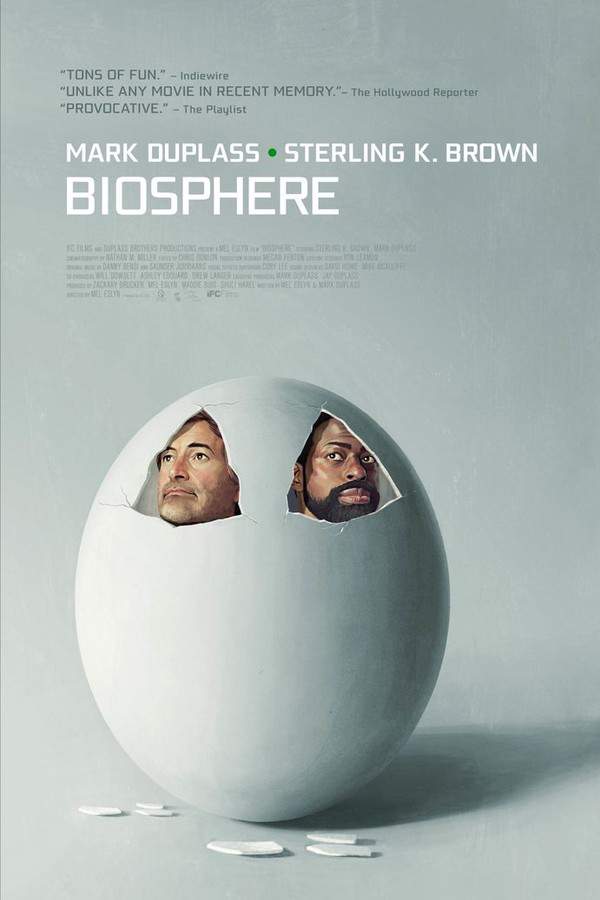
Biosphere (2023) movie poster

Plot Summary

Biosphere (2023) Plot Summary & Ending Explained

Release, runtime and language
2023 · 106 min · English
Echo score 47
JustWatch #3,837 25
Directed by
Mel Eslyn
Starring
Sterling K. Brown, Mark Duplass

In the aftermath of Earth's destruction, two individuals find themselves as the last people alive. They must adapt to a desolate and barren world, struggling to redefine their purpose and build a strong connection to ensure the continuation of humankind. Facing immense loneliness and the challenges of survival, they must discover if they can truly thrive in this new reality.

On this page (8)
  1. 1 Where to watch
  2. 2 What happens: full plot
  3. 3 Plot questions answered
  4. 4 How it ends
  5. 5 Movie threads
  6. 6 Movies like Biosphere
  7. 7 Categories
  8. 8 Every angle

Where to watch

Where to Watch Biosphere (2023)

Where can you watch Biosphere? Stream, rent or buy it in the US, including on ALLBLK Amazon channel , AMC+ and Philo: current JustWatch availability with up-to-date prices.

Streaming availability powered by JustWatch

Full plot summary · contains spoilers

What Happens in Biosphere: Full Plot Summary

The whole story of Biosphere (2023) explained, from the opening scene to the final frame: every key event, every twist and what it all adds up to. Read it as a quick recap before the sequel, to check a scene you missed, or to finally understand what really happened.

After a global apocalypse has decimated the human population, the only survivors are two childhood friends: Billy, the former President of the United States, and Ray, a scientist who was once Billy's adviser. Carrying the weight of guilt for his perceived role in causing the apocalypse, Billy and Ray find solace in a protective dome constructed by Ray that shields them from the harsh realities of the outside world. They maintain a modest fishpond, but unease sets in when the last surviving female fish dies, leaving them with only two male fish, one of which is showing signs of distress.

One night, while working late, Ray stumbles upon a fascinating discovery: the remaining fish appear to be undergoing sequential hermaphroditism, a process that allows them to change sex to continue breeding. To his astonishment, he notices a vivid green light shining outside the dome. The following morning, Ray shares his findings with Billy, only for Billy to realize that he too is undergoing sequential hermaphroditism, which means his body is gradually developing female characteristics.

This revelation leaves Billy feeling distraught about the changes overtaking his body, while Ray becomes increasingly fascinated by the phenomenon. However, their dynamic shifts as Ray finds himself uncomfortable when he touches Billy, particularly when physical intimacy leads to unexpected feelings of arousal. As the fish begin to breed, Billy confides in Ray that he has started menstruating and suggests that they consider having a child together. Struggling with deep-seated homophobic beliefs instilled in him during his upbringing, Ray hesitates and pulls away from Billy, causing tension between the two.

Despite the emotional upheaval, their bond begins to strengthen when they decide to pursue intimacy with the aim of procreation. Their initial attempt is shrouded in modesty, with a sheet covering Billy, yet as the moment unfolds, Ray's reservations dissolve, and they share a kiss. Soon after, Billy finds out he is pregnant, and this development brings them closer together.

Their newfound intimacy faces a significant challenge when a fierce storm hits, shattering the dome's windows and forcing them to dismantle the fishpond in a desperate attempt to seal the breaches. The subsequent morning brings a surprising sense of awe as they witness the aurora borealis lighting up the sky, a sign that the weather may be shifting. However, the reality of their dwindling food supply compounds Ray's distress as the death of their fish takes its toll. In a moment of encouragement, Billy recalls a story from Ray's eighth birthday, urging Ray to cling to hope amidst their uncertain future.
Last updated: November 07, 2024 at 23:44

Was this helpful?

Plot questions answered

Biosphere Plot Explained: Your Questions Answered

The questions people ask most about Biosphere (2023): what happens in the confusing scenes, why the characters do what they do, the twists, hidden details and what the ending means. Each answer contains spoilers.

Q1

Why is Billy's body changing?

Billy discovers he is undergoing sequential hermaphroditism, the same biological phenomenon affecting the fish in their pond. This means his body is gradually developing female characteristics. The transformation is a result of the post-apocalyptic environment, which appears to be triggering this evolutionary change in both the fish and potentially humans as a survival mechanism.

Foreshadowing: The fish were the first to show signs of the transformation when Ray noticed them changing sex to continue breeding.

  • billy transformation
  • sequential hermaphroditism
  • biological change
  • evolution
Q2

Why does Ray pull away when Billy suggests having a child?

Ray hesitates and withdraws emotionally because he is struggling with deep-seated homophobic beliefs that were instilled in him during his upbringing. Despite his growing feelings for Billy, his internalized beliefs create intense internal conflict, causing him to pull away even as Billy proposes they try to procreate together.

Foreshadowing: Ray's discomfort becomes apparent earlier when he feels uncomfortable touching Billy and experiences unexpected arousal, revealing his internal struggle.

  • ray conflict
  • homophobia
  • upbringing
  • emotional struggle
  • parenthood
Q3

Why do the fish change sex?

The fish are undergoing sequential hermaphroditism, a natural biological process where some species can change sex to ensure breeding can continue when population dynamics demand it. Since the last female fish died, leaving only males, the fish are adapting by transitioning to female to preserve the species, a survival mechanism that gives Ray and Billy hope for continuing humanity.

Foreshadowing: The tension in the fishpond begins when they realize the last female has died, putting their breeding efforts in jeopardy.

  • fish hermaphroditism
  • breeding
  • survival
  • population
Q4

Why does Billy suggest having a child with Ray?

After Billy starts menstruating and realizes his body is now capable of pregnancy, he sees it as a potential purpose for their survival, continuing the human race. Given that they are the last two people alive, Billy views creating new life as their responsibility and a way to give meaning to their existence in the post-apocalyptic world.

Foreshadowing: Billy's transformation becomes apparent after he learns about the fish's ability to change sex, and he connects his own bodily changes to this phenomenon.

  • billy pregnancy
  • parenthood
  • humanity continuation
  • purpose
Q5

What happens when the storm hits the dome?

A fierce storm strikes the dome and shatters several windows, creating life-threatening breaches in their only shelter. Billy and Ray must frantically dismantle the fishpond to use the materials to seal the broken windows and protect themselves from the harsh outside environment. This crisis forces them to work together desperately and sacrifice the fish they had been depending on.

Foreshadowing: Earlier tension about dwindling food supplies and the dome's fragility sets up this moment of crisis.

  • storm damage
  • dome breach
  • survival crisis
  • windows broken
Q6

What is the significance of the aurora borealis at the end?

The aurora borealis appearing in the sky represents a shift in their circumstances, it suggests the atmospheric and environmental conditions are changing after the apocalypse. While it brings a moment of awe and hope, it also coincides with the reality that their food supply is dwindling, leaving their ultimate fate ambiguous despite this beautiful natural display.

Foreshadowing: The storm itself marks a turning point in weather patterns, leading to this dramatic shift in the sky.

  • aurora borealis
  • hope
  • environmental change
  • ambiguous ending
Q7

Why do Billy and Ray decide to pursue intimacy?

After Billy reveals his pregnancy capability and suggests having a child, they choose to attempt procreation together. Despite Ray's initial hesitation due to his upbringing and Billy's own unease about his changing body, they decide to try. Their first attempt is awkward and covered by a sheet for modesty, but it ultimately leads to them sharing a kiss and reconciling their feelings.

Foreshadowing: The emotional tension building since Billy's transformation reaches a breaking point when they acknowledge their mutual feelings.

  • intimacy
  • procreation
  • relationship
  • billy ray connection
Q8

Why does Ray feel uncomfortable touching Billy after his transformation?

Ray finds himself uncomfortable with physical contact because Billy's changing body is triggering unexpected feelings of arousal in him. These new emotions confuse Ray, especially given his conservative upbringing, creating internal conflict about his identity and desires. His discomfort stems from grappling with feelings he has never experienced before.

Foreshadowing: This discomfort becomes evident during moments of physical proximity before they fully acknowledge their mutual attraction.

  • ray feelings
  • arousal
  • physical contact
  • identity confusion
Q9

What caused the apocalypse that destroyed Earth?

The specific cause of the global apocalypse is not detailed in the summary. Billy carries guilt for what he perceives as his role in causing it, suggesting his decisions as President may have contributed, but the exact nature of the catastrophic event remains unclear and ambiguous throughout the story.

Foreshadowing: Billy's guilt is introduced early, hinting at his responsibility without revealing specifics.

  • apocalypse
  • earth destruction
  • billy guilt
  • president
Q10

How do Billy and Ray survive in the dome?

Ray constructed a protective dome that shields them from the harsh, post-apocalyptic environment outside. They maintain a fishpond to provide food and attempt to sustain life. The dome serves as their sanctuary, but they face constant challenges including dwindling resources, the breaking dome windows during the storm, and the psychological toll of isolation as the last humans.

Foreshadowing: The dome is introduced as Ray's creation, establishing it as their only protection from the start.

  • dome survival
  • shelter
  • fishpond
  • resources

Ending explained

What Happens at the End of Biosphere?

How Biosphere (2023) ends, in short: the final scene, the last twist and what it means for the characters. The full ending explained, with every spoiler, lives on its own page.

Read the full ending explained

In the end, Biosphere reveals that even in the most surreal and seemingly hopeless circumstances, nature's resilience and the human capacity for transformation remain powerful forces. Despite the bleakness of their apocalyptic world, Billy and Ray’s relationship evolves into something deeply meaningful, rooted in love, trust, and hope. The strange phenomena they witness—the green light and Billy's unique pregnancy—serve as symbols of life's unpredictable ability to find a way, reinforcing that change and magic are intrinsic to existence. As Billy embraces the possibility of magic—symbolized by the bowling ball he conjures and the miracle of their unborn child—the dome’s chaos mirrors their internal shifts, from despair to renewed faith. Ultimately, the movie suggests that hope and transformation are not only possible but essential, illustrating that life can flourish even in the most unlikely and absurd conditions. The final thud of the bowling ball echoes as a metaphor for Billy’s newfound hope, signaling that belief in the impossible can lead to new beginnings and the rebirth of optimism in a shattered world. Their story ends on a note of unlikely optimism, demonstrating that even in darkness, life finds a way.

Biosphere ending explained in full

Movie threads

More Movies Like Biosphere, by Mood & Story

Curated lists built around what makes Biosphere tick: the same mood, the same kind of story or the same emotional payoff. Each list explains why these movies belong together.

Intimate Post-Apocalyptic Survival Movies like Biosphere

Stories of human connection and adaptation in a collapsed world. If you liked the intimate and philosophical survival story in Biosphere, explore these other movies. They focus on character-driven stories set after a collapse, where the struggle is as much about human connection and purpose as it is about physical survival, offering a similar thoughtful and bittersweet vibe.

  • post-apocalyptic
  • intimate
  • philosophical
  • melancholic
  • hopeful
  • claustrophobic
  • Tone: bittersweet, philosophical
  • Pacing: slow, character-driven
Why these movies?

The story pattern: These narratives typically begin after a cataclysm and follow a small cast, often a pair or a tiny group, as they navigate a barren new reality. The central conflict is internal and relational—dealing with loneliness, redefining purpose, and deciding what is worth preserving or rebuilding in a world that has ended.

Why they belong together: Movies are grouped here for their shared focus on the human scale of apocalypse. They share a slow, contemplative pace, a bittersweet tone balancing loss with hope, and a central theme of how relationships and identity evolve under extreme isolation and pressure.

Absurdist Sci-Fi with Heart Movies like Biosphere

High-concept sci-fi stories that explore big ideas with warmth and humor. Fans of Biosphere who enjoyed its blend of a high-concept sci-fi premise with tender character drama will find similar movies here. These films use imaginative settings and scenarios—like being the last people on Earth—to tell surprisingly intimate and heartfelt stories about connection.

  • absurdist
  • philosophical
  • hopeful
  • melancholic
  • quirky
  • intimate
  • Tone: bittersweet, absurdist, hopeful
  • Pacing: slow, conversational
Why these movies?

The story pattern: Stories in this thread often start with an unconventional or seemingly bleak scenario. The plot unfolds not through traditional action, but through dialogue and character development, as the protagonists find humor, hope, and profound meaning within their bizarre circumstances, leading to an emotionally resonant, if sometimes ambiguous, conclusion.

Why they belong together: These films are united by their unique blend of genre: they are sci-fi that feels personal, dramas that aren't afraid of the absurd. They share a moderate complexity, a mix of melancholy and hope in their tone, and a core that is ultimately about the resilience of the human spirit.

If you liked this

Movies Like Biosphere

Similar movies to Biosphere: the same genre, themes or kind of story. Each one comes with its own plot summary, timeline and ending explained.

Browse all movie summaries

Categories

Movie Lists Featuring Biosphere

Biosphere appears in these hand-built movie categories. Each one groups movies by a specific mood, theme or story type, with their plot summaries and endings explained.

View all movie categories

Every angle

Biosphere (2023) Explained: Plot, Ending, Timeline & Characters

Everything about Biosphere in one place: what happens in the plot summary, the timeline in chronological order, the characters and meaning, the ending explained and a spoiler-free summary. What's After the Movie adds the cast, box office and post-credit scenes.

Coming soon on iOS and Android

The Plot Explained Movie Summary App

Plot summaries, endings explained and timelines on your phone. Catch up on any movie in minutes, save your favorites and never miss a twist again.

Be the first to know when we launch. Your email stays private, always.

Learn more about the app