Plot Explained Spoilers guaranteed!
Plot Explained

Browse by genre

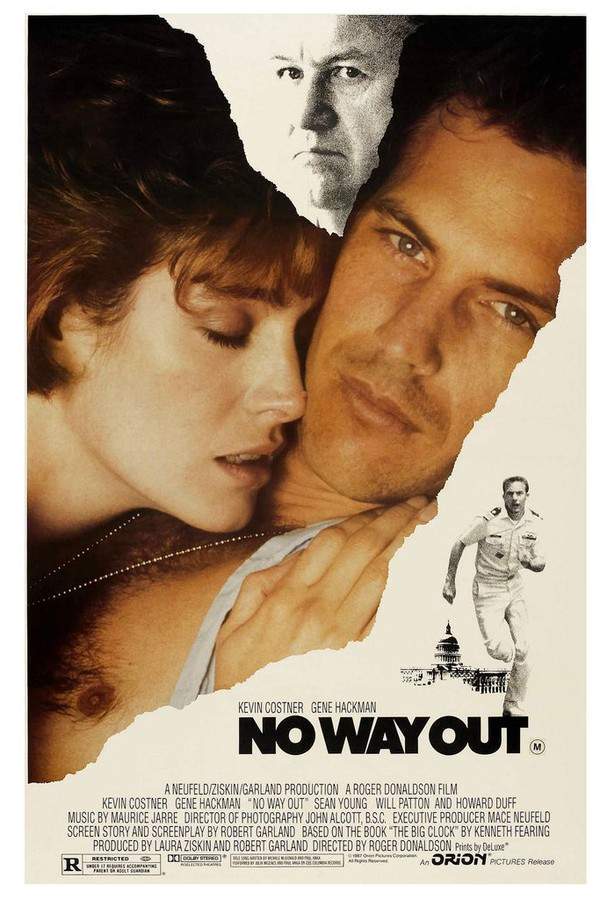
No Way Out (1950) movie poster

Spoiler-Free Summary

No Way Out (1950) Spoiler-Free Summary – What It's About

Release, runtime and language
1950 · 106 mins · English
Directed by
Joseph L. Mankiewicz
Starring
Sidney Poitier, Jack Kruschen, Charles Ferguson, Eleanor Audley, Harry Bellaver, Ian Wolfe

A pair of street‑wise brothers are rushed to a city hospital after sustaining gunshot injuries. When one brother succumbs to his wounds, the surviving sibling confronts the African‑American physician who treated them, accusing him of causing his brother’s death and igniting a tense showdown that blurs the line between victim and perpetrator.

On this page (7)
  1. 1 Where to watch
  2. 2 What it is about
  3. 3 Is it worth watching?
  4. 4 After you watch
  5. 5 Movie threads
  6. 6 Movies like No Way Out
  7. 7 Every angle

Where to watch

Where to Watch No Way Out (1950)

Where can you watch No Way Out? Stream, rent or buy it in the US, including on Amazon Video, Apple TV Store and Fandango At Home: current JustWatch availability with up-to-date prices.

Streaming availability powered by JustWatch

Spoiler-free summary · safe to read

What Is No Way Out About? (No Spoilers)

The plot of No Way Out (1950) without spoilers: what it is about, who it follows and where it takes place, told without the twists or the ending. Enough to decide whether it is your next watch, not enough to ruin it.

In the gritty heart of a bustling city, the county hospital stands as a micro‑cosm of the community it serves—a place where hope and desperation collide in crowded corridors and stark emergency rooms. The institution has recently made a historic step: Luther Brooks, the first African‑American physician on staff, battles the weight of expectation while learning the hard edges of a demanding ward under the watchful eye of chief resident Dan Wharton. Their partnership, marked by cautious mentorship and an undercurrent of doubt, sets the tone for a drama that feels both intimate and socially charged.

The fragile peace shatters when two street‑wise brothers are rushed in after a violent encounter. Johnny Biddle arrives disoriented, his brother Ray Biddle bristling with hostility and prejudice, turning the sterile environment into a volatile arena. As Luther attempts to stabilize the pair, he is forced to confront not only the urgency of their injuries but also the lingering racial tensions that pulse through the hallways. The surgeon’s confidence wavers, and the scene crackles with the uneasy mix of professional duty and personal scrutiny.

When tragedy strikes and one of the brothers does not survive, the surviving sibling’s grief erupts into accusation. Ray’s fury is directed squarely at Luther, blaming the doctor for the loss and demanding answers in a city already simmering with distrust. The confrontation escalates, pulling in other figures such as the hesitant Edie Johnson, whose ties to the family add layers of complexity to an already charged encounter. The hospital’s bureaucracy, eager to protect its reputation, looms in the background, hinting at larger forces that may shape the outcome.

Amidst the clamor of sirens, hurried footsteps, and whispered judgments, the film dwells on a tense atmosphere where personal ambition, racial identity, and the desperate search for truth intersect. The stage is set for a confrontation that will test loyalties, challenge assumptions, and expose the fragile line between victim and perpetrator, all within the stark, unforgiving light of a city’s emergency ward.

Last updated: December 05, 2025 at 09:43

Was this helpful?

What to expect

Is No Way Out Worth Watching? What It Feels Like

Is it dark, sad, slow, intense or confusing? The mood of No Way Out (1950) in a few tags, without a word about how it ends. Each tag opens a list of movies that feel the same.

After you watch

Seen No Way Out? Now Read the Spoilers

Once you have watched No Way Out (1950), come back for the full story: the plot summary with spoilers, the timeline in chronological order, the characters and meaning.

Movie threads

More Movies Like No Way Out, by Mood & Story

Curated lists built around what makes No Way Out tick: the same mood, the same kind of story or the same emotional payoff. Each list explains why these movies belong together.

Pressure cooker dramas like No Way Out

Where confined settings become volatile arenas for explosive social conflict. If you liked the intense, single-location conflict in No Way Out, you'll find similar tension in these movies. This list features films where a confined setting like a hospital or a courthouse becomes a volatile microcosm for explosive social drama, prejudice, and life-or-death accusations.

  • claustrophobic
  • urgent
  • hostile
  • tense
  • oppressive
  • anxious
  • Tone: tense, hostile, urgent
  • Pacing: steady, escalating
Why these movies?

The story pattern: Movies in this thread typically unfold in a restricted environment that traps characters with a mounting crisis. The narrative structure builds tension methodically as external pressures—be they racial prejudice, legal threats, or mob mentality—force a climactic confrontation within the walls of the containment zone.

Why they belong together: These films are grouped together because they share a core dynamic of a confined, high-pressure setting that intensifies social and personal conflicts. The shared mood is one of claustrophobic urgency, where escape is impossible and the only resolution is a direct, often violent, confrontation.


Movies with bittersweet justice like No Way Out

Stories where surviving systemic hatred is a victory, but the cost is immense. For viewers who appreciated the complex, bittersweet ending of No Way Out, this list collects films where a protagonist achieves a moral victory against racism or systemic injustice, but at a great personal cost and amidst enduring societal hostility. These are heavy, impactful stories.

  • dramatic
  • heavy
  • bitter
  • tense
  • oppressive
  • angry
  • Tone: tense, dramatic, bittersweet
  • Pacing: steady, methodical
Why these movies?

The story pattern: The narrative pattern involves an individual, often an outsider, confronting a powerful, prejudiced system. The central conflict is psychological and societal, leading to a climax where the protagonist survives or proves their innocence, but the ending is tinged with bitterness as the larger problem of hatred remains largely unchanged.

Why they belong together: These movies are united by their exploration of moral victories that feel incomplete. They share a heavy emotional weight, a tense and dramatic tone, and a focus on the psychological cost of battling injustice, resulting in a powerfully bittersweet viewing experience.

If you liked this

Movies Like No Way Out

Similar movies to No Way Out: the same genre, themes or kind of story. Each one comes with its own plot summary, timeline and ending explained.

Browse all movie summaries

Every angle

No Way Out (1950) Explained: Plot, Timeline & Characters

Everything about No Way Out in one place: what happens in the plot summary, the timeline in chronological order, the characters and meaning and a spoiler-free summary. What's After the Movie adds the cast, box office and post-credit scenes.

Coming soon on iOS and Android

The Plot Explained Movie Summary App

Plot summaries, endings explained and timelines on your phone. Catch up on any movie in minutes, save your favorites and never miss a twist again.

Be the first to know when we launch. Your email stays private, always.

Learn more about the app