Plot Explained Spoilers guaranteed!
Plot Explained

Browse by genre

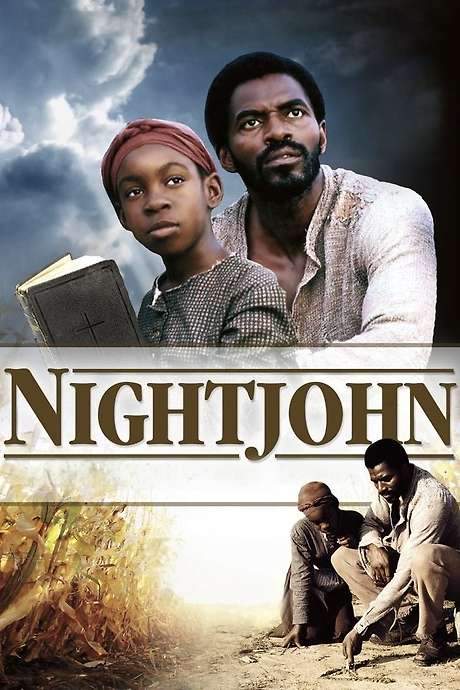
Nightjohn (1996) movie poster

Characters & Themes

Nightjohn (1996) Characters, Setting & Themes Explained

Release, runtime and language
1996 · 92 mins · English
Loading streaming availability…
Directed by
Charles Burnett
Starring
Carl Lumbly, Beau Bridges, Lorraine Toussaint, Bill Cobbs, Tom Nowicki, Gabriel Casseus

John, a gifted but enslaved man, possesses a forbidden talent—he can read. Defying the plantation's rules, he secretly teaches a young slave girl, Sarny, how to read and write. Through her newfound literacy, Sarny discovers the transformative power of language and a deeper sense of freedom.

On this page (9)
  1. 1 Where to watch
  2. 2 Characters explained (11)
  3. 3 Where & when it takes place
  4. 4 Themes & meaning (3)
  5. 5 Character & meaning questions
  6. 6 The book behind the movie
  7. 7 Movie threads
  8. 8 Movies like Nightjohn
  9. 9 Every angle
Loading streaming availability…

11 main characters · contains spoilers

Nightjohn Characters Explained: Who Is Who

The main characters of Nightjohn (1996), heroes and villains: what drives them, how they change over the course of the story and what each of them reveals about the film's bigger ideas.

  • Nightjohn (Carl Lumbly)

    A literate enslaved man who survived and learned to read despite brutal punishment. He uses teaching as a dangerous act of resistance, passing the alphabet and basic literacy to Sarny. His scars reveal the price of disobedience, and his relationship with Sarny frames the story’s central argument: words can free the mind.

    • 📚 Literacy
    • 🗝️ Freedom
    • 🔥 Defiance
  • Sarny (Allison Jones)

    A young enslaved girl who becomes a determined learner and the narrator of the tale. She moves from the cabins toward the master's house, driven by a hunger to read and understand the world beyond her limits. Her courage and persistence drive the plot and inspire others to seek knowledge and autonomy.

    • 📖 Learner
    • 🧭 Courage
    • 🧩 Growth
  • Clel Waller (Beau Bridges)

    The plantation master who values wealth and control above all else. He enforces discipline, guards his family’s status, and profits from the labor of enslaved people. His relentless focus on money and status drives much of the cruelty and moral corrosion in the story.

    • 💼 Wealth
    • 🏛️ Power
    • ⛓️ Oppression
  • Delie (Lorraine Toussaint)

    An elder slave who caretakes the younger slaves and attempts to shield them from danger. She guards the lines around literacy for safety, yet she ultimately bears responsibility when trouble arises. Her complicity and strength reveal the complexities of loyalty within the plantation system.

    • 🤍 Care
    • 🛡️ Protection
    • ⚠️ Sacrifice
  • Callie Waller (Kathleen York)

    Clel’s wife, who carries a tension between love and loyalty to wealth and status. She engages with the doctor and questions the fairness of the plantation world, offering moments of human longing amid the cruelty. Her stance highlights the personal conflicts that arise within slaveholding households.

    • ❤️ Love
    • 💰 Wealth
    • 🕊️ Conflict
  • Dr. Chamberlain (Tom Nowicki)

    The plantation doctor who becomes entangled in romance with Callie and serves as a conduit for information and secrets. He plays a role in the exchange of letters and the manipulation surrounding Egypt’s situation. His presence adds nuance to the plantation’s social web.

    • 🧪 Knowledge
    • 🕊️ Romance
    • 🗺️ Secrets
  • Outlaw (Gabriel Casseus)

    A enslaved man who seeks to marry Egypt and escape the plantation’s bounds. He faces risks and punishment, but his determination is sustained by the help of others who believe in a life beyond slavery. His plight threads through the plan to secure a future for himself and Egypt.

    • 🏃‍♂️ Escape
    • 🔒 Risk
    • 🕊️ Hope
  • Egypt (Monica Ford)

    A pregnant enslaved woman owned by Clel’s brother, whose fate becomes entwined with Outlaw’s escape plan. Her pregnancy raises the stakes of resistance and underscores the human cost of the plantation system. She represents the vulnerable who still fight for chance at a different life.

    • 🤰 Pregnancy
    • 🕊️ Hope
    • 🗺️ Escape
  • Old Man (Bill Cobbs)

    An older slave whose presence underscores the plantation’s long memory of cruelty. His experiences and cautions reflect the generational impact of slavery and the shared knowledge among the enslaved community. He embodies resilience within a harsh system.

    • 🪶 Wisdom
    • ⏳ Age
    • ⚖️ Justice
  • Joseph (Gerald Brown)

    A slave on the Waller plantation who participates in communal life and shares in the daily toil and social dynamics of the enslaved community. His presence helps illustrate the broad spectrum of enslaved experience and solidarity among workers.

    • 🪵 Labor
    • 🧭 Community
  • Lethe (Deborah Duke)

    A slave whose presence adds depth to the enslaved community and its interwoven stories. Lethe’s role hints at the layered histories and memories that linger beneath plantation life. She stands as part of the collective memory that sustains the group.

    • 🕰️ Memory
    • 🧱 Legacy

Last updated: October 04, 2025 at 16:35

Was this helpful?

Setting

Where and When Does Nightjohn Take Place?

The setting of Nightjohn (1996): the year and time period, the places and locations, and how they shape the characters, the mood and the tension of the story.

Time period

Antebellum South, 19th century

The story unfolds in the pre-Civil War era when slavery was legally sanctioned and plantation life dictated daily existence. Enslaved people endure brutal discipline and a rigid hierarchy that defines their world. Literacy and religion become charged, dangerous tools for both subjugation and subtle resistance.

Location

Clel Waller's plantation (Big House and slave cabins), doctor's house, church

The primary setting is a Southern cotton plantation where enslaved people live in cabins and labor in the fields, with the Big House as the center of power. The doctor’s house and the church provide interludes that reveal social networks beyond the fields. These locations anchor the drama around control, community, and the constant threat of punishment.

  • 🏡 Plantation
  • ⛓️ Slavery
  • 🌾 Rural South

Last updated: October 04, 2025 at 16:35

Was this helpful?

3 major themes

Nightjohn Meaning: Themes & Message Explained

What is Nightjohn (1996) really about? The emotional, social and philosophical themes the film keeps returning to, its symbolism and the message beneath the surface.

  • Literacy as Freedom

    Literacy is portrayed as a pathway to personal agency and collective empowerment. Nightjohn's decision to teach Sarny the alphabet becomes a risky act of defiance against the enslavers' control. Writing, whether on dirt or with ink, emerges as a means to remember, communicate, and imagine a future beyond enslavement. The film positions words as a form of power that can loosen the grip of oppression.

  • Oppression and Control

    Slavery's cruelty pervades every aspect of life: punishment, surveillance, and the stripping of identity. Wealth and lineage are used to maintain a brutal social order, while family bonds are exploited to enforce obedience. The masters' public facades conceal a system designed to extract labor and wealth from the enslaved. The story exposes how control is exercised through fear and economic power.

  • Resistance and Hope

    Small acts of defiance accumulate into a larger movement toward freedom. Sarny, Nightjohn, and their peers forge letters, share knowledge, and plan escapes to challenge the system. The narrative emphasizes resilience, solidarity, and the belief that literacy and community can undermine oppression. Even in dire circumstances, hope persists through collective courage and remembered stories.

Last updated: October 04, 2025 at 16:35

Was this helpful?

Character & theme questions

Nightjohn Characters & Meaning: Your Questions Answered

The questions people ask about Nightjohn (1996): who the characters really are, their relationships, what the symbols mean, where it takes place and what the movie is really about. Each answer contains spoilers.

Q1

Where is Nightjohn set?

The story takes place on Clel Waller's Southern cotton plantation, where enslaved people live in cabins and labor in the fields. The Big House serves as the center of power, while additional locations like the doctor's house and church reveal social networks beyond the fields.

  • plantation setting
  • southern estate
  • slave cabins
  • big house
Q2

What time period is Nightjohn set in?

Nightjohn is set in the antebellum South during the 19th century, before the Civil War. This was a period when slavery was legally sanctioned and plantation life dictated daily existence for enslaved people.

  • antebellum
  • 19th century
  • pre-civil war
  • slavery era
Q3

What is the central theme of Nightjohn?

The film's central theme is literacy as freedom. It portrays how learning to read and write provides enslaved people with personal agency and a means to imagine a future beyond oppression. The story argues that words can free the mind even when the body remains enslaved.

  • literacy
  • freedom
  • education
  • reading
  • writing
  • empowerment
Q4

Who is Nightjohn in Nightjohn?

Nightjohn is a literate enslaved man on the Waller plantation who can read despite the prohibition against teaching enslaved people. He teaches Sarny the alphabet as an act of resistance, bearing visible scars from previous punishment for his knowledge.

  • nightjohn character
  • Literate enslaved man
  • teacher
Q5

Who is Sarny in Nightjohn?

Sarny is a young enslaved girl who becomes the film's narrator and protagonist. Driven by a hunger to read and understand the world beyond her limits, she learns from Nightjohn and ultimately inspires others in the community to seek knowledge and autonomy.

  • sarny character
  • young slave
  • narrator
  • protagonist
Q6

How does Nightjohn depict oppression and control?

The film depicts oppression through constant threat of punishment, surveillance, and the stripping of identity. Masters maintain control through fear and economic power, using wealth and lineage to enforce a brutal social order. Family bonds are exploited to ensure obedience.

  • slavery
  • oppression
  • control
  • power
  • punishment
  • master
Q7

Who is Clel Waller in Nightjohn?

Clel Waller is the plantation master who values wealth and control above all else. He enforces strict discipline to maintain his family's status and profits from the labor of enslaved people. His relentless focus on money drives much of the cruelty in the story.

  • clel waller
  • plantation master
  • slaveowner
  • owner
Q8

What forms of resistance appear in Nightjohn?

The film shows resistance through small acts of defiance: teaching and learning letters, sharing knowledge secretly, and planning escapes. These individual acts accumulate into a larger movement, emphasizing resilience, solidarity, and the belief that literacy can undermine oppression.

  • resistance
  • defiance
  • escape
  • rebellion
  • solidarity
  • hopel
Q9

What role does Delie play in Nightjohn?

Delie is an elder slave who caretakes the younger enslaved people and attempts to shield them from danger. While she guards the boundaries around literacy for safety, she ultimately bears responsibility when trouble arises, revealing the complexities of loyalty within the plantation system.

  • delie character
  • elder slave
  • caretaker
  • guardian
Q10

What is the message of Nightjohn's ending?

The ending is bittersweet: Sarny is sold away, but she carries with her the transformative knowledge of literacy. The film suggests that while physical freedom may be lost, the mental freedom gained through education represents a lasting victory that cannot be taken away.

  • ending
  • message
  • legacy
  • knowledge
  • bittersweet
  • symbolism
Q11

How does the plantation setting shape the story?

The plantation setting anchors the drama around themes of control, community, and constant threat. The contrast between the Big House and slave cabins illustrates the rigid hierarchy, while locations like the church and doctor's house reveal social networks that exist beyond the master's direct view.

  • plantation
  • hierarchy
  • cabins
  • big house
  • community
  • control

Movie threads

More Movies Like Nightjohn, by Mood & Story

Curated lists built around what makes Nightjohn tick: the same mood, the same kind of story or the same emotional payoff. Each list explains why these movies belong together.

Movies about forbidden education and resistance like Nightjohn

Stories where learning is an act of rebellion against crushing authority. Discover more movies like Nightjohn, where characters defy oppressive systems through the pursuit of forbidden knowledge. If you liked the theme of literacy as freedom, you'll find similar stories of courageous education and intellectual rebellion in these compelling dramas.

  • defiant
  • oppressive
  • hopeful
  • tense
  • sobering
  • resilient
  • Tone: dark, tense, hopeful
  • Pacing: steady, methodical
Why these movies?

The story pattern: Stories in this thread typically follow a protagonist who discovers the power of forbidden knowledge, guided by a mentor figure. The narrative builds steadily as the characters engage in secret acts of learning, facing escalating risks and consequences, culminating in a victory of the spirit even if the physical circumstances remain dire.

Why they belong together: Movies are grouped here for their shared focus on education as a central, high-stakes act of resistance. They share a tone that balances the darkness of oppression with the hopeful spark of enlightenment, creating a cohesive, tension-filled viewing experience centered on the transformative power of knowledge.

Movies with bittersweet spiritual victories like Nightjohn

Journeys where hope endures even when the battle is not fully won. If you appreciated the bittersweet ending of Nightjohn, where hope persists despite loss, explore these films with similar emotional arcs. Find movies like Nightjohn that balance heavy themes with resilient hope, focusing on moral or spiritual triumphs over physical circumstances.

  • bittersweet
  • resilient
  • melancholic
  • hopeful
  • sobering
  • defiant
  • Tone: bittersweet, dark, hopeful
  • Pacing: steady, character-driven
Why these movies?

The story pattern: The narrative pattern involves protagonists enduring great hardship, often within an unjust world. Their primary arc is internal, achieving a form of freedom or victory that is philosophical or symbolic rather than a complete change in their external situation. The endings are emotionally complex, acknowledging loss while celebrating an enduring, transformative inner strength.

Why they belong together: These films are united by their complex emotional core and specific ending feel. They successfully blend heavy, often dark subject matter with a resilient, hopeful spirit, resulting in a powerful and bittersweet viewing experience that prioritizes moral and spiritual wins over conventional happy endings.

If you liked this

Movies Like Nightjohn

Similar movies to Nightjohn: the same genre, themes or kind of story. Each one comes with its own plot summary, timeline and ending explained.

Browse all movie summaries

Every angle

Nightjohn (1996) Explained: Plot, Timeline & Characters

Everything about Nightjohn in one place: what happens in the plot summary, the timeline in chronological order, the characters and meaning and a spoiler-free summary. What's After the Movie adds the cast, box office and post-credit scenes.

Coming soon on iOS and Android

The Plot Explained Movie Summary App

Plot summaries, endings explained and timelines on your phone. Catch up on any movie in minutes, save your favorites and never miss a twist again.

Be the first to know when we launch. Your email stays private, always.

Learn more about the app