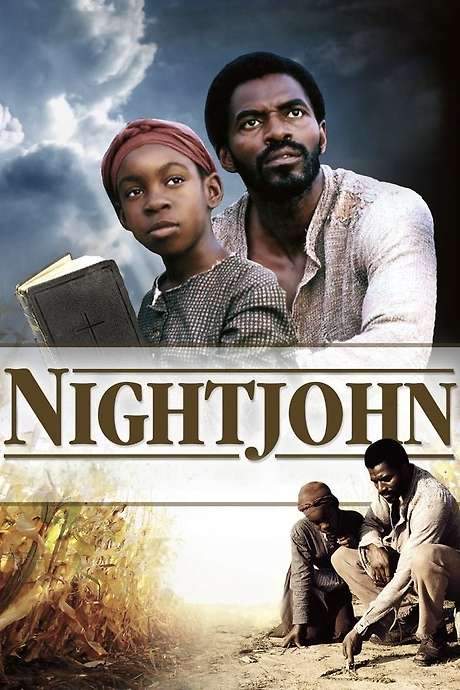
In a powerful drama set on a Southern plantation, Sarny is born in a slave cabin under the stern eye of her master, Clel Waller. He mutters that a boy would be worth more, but a promise keeps Sarny from immediate sale, while her mother is sold a few years later. Sarny is cared for by a devoted slave named Delie, who keeps a quiet watch over the girl as she grows.
As Sarny moves toward pre-teen years, she is sent to the Big House to help with Homer, the master’s young son who isn’t yet toilet-trained. Back at the cabins, Outlaw strives to win the permission of Mr. Waller so he can marry Egypt, a slave on another plantation. Delie finds herself sewing a dress for Sarny so she can begin working inside the master’s home, a move that deepens the girl’s exposure to the household’s complicated rules and temptations.
After a Sunday church service attended by both slaves and masters, the Wallers host a midday gathering that includes a doctor who will later form a romance with Callie, Clel’s wife. At the luncheon, Callie questions why money seems to drive much of their world—why a baby’s birth could shift wealth from one plantation to another. Clel’s sharp reply makes it clear that love isn’t the only factor in their decisions, and Callie wonders why things can’t be about love alone. The tension spills over when Sarny, in a moment of accident, drops a plate of food and is punished; Clel forces Callie to slap her. That night, Delie warns Sarny to mind her steps, or she’ll face hard labor in the fields. Sarny leaves the encounter vowing that she will find a way to resist.
The next day, Callie asks Sarny to carry a letter to the doctor’s place, and on the way she observes the slave trader Tom moving chains of people toward the Waller household. At the doctor’s home, the doctor asks Sarny to deliver a secret love letter to Callie, paying her a penny for the trouble. Back at the plantation, Tom tries to sell a slave to Clel for five hundred dollars, but Clel insists on a different bargain—he would buy John, a slave with a brutal scarred back, for fifty dollars rather than pay more and leave him unclothed. That night, John and Sarny strike a deal to trade tobacco for lessons in reading, and Sarny learns the letter “A” as she reads between the lines in the doctor’s correspondence with Callie.
The following morning, Outlaw is punished for slipping out to see Egypt. When Clel is about to whip him, Jeffrey, Clel’s son, pleads for mercy, but Clel reminds him that slaves are not friends and that the family’s wealth must be protected. Sarny narrates that Clel’s vigilance is focused on appearances, not the true danger in his world: the mistress, his wife. During a party that evening, Delie discovers John teaching Sarny the alphabet and grows furious, asking about the scars on John’s back. He explains they came from two escape attempts, the third succeeding only in his forced return to teach reading. Delie forbids further instruction for Sarny, citing safety, but John warns that Delie is teaching something worse—fear.
With a growing sense of agency, Sarny devises a plan: Callie will visit the Doctor in secret, and Sarny will care for Homer while she steals his alphabet blocks. John proclaims that words are freedom—the white folks keep them to themselves, and if the slaves had the right words, they might be free. He even writes Sarny’s name in the dirt to show that letters carry power. The two of them share quiet moments of learning, and Delie softens enough to begin studying with Sarny, while still aware of the dangers.
As a season of hard work unfolds, Clel gathers the family to harvest cotton, promising a feast if they succeed. Sarny reads the Bible and is baptized, and she discovers that she had secretly taken a Bible that Jeffrey was supposed to guard. The revelation shakes the plantation’s fragile lies, but many slaves resist the shift toward literacy. Sarny also reads a Gazette article about a slave rebellion, Nat Turner’s uprising, which further stirs the slave population to dream about collective resistance. She even sneaks back to Clel’s record book to learn more, and the feast becomes a cover for Outlaw and Egypt’s marriage.
Egypt is found to be pregnant, and Outlaw and Egypt must flee. John forges Clel’s signature to help them escape, and Jeffrey discovers the stolen Bible, with Delie taking the blame at first. Clel suspects who was involved, and when John confesses, Clel cuts off John’s fingers as punishment. Before they can finish him, John writes his name in the dirt and tells Sarny that she must forge a second note to carry their message. He whispers a grim lesson: “when you lose one hand, the other gets stronger,” urging Sarny to continue teaching others to read. Sarny forges the second note and instructs Outlaw and Egypt to name their baby John if it is a boy.
The next morning, the doctor tries to smooth over the crisis by claiming he taught Egypt to read basic things. Clel discovers two notes bearing his signature in two different hands, a sign that another slave can write and has weaponized that knowledge. Sarny insists that Clel would not shoot his own wealth, and she explains that literacy is the true threat—and the key to freedom. In the end, Sarny is sold, and she narrates that the story centers on her and Nightjohn, with a hint of John living in every enslaved person.
> when you lose one hand, the other gets stronger
Thus the tale remains a careful balance of cruelty and resilience, a living memory of those who fought to read, to dream, and to survive. Nightjohn, the man who helped her learn to read, remains a quiet, guiding presence in the background, embodying the idea that literacy can persist even under the harshest conditions.