Year: 1995
Runtime: 20 mins
Language: English
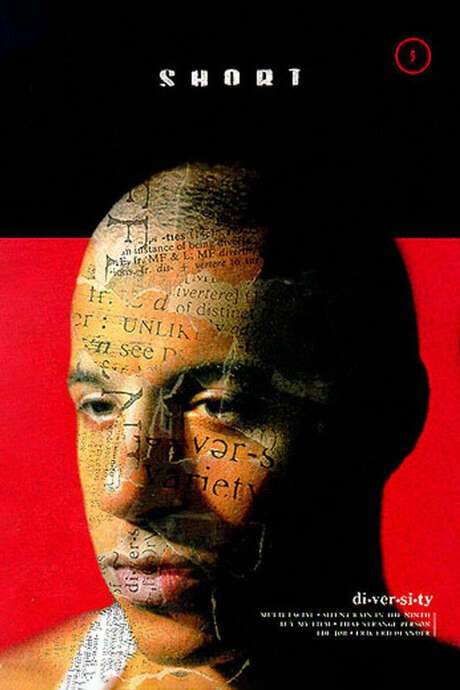
Not too light, Not too Dark Through a series of auditions, a young actor in New York City struggles with his identity.
Warning: spoilers below!
Haven’t seen Multi-Facial yet? This summary contains major spoilers. Bookmark the page, watch the movie, and come back for the full breakdown. If you're ready, scroll on and relive the story!
Trace every key event in Multi-Facial (1995) with our detailed, chronological timeline. Perfect for unpacking nonlinear stories, spotting hidden connections, and understanding how each scene builds toward the film’s climax. Whether you're revisiting or decoding for the first time, this timeline gives you the full picture.
Last updated: December 13, 2025 at 08:21
Find frequently asked questions about the Multi-Facial (1995) timeline, including chronological order, nonlinear jumps, cause-and-effect links, and scene sequence clarifications. This timeline FAQ helps explain when key events happen, how moments connect, and why the story unfolds in that specific order.
Mike fabricated the entire story about the fight and his girlfriend to make the audition monologue more impactful and authentic. After the audition, he calls his manager worried that the offensive content could ruin his chances, revealing he crafted the story for dramatic effect rather than drawing from personal experience.
The casting director responds positively because the monologue demonstrates Mike's ability to deliver bold, commitment-filled material with a distinct character voice. Despite its offensive nature, the raw authenticity and specificity of the performance shows Mike can fully inhabit a role, which is what casting directors seek.
The director explains that Mike's light skin makes him unsuitable for certain ethnic roles, specifically a Spanish role in a soap opera. This reflects Hollywood's rigid typecasting based on appearance, where actors must visually match specific racial categories to be considered for roles, limiting Mike's opportunities despite his talent.
Mike repeatedly states that great actors don't do soap operas, viewing them as beneath serious acting work. This reflects his determination to be seen as a legitimate actor rather than being typecast in what he considers lowbrow entertainment, even though this stance limits his career opportunities.
Earlier in the film, Mike dismisses a Black actor's success in an international commercial, insisting great actors don't do commercials.
The phrase, spoken by an actress ordering coffee, becomes a metaphor for Hollywood's rigid racial categorization. Mike recognizes the irony that just as coffee is judged by its shade, actors are judged by skin tone for roles. The film explores how Mike falls outside these narrow categories, being too light for some roles and too dark for others.
Mike's earlier rejection for being 'too light' for a Spanish role sets up this moment.
Mike can perform with a Cuban accent during the read but cannot actually speak Spanish. When the Hispanic actress switches to genuine Spanish, Mike freezes because his accent was a performance without actual language skills behind it, exposing his inability to truly inhabit the role beyond superficial imitation.
During the audition, Mike delivers a heartfelt monologue about watching his father perform in Raisin in the Sun, revealing that his father wanted him to become a great actor regardless of his skin color. This moment shows Mike's depth as an actor beyond surface performances and reveals his personal connection to Black theater and identity.
Mike removes the fake tattoo on his arm because he needs to present differently for his next audition. The tattoo was part of his Italian-American character for that specific role, but he must reinvent his appearance for each opportunity, demonstrating how actors must constantly transform themselves to fit various typecast expectations.
Mike carries quiet, controlled anger stemming from constant rejection based on his appearance rather than his talent. Each audition ends with some form of typecasting criticism, being too light, lacking dreadlocks, not fitting a specific type, building his frustration with an industry that judges him by race rather than ability.
The film critiques Hollywood's practice of categorizing actors by specific racial appearances, limiting opportunities for those who don't fit neat boxes. Mike's experience shows the absurd constraints placed on actors of ambiguous racial heritage, where being neither 'too light' nor 'too dark' means being shut out from roles entirely.
Discover curated groups of movies connected by mood, themes, and story style. Browse collections built around emotion, atmosphere, and narrative focus to easily find films that match what you feel like watching right now.
Character-driven stories of lonely souls wrestling with identity in the big city.If you liked the quiet, introspective mood of Multi-Facial, explore more movies about characters grappling with identity and isolation in the city. These films share a similar steady pacing and melancholic tone, focusing on personal struggles within an urban environment.
These narratives often follow a 'day-in-the-life' structure, charting a character's journey through a series of encounters or events that challenge their sense of self. The conflict is usually internal, stemming from a disconnect between who they are and how the world perceives them, leading to a moment of bittersweet or ambiguous self-recognition.
These films are grouped together because they share a specific mood of urban melancholy and a thematic focus on internal identity struggles. They connect through their steady pacing, medium emotional intensity, and a visual and narrative emphasis on the individual's place within a larger, often impersonal, social system.
Stories where characters face systemic barriers and achieve a wry, resigned understanding.Find movies similar to Multi-Facial that explore themes of fighting against systemic typecasting and bias. These dramas often feature a steady build-up of frustration leading to an ambiguous ending, perfect for viewers who appreciated the film's cynical yet reflective look at show business and identity.
The narrative pattern involves a character repeatedly butting against an immutable system, with each attempt highlighting a different facet of the problem. This creates a rhythm of hope and rejection. The arc typically ends not with a resolution of the external conflict, but with an internal shift where the character gains a painful, clear-eyed view of their situation.
These movies are connected by their central theme of individuals grappling with impersonal systems and the specific emotional journey from hope to frustrated recognition. They share a similar tone blending cynicism and melancholy, a straightforward narrative structure that methodically builds its case, and endings that favor complex realism over simple closure.
Don't stop at just watching - explore Multi-Facial in full detail. From the complete plot summary and scene-by-scene timeline to character breakdowns, thematic analysis, and a deep dive into the ending - every page helps you truly understand what Multi-Facial is all about. Plus, discover what's next after the movie.
Read a complete plot summary of Multi-Facial, including all key story points, character arcs, and turning points. This in-depth recap is ideal for understanding the narrative structure or reviewing what happened in the movie.
Discover the characters, locations, and core themes that shape Multi-Facial. Get insights into symbolic elements, setting significance, and deeper narrative meaning - ideal for thematic analysis and movie breakdowns.
Discover movies like Multi-Facial that share similar genres, themes, and storytelling elements. Whether you’re drawn to the atmosphere, character arcs, or plot structure, these curated recommendations will help you explore more films you’ll love.
Multi-Facial (1995) Plot Summary & Movie Recap
Multi-Facial (1995) Scene-by-Scene Movie Timeline
Multi-Facial (1995) Spoiler-Free Summary & Key Flow
Movies Like Multi-Facial – Similar Titles You’ll Enjoy
3 Faces (2019) Story Summary & Characters
Shadows (1959) Full Movie Breakdown
The Sleeping Negro (2021) Story Summary & Characters
Faces (1968) Ending Explained & Film Insights
Happy Face (2018) Plot Summary & Ending Explained
Face 2 Face (2016) Detailed Story Recap
Masked (2019) Complete Plot Breakdown
A Different Image (1982) Ending Explained & Film Insights
Rich (1983) Plot Summary & Ending Explained
Faces (2020) Ending Explained & Film Insights
The Face (1966) Plot Summary & Ending Explained
Black Like Me (1964) Ending Explained & Film Insights
Face to Face (1969) Full Summary & Key Details
The Face of Another (1966) Film Overview & Timeline
Face Off 8: Embrace of Light (2025) Plot Summary & Ending Explained