Plot Explained Spoilers guaranteed!
Plot Explained

Browse by genre

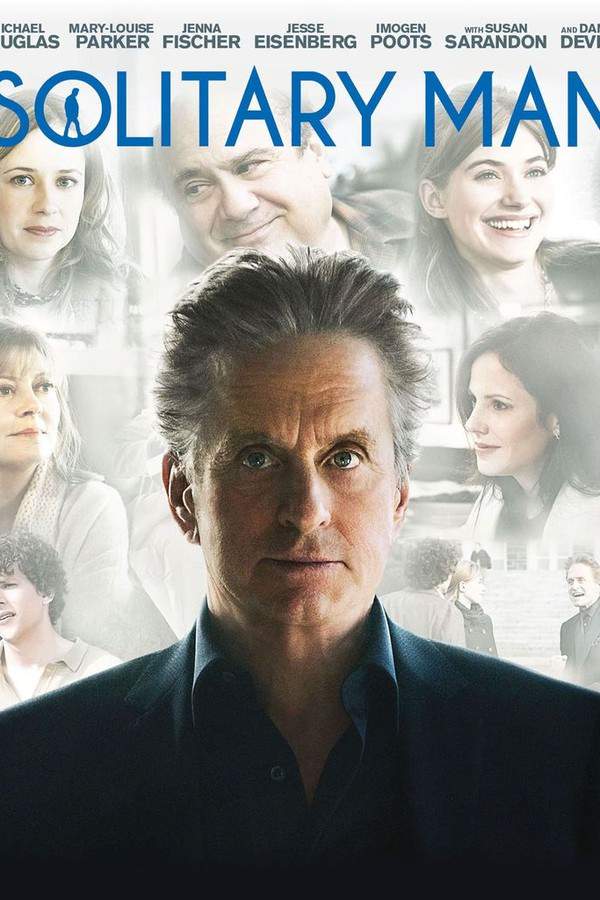
Solitary Man (2010) movie poster

Plot Summary

Solitary Man (2010) Plot Summary Explained

Release, runtime and language
2010 · 90 min · English
JustWatch #25,210 7
Directed by
Brian Koppelman, David Levien
Starring
Jesse Eisenberg, Michael Douglas, Susan Sarandon
Budget
$15M

Ben Kalmen is a successful car dealer whose life takes a dramatic turn, leading to a devastating downfall fueled by his own hubris and reckless decisions. Stripped of his lavish lifestyle, he's forced to adjust to a more modest existence and face the consequences of his past choices. While navigating this new reality, he unexpectedly takes Jordan’s daughter on a college tour in Boston, and the experience offers him a chance at redemption and a potential path towards rebuilding his life.

On this page (6)
  1. 1 Where to watch
  2. 2 What happens: full plot
  3. 3 Plot questions answered
  4. 4 Movie threads
  5. 5 Movies like Solitary Man
  6. 6 Every angle

Where to watch

Where to Watch Solitary Man (2010)

Where can you watch Solitary Man? Stream, rent or buy it in the US, including on Philo, Starz and Kanopy: current JustWatch availability with up-to-date prices.

Streaming availability powered by JustWatch

Full plot summary · contains spoilers

What Happens in Solitary Man: Full Plot Summary

The whole story of Solitary Man (2010) explained, from the opening scene to the final frame: every key event, every twist and what it all adds up to. Read it as a quick recap before the sequel, to check a scene you missed, or to finally understand what really happened.

The film begins with Ben Kalmen, portrayed by Michael Douglas, a 54-year-old car dealer who is not only attractive but also successful in the competitive landscape of New York. During his regular medical check-up, his doctor advises him to undergo a CAT scan due to an abnormality observed in his EKG, hinting at underlying heart concerns. Fast forward to six years later, and Ben's life has taken a significant downturn. He finds himself relying on medications and grappling with the consequences of neglecting his health. This denial of his mortality has spiraled him into a cycle of self-destruction that includes deceit, extramarital affairs, a divorce, and reckless business decisions that have nearly led him to prison.

Financially unstable, Ben is forced to borrow money from his daughter Susan, played by Jenna Fischer, while simultaneously refusing to come to terms with aging and his medical issues. His hedonistic lifestyle continues to flourish despite his failing heart. Adding to the complications, Ben is entangled in an affair with Nancy Kalmen, his estranged wife, a role brought to life by Susan Sarandon. Accompanying the daughter of his current girlfriend, Jordan Karsch, Ben makes his way to a college campus where he once thrived as an alumnus and benefactor.

While on campus, he crosses paths with a young and impressionable student, Daniel, played by Jesse Eisenberg, who is drawn to Ben's seemingly profound insights. In an unexpected twist, Ben becomes involved with Jordan's daughter, Allyson, portrayed by Imogen Poots. Despite their rendezvous, Allyson treats the encounter as a mere fling, one that fulfills her curiosity about older men before moving on. This leads to tensions with Jordan, who upon being informed, severs ties, impacting Ben's efforts to establish a new auto dealership.

As Ben faces eviction, he seeks employment at a diner owned by his college friend, Jimmy Marino, played by Danny DeVito. Encountering Allyson again makes the situation worse, leading Jordan to demand his immediate departure from the college town under threat of force from her ex-husband. After a disastrous attempt to flirt at a college party, Ben finds himself battered by an enforcer sent by Jordan's husband.

A turn of events finds Ben hospitalized after collapsing, prompting a reconciliation with his daughter, Susan. However, defying medical advice, he leaves the hospital early. In a moment of humility, Ben seeks out Daniel to apologize for his inappropriate behavior, and later attempts to reconnect with Nancy on a bench where their relationship once blossomed. In a candid conversation, he confesses that the anxiety surrounding aging and potential death has driven him to live recklessly and chase thrills. Although Nancy acknowledges his struggle, she does not excuse his actions, but still offers him a ride back to the city.

The film comes to a poignant close with Nancy waiting in the car for Ben's decision while a young woman passes by him in the opposite direction. He finds himself at a crossroads, contemplating between returning to Nancy or pursuing the fleeting moment with the young woman, ultimately leaving the audience wondering about his choice as he gazes into the camera.
Last updated: May 13, 2025 at 20:30

Was this helpful?

Plot questions answered

Solitary Man Plot Explained: Your Questions Answered

The questions people ask most about Solitary Man (2010): what happens in the confusing scenes, why the characters do what they do, the twists, hidden details and what the ending means. Each answer contains spoilers.

Q1

Why does Ben ignore his doctor's advice about his heart health?

Ben ignores his heart condition because he refuses to confront his mortality. Throughout the film, he uses denial and reckless behavior, affairs, lying, and risky business deals, as a way to avoid thinking about aging and death. His doctor first flagged an EKG abnormality at age 54, but six years later, Ben has only taken oral medication without following up on the necessary tests, choosing instead to live in denial while pursuing hedonistic pleasures.

Foreshadowing: The film opens with the doctor's recommendation for a CAT scan, establishing Ben's pattern of avoiding medical reality from the very beginning.

  • heart condition
  • denial
  • mortality
  • health
  • self-destruction
Q2

Why does Ben pursue a romantic relationship with Allyson?

Ben pursues Allyson partly out of vanity and a need to prove he still has appeal despite his declining health and status. During the college tour, he encounters Allyson, Jordan's daughter, and they have a brief encounter. However, Allyson treats it as a fleeting experiment with an older man, leaving Ben wanting more. His pursuit reflects his deeper insecurities about aging and his inability to form genuine connections.

Foreshadowing: Earlier on campus, Ben gives unsolicited life advice to Daniel, showing his tendency to insert himself into young people's lives in ways that serve his own ego.

  • affair
  • Allyson
  • vanity
  • aging
  • ego
Q3

Why does Jordan end her relationship with Ben after the affair?

Jordan cuts Ben off because the affair was with her own daughter, Allyson, which constitutes a profound betrayal on multiple levels. When Allyson reveals what happened, Jordan not only ends her romantic relationship with Ben but also withdraws the financial support she was providing for his new auto dealership. This leaves Ben in an even more precarious financial position and removes a key pillar of his plans to rebuild his life.

Foreshadowing: The timeline shows that Ben's relationship with Jordan was already complicated by his concurrent affair with his estranged wife Nancy.

  • Jordan
  • breakup
  • affair
  • financial support
  • betrayal
Q4

Why does Susan tell Ben he's not welcome in her family anymore?

Susan cuts Ben out because of his consistent unreliability as a grandfather and his affair with the mother of one of her son's friends, which she sees as a final betrayal. During a confrontation, Susan tells Ben he's no longer welcome in her family's life, expressing deep hurt over his inability to change his behavior and his disregard for the family boundaries he has repeatedly crossed.

Foreshadowing: Earlier, Ben relies on borrowing money from Susan, establishing the pattern of his dependency and failure to provide for his family.

  • Susan
  • daughter
  • family
  • estrangement
  • betrayal
Q5

Why does Ben get a job at Jimmy's diner?

Ben ends up working at Jimmy's diner because he has no other options, he's been cut off by Jordan financially, faces eviction from his home, and needs income to survive. Jimmy Marino, Ben's old college friend who now owns the diner, offers him a job out of pity or lingering loyalty. This represents a significant fall from grace for a former successful car dealer, marking a new low in Ben's downward spiral.

Foreshadowing: The timeline shows Ben's financial struggles as a constant pressure throughout the film, leading him to borrow from his daughter before this point.

  • Jimmy
  • diner
  • job
  • financial ruin
  • fall from grace
Q6

Why does Ben apologize to Daniel after leaving the hospital?

Ben apologizes to Daniel because he realizes he crossed inappropriate boundaries with the young student during their earlier campus encounters. After being hospitalized following the violent confrontation, Ben leaves against medical advice and seeks out Daniel to make amends. This moment represents a turning point where Ben begins attempting to take responsibility for his actions and rebuild his integrity, however belatedly.

Foreshadowing: Earlier, Ben gave Daniel unsolicited, pseudo-profound life advice, which he later recognizes as inappropriate manipulation of a young, impressionable student.

  • Daniel
  • apology
  • redemption
  • hospital
  • integrity
Q7

Why does Nancy agree to give Ben a ride at the end of the movie?

Nancy agrees to give Ben a ride because, despite their complicated history and his affairs, she still cares about him. When Ben finds her at the park bench, a location meaningful to their past, he confesses that fear of aging and death has driven his reckless behavior. Nancy doesn't excuse his actions but shows compassion by offering him a ride back to the city, leaving the door open for potential reconciliation.

Foreshadowing: The film establishes early that Ben is having an affair with Nancy, his estranged wife, showing the complexity of their ongoing connection.

  • Nancy
  • ride
  • reconciliation
  • park bench
  • compassion
Q8

What does the ending mean - does Ben choose Nancy or the young woman?

The ending is deliberately ambiguous. While Nancy waits in the car offering a path toward reconciliation and stability, a young woman passes by in the opposite direction, representing the temptation of youth and new experiences that Ben has chased throughout the film. The film cuts to Ben looking into the camera without revealing his choice, leaving viewers to interpret whether he chooses meaningful connection with Nancy or falls back into his old patterns of seeking novelty and validation.

Foreshadowing: This ending reflects Ben's entire arc, his inability to commit to healthy choices versus his habitual pursuit of fleeting thrills.

  • ending
  • choice
  • Nancy
  • young woman
  • ambiguity
  • crossroads
Q9

Why does Jordan's ex-husband send someone to attack Ben?

Jordan's ex-husband sends an enforcer because Ben made a crude advance on Maureen, Daniel's girlfriend, at a college party. This reckless act, combined with Ben's previous affair with Allyson, triggers a violent response. The ex-husband, described as an ex-police officer, dispatches someone to beat Ben up as punishment, leaving Ben hospitalized from the attack.

Foreshadowing: Ben's pattern of inappropriate advances and lack of judgment throughout the film sets up this confrontation.

  • ex-husband
  • attack
  • Maureen
  • violence
  • consequence
Q10

Why does Ben leave the hospital against medical advice?

Ben leaves the hospital against medical advice because he is desperate to take action rather than remain passive. After collapsing from the beating and his worsening heart condition, he uses the hospital stay to reconcile with his daughter Susan, but then abandons further treatment to pursue what he sees as more meaningful connections, apologizing to Daniel and finding Nancy. This reflects his ongoing pattern of avoiding difficult self-care in favor of addressing external relationships.

Foreshadowing: Ben's refusal to follow up on his heart condition from the very beginning of the film establishes his pattern of avoiding proper medical care.

  • hospital
  • against medical advice
  • heart
  • leaving early
  • pattern

Movie threads

More Movies Like Solitary Man, by Mood & Story

Curated lists built around what makes Solitary Man tick: the same mood, the same kind of story or the same emotional payoff. Each list explains why these movies belong together.

Melancholic character studies like Solitary Man

Intimate portraits of flawed individuals grappling with the consequences of their own choices. If you liked the introspective, character-driven depth of Solitary Man, explore other movies that focus on flawed individuals facing the consequences of their actions. These similar drama films share a melancholic tone and a steady pace, offering nuanced portraits of moral failure and the difficult path toward possible redemption.

  • melancholic
  • introspective
  • regretful
  • lonely
  • cynical
  • character study
  • Tone: melancholic, introspective, regretful
  • Pacing: steady, character-driven
Why these movies?

The story pattern: Narratives in this thread follow a central character's downfall, often self-inflicted through arrogance or reckless behavior. The story methodically explores the aftermath, as the protagonist is stripped of their status and forced to confront their failings. The climax is not a dramatic rescue but a quiet moment of self-awareness, often leading to an ambiguous ending that questions whether true change is possible.

Why they belong together: Movies are grouped here because they share a core focus on a single, complex character navigating a midlife crisis or existential dread. They create a similar viewing experience through their melancholic mood, moderate intensity, and contemplative pacing, making them perfect for viewers seeking thoughtful, character-focused dramas.

Movies about ambiguous redemption like Solitary Man

Stories where a chance at change is offered, but the outcome remains uncertain. For viewers who appreciated the realistic, uncertain hope at the end of Solitary Man, this collection features dramas about downfall and potential recovery. Discover similar movies where characters are offered a path to redemption after a personal collapse, but the ending remains thoughtfully ambiguous, reflecting the complexity of real change.

  • redemption
  • ambiguous
  • hopeful
  • regretful
  • bittersweet
  • downfall
  • Tone: bittersweet, melancholic, hopeful
  • Pacing: steady, deliberate
Why these movies?

The story pattern: The narrative pattern involves a clear downfall arc, followed by a period of adjustment to a diminished life. A catalyst—often an encounter with a younger generation or a simple act of kindness—presents a glimmer of hope. The story builds towards a crossroads for the character, but concludes without a definitive resolution, emphasizing that redemption is a choice, not a destined outcome.

Why they belong together: These films are united by their exploration of redemption as a difficult, uncertain process rather than a foregone conclusion. They share a bittersweet or ambiguous ending feel, a medium emotional weight, and themes of reconciliation and existential dread, creating a coherent vibe of realistic hope tempered by past failures.

If you liked this

Movies Like Solitary Man

Similar movies to Solitary Man: the same genre, themes or kind of story. Each one comes with its own plot summary, timeline and ending explained.

Browse all movie summaries

Every angle

Solitary Man (2010) Explained: Plot, Timeline & Characters

Everything about Solitary Man in one place: what happens in the plot summary, the timeline in chronological order, the characters and meaning and a spoiler-free summary. What's After the Movie adds the cast, box office and post-credit scenes.

Coming soon on iOS and Android

The Plot Explained Movie Summary App

Plot summaries, endings explained and timelines on your phone. Catch up on any movie in minutes, save your favorites and never miss a twist again.

Be the first to know when we launch. Your email stays private, always.

Learn more about the app