Plot Explained Spoilers guaranteed!
Plot Explained

Browse by genre

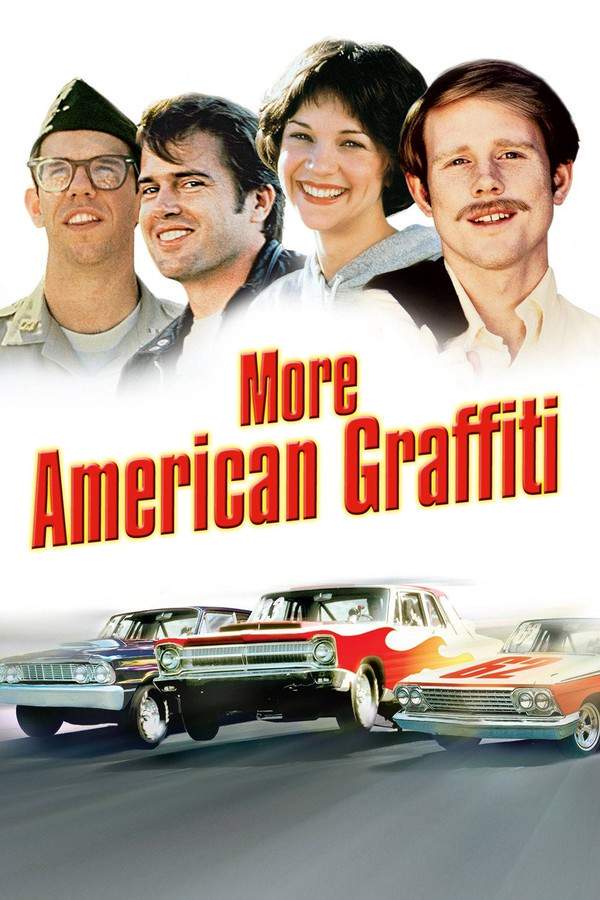
More American Graffiti (1979) movie poster

Characters & Themes

More American Graffiti (1979) Characters, Setting & Themes Explained

Release, runtime and language
1979 · 110 min · English
Loading streaming availability…
Directed by
Bill L. Norton
Starring
Bo Hopkins, Candy Clark, Charles Martin Smith, Cindy Williams, Mackenzie Phillips, Paul Le Mat
Budget
$3M

Steve Bolander and his friends are now young adults grappling with the challenges of the early 1960s. Steve's marriage to Laurie faces unexpected strains, while John Milner seeks excitement through drag racing. As they navigate love and personal growth, the shadow of the Vietnam War looms large, impacting their futures and the changing cultural landscape. The film explores themes of identity and the bittersweet passage of time, revisiting familiar characters in a new era.

On this page (7)
  1. 1 Where to watch
  2. 2 Characters explained (2)
  3. 3 Where & when it takes place
  4. 4 Themes & meaning (3)
  5. 5 Character & meaning questions
  6. 6 Movie threads
  7. 7 Every angle
Loading streaming availability…

2 main characters · contains spoilers

More American Graffiti Characters Explained: Who Is Who

The main characters of More American Graffiti (1979), heroes and villains: what drives them, how they change over the course of the story and what each of them reveals about the film's bigger ideas.

  • Bo Hopkins

    Bo Hopkins embodies a dynamic character navigating the tumult of the 1960s. His character's actions often serve as a catalyst for exploring themes of resistance and personal conviction, reflecting the era's struggle for autonomy.

    • 🎭 Actor
    • 🕵️‍♂️ Bold
  • Cindy Williams

    Cindy Williams portrays a character caught in the cultural shifts of the time, facing the complexities of love and freedom during an era of protest. Her character provides insight into the evolving identity of women in the 1960s.

    • 👩‍🎤 Female Empowerment
    • 💔 Romance

Last updated: October 22, 2024 at 23:15

Was this helpful?

Setting

Where and When Does More American Graffiti Take Place?

The setting of More American Graffiti (1979): the year and time period, the places and locations, and how they shape the characters, the mood and the tension of the story.

Time period

1964-1967

The years 1964 to 1967 were pivotal in American history, marked by cultural revolutions, the Vietnam War, and significant social changes. This period saw the rise of the counterculture movement, which challenged conventional norms and promoted freedom, peace, and self-expression.

Location

Haight-Ashbury

Haight-Ashbury is a neighborhood in San Francisco known for its role in the 1960s counterculture movement. It became a haven for artists, hippies, and activists, encapsulating the spirit of the era with its vibrant music scene and eclectic shops.

  • 🏙️ Urban
  • 🌿 Nature

Last updated: October 22, 2024 at 23:15

Was this helpful?

3 major themes

More American Graffiti Meaning: Themes & Message Explained

What is More American Graffiti (1979) really about? The emotional, social and philosophical themes the film keeps returning to, its symbolism and the message beneath the surface.

  • Rebellion

    The film explores the theme of rebellion against societal norms, particularly during the Vietnam War era. Characters engage in acts of defiance, such as burning draft cards and risking persecution to stand up for their beliefs, reflecting the spirit of a generation seeking change.

  • Documentary Style

    Utilizing innovative cinematic techniques, the film captures the essence of the 1960s through different filmmaking styles. The stark contrast between gritty realism and stylized sequences helps convey the chaotic energy and emotional weight of the decade's defining moments.

  • Social Change

    The narrative delves into the social issues of the time, including the women's liberation movement and anti-Vietnam War protests. It highlights the tension between authority and the quest for personal freedom, showcasing the characters' struggles in an era of significant upheaval.

Last updated: October 22, 2024 at 23:15

Was this helpful?

Character & theme questions

More American Graffiti Characters & Meaning: Your Questions Answered

The questions people ask about More American Graffiti (1979): who the characters really are, their relationships, what the symbols mean, where it takes place and what the movie is really about. Each answer contains spoilers.

Q1

Where is More American Graffiti set?

The film is set primarily in Haight-Ashbury, a neighborhood in San Francisco that became famous as the epicenter of the 1960s counterculture movement. This setting is significant because it captures the era's spirit of artistic expression, social rebellion, and musical vibrancy that defined a generation.

  • haight-ashbury
  • san francisco
  • setting
  • location
  • counterculture
Q2

What time period does More American Graffiti cover?

The movie takes place during 1964 to 1967, a pivotal period in American history marked by cultural revolution, the escalating Vietnam War, and significant social changes. This era saw the rise of the counterculture movement that challenged conventional norms and promoted freedom, peace, and self-expression.

  • 1960s
  • 1964-1967
  • time period
  • era
  • vietnam war
  • counterculture
Q3

What is Haight-Ashbury and why is it important to the film?

Haight-Ashbury is a San Francisco neighborhood that became a haven for artists, hippies, and activists during the 1960s. In the film, this location represents the heart of the counterculture movement, encapsulating the spirit of rebellion and self-expression that defines the characters' experiences and the era's cultural transformation.

  • haight-ashbury
  • counterculture
  • hippies
  • san francisco
  • 1960s culture
Q4

What are the main themes in More American Graffiti?

The film explores several key themes including rebellion against societal norms, particularly during the Vietnam War era, with characters burning draft cards and risking persecution for their beliefs. It also examines social change through the women's liberation movement and anti-war protests, and captures the bittersweet passage of time as characters navigate love, personal growth, and the changing cultural landscape.

  • rebellion
  • social change
  • themes
  • counterculture
  • vietnam war
  • passage of time
Q5

How does More American Graffiti portray the 1960s counterculture?

The film portrays the 1960s counterculture through its setting in Haight-Ashbury and the characters' involvement in anti-war protests and social movements. It captures the tension between authority and the quest for personal freedom, showcasing how young adults grappled with the challenges of the era while seeking identity and meaning beyond conventional norms.

  • counterculture
  • 1960s
  • hippies
  • social movements
  • vietnam war protests
Q6

How does the documentary style contribute to the film?

The film uses innovative cinematic techniques including split-screens and grainy 16mm footage to capture the essence of the 1960s. The stark contrast between gritty realism and stylized sequences helps convey the chaotic energy and emotional weight of the decade's defining moments, creating a visual representation of the era's turbulence and transformation.

  • documentary style
  • cinematic techniques
  • split-screen
  • 1960s filmmaking
  • visual style
Q7

Who are the main characters in More American Graffiti?

The film centers on Steve Bolander and his friends as young adults facing the challenges of the early 1960s. Key characters include Bo Hopkins, whose dynamic character serves as a catalyst for exploring themes of resistance and personal conviction, and Cindy Williams, who portrays a character navigating the cultural shifts and complexities of love and freedom during an era of protest.

  • steve bolander
  • bo hopkins
  • cindy williams
  • main characters
  • cast
Q8

What is the tone of More American Graffiti?

The film has a bittersweet tone, reflecting its core theme of the bittersweet passage of time. While it tackles serious subjects like the Vietnam War draft and police persecution, the emotional impact is balanced by nostalgic framing and comedic elements. The variable pacing, resulting from the innovative non-linear structure jumping between four New Year's Eves, creates a dynamic mix of loss, resilience, and cultural excitement.

  • tone
  • bittersweet
  • comedy
  • drama
  • emotional tone
  • nostalgia
Q9

How does the film address social change and women's liberation?

More American Graffiti delves into the social issues of the era, including the women's liberation movement and anti-Vietnam War protests. Through characters like Cindy Williams's role, it highlights the evolving identity of women in the 1960s and showcases the broader tension between authority and personal freedom that defined the period's significant cultural upheaval.

  • women's liberation
  • social change
  • 1960s
  • gender roles
  • social issues
Q10

How does the Vietnam War affect the story?

The Vietnam War looms large over the narrative, impacting the characters' futures and shaping the changing cultural landscape. The war creates tension and uncertainty for the young adult characters, influencing their decisions about rebellion, commitment, and the sacrifices they make as they navigate love and personal growth during this tumultuous period.

  • vietnam war
  • draft
  • war impact
  • 1960s conflict
  • military

Movie threads

More Movies Like More American Graffiti, by Mood & Story

Curated lists built around what makes More American Graffiti tick: the same mood, the same kind of story or the same emotional payoff. Each list explains why these movies belong together.

Bittersweet generation-spanning stories like More American Graffiti

Films that weave together multiple lives to capture the spirit of a changing era. If you enjoyed the interconnected character arcs and historical backdrop of More American Graffiti, explore more movies like it. This collection features ensemble dramas and comedies that capture the spirit of a generation facing social change, with similar bittersweet tones and complex narrative structures.

  • nostalgic
  • reflective
  • melancholic
  • ensemble
  • historical
  • interwoven
  • Tone: bittersweet, reflective, nostalgic
  • Pacing: variable, character-driven
Why these movies?

The story pattern: These stories typically follow a group of characters—often friends or a community—across several years or key moments. The narrative structure is often fragmented or episodic, using time jumps or parallel storylines to highlight contrasts between youthful idealism and adult realities, ultimately reflecting on the passage of time and the costs of progress.

Why they belong together: Movies are grouped here for their shared focus on generational identity, their use of a multi-character ensemble to explore a central theme (like war or social change), and their emotionally resonant, bittersweet tone that balances nostalgia with the harsh realities of growing up.

Counterculture and war dramas like More American Graffiti

Stories where personal rebellion clashes with the grim realities of war and society. For viewers who liked the blend of chaotic energy, political themes, and war backdrop in More American Graffiti. Discover similar movies about the 1960s counterculture, Vietnam War era, and stories of personal freedom clashing with societal expectations.

  • gritty
  • chaotic
  • anxious
  • counterculture
  • political
  • war themes
  • Tone: gritty, anxious, energetic
  • Pacing: variable, energetic
Why these movies?

The story pattern: Narratives in this thread often follow young adults navigating a world in flux. Characters might be drawn into political activism, drug culture, or artistic scenes while the looming threat of the draft or other institutional forces creates constant tension. The journey is one of disillusionment and maturity, as personal growth is forged in a climate of chaos and anxiety.

Why they belong together: These films share a specific historical setting or vibe defined by counterculture ideals, a palpable sense of social and political anxiety, and a narrative that pits individual desire for freedom against larger, often oppressive, systems. The tone is gritty yet energetic, capturing the chaotic spirit of the era.

Every angle

More American Graffiti (1979) Explained: Plot, Timeline & Characters

Everything about More American Graffiti in one place: what happens in the plot summary, the timeline in chronological order, the characters and meaning and a spoiler-free summary. What's After the Movie adds the cast, box office and post-credit scenes.

Coming soon on iOS and Android

The Plot Explained Movie Summary App

Plot summaries, endings explained and timelines on your phone. Catch up on any movie in minutes, save your favorites and never miss a twist again.

Be the first to know when we launch. Your email stays private, always.

Learn more about the app