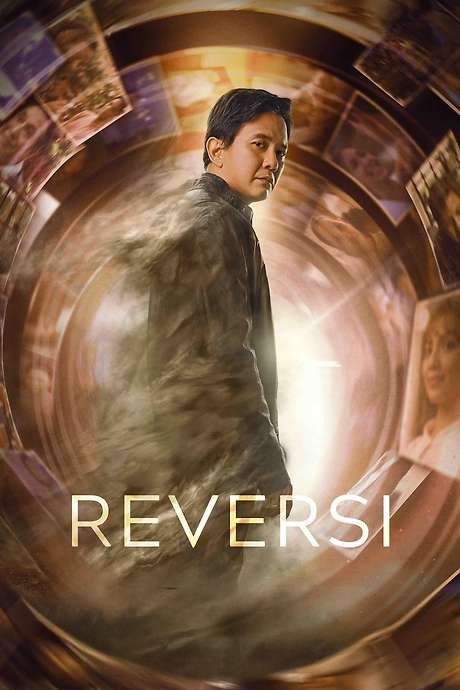
In a story that moves between a past that shapes the present and a reunion that unsettles old memories, the film centers on a college community and the truth it has buried for years. The plot unfolds around Murali’s unfulfilled dream of a 15-year reunion with his classmates, a wish that becomes a catalyst for revisiting long-quieted loyalties, rivalries, and the fragile lines between friendship and ambition. In the present, Murali’s parents, Iyer and Lakshmi, both devoted teachers at the same college, decide to honor their son by bringing the old circle back together. The reunion gathers a group of former students who have taken starkly different paths in life: Suku, a self-made diamond dealer turned Mumbai business figure; Satheesan, now a rising political force as an MLA; Vasu, his devoted aide; Pious, once a privileged but headstrong student; Thara, an award-winning dancer; and Raziya, whose struggle with a nervous breakdown has left invisible scars. The atmosphere is festive on the surface, but underneath, a heaviness lingers as everyone confronts how much has changed since their college days. As they relive shared memories, a sudden crisis strikes: Suku appears to attempt suicide that night, an event that triggers a cascade of questions and unspoken truths. In the hospital, Pious begins to tell Iyer the backstory that links these present-day tensions to a past tragedy.
The film then shifts to 1991, the final year of Murali’s college life, to reveal how the bonds between these characters were formed and ruptured. Murali is depicted as a singer with a natural charm, while Suku emerges as a passionate and fiery student union leader who will not back down from a fight. Pious is portrayed as a wealthy, spoiled but influential friend, and Thara Kurup stands out as the daughter of an MLA and a celebrated classical dancer. Raziya comes from a conservative Muslim family, and Vasu serves as Satheeshan’s loyal ally in the oppositional faction of student politics. The dynamics are tense and charged with the excitement and danger of youth. When it seems that Suku and Thara’s relationship could bridge divides, Satheeshan, who leads the rival faction, works to drive a wedge between them. He steals a letter that Thara wrote to Suku and hides it in a ballet box, hoping to weaponize it for political advantage. Pious witnesses this act, and he and Suku plot to retrieve the letter that same night, but their plan falters.
Meanwhile, Murali and Raziya, who have fallen in love, plan to run away together and meet in a generator room. Raziya waits for Murali there, but he never arrives. The next day, Thara’s letter is exposed, causing a public scandal, and Satheeshan accuses Suku of using the letter for his own purposes. Thara ends her relationship with Suku under the pressure of the revelation, and a vicious confrontation erupts between Suku and Satheeshan. The chaos is intensified by the shocking news that Murali has been found dead in the generator room. Raziya experiences a nervous breakdown, the fallout of a night of hidden desires and brittle loyalties now laid bare for all to see.
After Murali’s funeral, Suku makes a drastic choice: he leaves his studies and relocates to Mumbai, where he builds a diamond business with the help of a mentor, Shantharam. Shantharam becomes a father figure and helps Suku through challenging times, including a marriage to Ratna. The story of Suku’s life in Mumbai is one of rapid ascent and personal upheaval; after Shantharam’s death, Suku assumes control of the business, only to endure a painful divorce from Ratna. The past, it seems, has forged a different path for him—one that is connected irrevocably to the choices he made in those years and the weight of a secret that has never quite disappeared.
In the present, Thara makes a crucial revelation during the reunion. She returns to apologize to Suku for ending their relationship, explaining that she later understood who Suku really was—someone kind and truthful—while the true manipulator was Satheeshan, who exploited Thara’s vulnerability for political gain. She also learns about Suku’s marriage and subsequent divorce, a history that further clarifies the consequences of the choices made in youth. The conversation marks a turning point: Thara and Suku begin to reconcile, and Suku opens up about that night in the generator room. He confesses that he had hidden inside the space, thinking he was avoiding danger, and in the darkness, he mistook Murali for one of Satheeshan’s men. In a moment of panic and confusion, he attacked and unintentionally killed Murali, a truth that the guilt has weighed on him for years. This revelation explains why he had left his studies and why the wound of 1991 has never fully closed.
Raziya’s arc takes a darker turn as she reveals her own involvement in the aftermath of Murali’s death. She had returned to the generator room to remember Murali and, hearing Thara and Suku together, overheard their conversation. Consumed by rage and grief, she confronts Suku and, in a moment of vengeful despair, strangulates him using a string from Murali’s guitar and stages it as a suicide. She regrets the act deeply, yet the guilt remains a heavy burden. When Suku regains consciousness in the hospital, he tells the police that he attempted suicide, a false confession that buys time for the truth to emerge and for those involved to confront the consequences of their actions.
The discovery of these truths brings forgiveness within reach. Iyer, Lakshmi, and Raziya confront the moral weight of the events and offer their forgiveness to Suku, urging him to be with Thara, who has waited faithfully for him for fifteen years. In a quiet, emotional culmination, Suku forgives himself and accepts Thara’s presence in his life once again. The film ends on a note of reconciliation and renewed hope: a circle closed not by erasing the past, but by acknowledging it, accepting responsibility, and choosing to move forward with honesty and compassion. The reunion thus becomes more than a memory—it's a turning point that allows old wounds to heal and gives the characters a chance to redefine their futures together.
This story, woven through alternating timelines, explores how love, loyalty, ambition, and guilt intersect in young lives and how the truth can become a path to redemption when it is met with forgiveness, understanding, and the courage to face what happened all those years ago. The emotional core rests on the resilience of relationships that survived the pressures of time and circumstance, finally choosing to stand together again in the light of truth.