Year: 1988
Runtime: 121 min
Language: English
Director: Barry Levinson
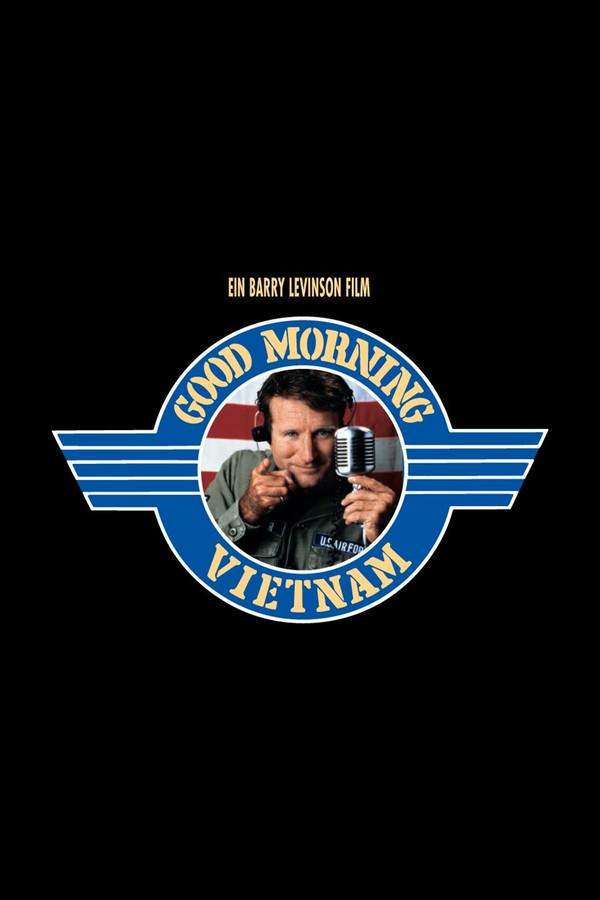
Radio personality Adrian Cronauer's humorous broadcasts bring laughter to Vietnam, but his irreverent style clashes with military protocol and shocks even seasoned soldiers. Facing conflict with his superior officer, Sergeant Major Dickerson, Cronauer finds himself navigating a complex situation involving a burgeoning romance with a Vietnamese woman and the sobering realities of war. He must then confront the difficult consequences of his comedic approach amidst the chaos and destruction.
Find where to stream, rent, or buy Good Morning, Vietnam (1988) in the US with current JustWatch availability, up-to-date pricing, and platform listings for subscription, rental, and digital purchase options.
Warning: spoilers below!
Haven’t seen Good Morning, Vietnam yet? This summary contains major spoilers. Bookmark the page, watch the movie, and come back for the full breakdown. If you're ready, scroll on and relive the story!
Read the complete plot breakdown of Good Morning, Vietnam (1988), including all key story events, major twists, and the ending explained in detail. Discover what really happened, and what it all means.
As Airman Second Class Adrian Cronauer lands in the stifling heat of Saigon in 1965, he introduces a contagious energy and rebellious nature that soon rattles the rigid structure of the Armed Forces Radio Service. Joined by Private Edward Garlick, Cronauer arrives at the radio station, where his exuberance and relaxed demeanor stand in stark contrast to the serious staff members. His first broadcast makes waves with the iconic greeting, > “Good morning, Vietnam!” The upbeat tone is a welcome relief in an otherwise bleak setting, blending censored news, cheeky humor, and infectious rock-and-roll, despite the disapproval from his superiors, notably Second Lieutenant Steven Hauk and Sergeant Major Phillip Dickerson. However, over time, even Brigadier General Taylor and the other DJs come to appreciate Cronauer’s unique take on broadcasting.
Wandering the streets of Saigon, Cronauer befriends a charming Vietnamese girl named Trinh, who he takes to an English class. Showcasing his flair, he takes charge of the lesson, teaching the students American slang, even adding some colorful profanity. After class, when he tries to engage Trinh, her brother Tuan rebuffs him. Undaunted, Cronauer forms a connection with Tuan, introducing him to Jimmy Wah’s, a popular haunt for military personnel. Unfortunately, the evening takes a dark turn when two racist soldiers, angered by Tuan’s presence, instigate a conflict that escalates into a chaotic brawl. Following the incident, Dickerson chastises Cronauer, but his shows continue to capture listeners’ hearts, despite the ongoing vendetta from Hauk and Dickerson.
One pivotal day at Jimmy Wah’s, Tuan approaches Cronauer with news that Trinh wants to see him. Their moment of peace is soon disrupted when a violent explosion rocks the bar, tragically killing two soldiers and deeply unsettling Cronauer. The explosion is attributed to a bomb, which Dickerson orders to be kept off the air. In a heroic act of defiance, Cronauer locks himself in the studio and reveals the horrifying truth to his audience, fiercely opposing Dickerson’s directives. Though this results in his suspension, the listener backlash against Cronauer’s removal is swift, sending many letters and calls demanding his return, much to Hauk’s displeasure.
As despair sinks in, Cronauer wallows in self-pity and whiskey, while his pursuit of Trinh ends in repeated heartbreak, compounding his disillusionment as a DJ. Meanwhile, Taylor’s intervention at the radio station leads to predictable defiance from Hauk, who refuses to acknowledge Cronauer’s absence. It is only when Garlick encourages Cronauer to broadcast a heartfelt message to troops headed for Nha Trang that he starts to recognize the importance of his role, reigniting his commitment to his job.
Yet, in a calculated move, Dickerson sends Cronauer into perilous Viet Cong territory under the guise of an interview. A chance encounter with a mine forces Cronauer and Garlick into hiding from VC patrols, leaving their Jeep stranded. In Saigon, Tuan learns of their situation and desperately attempts to help, only to run into further misfortune when the van he steals breaks down. Just when it seems they’re doomed, a Marine helicopter provides the necessary lift back to safety, where Cronauer learns of Tuan’s shocking double life as “Phan Duc To” and his involvement in the bombing at Jimmy Wah’s.
This twist of fate sparks dire consequences: Dickerson arranges for Cronauer’s honorable discharge, informing him that his association with Tuan will irreparably damage the Army’s image. As he prepares to leave, Dickerson faces ramifications for his actions, ultimately being reassigned to Guam—a fate he deems just given his malicious intent.
In the aftermath, Cronauer confronts Tuan, expressing his outrage over the violence inflicted upon American soldiers and the untold lives lost in Vietnam. Tuan, revealing the uproar caused by the US Army in his village, shares his own conflicted feelings. Despite their fallout, Tuan still values Cronauer’s life, underscoring the complex nature of their intertwined fates.
As Cronauer boards a plane for Tan Son Nhut Air Base, flanked by military police, he pauses to bid farewell to Trinh and his students, orchestrating one final softball game before his departure. The next morning, Garlick steps into the DJ role, honoring Cronauer by airing his farewell message: > “Goodbye, Vietnam!”
Last updated: November 19, 2024 at 17:55
Explore frequently asked questions about Good Morning, Vietnam (1988) with spoiler-rich answers covering the full plot summary, major story beats, character motivations, hidden details, and ending meaning. This movie summary FAQ helps explain confusing scenes, plot twists, and narrative decisions in clear, searchable detail.
Cronauer's irreverent humor and rock-and-roll music clashed with the rigid, formal tone of Armed Forces Radio Service. His superiors, especially Second Lieutenant Hauk and Sergeant Major Dickerson, viewed his style as unprofessional and disrespectful of military protocol. Despite this, his cheerful broadcasts became popular with soldiers, and even Brigadier General Taylor eventually appreciated his unique approach.
Early scenes show Cronauer's first broadcast immediately drawing disapproval from station staff.
A violent explosion ripped through Jimmy Wah's bar, killing two American soldiers. The bombing was later revealed to be orchestrated by Tuan, Trinh's brother, who was living a double life as a Viet Cong operative known as 'Phan Duc To'. The attack was motivated by anger over US military actions in Tuan's village.
Earlier, racist soldiers attacked Tuan at the same bar, creating tension that foreshadows the violent retaliation.
When Dickerson ordered the bombing to be kept off the air to avoid damaging morale, Cronauer locked himself in the studio and reported the truth to his listeners. He felt it was wrong to hide the reality of soldiers dying from the people who trusted him for honest news. This act of defiance led to his suspension.
Cronauer's rebellious nature and commitment to authentic broadcasting had been established from his first day at the station.
Tuan was Trinh's younger brother, initially introduced as a friend who helped Cronauer navigate Saigon. He was secretly a Viet Cong operative operating under the name 'Phan Duc To'. He had been involved in the bombing at Jimmy Wah's and maintained this double life while befriending American soldiers.
Tuan's request to meet at Jimmy Wah's just before the explosion and his urgency to help Cronauer during the VC patrol incident hint at his true allegiances.
Sergeant Major Dickerson deliberately sent Cronauer into dangerous Viet Cong territory under the guise of conducting interviews. It was a calculated move to put Cronauer in harm's way, exploiting his adventurous nature. Cronauer and Garlick eventually hit a mine and had to hide from VC patrols.
Dickerson's ongoing hostility toward Cronauer and his refusal to accept the popular DJ's presence set up this dangerous assignment.
Cronauer received an honorable discharge because his association with Tuan, a known Viet Cong operative, would damage the Army's public image if revealed. Dickerson orchestrated this by exploiting Cronauer's friendship with someone involved in killing American soldiers. The Army wanted to avoid the scandal of a soldier being connected to an enemy combatant.
Dickerson's earlier manipulation of Cronauer's assignment to VC territory was designed to create this exact situation.
Dickerson faced consequences for his actions but was only reassigned to Guam rather than receiving a severe punishment. While this seems lenient, Cronauer viewed it as a fitting fate given Dickerson's malicious intent in deliberately endangering Cronauer's life and orchestrating his discharge.
Dickerson's repeated attempts to undermine Cronauer and his explicit orders to hide the bombing showed his corrupt priorities throughout the film.
Following the explosion at Jimmy Wah's, Trinh withdrew from her relationship with Cronauer. The bombing, orchestrated by her own brother Tuan, created an impossible situation where continuing their relationship would mean complications and potential danger for both sides. This heartbreak contributed to Cronauer's descent into despair.
The tension between Cronauer's American identity and Trinh's Vietnamese life was established early when Tuan initially rebuffed Cronauer's attempts to engage with Trinh.
After their Jeep was stranded from a mine explosion and they were forced to hide from Viet Cong patrols, Tuan attempted to help by stealing a van but it broke down. Just when all seemed lost, a Marine helicopter arrived and lifted them to safety in Saigon.
Tuan's desperate attempt to help, despite his secret identity as a Viet Cong operative, showed the complexity of their friendship.
After being encouraged by Garlick, Cronauer broadcast a heartfelt message to troops headed for Nha Trang, expressing genuine care for their wellbeing and thanking them for their service. This moment marked his rediscovery of purpose and reignited his commitment to his role as a DJ, pulling him out of his despair.
Cronauer's earlier descent into drinking and heartbreak set up this pivotal moment of recommitment.
After learning Tuan's true identity, Cronauer confronted him about the violence inflicted on American soldiers and the lives lost in Vietnam. Tuan explained that the US Army had caused devastation in his village, justifying his actions through the same lens of loss and outrage. Despite their fallout, Tuan had still tried to save Cronauer's life, underscoring the complex humanity on both sides.
Their earlier friendship at Jimmy Wah's and Tuan's efforts to help during the patrol incident established the complicated nature of their bond.
Discover curated groups of movies connected by mood, themes, and story style. Browse collections built around emotion, atmosphere, and narrative focus to easily find films that match what you feel like watching right now.
Characters use laughter and irreverence to cope with oppressive or tragic circumstances.Discover films similar to Good Morning, Vietnam, where characters use comedy as a rebellious tool against grim backdrops. If you liked the blend of laughter and tragedy in a war zone, you'll find these stories of irreverent humor in difficult settings compelling.
Narratives in this thread often follow a charismatic, non-conformist character who brings levity to a serious environment, challenging authority or established norms. Their comedic approach initially provides escape and unity, but is ultimately tested by escalating conflict or tragedy, forcing a reckoning with the limits and purpose of their humor.
Movies are grouped here for their shared core conflict: the tension between life-affirming comedy and life-threatening seriousness. They share a bittersweet tone, balancing high-energy humor with moments of profound gravity, and explore the moral weight of making people laugh when things are falling apart.
An individual's vibrant humanity clashes with rigid, impersonal bureaucracy.Find movies like Good Morning, Vietnam featuring a charismatic rebel challenging a rigid system. These films explore the friction between personal expression and institutional control, perfect for fans of stories about nonconformists making a difference against all odds.
The narrative pattern involves a protagonist who achieves genuine connection and results through unorthodox means, directly threatening the authority of a bureaucratic superior. The story escalates as the system attempts to neutralize this threat, leading to a climax where the value of human spirit is weighed against the demands of cold efficiency, often resulting in a pyrrhic victory.
These movies share a central thematic focus on the conflict between individuality and institutional conformity. They possess a confrontational mood and explore ideas of personal rebellion within structured worlds like the military, corporations, or government, often delivering a message about the cost of authenticity.
Don't stop at just watching - explore Good Morning, Vietnam in full detail. From the complete plot summary and scene-by-scene timeline to character breakdowns, thematic analysis, and a deep dive into the ending - every page helps you truly understand what Good Morning, Vietnam is all about. Plus, discover what's next after the movie.
Track the full timeline of Good Morning, Vietnam with every major event arranged chronologically. Perfect for decoding non-linear storytelling, flashbacks, or parallel narratives with a clear scene-by-scene breakdown.
Discover the characters, locations, and core themes that shape Good Morning, Vietnam. Get insights into symbolic elements, setting significance, and deeper narrative meaning - ideal for thematic analysis and movie breakdowns.