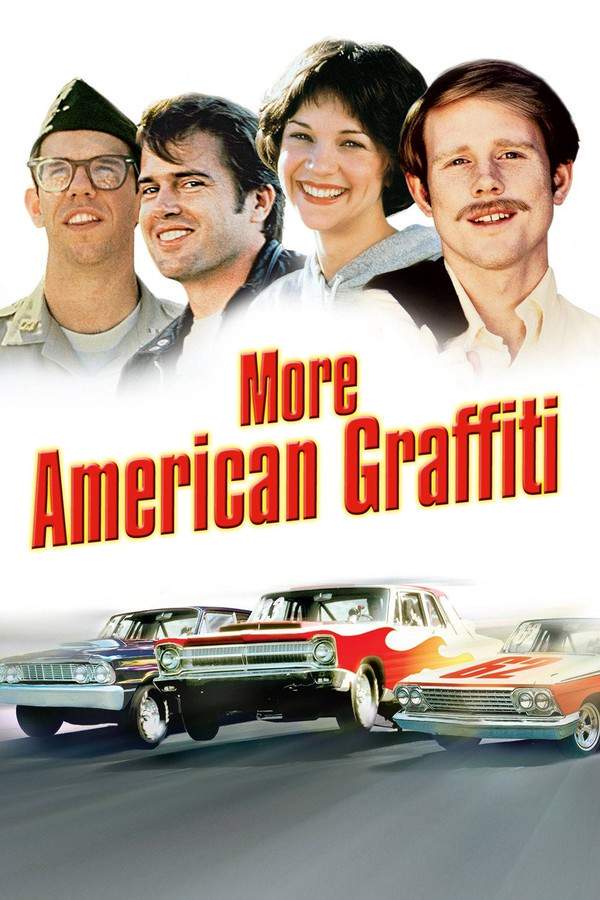
More American Graffiti

More American Graffiti

Year: 1979

Runtime: 110 min

Language: English

Director: Bill L. Norton

Budget: $3M

DramaComedyWar

Steve Bolander and his friends are now young adults grappling with the challenges of the early 1960s. Steve's marriage to Laurie faces unexpected strains, while John Milner seeks excitement through drag racing. As they navigate love and personal growth, the shadow of the Vietnam War looms large, impacting their futures and the changing cultural landscape. The film explores themes of identity and the bittersweet passage of time, revisiting familiar characters in a new era.

Warning: spoilers below!

Haven’t seen More American Graffiti yet? This summary contains major spoilers. Bookmark the page, watch the movie, and come back for the full breakdown. If you're ready, scroll on and relive the story!

Timeline – More American Graffiti (1979)

Trace every key event in More American Graffiti (1979) with our detailed, chronological timeline. Perfect for unpacking nonlinear stories, spotting hidden connections, and understanding how each scene builds toward the film’s climax. Whether you're revisiting or decoding for the first time, this timeline gives you the full picture.

1

New Year's Eve 1964

The film opens on New Year's Eve 1964, setting the stage for the unfolding narrative over the next few years. The characters come together in a celebratory gathering, symbolizing hope and the promise of change as the 1960s begin.

1964-12-31
2

The Impacts of the Vietnam War

By 1965, the Vietnam War is a significant influence on American society, depicted through powerful scenes that reflect the tension of the era. The filmmakers use a gritty, handheld style to emphasize the urgency and rawness of this tumultuous period.

1965
3

Draft Card Burning

A key moment occurs in 1965 when a character boldly decides to burn his draft card. This act of defiance symbolizes not just individual choices, but also the broader sentiment of protest against the Vietnam War and the sacrifices young Americans faced.

1965
4

Peace Demonstrations

Throughout 1965, scenes of campus peace demonstrations are interspersed, capturing the essence of the growing anti-war movement. These gatherings illustrate the rising discontent among students and young people as they take a stand for their beliefs.

1965
5

Marijuana Stash Disposed

In a tense moment, characters are seen hurriedly disposing of their marijuana stash before a police traffic stop. This scene encapsulates the constant fear of persecution that those involved in the counterculture faced during this period.

1965
6

Introduction of the Counterculture

As the film progresses into 1966, the essence of the 1960s counterculture movement is further explored. The vibrant atmosphere of the Haight-Ashbury district is highlighted, showcasing the psychedelic lifestyle that defined this era.

1966 Haight-Ashbury
7

Split-Screen Aesthetic

The cinematic style of the 1966 scenes pays homage to iconic documentary filmmaking, employing split screens and multiple angles. This innovative technique immerses the audience in the chaotic and energetic spirit of the time.

1966
8

Women's Liberation Movement

The film reflects the early women's liberation movement, illustrating the push for gender equality and personal freedoms. Characters engage in discussions and protests that highlight the social changes occurring around them.

1966
9

Police Response to Protests

As anti-Vietnam War protests escalate in 1966, the authorities' heavy-handed responses are portrayed starkly. Scenes capture the intense confrontation between law enforcement and protestors, emphasizing the division in society.

1966
10

Reflections on Societal Change

As 1967 approaches, characters reflect on the personal liberties and societal changes they have witnessed. The complexities of their experiences convey a nuanced understanding of the struggle for freedom during the tumultuous 1960s.

1967
11

Final New Year's Eve

On New Year's Eve 1967, the culmination of the characters' journeys is evident. The celebration is laced with a bittersweet acknowledgment of the challenges ahead, signaling the ongoing fight for civil rights and social justice.

1967-12-31
12

Cinematic Legacy of the 60s

The film concludes with a reflection on the legacy of the 1960s and the impact it still holds on modern society. It captures the enduring message of courage, change, and the importance of standing against oppression.

Last Updated: November 17, 2024 at 22:28

Mobile App Preview

Coming soon on iOS and Android

The Plot Explained Mobile App

From blockbusters to hidden gems — dive into movie stories anytime, anywhere. Save your favorites, discover plots faster, and never miss a twist again.

Sign up to be the first to know when we launch. Your email stays private — always.

Explore Movie Threads

Discover curated groups of movies connected by mood, themes, and story style. Browse collections built around emotion, atmosphere, and narrative focus to easily find films that match what you feel like watching right now.

Bittersweet generation-spanning stories like More American Graffiti

Films that weave together multiple lives to capture the spirit of a changing era.If you enjoyed the interconnected character arcs and historical backdrop of More American Graffiti, explore more movies like it. This collection features ensemble dramas and comedies that capture the spirit of a generation facing social change, with similar bittersweet tones and complex narrative structures.

nostalgicreflectivemelancholicensemblehistoricalinterwovencharacter-driven

Narrative Summary

These stories typically follow a group of characters—often friends or a community—across several years or key moments. The narrative structure is often fragmented or episodic, using time jumps or parallel storylines to highlight contrasts between youthful idealism and adult realities, ultimately reflecting on the passage of time and the costs of progress.

Why These Movies?

Movies are grouped here for their shared focus on generational identity, their use of a multi-character ensemble to explore a central theme (like war or social change), and their emotionally resonant, bittersweet tone that balances nostalgia with the harsh realities of growing up.


Counterculture and war dramas like More American Graffiti

Stories where personal rebellion clashes with the grim realities of war and society.For viewers who liked the blend of chaotic energy, political themes, and war backdrop in More American Graffiti. Discover similar movies about the 1960s counterculture, Vietnam War era, and stories of personal freedom clashing with societal expectations.

grittychaoticanxiouscounterculturepoliticalwar themesenergeticrebellious

Narrative Summary

Narratives in this thread often follow young adults navigating a world in flux. Characters might be drawn into political activism, drug culture, or artistic scenes while the looming threat of the draft or other institutional forces creates constant tension. The journey is one of disillusionment and maturity, as personal growth is forged in a climate of chaos and anxiety.

Why These Movies?

These films share a specific historical setting or vibe defined by counterculture ideals, a palpable sense of social and political anxiety, and a narrative that pits individual desire for freedom against larger, often oppressive, systems. The tone is gritty yet energetic, capturing the chaotic spirit of the era.

Unlock the Full Story of More American Graffiti

Don't stop at just watching — explore More American Graffiti in full detail. From the complete plot summary and scene-by-scene timeline to character breakdowns, thematic analysis, and a deep dive into the ending — every page helps you truly understand what More American Graffiti is all about. Plus, discover what's next after the movie.

More American Graffiti Summary

Read a complete plot summary of More American Graffiti, including all key story points, character arcs, and turning points. This in-depth recap is ideal for understanding the narrative structure or reviewing what happened in the movie.

More American Graffiti Summary

Characters, Settings & Themes in More American Graffiti

Discover the characters, locations, and core themes that shape More American Graffiti. Get insights into symbolic elements, setting significance, and deeper narrative meaning — ideal for thematic analysis and movie breakdowns.

Characters, Settings & Themes in More American Graffiti

More American Graffiti Spoiler-Free Summary

Get a quick, spoiler-free overview of More American Graffiti that covers the main plot points and key details without revealing any major twists or spoilers. Perfect for those who want to know what to expect before diving in.

More American Graffiti Spoiler-Free Summary

More About More American Graffiti

Visit What's After the Movie to explore more about More American Graffiti: box office results, cast and crew info, production details, post-credit scenes, and external links — all in one place for movie fans and researchers.

More About More American Graffiti