










Plot Explained Spoilers guaranteed!
Plot Explained

Browse by genre

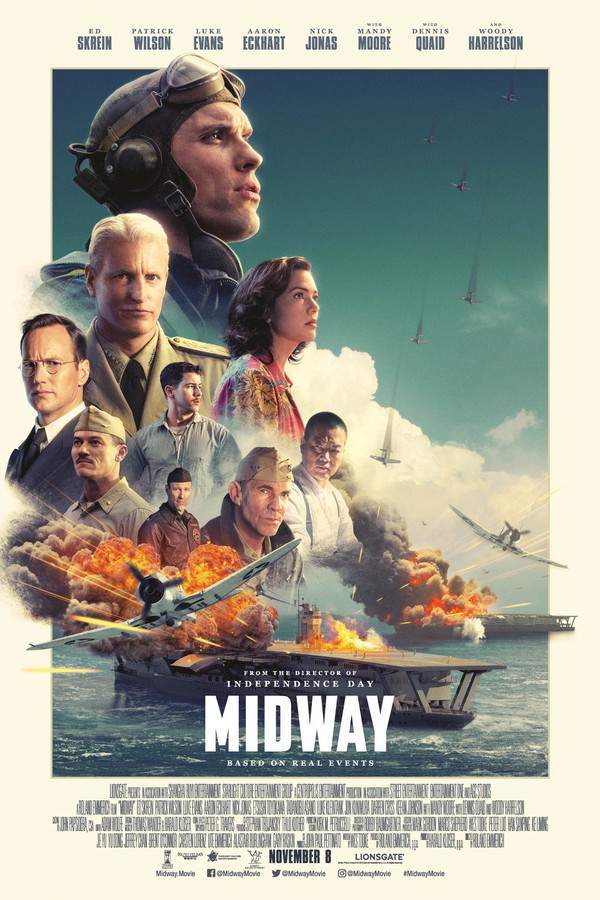
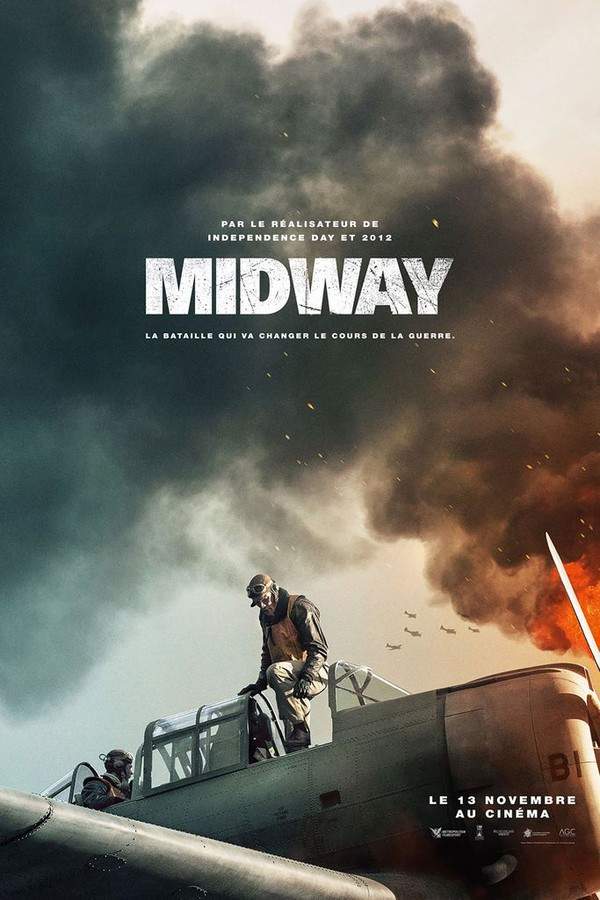
Midway (2019) movie poster

Timeline

Midway (2019) Timeline Explained – Every Event in Order

Release, runtime and language
2019 · 138 min · English
Echo score 45
JustWatch #1,042 10
Directed by
Roland Emmerich
Starring
Ed Skrein, Luke Evans, Aaron Eckhart, Patrick Wilson, Woody Harrelson, Dennis Quaid
Budget
$100M

In June 1942, the clash at Midway became a pivotal moment in the Pacific Theater of World War II. This film recounts the true story of the American forces facing a formidable Japanese fleet, highlighting the courage and determination of the leaders and soldiers involved. Against overwhelming odds, their bravery and strategic decisions proved crucial in changing the course of the war and marking a turning point in the conflict.

On this page (6)
  1. 1 Where to watch
  2. 2 Events in order (15)
  3. 3 Timeline questions answered
  4. 4 Movie threads
  5. 5 Movies like Midway
  6. 6 Every angle

Where to watch

Where to Watch Midway (2019)

Where can you watch Midway? Stream, rent or buy it in the US, including on Angel Studios, YouTube Free and Amazon Video: current JustWatch availability with up-to-date prices.

Streaming availability powered by JustWatch

15 events in order · contains spoilers

Midway Timeline: Events in Chronological Order

Every key event of Midway (2019) in order, scene by scene, with when and where it takes place. Use it to untangle flashbacks, time jumps and parallel storylines, to refresh your memory before the sequel or to find the exact scene you are thinking of.

  1. US Naval Meeting in Tokyo

    In 1937, a significant conversation occurs between Edwin T. Layton, a US Naval attache, and Isoroku Yamamoto, the Commander-in-chief of the Combined Fleet of Japan. Yamamoto discreetly warns Layton about Japan's potential actions if their oil supplies are threatened, foreshadowing the tensions that will escalate into war.

    When
    1937
    Where
    Tokyo
  2. Attack on Pearl Harbor

    On December 7, 1941, the Japanese fleet launches a surprise attack on Pearl Harbor, which serves as the catalyst for the United States' entry into World War II. This devastating assault leads to significant losses in both personnel and equipment, dramatically altering the course of the conflict.

    When
    December 7, 1941
    Where
    Pearl Harbor
  3. Nimitz Takes Command

    In the aftermath of the Pearl Harbor attack, Admiral Chester W. Nimitz is appointed commander of the severely damaged US Pacific Fleet. He faces immediate challenges and consultations with Layton, who questions the communication failures that allowed the attack to occur.

    Where
    Pearl Harbor
  4. USS Enterprise Evades Attack

    Lieutenant Commander Wade McClusky is aboard the USS Enterprise, which is stationed 170 miles away from Pearl Harbor during the attack. This fortunate positioning spares the carrier fleet from destruction and allows it to play a critical role in subsequent operations.

    Where
    USS Enterprise
  5. Destruction of USS Arizona

    As the battle ensues, Lieutenant Roy Pearce, the watch officer of the USS Arizona, tragically loses his life amidst the catastrophic explosions that devastate his ship. His sacrifice is emblematic of the bravery exhibited by many in the face of overwhelming adversity.

    Where
    USS Arizona
  6. Halsey Monitors Japanese Carriers

    Vice Admiral William 'Bull' Halsey works swiftly to track the movements of Japanese carriers. His efforts are hampered by intelligence challenges as reports indicate that the Japanese fleet is launching full-scale assaults from multiple locations.

  7. Yamamoto's Frustration

    In Japan, naval leaders, including Yamamoto, express frustration over missed military opportunities. Yamamoto is particularly dismayed by Vice Admiral Chuichi Nagumo's decision not to destroy the oil tankers at Pearl Harbor, which could have severely crippled US naval capabilities.

  8. Nimitz's Offensive at Marshall Islands

    On February 1st, Nimitz commands Halsey's battle group to assault Japanese positions at the Marshall Islands. Despite facing numerical disadvantages and supply issues, American pilots managed to inflict significant damage to Japanese forces, showcasing their resilience.

    When
    February 1, 1942
    Where
    Marshall Islands
  9. The Doolittle Raid

    By April 1942, the strategic focus shifts following the successful Doolittle Raid led by Lieutenant Colonel Jimmy Doolittle. This operation marks a significant morale boost for the US and shifts Japanese attention towards the Coral Sea and subsequently to Midway.

    When
    April 1942
    Where
    Coral Sea
  10. Intelligence Breakthrough

    Cryptologists under Joseph Rochefort start intercepting crucial Japanese communications linking to a location known as 'AF'. Layton suspects that this refers to Midway Atoll, challenging assumptions that it could be a different site, essential for anticipating Japanese movements.

  11. Battle of Midway Begins

    On June 4, the Japanese initiate a full-scale aerial assault on Midway. While initial attacks by US land-based aircraft are met with limited success, intelligence and determination set the stage for a turning point in the Pacific Theater.

    When
    June 4, 1942
    Where
    Midway
  12. McClusky's Offensive Strategy

    As the battle progresses, C. Wade McClusky leads a daring offensive against the Japanese fleet. His leadership results in the destruction of vital carrier ships, significantly weakening Japanese naval capabilities in the conflict.

    Where
    Midway
  13. Best's Strike on Hiryu

    Lieutenant Richard 'Dick' Best rallies remaining pilots to strike the Japanese carrier Hiryu. His successful attack leads to a critical hit that ensures the destruction of the last remaining Japanese carrier during the battle.

    Where
    Midway
  14. Yamamoto's Retreat Order

    Following significant losses, Admiral Yamamoto orders a retreat for Japanese forces, marking the end of the fierce Battle of Midway. This decision symbolizes a pivotal moment in the Pacific War, altering the balance of power.

  15. Japanese Surrender in Tokyo Bay

    On September 2, 1945, Nimitz arrives in Tokyo Bay to formally accept the Japanese surrender, bringing an end to World War II in the Pacific. The aftermath reveals both the triumphs and tragedies faced by those involved in the war, forever changing the lives of many.

    When
    September 2, 1945
    Where
    Tokyo Bay

Last updated: November 03, 2024 at 20:59

Was this helpful?

Timeline questions answered

Midway Timeline Explained: Your Questions Answered

When does it happen, and why in that order? The questions people ask about the chronology of Midway (2019): time jumps, flashbacks, cause and effect between scenes and the correct order of events, each answered with spoilers.

Q1

What did the code word 'AF' refer to in the movie?

In the film, 'AF' was the code word for Midway Atoll. US cryptologists intercepted Japanese communications mentioning an upcoming attack on 'AF.' While Washington believed 'AF' might refer to the Aleutian Islands, intelligence officer Edwin Layton correctly deduced it meant Midway, allowing the US to prepare its ambush.

  • af code
  • midway atoll
  • intelligence
  • japanese communications
  • rochefort
Q2

Why didn't Japan destroy the oil tankers at Pearl Harbor?

Vice Admiral Chuichi Nagumo chose not to launch a third strike on Pearl Harbor's oil tankers and repair facilities. Yamamoto was furious with this decision, believing it could have crippled US naval operations for years. Nagumo's cautious approach prioritized preserving his aircraft for what he believed was the main mission, ultimately allowing the US to recover more quickly.

  • oil tankers
  • nagumo
  • yamamoto
  • pearl harbor
  • missed opportunity
Q3

How did the USS Enterprise survive the Pearl Harbor attack?

The USS Enterprise was stationed 170 miles north of Pearl Harbor, conducting a ferry mission to deliver aircraft to Wake Island. This fortunate positioning kept the carrier out of range of the initial Japanese attack waves, preserving the US carrier fleet for the battles to come.

  • uss enterprise
  • pearl harbor
  • carrier
  • wade mcclusky
  • survived
Q4

What was the significance of the Doolittle Raid?

The Doolittle Raid in April 1942 was a bold bombing run on Tokyo led by Jimmy Doolittle. Though causing minimal physical damage, it provided a massive psychological boost to American morale and shocked Japan, forcing them to redirect defensive forces and ultimately setting the stage for the Battle of Midway.

Foreshadowing: Earlier in the film, Yamamoto warned that Japan would act if its oil supplies were threatened; the Doolittle Raid demonstrated American reach and provoked Japanese overextension.

  • doolittle raid
  • jimmy doolittle
  • tokyo
  • april 1942
  • morale boost
Q5

Why was the Battle of Midway a turning point in the war?

The Battle of Midway in June 1942 marked the first major strategic defeat for Japan in World War II. By destroying four of Japan's aircraft carriers, the US shifted the balance of power in the Pacific. Japan's naval strength was permanently broken, giving the US the initiative for the remainder of the war.

  • battle of midway
  • turning point
  • carriers
  • japanese defeat
  • pacific war
Q6

How did US intelligence help win the Battle of Midway?

US cryptologists, working under Joseph Rochefort, successfully decoded Japanese communications revealing the attack plan on Midway. By correctly identifying 'AF' as Midway rather than an Aleutian target, Admiral Nimitz was able to position his limited forces for an ambush, catching the Japanese by surprise and devastating their carrier fleet.

Foreshadowing: The film shows Layton arguing with Washington about 'AF,' challenging their assumption that it was not Midway.

  • intelligence
  • cryptologists
  • rochefort
  • code breaking
  • midway victory
Q7

Why did Admiral Yamamoto order a retreat after Midway?

After losing all four of his fleet carriers, Akagi, Kaga, Soryu, and Hiryu, Admiral Yamamoto recognized that continuing the battle was futile. With no air cover remaining, Japanese forces were vulnerable to further attacks. Yamamoto's decision to retreat prevented further catastrophic losses but marked the end of Japanese naval supremacy.

Foreshadowing: Earlier, Yamamoto expressed frustration over Nagumo's failure to strike the oil facilities, decisions that now proved costly.

  • yamamoto
  • retreat
  • carriers destroyed
  • hiryu
  • akagi
  • kaga
Q8

What happened to Dick Best after the Battle of Midway?

Lieutenant Dick Best, who led the crucial attack that destroyed the Japanese carrier Hiryu, never flew again after Midway. He contracted tuberculosis from the conditions during the battle, which ended his flying career. Despite this, he became legendary for his unprecedented strike and lived as a war hero.

  • dick best
  • hiryu
  • tuberculosis
  • pilot
  • legacy
Q9

Why did Nimitz become commander of the Pacific Fleet?

After the devastating Pearl Harbor attack, Admiral Chester Nimitz was appointed to lead the battered US Pacific Fleet. He was chosen for his leadership abilities and resilience. Nimitz immediately faced the challenge of rebuilding the fleet and preparing for offensive action against Japan.

  • nimitz
  • pacific fleet
  • commander
  • pearl harbor
  • leadership
Q10

Why did McClusky turn his aircraft the wrong way during Midway?

Lieutenant Commander Wade McClusky made a critical decision to search for Japanese carriers in the wrong direction after spotting a destroyer. Despite this apparent mistake, his persistence paid off when he eventually found the Japanese fleet. His dive-bombers caught the carriers with their aircraft parked on deck, leading to the destruction of three carriers.

  • mcclusky
  • carrier attack
  • dive bombers
  • japanese fleet
  • decision
Q11

Why did Japan target Midway Atoll?

Japan planned to attack Midway to draw out and destroy the remaining US carrier forces, thus securing the Pacific. Admiral Yamamoto believed a victory there would force the US to negotiate peace. Midway's location was also strategically vital as it would give Japan a base close to Hawaii and the US mainland.

  • japan attack
  • midway atoll
  • strategic
  • yamamoto
  • carriers

Movie threads

More Movies Like Midway, by Mood & Story

Curated lists built around what makes Midway tick: the same mood, the same kind of story or the same emotional payoff. Each list explains why these movies belong together.

Movies about pivotal historical battles like Midway

Immerse yourself in the tense, decisive moments that changed the course of history. Explore movies like Midway that recreate major historical turning points. If you enjoyed the strategic tension and high-stakes action of a world-changing battle, these films offer similar gripping war stories and historical dramas based on true events.

  • tense
  • gripping
  • patriotic
  • suspenseful
  • historical
  • strategic
  • Tone: tense, patriotic, grim
  • Pacing: fast, strategic
Why these movies?

The story pattern: Stories in this thread typically follow a chronological build-up to a single, decisive conflict. They balance the macro-level strategic overview with the micro-level human experiences of soldiers and commanders, culminating in a battle whose outcome has profound and far-reaching consequences.

Why they belong together: These movies are grouped by their shared focus on a specific, world-altering historical event. They deliver a tense, fast-paced viewing experience grounded in realism, emphasizing the gravity of the situation and the courage demonstrated under extreme pressure.

War movies with bittersweet victories like Midway

Stories where hard-won success is shadowed by profound sacrifice and loss. Find more war movies like Midway that explore the bittersweet nature of victory. These similar films balance triumphant outcomes with a sobering look at the human cost of conflict, perfect for viewers who appreciate stories about sacrifice and duty.

  • bittersweet
  • tragic
  • grim
  • heavy
  • hopeful
  • sacrifice
  • Tone: bittersweet, tragic, heavy
  • Pacing: fast, then reflective
Why these movies?

The story pattern: The narrative pattern involves a group striving toward a crucial goal against significant opposition. The climax is a success, but the resolution deliberately shifts focus to the casualties and trauma endured, creating a poignant contrast between the win for the many and the losses of the individual.

Why they belong together: Movies in this thread share a specific emotional arc: the journey from desperation to triumph, followed by a sober reflection on sacrifice. They are united by a heavy emotional weight and a tone that balances tension with tragedy, resulting in a powerfully bittersweet feeling.

If you liked this

Movies Like Midway

Similar movies to Midway: the same genre, themes or kind of story. Each one comes with its own plot summary, timeline and ending explained.

Browse all movie summaries

Every angle

Midway (2019) Explained: Plot, Timeline & Characters

Everything about Midway in one place: what happens in the plot summary, the timeline in chronological order, the characters and meaning and a spoiler-free summary. What's After the Movie adds the cast, box office and post-credit scenes.

Coming soon on iOS and Android

The Plot Explained Movie Summary App

Plot summaries, endings explained and timelines on your phone. Catch up on any movie in minutes, save your favorites and never miss a twist again.

Be the first to know when we launch. Your email stays private, always.

Learn more about the app