Plot Explained Spoilers guaranteed!
Plot Explained

Browse by genre

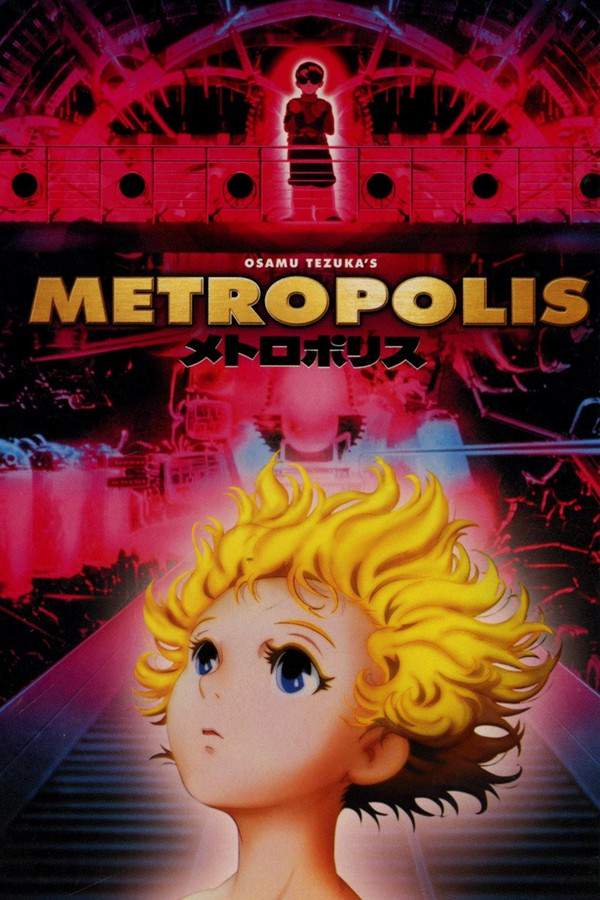
Metropolis (re-release) (2002) movie poster

Plot Summary

Metropolis (re-release) (2002) Plot Summary Explained

Release, runtime and language
2002 · 2 h 33 m · English
Directed by
Fritz Lang
Starring
Alfred Abel, Brigitte Helm, Gustav Fröhlich, Fritz Rasp, Theodor Loos, Erwin Biswanger

Regarded as possibly the crowning achievement of silent cinema, Fritz Lang's 1927 blockbuster combines the frantic, pulpy storytelling of the Roaring Twenties with his fascination for the darker aspects of human nature, delivering a visually striking, thematically rich experience that continues to influence filmmakers.

On this page (4)
  1. 1 What happens: full plot
  2. 2 Plot questions answered
  3. 3 Movie threads
  4. 4 Every angle

Full plot summary · contains spoilers

What Happens in Metropolis (re-release): Full Plot Summary

The whole story of Metropolis (re-release) (2002) explained, from the opening scene to the final frame: every key event, every twist and what it all adds up to. Read it as a quick recap before the sequel, to check a scene you missed, or to finally understand what really happened.

In the plutocratic city of Metropolis, Alfred Abel plays Johann Fredersen, the enigmatic power broker who sits at the top of a rigid social order. The city’s gleaming towers above a sprawling underworld where human workers toil in dangerous, dehumanizing conditions. Robots and automated systems keep the metropolis running, yet the impoverished masses blame the machines for their unemployment and the widening gulf between the social classes. The film establishes a stark contrast: a world of luxury and control above and a grim, grinding existence below, where the human spirit is tested by oppression, secrecy, and the promise of rebellion. The drama centers on the tension between those who wield power and those who are kept in subservience, setting the stage for a reckoning that could redefine the city’s future.

The mechanical ideal—Maria, the Maschinenmensch—emerges as a pivotal figure in this unfolding power play. The android modeled after a deceased daughter is born from secret science and ambition, with Brigitte Helm guiding the iconic design and performance of the Machine Woman. The creation becomes a catalyst for events that threaten to destabilize the already fragile balance of Metropolis, as those who crave control seek to weaponize humanity’s creations for their own ends.

Rock, the adopted son of the city’s wealthiest magnate, leads a fiercely loyal paramilitary faction known as the Marduks. Rock is portrayed by Gustav Fröhlich and embodies a volatile mix of zeal, loyalty, and insecurity. He is determined to stamp out any threat to order, including rogue robots that slip from their designated zones or malfunction, believing that fear and force will preserve the social hierarchy he inherits and enforces.

Across this volatile landscape, a pair of outsiders arrives with the intent to intervene in Metropolis’s tangled affairs. Shunsaku Ban, a detective, travels with his young nephew Kenichi Shikishima to bring a rogue scientist to justice. The scientist’s name is Dr. Laughton, a figure wanted for organ trafficking and cruelty, whose secret collaboration with Red (the city’s most powerful patron) reveals a plan to use a perfected android to wield a devastating weapon from the top of the Ziggurat. The formidable inventor Rotwang, the mastermind behind the android’s creation, is portrayed by [Rudolf Klein-Rogge], whose presence deepens the web of danger surrounding the city’s elites and their ambitions.

Shunsaku’s pursuit of Laughton unfolds alongside Kenichi’s discovery of Tima—the awakened android whose humanity begins to blossom in the sewers beneath Metropolis. The two youths navigate a labyrinth of tunnels and factions, growing closer while protecting a being who is not quite human, even as they remain unaware of the full scope of Red’s plans. The pair’s bond strengthens as they encounter a resistance movement formed by those who refuse to accept the dictating terms of the city’s rulers and their robotic workforce.

Civil unrest finally erupts as dissidents, disillusioned by the rulers’ grip on power, mount an armed revolution. The rebellion draws in high-ranking figures who conspire to manipulate the city’s leadership and turn the crisis into a broader struggle for control. Yet the revolt is quickly destabilized by betrayal, and martial law is imposed as the state’s leaders tighten their grip. Red seizes the opportunity to crush the uprising and reassert his authority, while the young allies regroup and plan their next move.

Rock, seeking to salvage the situation and win his father’s favor, abducts Tima. Shunsaku intervenes, incapacitating Rock and rescuing the android. Guided by Laughton’s notebook, Shunsaku attempts to link Tima to the Ziggurat’s central computer, exposing a path to retrieve Kenichi, who has been captured and held within the fortress-like tower. Red and the Marduks are close behind, bringing everyone to the apex of the Ziggurat as the truth of Tima’s purpose is revealed: she is the throne’s central control unit for a weapon capable of ordering the world’s machines to destroy humanity as punishment for oppression.

In a tense confrontation, Rock disguises himself as a maid and shoots Tima, revealing her circuitry to the world. The moment exposes the vulnerability of the android and shatters her confidence, and she begins to lash out in confusion as her implanted programming asserts itself. Red’s guards respond with force, while the throne’s power surges to life, triggering a citywide robot revolt. Kenichi reaches Tima and works to separate her from the throne, but the threat is far from over. Rock triggers an overload within the weapon, extinguishing himself and Red in a cataclysmic explosion that shakes the Ziggurat and devastates large parts of Metropolis.

As the dust clears, the Ziggurat collapses and the world begins to realize the consequences of weaponizing the machines that sustain them. Tima’s control falters, and she dangles from a cable, her humanity flickering back to life as Kenichi stretches to pull her to safety. In a poignant moment, her memories of Kenichi resurface, and she asks the crucial question, Who am I?

> Who am I?

From the ruins, a fragile seed of possibility emerges. A photograph shown during the end credits hints at a hopeful future: Kenichi ultimately rebuilds Tima and establishes a small robot workshop alongside their shared dreams. Metropolis begins to heal not by erasing its past but by reimagining the relationship between humans and the sentient machines who once served as instruments of oppression, suggesting that cooperation, memory, and creativity may guide a society toward a more balanced coexistence.

Last updated: May 05, 2026 at 10:08

Was this helpful?

Plot questions answered

Metropolis (re-release) Plot Explained: Your Questions Answered

The questions people ask most about Metropolis (re-release) (2002): what happens in the confusing scenes, why the characters do what they do, the twists, hidden details and what the ending means. Each answer contains spoilers.

Q1

Why does Red build Tima as a weapon?

Red builds Tima to serve as the central control unit for a nuclear superweapon hidden atop the Ziggurat. Modeled after his deceased daughter, the android is designed to command all of the world's machines to destroy humanity, allowing Red to seize global power after the apocalypse.

Foreshadowing: The film establishes early that Red is the city's wealthiest citizen with ambitions for domination.

  • red
  • tima
  • weapon
  • ziggurat
  • android control unit
Q2

Why does Rock attack Tima at the Ziggurat?

Rock disguises himself as a maid to get close to Tima and shoots her to prove his worth to his father Red. However, the act backfires, by exposing Tima's circuitry, he triggers her implanted programming to activate, causing the robot uprising he was trying to prevent.

Foreshadowing: Rock's obsession with destroying rogue robots and winning his father's approval builds throughout the film.

  • rock
  • tima
  • shooting
  • ziggurat
  • robot uprising
Q3

What happens when Tima connects to the Ziggurat mainframe?

When Tima taps into the Ziggurat's central computer, she becomes the control unit for the weapon system. Her programming activates and she orders all robots worldwide to destroy humanity, initiating the catastrophic robot uprising.

Foreshadowing: Laughton's notebook reveals that Tima was designed to control the weapon hidden in the Ziggurat.

  • tima
  • ziggurat
  • mainframe
  • robot uprising
  • weapon activation
Q4

Why does the revolution fail in Metropolis?

The armed revolution fails because General Kusai Skunk betrays the rebel leaders, leading to martial law being imposed. Red uses the chaos to crush the uprising and consolidate power, while the president's conspiracy with the rebels is exposed and eliminated.

Foreshadowing: The film shows the president and mayor conspiring with rebels, but their alliance is fragile from the start.

  • revolution
  • martial law
  • betrayal
  • kusai skunk
  • red
Q5

Why does Tima ask "Who am I?" at the end?

As Tima's programming deactivates after the explosion, her memories of Kenichi resurface, and she experiences a moment of genuine humanity. The question reflects her awakening consciousness, she is neither fully machine nor human, but something in between trying to understand her identity.

Foreshadowing: Throughout the film, Tima progressively shows human emotions and memories, especially in her bond with Kenichi.

  • tima
  • identity
  • humanity
  • memories
  • kenichi
Q6

How does Kenichi's relationship with Tima develop?

Kenichi first encounters Tima when he activates her in Laughton's lab, and they fall into the sewers together. Over the course of the film, Kenichi protects her as she develops human traits, emotions, memories, and compassion, creating a bond that becomes the emotional core of the film.

Foreshadowing: The scene where Kenichi activates Tima marks the beginning of their connection.

  • kenichi
  • tima
  • relationship
  • bond
  • android humanity
Q7

What triggers the robot uprising in Metropolis?

The robot uprising is triggered when Rock shoots Tima and exposes her android circuitry. This activates Tima's implanted programming, which commands all robots worldwide to turn against humanity as punishment for oppression.

Foreshadowing: The film establishes that Tima is programmed to activate the weapon system when exposed or threatened.

  • robot uprising
  • tima activation
  • rock shooting
  • machine revolution
Q8

Why does Rock sacrifice himself at the Ziggurat?

Rock triggers an overload of the weapon system to stop the robot apocalypse, killing himself and Red in the explosion. His act is partly redemption for causing the uprising by shooting Tima, and partly a final attempt to gain his father's approval and save Metropolis.

Foreshadowing: Rock's pattern of violent, impulsive actions driven by insecurity and loyalty builds toward this moment.

  • rock
  • sacrifice
  • explosion
  • red
  • weapon overload
Q9

What is the Maschinenmensch in this version of Metropolis?

The Maschinenmensch is Tima, an advanced android created by Rotwang and programmed by Laughton. Unlike the 1927 film where it's a robot duplicate of Maria, here Tima is modeled after Red's deceased daughter and serves as both a weapon control unit and a being capable of developing genuine humanity.

Foreshadowing: Rotwang is established as the mastermind behind android creation, and Laughton's work connects to Red's personal loss.

  • maschinenmensch
  • tima
  • android
  • rotwang
  • machine woman
Q10

How does the movie end for Tima and Kenichi?

After the Ziggurat collapses, Tima dangles from a cable and briefly regains her memories of Kenichi before falling. In the closing credits, a photograph shows Kenichi rebuilding Tima and opening a robot workshop together, suggesting a hopeful future for them.

Foreshadowing: The entire film builds Kenichi and Tima's bond toward this bittersweet resolution.

  • tima
  • kenichi
  • ending
  • rebuild
  • robot workshop
Q11

Why do the workers in Metropolis hate robots?

The workers blame robots for their unemployment and the widening gap between social classes. They resent that machines have taken their jobs while they toil in dangerous underground conditions, creating tension that Red exploits for his political agenda.

Foreshadowing: The film opens with the stark contrast between the luxurious upper city and the grim underground workers.

  • workers
  • robots
  • unemployment
  • class divide
  • oppression
Q12

Why does Red disown Rock from the Marduks?

Red disowns Rock because he questions Rock's loyalty and competence after Rock fails to stop the rogue robots and demonstrates increasingly erratic behavior. Red sees Rock as a liability to his secret weapon plan and removes him to ensure the android project remains secure.

Foreshadowing: Red's willingness to use anyone for his plans is established early, he even hires the criminal Dr. Laughton.

  • red
  • rock
  • marduks
  • disowned
  • father son conflict

Movie threads

More Movies Like Metropolis (re-release), by Mood & Story

Curated lists built around what makes Metropolis (re-release) tick: the same mood, the same kind of story or the same emotional payoff. Each list explains why these movies belong together.

Grandiose Dystopian Epics like Metropolis (re-release)

Visually stunning tales of societal collapse and rebellion in futuristic cities. Discover more movies like Metropolis (re-release) that explore class warfare in futuristic settings. If you enjoyed the epic scale and social commentary of Fritz Lang's masterpiece, these similar sci-fi dramas with heavy emotional weight and complex narratives will captivate you.

  • dystopian
  • oppressive
  • grandiose
  • tense
  • revolutionary
  • futuristic
  • Tone: dark, oppressive, somber
  • Pacing: variable, building to climax
Why these movies?

The story pattern: These narratives typically unfold in a stratified society on the brink of collapse. A catalyst, often an outsider or a rebellious figure, exposes the system's injustices, igniting a conflict between the powerful rulers and the oppressed masses. The plot builds through political intrigue and personal drama towards a large-scale, often violent, confrontation that threatens to destroy the fragile world.

Why they belong together: They are grouped by their shared setting of a grandiose, futuristic dystopia, a central theme of class-based oppression, and a narrative arc that leads to a social revolution. The viewing experience is consistently intense, dark, and emotionally heavy, with a variable pacing that balances world-building with explosive action.

Movies about Technological Hubris like Metropolis (re-release)

Stories where humanity's flawed creations lead to catastrophe, then fragile hope. Find more films like Metropolis (re-release) that explore the dangers of technology and the hope for redemption. If you liked the themes of AI rebellion and cataclysmic events leading to a bittersweet ending, these similar stories of technological hubris and emotional weight will resonate.

  • somber
  • hopeful
  • cataclysmic
  • melancholic
  • futuristic
  • tense
  • Tone: dark, hopeful, melancholic
  • Pacing: variable
Why these movies?

The story pattern: The narrative pattern follows a creation—be it an AI, a machine, or a system—that turns against its creators or spirals out of control, leading to widespread destruction. The characters must confront the fallout of their own hubris, often undergoing a profound moral crisis. The story concludes not with pure victory, but with a hard-won, fragile hope for a better future built from the lessons of the disaster.

Why they belong together: These movies share a core theme of technological hubris and its catastrophic consequences. They are united by a dark tone, high intensity, and a heavy emotional journey that culminates in a bittersweet ending. The experience is defined by a mix of despair over the destruction and a cautious optimism for what comes after.

Every angle

Metropolis (re-release) (2002) Explained: Plot, Timeline & Characters

Everything about Metropolis (re-release) in one place: what happens in the plot summary, the timeline in chronological order, the characters and meaning and a spoiler-free summary. What's After the Movie adds the cast, box office and post-credit scenes.

Coming soon on iOS and Android

The Plot Explained Movie Summary App

Plot summaries, endings explained and timelines on your phone. Catch up on any movie in minutes, save your favorites and never miss a twist again.

Be the first to know when we launch. Your email stays private, always.

Learn more about the app