Plot Explained Spoilers guaranteed!
Plot Explained

Browse by genre

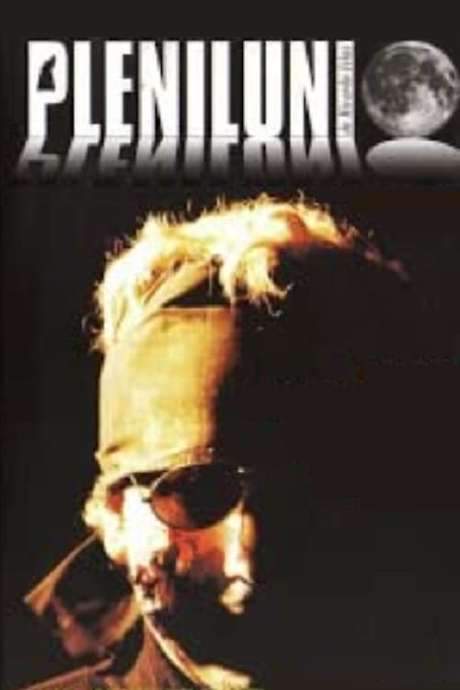
Mekhong Full Moon Party (2002) movie poster

Plot Summary

Mekhong Full Moon Party (2002) Plot Summary Explained

Release, runtime and language
2002 · 119 mins · Thai
Loading streaming availability…
Directed by
Jira Maligool
Starring
Boonsong Nakphoo, Surasee Patham, Noppadol Duangporn, Somlek Sakdikul, Boonsri Yindee, Jarupus Pattamasiri

Questions swirl—divine phenomenon, human fabrication, or natural illusion? A university student harboring a hidden secret returns to his hometown for the annual Full Moon Party, a celebration of a spectacular fire‑ball shower whose mysterious origins are hotly contested. He learns that only what is seen can be trusted.

On this page (6)
  1. 1 Where to watch
  2. 2 What happens: full plot
  3. 3 Plot questions answered
  4. 4 Movie threads
  5. 5 Movies like Mekhong Full Moon Party
  6. 6 Every angle
Loading streaming availability…

Full plot summary · contains spoilers

What Happens in Mekhong Full Moon Party: Full Plot Summary

The whole story of Mekhong Full Moon Party (2002) explained, from the opening scene to the final frame: every key event, every twist and what it all adds up to. Read it as a quick recap before the sequel, to check a scene you missed, or to finally understand what really happened.

Khan, a Nong Khai native now studying at a Bangkok university, returns home for the annual Naga fireballs festival, a tradition that has long sparked debate about its origins and what it may really be.

At the festival, Dr. Norati argues that science can explain the glowing phenomenon, while Dr. Surapol contends that the fireballs are manmade and part of a hoax. The clash between empirical inquiry and myth shrouds the celebration with tension, inviting viewers to weigh evidence against belief.

Khan knows the truth behind the spectacle. He grew up as a dek wat at a Buddhist temple across the Mekong in Laos, helping the temple’s abbot and the monks there to create fireballs and plant them on a bed along the river. Those childhood days forged not only the craft behind the illusion but also his remarkable swimming ability, which earned him an athletic scholarship and a future that seemed to drift away from the ceremony’s secrets.

Now, the temple’s abbot, Luang Poh Loh, seeks Khan out and begs him to help again with the planting of the fireballs. But Khan, weary of perpetuating a myth and weary of the crowds it draws, refuses. His decision sets in motion a quiet confrontation between two worldviews that could alter how the festival is celebrated and understood by the community.

Luang Poh Loh remains calm and philosophical, offering a guiding sentiment that resonates beyond the festival’s glow: Do what you believe, believe in what you do.

The story unfolds as a study of memory, duty, and the difficult choices that come with upholding a tradition. It presents science and faith as competing forces within a shared cultural space, each speaking to a different truth about the same luminous signals rising from the Mekong. In doing so, it invites audiences to consider how communities negotiate the boundaries between explanation and faith, while honoring the personal histories that shape who we become.

Last updated: February 20, 2026 at 18:44

Was this helpful?

Plot questions answered

Mekhong Full Moon Party Plot Explained: Your Questions Answered

The questions people ask most about Mekhong Full Moon Party (2002): what happens in the confusing scenes, why the characters do what they do, the twists, hidden details and what the ending means. Each answer contains spoilers.

Q1

Why does Khan refuse to help with the fireballs?

Khan refuses because he is weary of perpetuating a myth and the crowds it draws. After leaving his childhood life at the temple and gaining an athletic scholarship through swimming, he no longer wants to be part of deceiving the community. He believes the fireballs are a lie that has gone on long enough.

  • khan refusal
  • fireballs tradition
  • dek wat
  • personal choice
Q2

What is a dek wat and what did Khan do at the temple?

Dek wat means a temple child or novice in Thai/Laos Buddhist tradition. As a young boy, Khan lived at a Buddhist temple across the Mekong in Laos and helped the abbot and monks create fireballs, planting them along the riverbed. This work was part of his daily duties at the temple.

  • dek wat
  • buddhist temple
  • laos
  • temple child
  • monks
Q3

How did Khan develop his swimming ability?

Khan developed his swimming ability during his time at the temple. The physical work of helping plant fireballs and the discipline of temple life forged his body and endurance, which earned him an athletic scholarship to study in Bangkok. His swimming talent is directly tied to his childhood at the temple.

  • swimming
  • athletic scholarship
  • bangkok university
  • temple training
Q4

What do the scientists say about the Naga fireballs?

Dr. Norati argues that science can explain the glowing phenomenon through natural causes, while Dr. Surapol contends the fireballs are manmade and part of a hoax. The debate represents a clash between empirical inquiry and spiritual belief about what causes the glowing orbs to rise from the Mekong.

  • scientific explanation
  • dr norati
  • dr surapol
  • fireballs phenomenon
  • hoax
Q5

Why does the abbot ask Khan to help with the festival again?

The abbot, Luang Poh Loh, seeks Khan's help because the young man possesses the unique skill and experience needed to create and plant the fireballs convincingly. The abbot needs Khan's assistance to continue the tradition that the community has come to expect and believe in.

  • luang poh loh
  • abbott
  • fireballs planting
  • tradition request
Q6

What does the abbot mean by 'do what you believe, believe in what you do'?

The abbot's statement is a philosophical stance that frames the conflict as a personal test of conviction rather than a simple choice between science and religion. He suggests that each person must follow their own truth, whether that means continuing the tradition or revealing its secrets. It leaves room for individual choice within the community.

  • philosophy
  • belief
  • conviction
  • personal truth
  • tradition vs truth
Q7

How are the Naga fireballs actually made?

The fireballs are manually created by the temple monks with the help of assistants like young Khan. They craft the fireballs and plant them on a bed along the riverbed in the Mekong, where they are later released to appear as mysterious glowing orbs rising from the water, a spectacle that appears miraculous to observers.

  • fireballs creation
  • manual制作
  • riverbed
  • mekong ritual
  • illusion
Q8

What happens to the festival after Khan refuses to participate?

The festival proceeds but its future becomes uncertain. Khan's refusal signals a potential breaking point in the tradition. The story ends ambiguously, with the truth about the fireballs remaining contested and the community left to decide whether the celebration will adapt or continue in its traditional form.

  • festival future
  • tradition ending
  • community decision
  • open ending
Q9

What is Khan's secret about the fireballs?

Khan's secret is that he personally helped create the Naga fireballs as a child at the temple. He knows the entire ritual is a human-made spectacle, not a divine miracle. This knowledge is what drives his refusal to perpetuate the deception as an adult.

  • khan secret
  • childhood
  • deception truth
  • fireballs secret
Q10

What is the central conflict between science and faith in the film?

The film presents a tension between Dr. Norati's scientific view that the fireballs have a natural explanation and Dr. Surapol's claim that they are a manmade hoax, versus the believers who accept them as a miracle. Khan sits at the center, knowing the truth but torn between revealing it and honoring tradition.

  • science vs religion
  • faith vs evidence
  • belief system
  • miracle debate
Q11

Why is Khan's return home so difficult for him?

Khan's return is difficult because he must confront his past identity as a temple child while living his new life as a Bangkok university student. The festival forces him to choose between his old self, which kept the secret and gained his athletic future through temple discipline, and his new desire for honesty about the illusion.

  • identity conflict
  • past vs present
  • bangkok university
  • homecoming

Movie threads

More Movies Like Mekhong Full Moon Party, by Mood & Story

Curated lists built around what makes Mekhong Full Moon Party tick: the same mood, the same kind of story or the same emotional payoff. Each list explains why these movies belong together.

Quiet Journeys of Cultural Return and Introspection like Mekhong Full Moon Party

Characters returning to their roots confront personal secrets and cultural identity. Discover movies like Mekhong Full Moon Party, where characters return home to face secrets and cultural identity. If you enjoyed the introspective atmosphere and themes of personal duty, these similar dramas and coming-of-age stories will resonate.

  • contemplative
  • nostalgic
  • atmospheric
  • philosophical
  • introspective
  • quiet
  • Tone: melancholic, reflective, philosophical
  • Pacing: slow, deliberate, atmospheric
Why these movies?

The story pattern: The narrative typically revolves around a character's physical return to a place laden with personal history, triggering an internal journey. The conflict is often internal and philosophical, pitting individual truth against communal beliefs or family duty, leading to a reflective and often ambiguous resolution.

Why they belong together: These films share a specific emotional and narrative pattern: a slow, contemplative pace, a melancholic tone, and a focus on the internal conflict of a protagonist reconciling their past with their present self within a distinct cultural setting.

Atmospheric Philosophical Dramas with Ambiguous Endings like Mekhong Full Moon Party

Slow-burn stories exploring faith versus reason without clear answers. Find movies similar to Mekhong Full Moon Party that blend mystery and drama with philosophical depth. If you liked the ambiguous ending and the exploration of faith vs. reason, these contemplative films offer a comparable thoughtful experience.

  • philosophical
  • atmospheric
  • ambiguous
  • tense
  • contemplative
  • uncertain
  • Tone: melancholic, tense, uncertain
  • Pacing: slow, contemplative
Why these movies?

The story pattern: The plot serves as a vessel to explore a central ideological conflict. Character development is secondary to the thematic exploration, which unfolds slowly through atmospheric tension and dialogue. The story deliberately avoids a definitive conclusion, inviting the viewer to sit with the unresolved questions.

Why they belong together: This thread groups films based on their shared focus on philosophical tension, a slow and atmospheric pacing that encourages contemplation, and an ambiguous ending that prioritizes intellectual engagement over narrative closure.

If you liked this

Movies Like Mekhong Full Moon Party

Similar movies to Mekhong Full Moon Party: the same genre, themes or kind of story. Each one comes with its own plot summary, timeline and ending explained.

Browse all movie summaries

Every angle

Mekhong Full Moon Party (2002) Explained: Plot, Timeline & Characters

Everything about Mekhong Full Moon Party in one place: what happens in the plot summary, the timeline in chronological order, the characters and meaning and a spoiler-free summary. What's After the Movie adds the cast, box office and post-credit scenes.

Coming soon on iOS and Android

The Plot Explained Movie Summary App

Plot summaries, endings explained and timelines on your phone. Catch up on any movie in minutes, save your favorites and never miss a twist again.

Be the first to know when we launch. Your email stays private, always.

Learn more about the app