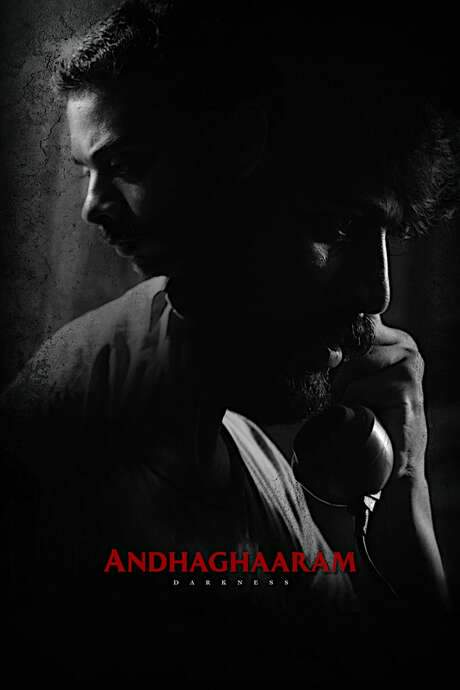
Malan is a 25-year-old who finds himself unemployed and spends his days chasing cricket with friends. His phasmophobia runs deep, so much so that after sunset he retreats to the safety of home, insisting his widowed mother, Geetha, accompany him to the bathroom and even to meals. This reliance quickly grates on his family—especially his brother Gamini and sister-in-law Nirmala—as well as the kids in the house.
One night, a spark appears when Malan meets a girl named Shaini Shaini, and he flirts to win her attention while keeping his true nerves hidden. Shaini, in turn, shows interest, and the budding romance seems possible. Meanwhile, the cricketers must abandon their usual ground for a new, rumored haunted site. A strange weather shift sends them away, and Malan even brings home his stumps stained with the blood of a buried corpse, a detail that unsettles him and sows unease at home.
Malan becomes fixated on Shaini, who invites him to a dinner. Yet fear of ghosts keeps him cautious, so he brings his whole family along to the hotel. At the dinner, his mother approves the relationship and begins arranging a meeting with Shaini’s family. In the days that follow, Geetha and Nirmala witness a string of eerie occurrences: the house seems haunted, especially the hallway, feeding their suspicions that something otherworldly is at work. They seek help from an exorcist, who prescribes three rituals to test for a spirit’s presence in their home.
- A coconut rests on a Rangoli while prayers are spoken; the coconut slowly rotates on its own.
- An egg sits on a pan and watchers note whether it changes color or explodes.
- A lit lamp is left with two drops of blood; if a spectral visitor appears and licks the blood, they know they’re dealing with a spirit.
After performing the rituals, the family’s fears are vindicated. They hire two priests to exorcize the ghost, but the priests turn out to be conmen and escape with their lives. That same night, Malan is possessed by the spirit, and he begins behaving in an increasingly effeminate way, donning women’s clothes and jewelry, and distancing himself from Shaini. The possession reveals a trio of spirits inhabiting him: a violent woman named Maya, a Tamil Hindu man named Ramu, and a learning-disabled boy who all share Malan’s body. With the possession, Malan commits brutal acts—hanging a woman and injuring a thug named Wasantha with his van. The family seeks help from a Buddhist monk, who manages to drive the entity away.
The ghostly woman’s story then comes to light. In the past, a young boy named Mayantha faced his father’s rejection after revealing his gender identity. Mayantha is taken in by a Tamil man named Ramu, who has a son with a disability. Maya—dissatisfied with not becoming a doctor—adopts another young transgender person named Madhuri/Madhawi and throws her energies into supporting them both. When Madhuri leaves to study medicine abroad, Maya purchases a plot of land where she intended to build a hospital for the poor, only to have Minister Ashoka seize it. Maya confronts the minister, who murders her and also kills Ramu and his son. Before dying, Maya vows to target the minister, his wife, and his henchmen, including Shantha. Their bodies are buried on Maya’s land.
The monk, moved by Maya’s tale, admits his duty but chooses to trap her instead. Hearing Maya’s story galvanizes Malan, and he bravely agrees to let Maya possess him again, despite the danger. Maya returns to confront the minister and, with her fellow spirits, eliminates his henchmen in a visceral showdown. The minister seeks sanctuary in a Kali temple, which Maya is forbidden to enter, yet she pleads to the deity for justice and pursues him inside. The three spirits unite to end the minister’s life.
A few years pass, and Malan has used Maya’s wishes as a blueprint to build a hospital for Dr. Madhuri. The conclusion reveals Maya’s presence as a symbiotic force within Malan, ready to emerge and help when the moment calls.
In the end, what remains is a story where fear, memory, and a harsh sense of justice intertwine. The hospital stands as Maya’s lasting testament, a beacon for the poor, and Malan carries the ghost’s influence within him as a quiet, enduring partnership that keeps him grounded—and perhaps ready for the next challenge.