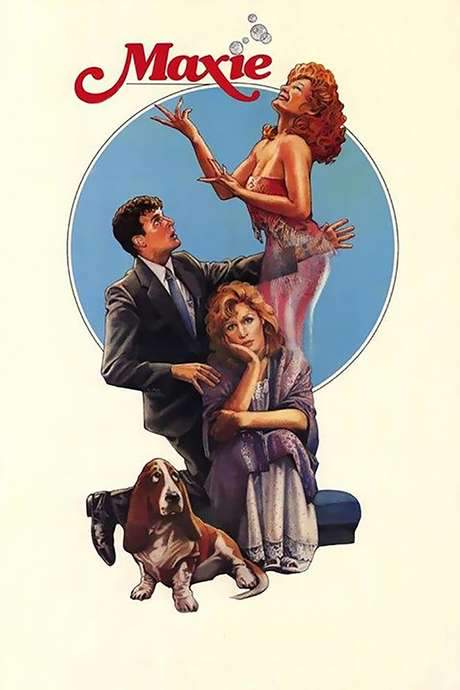
When Nick Chaney and his wife Jan / Maxie move into an old San Francisco apartment, they uncover a message tucked beneath decades of wallpaper: Maxie Malone lived here! Read it, and weep! The quirky landlady upstairs is at once amused and overwhelmed by the discovery, and she spins the tale of a brash young actress from the 1920s who vanished after a fateful car crash just before she could nail a Hollywood audition.
Maxie Malone’s brief film legacy is all that remains—a few minutes captured on celluloid. Nick, curious and practical, digs up that fragment of history and watches it with Jan. The moment the screen flickers to life, Jan heads to bed, but Nick is drawn back by a voice that insists he play the clip again. The voice seems to originate from the grain of the film itself and from Maxie’s presence, though Nick initially chalks it up to a stressed mind. The figure of Maxie partially materializes in the room, urging him to replay the scene. After a second viewing, the apparition dissolves, and Nick retreats to sleep, convinced he’s simply imagined the whole thing.
The next day, Nick’s boss invites them to a ritzy party, a test of nerves for Jan who feels out of place among San Francisco’s high-society crowd. But the spirit of Maxie has not faded; it has simply found a new vessel. When Maxie takes over Jan’s body, the transformation is striking: Jan’s reserved demeanor gives way to unbridled glamour. The newly infused Maxie flirts boldly, dances with reckless abandon, and performs a vampiric take on the standards, Bye Bye Blackbird, draped over the grand piano and captivating the room. The night spirals into thrill as Nick and “Jan”—possessed by Maxie—slip away from propriety, sneaking a kiss on a deserted amusement park merry-go-round. Their escapade is interrupted by a policeman, but Nick improvises—a quick lie keeps them from trouble, and the pair escapes into the night.
Yet every possession must be resolved so that Jan can reclaim her own life. The path to freedom lies in a dramatic audition for the lead in a new film production of Cleopatra. In this pivotal moment, Jan is paired with the real-life star Harry Hamlin appearing as himself, with Maxie’s spirit lending Jan an unmistakable, fearless stage presence. The performance dazzles the production team, and Jan—though still colored by Maxie’s irrepressible feminine energy—emerges freer and more confident in embracing her own sexuality. Maxie’s soul, having found a final note on the screen and stage, moves on in the afterlife, leaving Jan strengthened, liberated, and more at ease with herself than before.
In the end, the strange duet of Jan and Maxie becomes a conduit for transformation rather than a haunting, offering a wistful meditation on memory, artistry, and the enduring drive to express who you truly are.