Year: 1985
Runtime: 57 mins
Language: English
Directors: Annabel Jankel, Rocky Morton
In a hyper‑wired future where media dominates, reporter Edison Carter fights corruption and corporate greed. He uncovers that his employer, Network 23, has begun using a dangerous subliminal advertising technique called “blip‑verts,” which can be fatal to viewers.
Warning: spoilers below!
Haven’t seen Max Headroom: 20 Minutes into the Future yet? This summary contains major spoilers. Bookmark the page, watch the movie, and come back for the full breakdown. If you're ready, scroll on and relive the story!
Trace every key event in Max Headroom: 20 Minutes into the Future (1985) with our detailed, chronological timeline. Perfect for unpacking nonlinear stories, spotting hidden connections, and understanding how each scene builds toward the film’s climax. Whether you're revisiting or decoding for the first time, this timeline gives you the full picture.
Last updated: October 09, 2025 at 14:41
Find frequently asked questions about the Max Headroom: 20 Minutes into the Future (1985) timeline, including chronological order, nonlinear jumps, cause-and-effect links, and scene sequence clarifications. This timeline FAQ helps explain when key events happen, how moments connect, and why the story unfolds in that specific order.
Blipverts are a hidden form of subliminal advertising that Network 23 uses to influence viewers. They are extremely dangerous because they can be fatal to certain viewers, even causing deadly explosions in some people. This is why Network 23 went to such lengths to cover up their existence.
The apartment explosion Carter investigates early on is later revealed to have been caused by blipverts.
Network 23 management pulled Carter off the story because the apartment explosion was actually caused by blipverts, a deadly subliminal advertising technique that the network was secretly using. Exposing the investigation would have revealed the corporation's involvement in the fatal scheme.
The pressure from above to drop the story hints that something larger than a simple explosion is being covered up.
Max Headroom was created by Bryce Lynch, a teenage computer genius working for Network 23. After Carter crashed in the parking garage, Lynch attempted to digitally copy Carter's mind and appearance to create a replacement that could serve as an alibi. The cloning process was imperfect, the digital copy didn't look exactly like Carter and began developing its own personality, repeatedly muttering 'Max Headroom,' thus creating the character.
The 'Max. Headroom 2.3m' sign that Carter crashes into foreshadows the digital entity's name.
After the digital clone proved imperfect, Lynch ordered Carter's disposal. However, the hired goons Breugal and Mahler decided to profit from the situation rather than simply eliminate him. They sold Carter to a body bank where his organs could be harvested for profit, turning what was supposed to be an execution into a lucrative black market transaction.
The goons' earlier description as sociopathic hints at their willingness to prioritize money over following orders.
After Breugal and Mahler sold the digital clone to Blank Reg, the owner of the pirate station Big Time, Reg recognized the character's potential as a provocative host. Max's rapid-fire delivery and fearless satire about Network 23 and its corporate sponsors resonated with audiences. The character quickly gained popularity, drawing viewership away from Network 23 and forcing Grossman to panic as the hijacked persona threatened to expose their operations.
Blank Reg's role as a provocateur behind pirate television establishes his willingness to broadcast controversial content.
Carter was fleeing Network 23 headquarters after being spotted by security cameras while retrieving evidence of the blipverts cover-up. As he raced through the parking garage on a motorcycle, Bryce Lynch remotely raised the barrier gates to trap him. A rising gate forced Carter to crash through a low-clearance sign marked 'Max. Headroom 2.3m,' causing his serious head injury.
Lynch's role as a computer genius working for the network establishes his ability to control the building's security systems.
The digital clone was an imperfect copy of Edison Carter's mind and appearance. During the imperfect cloning process, the digital copy began developing its own personality and identity issues. The phrase 'Max Headroom' became its only recognizable utterance, a glitch in its programming that reflected its fragmented sense of self and confusion about what it was supposed to be.
The cloning process was described as producing an imperfect result that 'does not resemble Carter.'
The summary indicates that Carter, recovering from his head injuries, managed to escape from the body bank and find his way back to Theora Jones. With her assistance, they coordinated efforts to expose the truth. The exact details of the escape aren't fully detailed in the summary, but it marks a turning point where Carter transitions from hunted victim to active pursuer of justice.
Carter's survival was already foreshadowed by the fact that the goons sold him to the body bank rather than killing him immediately.
Network 23 created blipverts as a subliminal advertising technique to influence viewer behavior without conscious awareness. Despite knowing they could be fatal to some viewers, and even cause explosions, the network concealed the danger to protect their advertising revenue and avoid the legal and public relations consequences of exposing their deadly marketing method. It represents the film's critique of corporate greed overriding public safety.
The corporate greed and corruption motif runs throughout the story, starting with management pulling Carter off the investigation.
The summary indicates that with Theora Jones's assistance, Carter publicly exposed Network 23, Bryce Lynch, and Grossman, triggering investigations and scrutiny of their corporate corruption. Both Lynch and Grossman were implicated in the conspiracy to cover up the blipverts danger and in the subsequent attempt to silence Carter and create the digital clone.
Grossman's fury at Carter's disappearance and his panic as Max Headroom gains popularity establish their culpability.
No, Max Headroom does not replace Edison Carter. The digital clone was an imperfect copy that developed its own separate personality and identity. Carter survives the crash and eventually escapes the body bank. At the end of the film, both the real Carter and the digital Max Headroom exist separately, Carter continues his journalism while Max remains on Big Time as the pirate station's controversial host.
The cloning attempt is described as failing because the clone 'does not resemble Carter and begins to develop its own personality.'
Big Time is a pirate television station run by Blank Reg, a provocateur who broadcasts controversial content outside corporate control. Unlike Network 23, Big Time operates outside the mainstream media system, allowing it to broadcast the kind of sharp social commentary and satire that corporate networks would suppress. This is where Max Headroom finds fame as a host.
Blank Reg is introduced as 'the provocateur behind the pirate television station Big Time.'
Discover curated groups of movies connected by mood, themes, and story style. Browse collections built around emotion, atmosphere, and narrative focus to easily find films that match what you feel like watching right now.
Bitingly cynical sci-fi that critiques corporate power and media manipulation.If you enjoyed the sharp social commentary of Max Headroom, you'll find similar movies here. These films and shows use science fiction to explore themes of media control, corporate espionage, and technological dread, offering a cynical but thrilling look at possible futures.
Stories in this thread typically follow an outsider or truth-seeker who uncovers a sinister conspiracy orchestrated by powerful institutions. The plot is a race against time to expose the truth, often set against a backdrop of a hyper-commercialized, technologically saturated world where identity and reality are fluid concepts.
These films are grouped together for their shared focus on using a high-tech, dystopian setting to deliver pointed social satire. They share a tense, anxious mood, a fast pace driven by conspiracy, and a cynical view of power structures, making the viewing experience both intellectually stimulating and thrilling.
Frantic investigations into lethal secrets hidden by powerful corporations.Find movies similar to Max Headroom where a lone investigator uncovers a deadly corporate conspiracy. These stories feature fast pacing, tense action, and themes of journalistic integrity against overwhelming corporate power, perfect for fans of urgent, high-intensity thrillers.
The narrative pattern involves a whistleblower or investigator discovering a technology or practice that is harmful to the public. They are then hunted by the corporation as they attempt to expose the truth, leading to a series of chases, narrow escapes, and a climactic confrontation where the victory is often qualified rather than absolute.
Movies in this thread share a core plot of exposing a corrupt system, creating a cohesive experience of urgency and tension. They are united by their fast pacing, high intensity, and focus on the moral conflict between individual truth and institutional power, resulting in a gripping and often cynical narrative.
Don't stop at just watching - explore Max Headroom: 20 Minutes into the Future in full detail. From the complete plot summary and scene-by-scene timeline to character breakdowns, thematic analysis, and a deep dive into the ending - every page helps you truly understand what Max Headroom: 20 Minutes into the Future is all about. Plus, discover what's next after the movie.
Read a complete plot summary of Max Headroom: 20 Minutes into the Future, including all key story points, character arcs, and turning points. This in-depth recap is ideal for understanding the narrative structure or reviewing what happened in the movie.
Discover the characters, locations, and core themes that shape Max Headroom: 20 Minutes into the Future. Get insights into symbolic elements, setting significance, and deeper narrative meaning - ideal for thematic analysis and movie breakdowns.
Get a quick, spoiler-free overview of Max Headroom: 20 Minutes into the Future that covers the main plot points and key details without revealing any major twists or spoilers. Perfect for those who want to know what to expect before diving in.
Discover movies like Max Headroom: 20 Minutes into the Future that share similar genres, themes, and storytelling elements. Whether you’re drawn to the atmosphere, character arcs, or plot structure, these curated recommendations will help you explore more films you’ll love.
Max Headroom: 20 Minutes into the Future (1985) Plot Summary & Movie Recap
Max Headroom: 20 Minutes into the Future (1985) Scene-by-Scene Movie Timeline
Max Headroom: 20 Minutes into the Future (1985) Spoiler-Free Summary & Key Flow
Movies Like Max Headroom: 20 Minutes into the Future – Similar Titles You’ll Enjoy
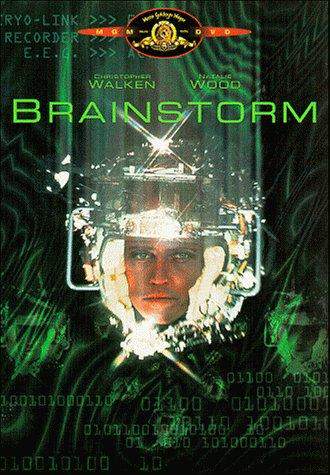
Brainstorm (1983) Complete Plot Breakdown
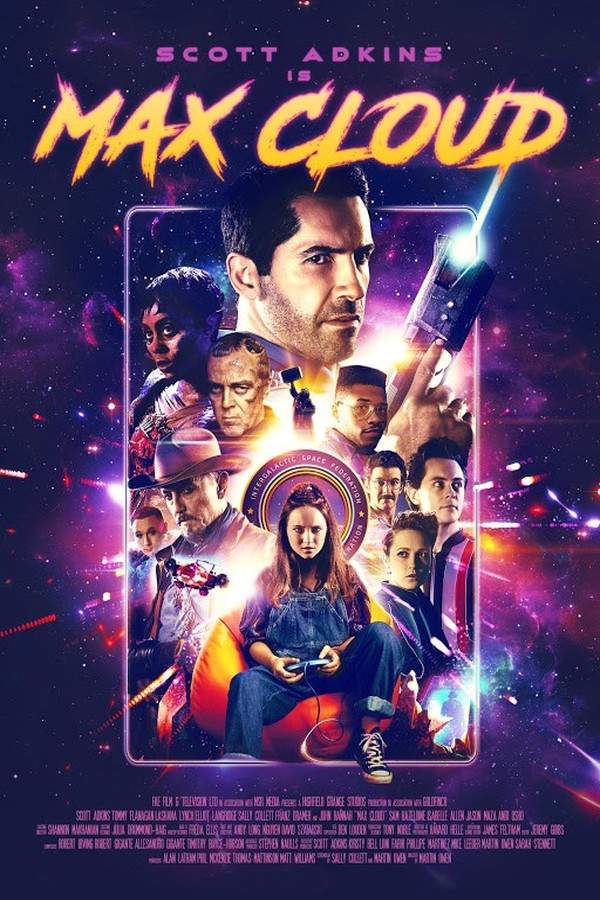
Max Cloud (2020) Plot Summary & Ending Explained
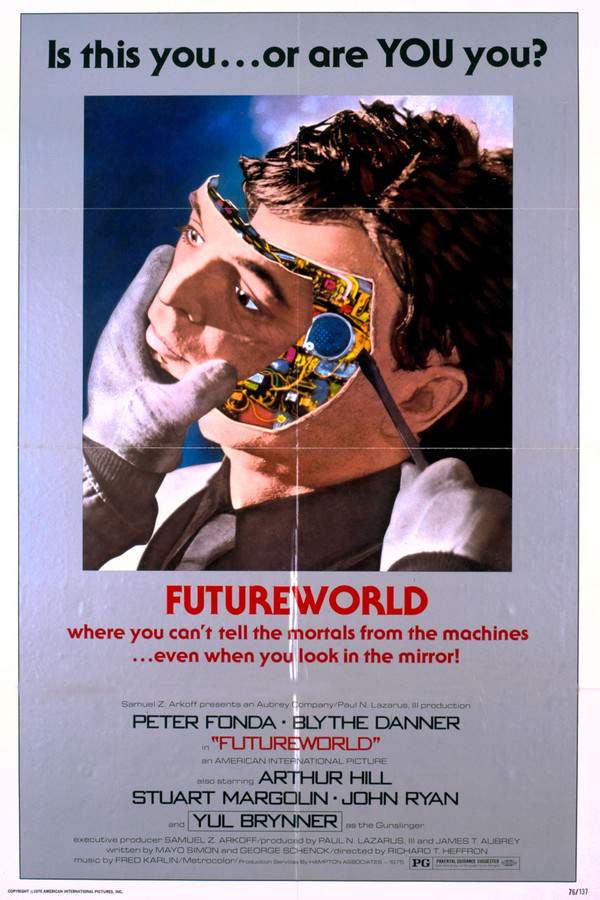
Futureworld (1976) Full Movie Breakdown
Maximum Surge (2003) Movie Recap & Themes
Future Schlock (1984) Movie Recap & Themes
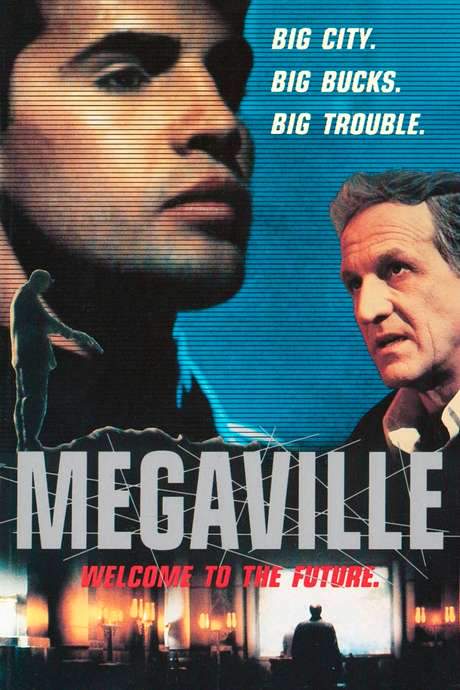
Megaville (1992) Ending Explained & Film Insights
Virtual Obsession (1998) Full Movie Breakdown
Maxmillian Tarzan (1999) Movie Recap & Themes
The Maxx (1000) Complete Plot Breakdown
The Twonky (1953) Film Overview & Timeline
RoboCop: The Future of Law Enforcement (1994) Film Overview & Timeline
The Drivetime (1995) Movie Recap & Themes
World on a Wire (1000) Complete Plot Breakdown
Alphaville (1965) Film Overview & Timeline
Plughead Rewired: Circuitry Man II (1994) Detailed Story Recap