Plot Explained Spoilers guaranteed!
Plot Explained

Browse by genre

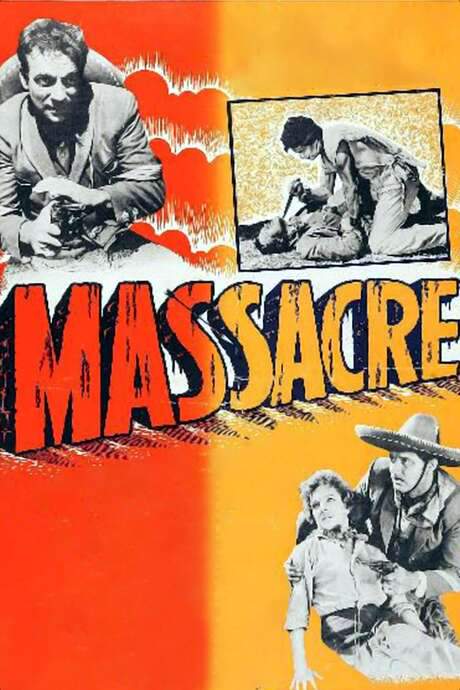
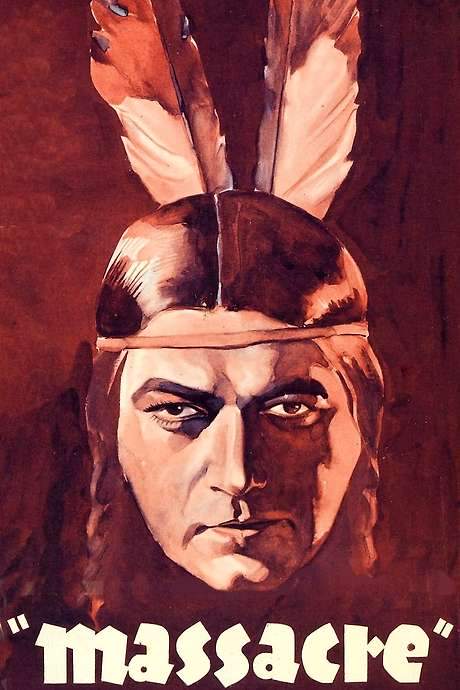
Massacre (1934) movie poster

Timeline

Massacre (1934) Timeline Explained – Every Event in Order

Release, runtime and language
1934 · 70 mins · English
Loading streaming availability…
Directed by
Alan Crosland
Starring
Ann Dvorak, Tully Marshall, Robert Barrat, Henry O'Neill, DeWitt Jennings, Claire Dodd

After his father, the tribal chief, dies, Joe Thunder Horse returns to his youth reservation only to discover his people are dying from disease and are being systematically stripped of their possessions and basic rights by corrupt Indian agents. Determined to right these wrongs, he journeys to Washington, confronting prejudice and hostility at every turn.

On this page (6)
  1. 1 Where to watch
  2. 2 Events in order (14)
  3. 3 Timeline questions answered
  4. 4 Movie threads
  5. 5 Movies like Massacre
  6. 6 Every angle
Loading streaming availability…

14 events in order · contains spoilers

Massacre Timeline: Events in Chronological Order

Every key event of Massacre (1934) in order, scene by scene, with when and where it takes place. Use it to untangle flashbacks, time jumps and parallel storylines, to refresh your memory before the sequel or to find the exact scene you are thinking of.

  1. Joe Thunderhorse stars in Chicago wild west show

    Joe Thunderhorse, star of a wild west show at the Century of Progress in Chicago, is treated as a spectacle by white showmen who commodify his Native identity. His rich white girlfriend flaunts him in front of curious friends, underscoring how his culture is used for entertainment rather than respected.

    When
    Opening sequence
    Where
    Chicago (Century of Progress)
  2. News of his dying father sends Joe back home

    When Joe learns his father Black Pony is on his death bed, he travels with his African American valet Sam to the Stone Eagle Reservation. He hopes to reconnect with his Native roots, but the encounter is shadowed by government intrusions and the uneasy 'Indian Problem' talk from Quissenberry.

    When
    Upon learning of his father’s illness
    Where
    Stone Eagle Reservation
  3. Father dies; Joe confronts Doc Turner

    Joe's father dies without recognizing him. He confronts Doc Turner, the government doctor who has never visited, and Turner pulls a gun on Joe. Joe knocks Turner out and disrupts a publicity stunt featuring Chief Black Star.

    When
    Soon after arrival
    Where
    Stone Eagle Reservation
  4. Disruption of the Black Star publicity stunt

    Joe disrupts the film footage of Chief Black Star’s promotion, threatening the white handlers and ending the stunt. The act makes clear Joe's willingness to challenge exploitation of Native people for profit.

    When
    The same day as the confrontation with Turner
    Where
    Stone Eagle Reservation
  5. Funeral for Black Pony; Native rites

    Back on the reservation, Joe's father dies and he refuses a white Reverend's burial. He sends his brother Adam to arrange a Native funerary rite, asserting Native sovereignty in death.

    When
    After the father's death
    Where
    Stone Eagle Reservation
  6. Jennie abducted and assaulted; car chase

    Jennie, Joe's 15-year-old sister, is abducted and raped by Thomas Shanks, an undertaker and a white government agent. Joe discovers her distress and pursues Shanks in a high-speed car chase, lassos him, and drags him down the dirt road. That night the community performs a traditional funerary ceremony.

    When
    The night of the assault
    Where
    Stone Eagle Reservation
  7. Quissenberry orders Joe's arrest

    The next morning Quissenberry warns about Joe’s violent 'pagan' behavior and orders his arrest. A staged trial with a sham defense leads to Joe pleading guilty, and he is heavily fined and jailed.

    When
    The following morning
    Where
    Stone Eagle Reservation / local courthouse
  8. Lydia helps Joe escape; journey to D.C.

    Lydia, a college-educated Native woman, helps Joe escape from jail. He then travels to Washington, D.C. to meet the Commissioner of Indian Affairs and press for Native rights.

    When
    After escape
    Where
    Jail → Washington, D.C.
  9. Dialogue in D.C. about Native rights

    In Washington, Joe confronts Commissioner J.R. Dickinson and discusses land, water power, oil rights, and the government's failure to protect Native communities. The dialogue reveals a moral clash over sovereignty and the treatment of Indigenous peoples.

    When
    In D.C.
    Where
    Washington, D.C.
  10. Arrest for Shanks' murder; Jennie kidnapped

    Back home, Joe is arrested for Shanks' murder, and Quissenberry has Jennie kidnapped to prevent testimony. This underscores the government’s ongoing manipulation of the case.

    When
    After returning from D.C.
    Where
    Stone Eagle Reservation
  11. Mass breakout and courthouse burning

    Fearing Joe's execution, Native men break Joe out of jail by storming the courthouse and burning it down. Joe pleads with the crowd to avoid another massacre.

    When
    Immediately after arrest
    Where
    Stone Eagle Reservation courthouse
  12. Jennie’s abuse exposed

    The mob tracks Jennie down by beating White Feather, a Native policeman, and they discover that White Feather has abused Jennie. The revelation exposes corruption within Native law enforcement aligned with government interference.

    When
    Following the breakout
    Where
    Nearby on the reservation
  13. Climax: shooting, arrests, and acquittal

    When government agents arrive, Quissenberry shoots Joe unprovoked. He and White Feather are arrested, and Joe is ultimately acquitted; Doc Turner and Quissenberry are removed from office.

    When
    Climactic confrontation
    Where
    Stone Eagle Reservation / on-site confrontation
  14. Resolution: Joe survives and starts anew

    Joe is revealed to have survived the gunshot. He reunites with Lydia on the rocks and accepts a job in the Indian Service at Stone Eagle Reservation, signaling a renewed commitment to Native affairs.

    When
    Epilogue
    Where
    Stone Eagle Reservation

Last updated: December 04, 2025 at 15:32

Was this helpful?

Timeline questions answered

Massacre Timeline Explained: Your Questions Answered

When does it happen, and why in that order? The questions people ask about the chronology of Massacre (1934): time jumps, flashbacks, cause and effect between scenes and the correct order of events, each answered with spoilers.

Q1

Why does Joe disrupt the Black Star publicity stunt?

Joe disrupts the publicity stunt because it's a exploitation scheme where white handlers use a Native man named Chief Black Star as a front to sell a fake Native remedy. When questions about money for the Native community go unanswered, Joe confronts the manipulators and threatens the white marketers, refusing to be part of a show that erases the community it claims to represent.

  • black star
  • exploitation
  • publicity stunt
  • native rights
  • money
Q2

Why does Joe refuse the white Reverend's burial for his father?

Joe refuses a white Reverend's burial because he wants a traditional Native funerary rite for his father Black Pony. He sends his brother Adam to find a Native man to conduct the ceremony, asserting Native sovereignty in death and rejecting the imposed religious and cultural practices of the white establishment.

  • black pony
  • funeral
  • native rites
  • reverend
  • tradition
Q3

What happens to Jennie Thunderhorse?

Jennie Thunderhorse, Joe's 15-year-old sister, is abducted and assaulted by Thomas Shanks, who is both an undertaker and a white government agent. Joe discovers her distress, pursues Shanks in a high-speed car chase across the reservation, lassos him, and drags him down the dirt road in retribution.

  • jennie thunderhorse
  • thomas shanks
  • assault
  • abduction
  • car chase
Q4

Why is Joe arrested after the funeral?

Joe is arrested because Quissenberry, a federal government agent, orders his arrest for what he calls Joe's violent 'pagan' behavior, referring to the traditional Native funerary ceremony and the brutal punishment of Shanks. A staged trial follows with a sham defense, forcing Joe to plead guilty. He is heavily fined and jailed.

  • quissenberry
  • arrest
  • trial
  • pagan
  • prison
Q5

Who is Lydia and why does she help Joe escape?

Lydia is a college-educated Native woman who helps Joe escape from jail. Her motivation stems from supporting Joe's cause and the shared goal of fighting for Native rights. She enables his journey to Washington D.C. to meet the Commissioner of Indian Affairs and press for systemic change.

  • lydia
  • escape
  • jail
  • washington
  • indian affairs
Q6

What happens during Joe's meeting in Washington D.C.?

In Washington, Joe confronts Commissioner J.R. Dickinson about land, water power, oil rights, cattle rangers, and timber, systems that have long blocked pro-Native legislation. The dialogue reveals the government's systemic failure to protect Native communities and includes the film's iconic line about how the government used to shoot Indians down and now cheats, starves, and kills them off through dirt and disease.

  • washington
  • commissioner dickinson
  • indian affairs
  • land rights
  • oil
  • massage quote
Q7

Why do the Native men break Joe out of jail and burn the courthouse?

The Native men break Joe out of jail and burn the courthouse because Joe has been arrested for Shanks' murder and Quissenberry has kidnapped Jennie to prevent her from testifying. Fearing Joe's execution and seeing no justice through legal means, the community takes dramatic action to prevent what they see as an inevitable massacre.

  • breakout
  • courthouse
  • jail
  • massacre
  • kidnapping
  • rescue
Q8

What does the 'massacre' quote mean in the movie?

The quote 'You used to shoot the Indian down. Now you should cheat him, starve him, kill him off by dirt and disease. It's a massacre anyway you take it' refers to the government's shift from direct violent persecution to systemic oppression through neglect, disease, poverty, and legal manipulation. The title 'Massacre' encompasses both physical violence and the slower, institutionalized destruction of Native communities.

  • massacre quote
  • genocide
  • government
  • oppression
  • disease
Q9

Who shoots Joe Thunderhorse at the climax?

Quissenberry, the white federal government agent, shoots Joe in cold blood during the climactic confrontation when government agents arrive. This act of unprovoked violence leads to Quissenberry's immediate arrest alongside White Feather, a Native policeman implicated in the corruption and abuse.

  • quissenberry
  • shooting
  • shootout
  • white feather
  • cold blood
Q10

What happens to Quissenberry and Doc Turner at the end?

After Quissenberry shoots Joe and is arrested, both Quissenberry and Doc Turner, the government doctor who never visited the sick elder, are removed from their posts. The corruption and abuse they inflicted on the Stone Eagle Reservation is exposed, bringing a measure of accountability though systemic problems remain.

  • quissenberry
  • doc turner
  • removed
  • arrested
  • corruption
Q11

Why does Joe accept a job with the Indian Service?

Joe accepts a position within the Indian Service at Stone Eagle Reservation because, despite the hard-won victory, he recognizes that meaningful change requires Native participation inside the system. Working alongside Lydia, he takes a hopeful but realistic path toward greater Native governance and stewardship of their lands.

  • indian service
  • job
  • resolution
  • hopeful
  • leadership
Q12

Why does Joe confront Doc Turner upon arriving at the reservation?

Joe confronts Doc Turner because the government doctor has never checked on his dying father Black Pony, neglecting his duty to the Native community. When Joe confronts him, Turner pulls a gun, escalating the tension and highlighting the hostility Joe faces from government officials supposed to help his people.

  • doc turner
  • confrontation
  • father
  • dying
  • negligence
Q13

What is Sam's role in the story?

Sam is Joe's African American valet who travels with him to the Stone Eagle Reservation. While not a major plot driver, Sam represents an ally in Joe's journey and highlights the intersection of different marginalized groups facing oppression during this period.

  • sam
  • valet
  • ally
  • supporting character
Q14

Why does Joe Thunderhorse return to the reservation?

Joe returns to the Stone Eagle Reservation when he learns his father Black Pony is on his deathbed. Though he has spent years away working in a wild west show and lost touch with his heritage, the news of his father's illness prompts him to reconnect with his Native roots and confront the struggles his people face.

  • return
  • father black pony
  • dying
  • heritage
  • roots

Movie threads

More Movies Like Massacre, by Mood & Story

Curated lists built around what makes Massacre tick: the same mood, the same kind of story or the same emotional payoff. Each list explains why these movies belong together.

Movies about fighting systemic injustice like Massacre

Stories where a character's anger fuels a grim, determined fight against a corrupt system. If you were moved by the righteous fury in Massacre, explore other films where characters confront powerful, corrupt systems. These movies often share a dark tone, heavy emotional weight, and a steady pacing that builds tension as the protagonist battles against overwhelming injustice, leading to a complex and impactful resolution.

  • angry
  • grim
  • tense
  • righteous
  • oppressive
  • determined
  • Tone: dark, angry, grim
  • Pacing: steady, deliberate
Why these movies?

The story pattern: These narratives typically begin with a personal or communal tragedy that exposes a deep-seated systemic flaw. The protagonist, often an outsider or someone deeply affected, embarks on a mission to confront the corrupt power structure. The journey is fraught with hostility and setbacks, building to a climax that may involve direct confrontation or a difficult appeal to a higher authority, with the ending acknowledging that systemic change is slow and costly.

Why they belong together: Movies are grouped here because they share a core narrative of challenging a powerful, unjust system. They create a cohesive experience through their dark tone, heavy emotional weight driven by themes of oppression, and a protagonist defined by their righteous anger and determination in the face of overwhelming odds.

Grim and dramatic Westerns similar to Massacre

Character-driven Westerns where a steady pace builds towards tense, morally complex conflicts. For viewers who appreciated the dark, dramatic tension of Massacre, this collection features other Westerns with a steady pacing and heavy themes. These films focus on character journeys through grim settings, dealing with injustice and moral conflicts, resulting in a tense and emotionally resonant experience rather than a simple action adventure.

  • grim
  • tense
  • melancholic
  • oppressive
  • dramatic
  • serious
  • Tone: dark, tense, melancholic
  • Pacing: steady, character-driven
Why these movies?

The story pattern: The narrative pattern involves a protagonist returning to or confronting a familiar place plagued by conflict. The story unfolds methodically, introducing a series of injustices or threats that create a sense of oppressive tension. The focus is on the character's internal and external struggles, leading to a climax that is often violent and cathartic but leaves lasting emotional scars, reflecting the complexity of the themes.

Why they belong together: These films are grouped by their shared vibe: a dark, dramatic tone within the Western genre, a steady pacing that builds palpable tension, and a focus on heavy themes like grief and injustice. They offer a more sober and intense take on the Western, distinguished by their emotional weight and moral seriousness.

If you liked this

Movies Like Massacre

Similar movies to Massacre: the same genre, themes or kind of story. Each one comes with its own plot summary, timeline and ending explained.

Browse all movie summaries

Every angle

Massacre (1934) Explained: Plot, Timeline & Characters

Everything about Massacre in one place: what happens in the plot summary, the timeline in chronological order, the characters and meaning and a spoiler-free summary. What's After the Movie adds the cast, box office and post-credit scenes.

Coming soon on iOS and Android

The Plot Explained Movie Summary App

Plot summaries, endings explained and timelines on your phone. Catch up on any movie in minutes, save your favorites and never miss a twist again.

Be the first to know when we launch. Your email stays private, always.

Learn more about the app