Massacre

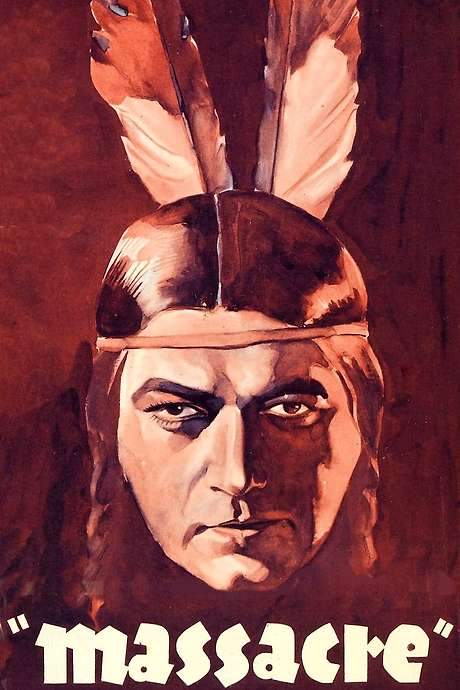
Massacre

Year: 1934

Runtime: 70 mins

Language: English

Director: Alan Crosland

WesternDrama

After his father, the tribal chief, dies, Joe Thunder Horse returns to his youth reservation only to discover his people are dying from disease and are being systematically stripped of their possessions and basic rights by corrupt Indian agents. Determined to right these wrongs, he journeys to Washington, confronting prejudice and hostility at every turn.

Warning: spoilers below!

Haven’t seen Massacre yet? This summary contains major spoilers. Bookmark the page, watch the movie, and come back for the full breakdown. If you're ready, scroll on and relive the story!

Timeline & Setting – Massacre (1934)

Explore the full timeline and setting of Massacre (1934). Follow every major event in chronological order and see how the environment shapes the story, characters, and dramatic tension.

Time period

1930s

The story unfolds in the early to mid-1930s, a period shaped by the Great Depression and shifting Native policy in the United States. The Century of Progress exposition in Chicago (1933–34) provides a backdrop of public spectacle and federal interest in Indigenous affairs. Government attitudes toward Native lands and rights drive the plot’s conflicts and the characters’ decisions.

Location

Stone Eagle Reservation, Chicago, Washington, D.C., Haskell Institute

The action centers on the Stone Eagle Reservation, where Native life and traditional rites collide with federal oversight. Much of the film unfolds against a high-profile wild west show in Chicago during the Century of Progress, which exoticizes Native identity for entertainment. The narrative also touches Washington, D.C. as Native rights and government policy come under scrutiny, with glimpses of Joe’s youth at the Haskell Institute grounding his cultural background.

🏞️ Stone Eagle Reservation 🎪 Century of Progress Wild West Show 🗽 Washington D.C. 🎓 Haskell Institute

Last Updated: December 04, 2025 at 15:21

Main Characters – Massacre (1934)

Meet the key characters of Massacre (1934), with detailed profiles, motivations, and roles in the plot. Understand their emotional journeys and what they reveal about the film’s deeper themes.

Chief Joe Thunderhorse (Richard Barthelmess)

A center-stage Native leader who is simultaneously a celebrated spectacle and a man wrestling with his cultural identity. He is fiercely protective of his family, quick to act, and willing to challenge white authority when justice for his people is at stake.

🪶 Heroic 💪 Protector 🗺️ Rebel

Lydia (Ann Dvorak)

A college-educated Native woman who helps Joe escape jail and becomes a voice of reason and resistance. She navigates prejudice with intelligence and courage, supporting Native rights and personal loyalty.

🎓 Education 🗣️ Ally ✊ Empowerment

Sam (Clarence Muse)

Joe’s loyal African American valet who stands by his side through the tense journey. He offers wisdom, practicality, and steadfast companionship in a hostile world.

🤝 Loyalty 🧭 Guide 🧵 Friendship

Elihu P. Quissenberry (Dudley Digges)

A white government agent who treats Indigenous people as a policy issue rather than a people. He schemes to arrest Joe, disrupt Native justice, and manipulate the system for bureaucratic gain.

⚖️ Oppression 🧠 Manipulation 🗺️ Power

Doc Turner (Arthur Hohl)

A government doctor whose neglect and opportunism mirror the broader failures of federal oversight. He becomes a direct antagonist when he confronts Joe and later faces consequences for his actions.

🧪 Medicine 🗽 Corruption 🧭 Authority

J.R. Dickinson (Henry O'Neill)

The Commissioner of Indian Affairs who frames policy as a struggle over resources and control. His dialogue frames Native lands as bargaining chips in national politics and economic interests.

🏛️ Policy 📜 Bureaucracy 🔎 Accountability

Adam Thunderhorse (James Eagles)

Joe’s brother who embodies family ties and the continuity of Native kinship. He supports Joe’s cause and represents the broader Native community seeking legitimacy and safety.

👨‍👦 Family 🛡️ Support 🧭 Ally

Jennie Thunderhorse (Agnes Narcha)

Joe’s 15-year-old sister who suffers abuse at the hands of a white government agent, becoming a catalyst for Joe’s pursuit of justice and the community’s outrage.

🩸 Trauma 👧 Vulnerability 🕊️ Resilience

Last Updated: December 04, 2025 at 15:21

Major Themes – Massacre (1934)

Explore the central themes of Massacre (1934), from psychological, social, and emotional dimensions to philosophical messages. Understand what the film is really saying beneath the surface.

🪶 Identity

Chief Joe Thunderhorse is torn between his Native heritage and life in a white-dominated world of entertainment. His return to the reservation reveals how cultural identity is manipulated or erased by public perception. The film probes what it means to belong to a community when personal loyalties are pulled in different directions.

⚖️ Injustice

Government agents and white authorities treat Native peoples as a problem to be managed rather than citizens with rights. The staged trial, arrest, and political pressure illustrate systemic racism and the fragility of Native justice. The narrative lays bare how law, policy, and bias converge to undermine Indigenous sovereignty.

🔥 Resistance

The Native community rises against oppression, culminating in the courthouse burning and a jailbreak that asserts control over their fate. Joe’s escape and pursuit of justice highlight collective resilience and solidarity. The ending reframes the struggle as a path to self-determination through service and community rebuilding.

Last Updated: December 04, 2025 at 15:21

Mobile App Preview

Coming soon on iOS and Android

The Plot Explained Mobile App

From blockbusters to hidden gems — dive into movie stories anytime, anywhere. Save your favorites, discover plots faster, and never miss a twist again.

Sign up to be the first to know when we launch. Your email stays private — always.

Explore Movie Threads

Discover curated groups of movies connected by mood, themes, and story style. Browse collections built around emotion, atmosphere, and narrative focus to easily find films that match what you feel like watching right now.

Movies about fighting systemic injustice like Massacre

Stories where a character's anger fuels a grim, determined fight against a corrupt system.If you were moved by the righteous fury in Massacre, explore other films where characters confront powerful, corrupt systems. These movies often share a dark tone, heavy emotional weight, and a steady pacing that builds tension as the protagonist battles against overwhelming injustice, leading to a complex and impactful resolution.

angrygrimtenserighteousoppressivedeterminedmelancholic

Narrative Summary

These narratives typically begin with a personal or communal tragedy that exposes a deep-seated systemic flaw. The protagonist, often an outsider or someone deeply affected, embarks on a mission to confront the corrupt power structure. The journey is fraught with hostility and setbacks, building to a climax that may involve direct confrontation or a difficult appeal to a higher authority, with the ending acknowledging that systemic change is slow and costly.

Why These Movies?

Movies are grouped here because they share a core narrative of challenging a powerful, unjust system. They create a cohesive experience through their dark tone, heavy emotional weight driven by themes of oppression, and a protagonist defined by their righteous anger and determination in the face of overwhelming odds.

Grim and dramatic Westerns similar to Massacre

Character-driven Westerns where a steady pace builds towards tense, morally complex conflicts.For viewers who appreciated the dark, dramatic tension of Massacre, this collection features other Westerns with a steady pacing and heavy themes. These films focus on character journeys through grim settings, dealing with injustice and moral conflicts, resulting in a tense and emotionally resonant experience rather than a simple action adventure.

grimtensemelancholicoppressivedramaticserioussomber

Narrative Summary

The narrative pattern involves a protagonist returning to or confronting a familiar place plagued by conflict. The story unfolds methodically, introducing a series of injustices or threats that create a sense of oppressive tension. The focus is on the character's internal and external struggles, leading to a climax that is often violent and cathartic but leaves lasting emotional scars, reflecting the complexity of the themes.

Why These Movies?

These films are grouped by their shared vibe: a dark, dramatic tone within the Western genre, a steady pacing that builds palpable tension, and a focus on heavy themes like grief and injustice. They offer a more sober and intense take on the Western, distinguished by their emotional weight and moral seriousness.

Unlock the Full Story of Massacre

Don't stop at just watching — explore Massacre in full detail. From the complete plot summary and scene-by-scene timeline to character breakdowns, thematic analysis, and a deep dive into the ending — every page helps you truly understand what Massacre is all about. Plus, discover what's next after the movie.

Massacre Summary

Read a complete plot summary of Massacre, including all key story points, character arcs, and turning points. This in-depth recap is ideal for understanding the narrative structure or reviewing what happened in the movie.

Massacre Summary

Massacre Timeline

Track the full timeline of Massacre with every major event arranged chronologically. Perfect for decoding non-linear storytelling, flashbacks, or parallel narratives with a clear scene-by-scene breakdown.

Massacre Timeline

Massacre Spoiler-Free Summary

Get a quick, spoiler-free overview of Massacre that covers the main plot points and key details without revealing any major twists or spoilers. Perfect for those who want to know what to expect before diving in.

Massacre Spoiler-Free Summary

More About Massacre

Visit What's After the Movie to explore more about Massacre: box office results, cast and crew info, production details, post-credit scenes, and external links — all in one place for movie fans and researchers.

More About Massacre

Similar Movies to Massacre

Discover movies like Massacre that share similar genres, themes, and storytelling elements. Whether you’re drawn to the atmosphere, character arcs, or plot structure, these curated recommendations will help you explore more films you’ll love.