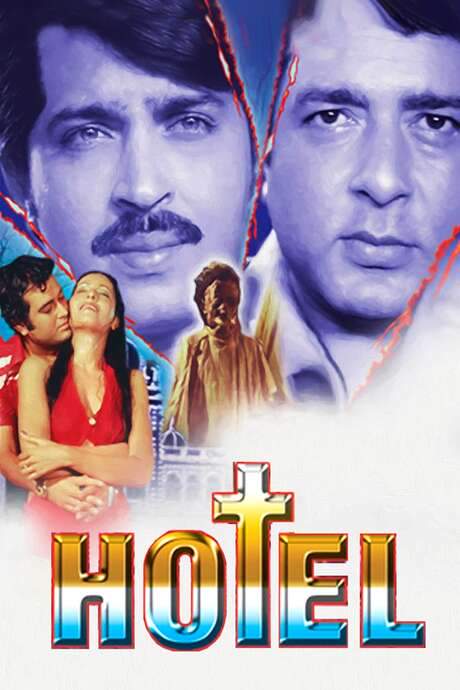
Mantra moves to Hyderabad after landing a job in a software company. Orphaned years ago, she has spent most of her life in hostels, building a quiet resilience that helps her navigate a new city. On arrival, a taxi driver—an assistant said to be sent by her employer—suggests she stay as a paying guest at an elderly couple's home in the city. The idea of a safe, affordable place to lay her head appeals to her, and she agrees. The elderly pair, Ramarao and his wife, greet her with warmth, share stories from the neighborhood, and offer hospitality that makes the unfamiliar feel a little more like home.
As Mantra settles into her new routine and begins her job, a creeping sense of danger shadows her. She starts to feel as if someone is following her, an unsettling thought that grows louder as the days pass. The tension spikes when a team of police arrives and accuses her of involvement in a scandal—an allegation that shakes her faith in the people around her. The accusation turns out to be a prank orchestrated by her ex-classmate Vijay, now a police officer stationed in Hyderabad. What begins as a misguided joke quickly fractures trust, even as it pulls her deeper into the web of fear and suspicion surrounding the home she’s living in.
Despite the turmoil, a bond forms between Mantra and Vijay, and he introduces her to his family with an eye toward building a future together. She opens up about the chilling encounters she has faced, and Vijay agrees to follow up on her story, promising to stand by her side. Their growing closeness coincides with a broader investigation that points toward the house she occupies. Accompanied by a small group and some members of the media, they uncover a file filled with photographs—images of the elderly couple and the driver who first approached her at the railway station. The pieces begin to fit together: Mantra has been living in a residence enmeshed in a murder investigation, and the discovery raises the stakes as they realize escape may be impossible within the sealed, ghostly walls.
With the house cutting off all outside contact and doors seemingly closing on their own, the group fights to stay ahead of the danger that seems to inhabit the space itself. One shocking moment follows another as the eerie events culminate in the death of a member who is overwhelmed by what they witness, underscoring the peril lurking inside the home. The deeper truth behind Mantra’s residence gradually unfolds: she is the daughter of the elderly couple’s family friends, and her twin sister Anjali had died at birth. After Anjali’s death, the couple believed Mantra to be their daughter and prepared to welcome her into their wealth. But Ramarao’s younger brother learned of the fortune and conspired to kill Ramarao and his wife to claim everything for himself. Unaware of this brutal history, Mantra remains in the house, an easy target for the brother’s malevolent plans.
As the truth comes to light, the tension escalates into a dramatic confrontation. Ramarao’s spirit—or the memory of his presence—appears to Mantra in a moment of supernatural clarity, and the struggle ends with the brother’s killing. In the aftermath, Vijay and Mantra step outside the house together, their bond strengthened by shared peril and the unraveling of a family tragedy. The story closes on a note of resilience and partnership, with the two of them facing the world anew, ready to rebuild in the wake of a haunting past.