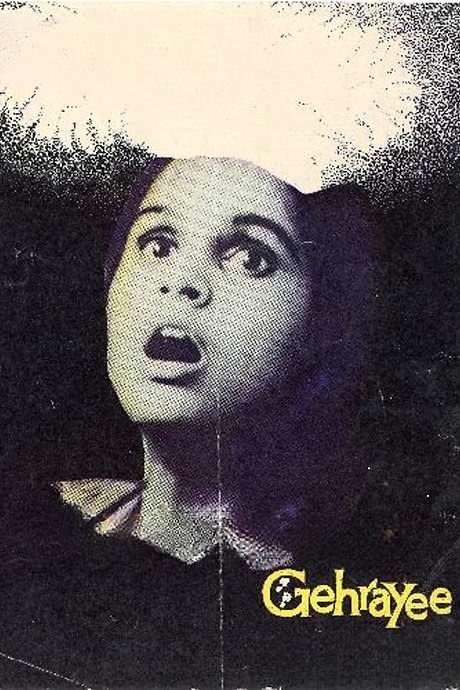
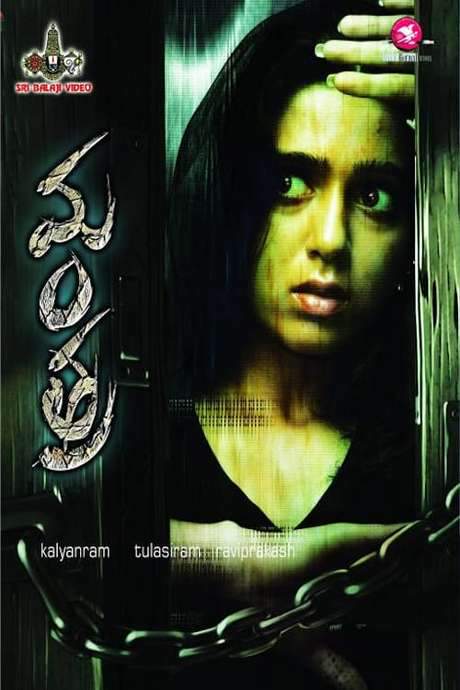
Mantra moves to Hyderabad to start a new chapter, having spent most of her life in hostels after losing her parents years ago. Upon arrival, a taxi driver—appearing to be an assistant sent by her employer—offers a practical path: instead of chasing a hostel, she can join a paying guest arrangement with a friendly elderly couple, Ramarao and his wife, who welcome her warmly into their modest home in the city. What begins as a routine transition quickly takes on a sense of unease. She feels as if someone is watching or pursuing her, a creeping fear that her life in this new city might be in danger.
As Mantra settles into her job and continues her daily routine, a shadowy suspicion intensifies: is there really someone intent on harming her, or is it all in her head? Her fears are starkly confronted when a team of police appear, accusing her of involvement in a scandal. The twist, however, reveals itself soon enough: the accusation stems from a prank by a former classmate, Vijay, who has become a police officer in Hyderabad. Their old friendship rekindles amid the tension, and what starts as a wary reunion evolves into something unexpectedly protective. Vijay’s warmth opens a pathway into his own world, and he introduces Mantra to his family with the notion of friendship and possible marriage on the horizon.
Mantra confides in Vijay about the relentless encounters with people who seem determined to kill her, a tale she repeats with growing conviction. Intrigued and concerned, Vijay agrees to look deeper into her situation, hoping to help her find clarity. Yet the investigation uncovers a far more unsettling truth: Mantra has been living in a house entwined with a murder investigation, a fact that shakes the foundation of everyone’s understanding of her life there. To get to the bottom of it, Vijay, accompanied by a few media people and Mantra herself, returns to the place she’s been calling home.
Entering the house, they are confronted by its eerie state, a place that seems more haunted with every step. Vijay presents a file containing photographs of the elderly couple and the driver who first approached Mantra at the railway station, a reminder that the past is not as distant as it seems. Although Vijay suspects that Mantra might be imagining things, she proves her credibility by showing her luggage and documents kept in her room, insisting she has a legitimate occupancy there. The group realizes that Mantra is living in a home that might be haunted by more than memories—and their attempt to leave is thwarted by the house itself, as doors slam shut, sealing their escape.
Stranded and cut off from the outside world, they search desperately for a route out. The house’s ghostly presence grows violent, picking off one person after another. A shocking moment arrives when a life is lost merely from the tremor of fear sparked by a sight—Mantra’s own photograph, found among the ominous evidence. Then the truth comes into sharper relief: a letter reveals that Mantra is not a stranger to this family at all. She is the daughter of the elderly couple’s family friends, though she was raised as a twin with Anjali, who died at birth. The elder couple, Ramarao and his wife, believed they could claim Mantra as their own daughter, and gifted her with their wealth. But when Ramarao’s younger brother learned of this plan, he plotted to seize everything for himself by killing Ramarao and his wife.
Unbeknownst to Mantra, she has been living in the same house where the tragedy of the family unfolds, making her an easy target for Ramarao’s brother. As the revelation sinks in, the room grows tenser and more claustrophobic. On the brink of despair, Ramarao’s soul finally makes a decisive move: it possesses Mantra and kills his brother, a spectral retribution that resolves nothing for the living but answers the ghost’s long-unresolved grievance. In a moment of fragile relief and shared relief, Vijay and Mantra embrace as they step out of the haunted house, choosing to leave the past behind and face what comes next together.