Plot Explained Spoilers guaranteed!
Plot Explained

Browse by genre

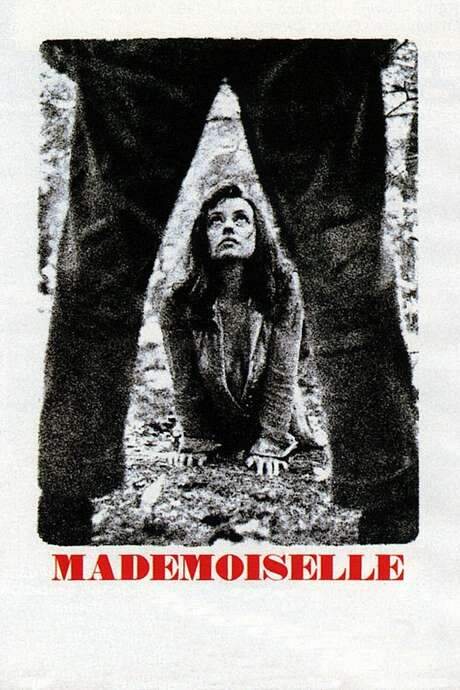
Mademoiselle (1966) movie poster

Characters & Themes

Mademoiselle (1966) Characters, Setting & Themes Explained

Release, runtime and language
1966 · 105 mins · English
Loading streaming availability…
Directed by
Tony Richardson
Starring
Jeanne Moreau, Pierre Collet, Charles Lavialle, Paul Barge, Annie Savarin, Umberto Orsini

A sexually repressed school teacher releases her pent up passions in a series of shocking crimes.

On this page (8)
  1. 1 Where to watch
  2. 2 Characters explained (3)
  3. 3 Where & when it takes place
  4. 4 Themes & meaning (3)
  5. 5 Character & meaning questions
  6. 6 Movie threads
  7. 7 Movies like Mademoiselle
  8. 8 Every angle
Loading streaming availability…

3 main characters · contains spoilers

Mademoiselle Characters Explained: Who Is Who

The main characters of Mademoiselle (1966), heroes and villains: what drives them, how they change over the course of the story and what each of them reveals about the film's bigger ideas.

  • Mademoiselle (Jeanne Moreau)

    An elegant newcomer who is admired for her refined exterior but harbors a dangerous, repressed sexuality. She meticulously plans and executes actions—fires and a flood—to draw Manou's attention, all while maintaining a façade of impeccable character. Behind closed doors she indulges in city fashion and outfits, revealing a sociopathic thrill for manipulating others. Her crimes are driven by a desperate need to possess and control the object of her desire.

    • ❄️ Psychological
    • 🎭 Drama
    • 😈 Manipulative
  • Manou (Ettore Manni)

    A hardworking Italian logger living with his son Bruno, respected by the village for his bravery and generosity. He becomes the target of envy and suspicion from the local men, who overlook his integrity until false rumors spiral out of control. His heroic acts—displayed in flashbacks—contrast with the mob's brutality as violence closes in on him. Despite the rising danger, he remains dedicated to his son.

    • ❄️ Outsider
    • 🪓 Bravery
    • 🗡️ Suspense
  • Bruno (Keith Skinner)

    Manou's son, observant and cautious, who witnesses the village's escalating tensions. He initially trusts his father but gradually uncovers the truth about Mademoiselle's crimes. Trembling between loyalty and danger, he chooses silence as the community closes ranks. His awareness hints at the moral cost borne by the next generation.

    • ❄️ Witness
    • 🧒 Innocence
    • 🕵️ Knowledge

Last updated: October 05, 2025 at 08:35

Was this helpful?

Setting

Where and When Does Mademoiselle Take Place?

The setting of Mademoiselle (1966): the year and time period, the places and locations, and how they shape the characters, the mood and the tension of the story.

Time period

Location

France, small farming village

Set in a quiet rural area of France, the action unfolds in a compact farming village surrounded by fields and barns. The close-knit community's routines and norms foster rumor and suspicion when outsiders arrive. The bucolic countryside provides a tranquil backdrop that contrasts with the creeping tension as fires and a flood threaten the village.

  • ❄️ Rural
  • 🏘️ Village
  • 🎭 Drama

Last updated: October 05, 2025 at 08:35

Was this helpful?

3 major themes

Mademoiselle Meaning: Themes & Message Explained

What is Mademoiselle (1966) really about? The emotional, social and philosophical themes the film keeps returning to, its symbolism and the message beneath the surface.

  • Social Dynamics

    In the village, gossip, envy, and rigid social codes breed suspicion and scapegoating of the outsider Manou. The townsfolk bond over tradition and a shared sense of propriety, turning on anyone who disrupts the status quo. The film uses these dynamics to explore how a community polices itself through rumor and intimidation.

  • Obsession and Destruction

    Mademoiselle's restrained sexuality and growing fixation on Manou drive her to orchestrate fires and a flood. Her calculated manipulation reveals a dark pleasure in watching events unfold and controlling the outcome. The disasters serve as a twisted stage for desire and power.

  • Truth and Consequences

    Bruno witnesses the truth about his father's innocence and the real culprit, but his outsider status keeps him silent. The villagers react with violent justice, punishing Manou while the true perpetrator remains hidden. The ending underscores moral ambiguity and the heavy cost of hidden crimes.

Last updated: October 05, 2025 at 08:35

Was this helpful?

Character & theme questions

Mademoiselle Characters & Meaning: Your Questions Answered

The questions people ask about Mademoiselle (1966): who the characters really are, their relationships, what the symbols mean, where it takes place and what the movie is really about. Each answer contains spoilers.

Q1

Where is Mademoiselle set?

The film takes place in a quiet rural area of France, specifically a compact farming village surrounded by fields and barns. The bucolic countryside provides a tranquil backdrop that contrasts sharply with the creeping tension as the story unfolds.

  • rural france
  • village
  • setting
  • farming community
Q2

How does the village setting influence the story?

The close-knit community's routines and norms foster rumor and suspicion, especially when outsiders arrive. The villagers bond over tradition and a shared sense of propriety, turning on anyone who disrupts the status quo. This environment of gossip and rigid social codes creates the perfect conditions for scapegoating and collective violence.

  • village gossip
  • suspicion
  • social codes
  • community
  • outsiders
Q3

What are the main themes in Mademoiselle?

The film explores three interconnected themes: social dynamics (how gossip and rigid social codes breed suspicion and scapegoating), obsession and destruction (repressed sexuality manifesting as calculated cruelty), and truth versus consequences (moral ambiguity where the real culprit goes unpunished while an innocent man is targeted).

  • themes
  • social dynamics
  • obsession
  • repressed sexuality
  • truth
  • consequences
Q4

Who is Mademoiselle in the film?

Mademoiselle is an elegant newcomer played by Jeanne Moreau. She is admired for her refined exterior but harbors dangerous, repressed sexuality. Behind closed doors she indulges in city fashion, revealing a sociopathic thrill for manipulating others. Her crimes, fires and a flood, are calculated attempts to control and possess the object of her desire.

  • jeanne moreau
  • mademoiselle
  • character
  • repressed sexuality
  • manipulation
Q5

Who is Manou and what is his role?

Manou is an Italian logger played by Ettore Manni who lives in the village with his son Bruno. He is respected by the community for his bravery and generosity, making him a target of envy from the local men. Despite his integrity, false rumors spiral out of control and put him in danger from the mob.

  • manou
  • ettore manni
  • italian logger
  • outsider
  • villager respect
Q6

What role does Bruno play in the story?

Bruno is Manou's young son, portrayed by Keith Skinner. He is observant and cautious, witnessing the village's escalating tensions. He uncovers the truth about Mademoiselle's crimes but, as an outsider with no voice, chooses silence as the community closes ranks. His character represents the moral cost borne by the next generation.

  • bruno
  • keith skinner
  • manou's son
  • witness
  • silence
  • moral cost
Q7

How does the film portray obsession and desire?

Mademoiselle's restrained sexuality and growing fixation on Manou drive her to orchestrate devastating acts, fires and a flood. Her calculated manipulation reveals a dark pleasure in watching events unfold and controlling the outcome. The disasters serve as a twisted stage for her desire and need for power over the object of her obsession.

  • obsession
  • desire
  • manipulation
  • power
  • crimes
  • fires
  • flood
Q8

What does the film say about truth and justice?

The film presents a dark exploration of justice: Bruno witnesses the truth about his father's innocence and the real culprit, but his outsider status keeps him silent. The villagers react with violent justice, punishing Manou while the true perpetrator remains hidden. The ending underscores moral ambiguity and the heavy cost of hidden crimes.

  • truth
  • justice
  • moral ambiguity
  • villagers
  • mob violence
  • unpunished crimes
Q9

How does the film explore social control and conformity?

In the village, gossip, envy, and rigid social codes breed suspicion and scapegoating, particularly targeting outsiders. The community polices itself through rumor and intimidation, bonding over tradition while turning violently against anyone who disrupts the established order. The film critiques how collective conformity enables injustice.

  • social control
  • gossip
  • conformity
  • villagers
  • mob mentality
  • scapegoating
Q10

Why is Manou targeted by the villagers?

Manou becomes the target of envy and suspicion from the local men, who overlook his integrity and heroic nature. Despite being respected for his bravery and generosity, false rumors about him spiral out of control. His status as an Italian outsider in this French village makes him vulnerable to the community's need for a scapegoat.

  • manou
  • italian
  • outsider
  • xenophobia
  • envy
  • rumors
  • targeted
Q11

What makes Mademoiselle a dark psychological drama?

The film combines psychological tension, the teacher's hidden, dangerous fixation, with escalating external violence in the community. The slow pacing creates a gradual, atmospheric build of suspicion and unease. The tone is distinctly dark due to its exploration of repressed sexuality manifesting as sociopathic behavior, xenophobia, and a tragic miscarriage of justice.

  • psychological
  • repressed sexuality
  • sociopathic
  • dark tone
  • xenophobia
  • psychological drama

Movie threads

More Movies Like Mademoiselle, by Mood & Story

Curated lists built around what makes Mademoiselle tick: the same mood, the same kind of story or the same emotional payoff. Each list explains why these movies belong together.

Slow burn descent stories like Mademoiselle

Stories where repressed interior lives erupt in violent, shocking acts. Explore movies like Mademoiselle, where a character's inner turmoil leads to a shocking criminal spiral. This thread groups psychological dramas and thrillers with a slow pacing, heavy emotional weight, and a bleak tone, focusing on the tragic consequences of repressed desires breaking loose.

  • oppressive
  • repressed
  • psychological
  • chilling
  • suspenseful
  • troubling
  • Tone: dark, bleak, oppressive
  • Pacing: slow, deliberate, atmospheric
Why these movies?

The story pattern: This narrative pattern centers on a protagonist, often living a constrained or respectable life, who harbors a deep, unacknowledged darkness. The story unfolds slowly, charting the increasing instability of their psyche until a point of no return is crossed, leading to criminal acts or moral collapse that shatters their world.

Why they belong together: These films are grouped by their shared focus on psychological unraveling. They combine a slow, atmospheric pace with high emotional intensity and a dark, often bleak tone, creating a deeply unsettling experience centered on the dangers of suppressed humanity.


Claustrophobic village thrillers like Mademoiselle

Tales of prejudice and suspicion festering in an isolated community. Find movies similar to Mademoiselle that explore the dark side of small-town life. This collection features dramas and thrillers set in isolated communities where secrets, prejudice, and collective hysteria lead to devastating misunderstandings and crimes, all with a slow, tense pace.

  • claustrophobic
  • suspenseful
  • oppressive
  • lonely
  • troubling
  • melancholic
  • Tone: dark, tense, melancholic
  • Pacing: slow, steady build
Why these movies?

The story pattern: The narrative revolves around an isolated setting—a village, a small town, an institution—that functions as a pressure cooker. A disruptive element, often a crime or an outsider, exposes the community's ingrained biases and secrets. The story focuses on the collective response, which is typically irrational, cruel, and results in a miscarriage of justice or violence.

Why they belong together: These movies share a specific world-building element: the oppressive small community. They are united by a mood of claustrophobic dread, themes of xenophobia and scapegoating, and a tone that is dark and suspenseful, showing how groupthink can lead to dark outcomes.

If you liked this

Movies Like Mademoiselle

Similar movies to Mademoiselle: the same genre, themes or kind of story. Each one comes with its own plot summary, timeline and ending explained.

Browse all movie summaries

Every angle

Mademoiselle (1966) Explained: Plot, Timeline & Characters

Everything about Mademoiselle in one place: what happens in the plot summary, the timeline in chronological order, the characters and meaning and a spoiler-free summary. What's After the Movie adds the cast, box office and post-credit scenes.

Coming soon on iOS and Android

The Plot Explained Movie Summary App

Plot summaries, endings explained and timelines on your phone. Catch up on any movie in minutes, save your favorites and never miss a twist again.

Be the first to know when we launch. Your email stays private, always.

Learn more about the app