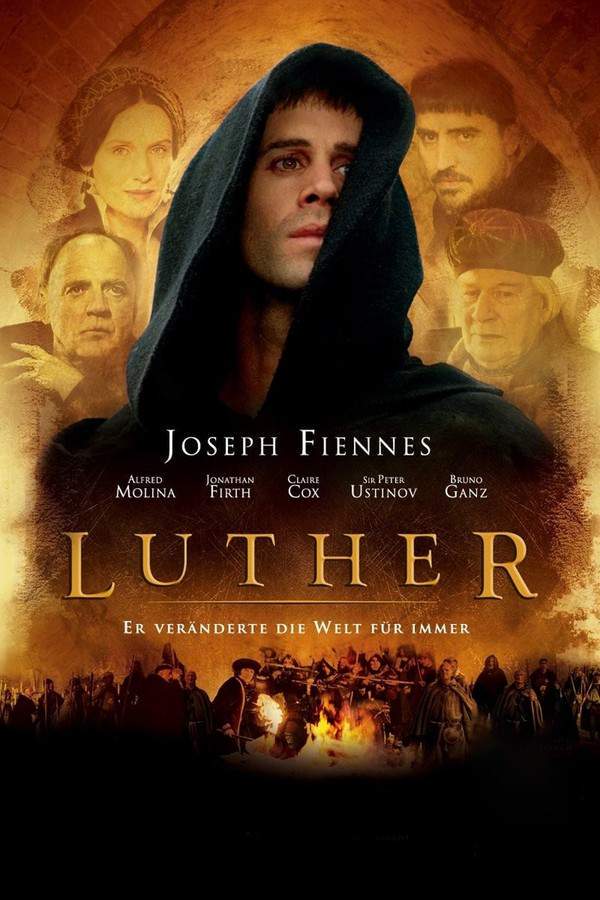
The film opens in a raging thunderstorm in 1505, where the young monk Martin Luther is driven to vow a life devoted to God and becomes an Augustinian friar. The initial torment of his faith sets a quiet, persistent tone: he wrestles with a view of God as merciless and vengeful, even as he seeks a path that could reconcile faith with mercy.
Two years into life at St. Augustine's Monastery in Erfurt, Luther grapples with doubt and spiritual turmoil. His elder mentor, Staupitz, encourages him to shift focus away from himself and toward Christ, urging a gentler understanding of the divine love that might redeem rather than condemn. This guidance marks a turning point in how he sees God and his own vocation.
From Erfurt, Luther’s journey leads him to Rome, where the opulence and moral laxity he encounters challenge his emerging beliefs. He confronts corruption, glimpses the spectacle surrounding indulgences, and even encounters relics like the skull believed to be John the Baptist, which together fuel his growing questions about the practice of indulgences themselves. This Rome episode intensifies his inner conflict and sets the stage for a radical reevaluation of church practices back home.
Returning to Germany, Luther is assigned to Wittenberg, where his teaching begins to emphasize a God of love over a God of judgment. He begins to articulate a message that salvation comes through faith and grace rather than through ritual purchases, a stance that unsettles the established order but resonates with many in his community.
In 1513, the papacy under Leo X intensifies the pressure, commissioning Johann Tetzel to travel through towns to sell indulgences intended to fund ambitious church projects. Luther publicly denounces indulgences, dismissing them as “just a piece of paper,” and boldly posts his 95 theses on the church door, inviting open debate and challenging the church to confront the corruption he perceives. This act sparks a formal reckoning, leading to a series of examinations beginning in Augsburg with Cardinal Cajetan and other church officials.
Excommunication follows, and Leo X moves to have Luther delivered to Rome. Yet Luther finds protection in Frederick the Wise of Saxony, who secretly relocates him. In Wartburg Castle, Luther hides away, while Andreas Karlstadt, his vehement contemporary, pushes for revolutionary upheaval among the nobles. The reformer’s concern over social unrest deepens as he wrestles with how reform should unfold in practice, even as he begins the monumental task of translating the Bible into German.
Luther’s personal life then becomes a public symbol of transformation when he marries Katharina von Bora, a former nun. As political tides shift, Charles V summons the evangelical princes to the Diet of Augsburg, attempting to outlaw Protestantism and ban the German Bible. The princes resist, and the assembly grants them the chance to read the Augsburg Confession, signaling a persistent, if contested, commitment to reform.
The film closes with a contemplation of Luther’s enduring influence, his translation work, and the enduring impact of his reformist legacy on faith and society.