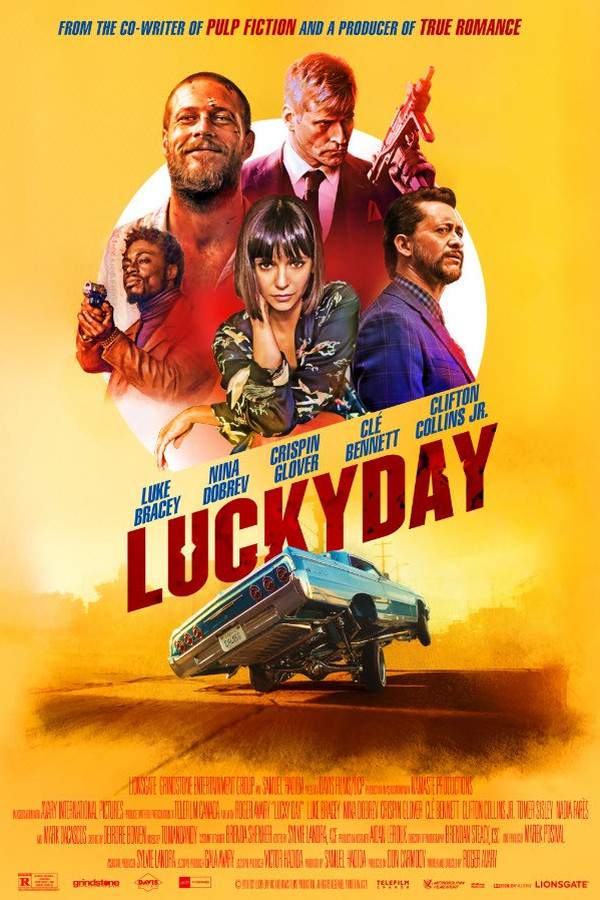
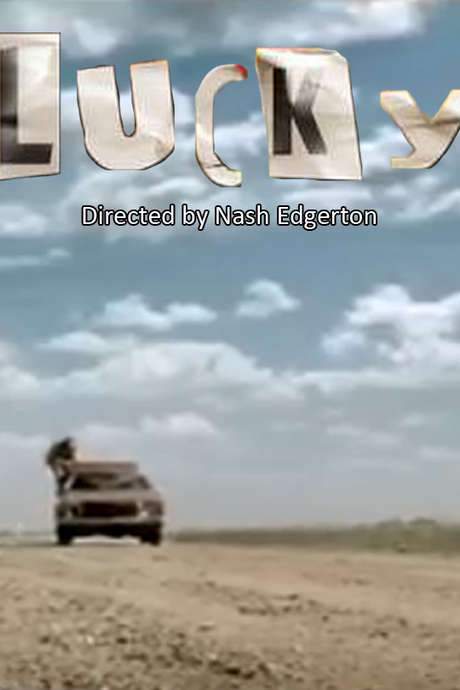
Former safecracker Red Luke Bracey is released from prison after two years and quickly re-enters a world of fragile loyalties and hidden dangers. He reconnects with his wife Chloe Nina Dobrev and their daughter Beatrice, nicknamed Bea, who now speaks almost exclusively in her mother’s native French—a change that highlights how much Lola the nanny Lolita has shaped their household. Red also crosses paths with his former associate Le Roi, who has tucked away $500,000 in untraceable bearer bonds in a secret basement beneath his pawn shop. Meanwhile, Red’s parole officer, DPO Ernesto Sanchez Clifton Collins Jr., remains deeply suspicious of Red and of Le Roi’s calculations.
In a tense moment of quiet desperation, Red returns to Le Roi’s basement to test a bank-safe he and Le Roi once cracked together. The safe is a mirror of the one from the bank job, but Red discovers that years away from the drill have dulled his edge; his hands shake, his memory falters, and the practiced sequence that once unlocked the door now slips away. The sting of failure underscoring his relief, he reconsiders the risk—the bonds are still there, waiting, but the security that protected them has become a trap.
Across town, Luc [Crispin Glover], a relentless contract killer who has just been removed from the no-fly list, enters the country with a single, brutal mission: locate Red. He travels with a ruthless clarity, killing to secure weapons through an associate named Jean-Jacques, and then ingratiates himself into the world of arms dealing with Louis [Mark Dacascos] and Pierre as he tightens his grip on those who stand in his way. The tension between Luc and the others intensifies when Jean-Jacques’s girlfriend is killed—Luc’s chilling casualness about the loss unsettles everyone, and Louis’s quick temper and fear of Luc’s skill add a volatile edge to every exchange. The violence escalates, with Luc dispatching enemies and leaving a trail of chaos as he carves a path through law enforcement and bystanders alike.
Back at the art gallery where Chloe plans to unveil new works, Derrek Blarney [David Hewlett], Chloe’s boss, presses his own agenda. He tries to leverage a loan to force a sales spike, threatening to pull funding if she doesn’t deliver, and he makes a crude, unwanted advance that reveals the precarious balance Chloe walks between artistic integrity and financial dependency. The night of the exhibition, Red and Le Roi attend, with Le Roi acting as a quiet counterweight to Red’s impulsiveness. Red, ever protective, masks his concern about Sanchez’s presence, and Chloe explains that Sanchez is an avid art collector who values the pieces beyond their monetary worth. The atmosphere is charged, a blend of art-world spectacle and criminal undertow.
The evening darkens quickly when Luc arrives at Red’s home and kills Lolita, sending Bea into a state of panic as she escapes. He discovers the exhibition’s location from a card left on Chloe’s table, and chaos erupts as he crashes the event, shooting into the crowd and wounding Le Roi in the process. Sanchez responds with calculated force, firing on Luc, while the gallery crowd scatters in panic as critics fall under fire. The chaotic escape path unfolds through Chloe’s home and into the tunnels that connect to Le Roi’s basement, with Bea racing toward her father as Red fights to shield his family.
In the ensuing confrontation, Red reveals a sore truth: Luc is the brother of Red’s former partner, the man who was killed during the bank heist, and who believed the bearer bonds had been destroyed. In a desperate negotiation of life and death, Red offers the bonds—and himself—in exchange for his family’s safety. Luc, who hadn’t known about the bonds, intensifies the confrontation, and a fatal shot is fired that seems to end Red’s life. Yet Red survives, saved by Le Roi’s key to the safe, which blocks Luc’s bullet and leaves the door to the vault stubbornly shut.
The pursuit continues through the basement tunnels, where Chloe, Beckoning through a perilous labyrinth of corridors, manages to pin Luc with a rake before climbing back to safety. Red survives as well, and Ernesto Sanchez arrives just as Luc closes in. Sanchez orders Luc to drop his weapon; when Luc refuses and tries to kill Sanchez, the parole officer shoots Luc repeatedly. Luc, in his final act, triggers a pair of explosive devices that destroy himself and the bearer bonds, erasing their deadly power.
With the immediate danger behind them, Red makes a final gamble: Sanchez agrees to let Red attempt to crack the safe because Bea is inside and needs her father’s hands. The tension is palpable as Red quietly works the tumblers, his breath steady and measured under the faint glow of the basement lights. He finally frees Bea, and the three of them share a hard-won embrace, the fear giving way to a cautious, ragged relief. Sanchez, though clearly exhausted by the night’s violence, chooses not to arrest Red, acknowledging that the night’s events have ended in a way that deserves some measure of commendation rather than punishment.
Days later, Bea tends Lolita’s ashes and the family faces a new practical challenge—water will soon be shut off. Red proposes a fresh start: move the family back to Chloe’s native France, a place Red has not spoken French in years, yet which now feels like a possible home. The specter of Derrek’s return haunts Chloe as he arrives with news that her paintings have sold out, their sale bolstered by the infamous blood-streak on canvases from the night at the gallery. Derrek delivers a cutting check and then coyly asks when her next show will be, signaling a new, lucrative career built on the chaos of the night.
In a final, quiet moment, Bea looks up and speaks English for the first time, announcing to the audience that it is “The End.” The family dances together, their new wealth and fragile safety giving them a moment of happiness that feels almost earned. Yet the closing montage offers a twist of the imagination: in the prison cell, Red gazes at Chloe’s picture and begins to pace, leaving the audience to wonder whether the entire adventure might be a dream or a constructed memory, a question left deliberately unresolved as the credits roll.