



Plot Explained Spoilers guaranteed!
Plot Explained

Browse by genre

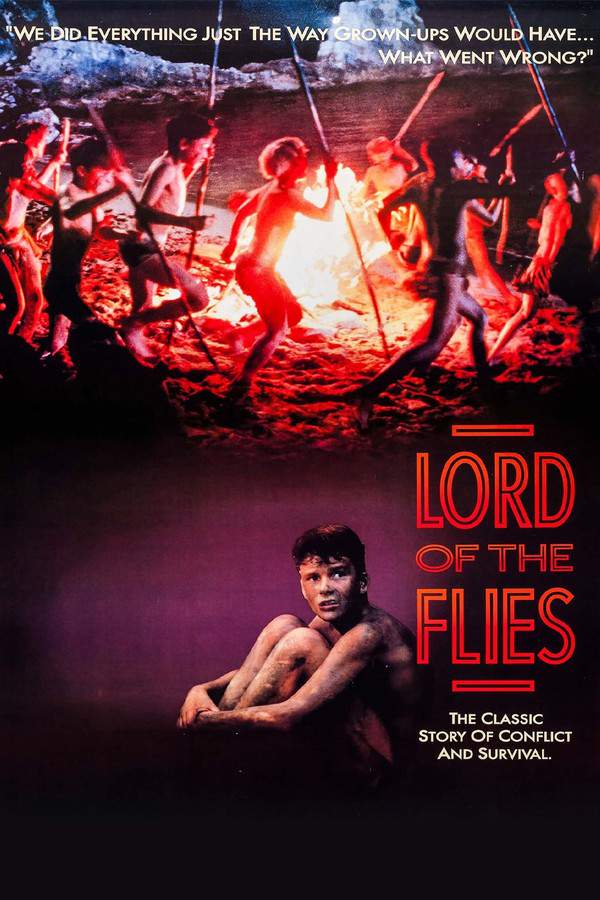
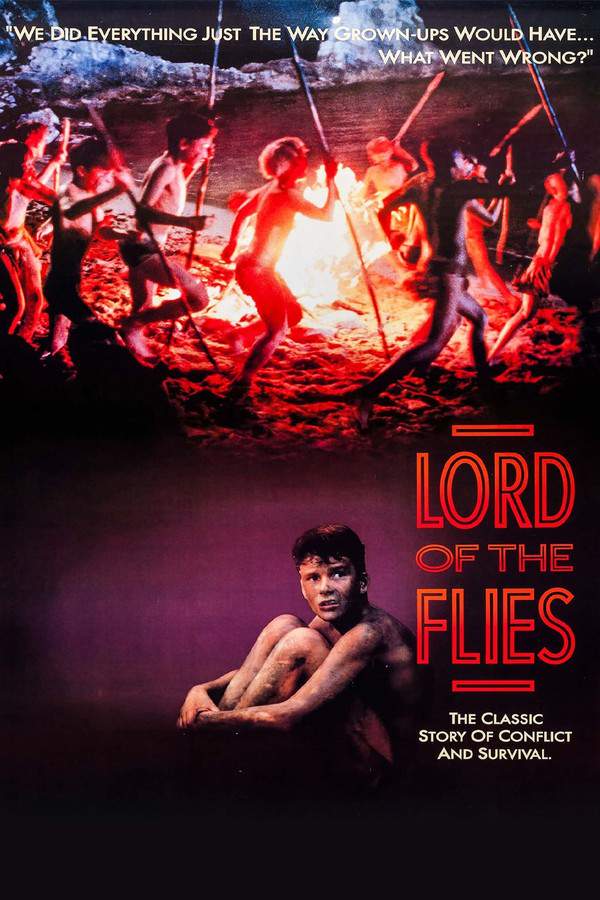
Lord of the Flies (1990) movie poster

Timeline

Lord of the Flies (1990) Timeline Explained – Every Event in Order

Release, runtime and language
1990 · 90 min · English
JustWatch #3,261 50
Directed by
Harry Hook
Starring
James Badge Dale, Balthazar Getty, Andrew Taft, Angus Burgin, Braden MacDonald, Chris Furrh

After a plane crash leaves a group of British schoolboys stranded on a deserted island, they attempt to govern themselves. As time passes, their fragile civilization collapses, and the boys descend into savagery, revealing the primal instincts that lie beneath the veneer of society. Their struggle for survival exposes the darkness within them and the challenges of maintaining order in the absence of adult supervision.

On this page (7)
  1. 1 Where to watch
  2. 2 Events in order (15)
  3. 3 Timeline questions answered
  4. 4 The book behind the movie
  5. 5 Movie threads
  6. 6 Movies like Lord of the Flies
  7. 7 Every angle

Where to watch

Where to Watch Lord of the Flies (1990)

Where can you watch Lord of the Flies? Stream, rent or buy it in the US, including on Amazon Video and Apple TV Store: current JustWatch availability with up-to-date prices.

Streaming availability powered by JustWatch

15 events in order · contains spoilers

Lord of the Flies Timeline: Events in Chronological Order

Every key event of Lord of the Flies (1990) in order, scene by scene, with when and where it takes place. Use it to untangle flashbacks, time jumps and parallel storylines, to refresh your memory before the sequel or to find the exact scene you are thinking of.

  1. Emergency Landing

    A British airliner, during wartime evacuations, makes an emergency landing on a deserted Pacific island. The event marks the beginning of a harrowing ordeal for the young passengers who are faced with survival and the loss of their previous lives.

    Where
    Deserted Pacific Island
  2. Survivors Emerge

    Following the landing, only a small group of preadolescent boys emerges as survivors. Their youth and innocence are about to be tested in ways they never imagined as they begin to navigate their new reality.

    Where
    Deserted Pacific Island
  3. Ralph Takes Charge

    Ralph, a light-haired boy, asserts his authority using a conch shell, signifying order and democracy among the boys. He establishes three main goals that will guide their community: embracing freedom, surviving the elements, and maintaining a signal fire for rescue.

    Where
    Deserted Pacific Island
  4. Igniting the Signal Fire

    Ralph collaborates with Jack and Simon, utilizing Piggy's glasses to ignite the signal fire. This moment not only symbolizes their budding friendship but also serves as a vital link to the outside world, demonstrating their collective desire for rescue.

    Where
    Deserted Pacific Island
  5. Fear of the Beast Emerges

    As time passes, the boys become consumed by their fears and paranoia, particularly regarding an imaginary creature they name 'the beast.' Despite Ralph's rational efforts, Jack fans the flames of fear to consolidate power, further fracturing their unity.

    Where
    Deserted Pacific Island
  6. Confrontation with Jack

    Ralph confronts Jack amidst growing tensions concerning leadership and survival strategies. This confrontation highlights the struggle between rationality and savagery as Ralph grapples with the potential of relinquishing his position.

    Where
    Deserted Pacific Island
  7. The Parachutist Descends

    An aerial battle rumbles above, and a dead fighter pilot descends on a parachute, creating confusion and terror among the boys. The mistaking of this lifeless body for the beast amplifies their fears and drives a deeper wedge between them.

    Where
    Deserted Pacific Island
  8. Jack's Tribe Forms

    Taking advantage of the boys' fears, Jack begins recruiting members to his tribe, offering excitement and a sense of freedom. This division solidifies as Ralph's leadership wanes, showcasing the shift toward barbarism.

    Where
    Deserted Pacific Island
  9. The Lord of the Flies

    Jack's tribe creates a grotesque offering for the imaginary beast—a severed pig's head placed on a pike. This prize becomes a symbol of their descent into savagery and leads Simon into a disturbing encounter that forces him to confront the nature of their fears.

    Where
    Deserted Pacific Island
  10. Simon's Revelation

    As Simon realizes the truth behind their shared fears, he rushes to inform Jack's tribe about the actual nature of the beast. Tragically, in a frenzied state of delusion, they mistake him for the creature, leading to a horrific act of violence.

    Where
    Deserted Pacific Island
  11. Conflict Over Glasses

    Following Simon's death, Jack's tribe steals Piggy's glasses, the only means left to start a fire. Ralph, alongside Piggy and the twins, takes a stand against Jack’s group, indicating the desperation and chaos that now define their existence.

    Where
    Deserted Pacific Island
  12. Piggy's Demise

    In a tragic turn of events, Piggy is killed during a confrontation, shattering both his body and the symbolic conch. This act signifies the complete breakdown of order and civility, leaving Ralph at a loss for what comes next.

    Where
    Deserted Pacific Island
  13. Final Pursuit

    Ralph learns of Jack's nefarious plans to hunt him down, intensifying the stakes for survival. This moment marks a turning point as the last remnants of their former society dissolve amid primal instincts.

    Where
    Deserted Pacific Island
  14. Island in Flames

    Jack's tribe sets the island ablaze in their pursuit of Ralph. This fiery destruction symbolizes the complete descent into chaos and annihilation of their humanity, marking a pivotal moment in their tragic journey.

    Where
    Deserted Pacific Island
  15. Rescue and Reflection

    Ralph collapses before a British naval officer, who arrives just as the boys reach their breaking point, mourning the loss of their innocence. The officer's disappointment serves as a stark reflection of the boys' transformation, hinting at a bleak future ahead.

    Where
    Deserted Pacific Island

Last updated: November 21, 2024 at 08:57

Was this helpful?

Timeline questions answered

Lord of the Flies Timeline Explained: Your Questions Answered

When does it happen, and why in that order? The questions people ask about the chronology of Lord of the Flies (1990): time jumps, flashbacks, cause and effect between scenes and the correct order of events, each answered with spoilers.

Q1

Why does Ralph become the leader instead of Jack?

Ralph becomes leader because he discovers and uses the conch shell as a symbol of order and democracy. When he blows the conch to gather the boys, he automatically establishes himself as someone who can bring them together. While Jack is older and a natural hunter, Ralph's calm demeanor and ability to organize the group around practical goals, building shelters, maintaining the signal fire, establishing rules, initially win over the majority. Piggy's support and the symbolic power of the conch solidify Ralph's position as the voice of civilization.

Foreshadowing: The conch first appears when Ralph spots it in the lagoon, immediately drawing the attention of all the boys.

  • ralph leader
  • conch shell
  • democratic leadership
  • jack versus ralph
Q2

Why does the signal fire matter so much to the boys?

The signal fire represents their only hope of rescue and their connection to the outside world. Ralph establishes it as one of three primary goals from the start. When a ship passes by unnoticed because the fire has burned out, the boys realize their negligence has cost them a real chance at being saved. This moment marks the first major fracture between Ralph's rational leadership and the boys' growing indifference to rescue, as they become more focused on hunting and immediate survival than on ever leaving the island.

Foreshadowing: Ralph immediately prioritizes fire-making after the first assembly, understanding its life-or-death importance.

  • signal fire
  • rescue
  • hope
  • ship passing
  • Ralph's leadership
Q3

What is the "beast" that the boys fear?

The beast is entirely imaginary, born from the boys' collective fear and paranoia. What they actually see is a dead fighter pilot from an aerial battle, whose parachute drags his body across the mountain. When Sam and Eric spot this figure in the darkness, they mistake it for the creature they've been imagining. The boys' fear has literally brought their nightmare to life, they've projected their terror onto an innocent corpse, and this misunderstanding drives the story toward its most violent events.

Foreshadowing: The boys' early speculation about a mysterious creature, combined with their fear of the unknown, plants the seeds for this tragic misidentification.

  • beast
  • fear
  • parachutist
  • dead pilot
  • imagined monster
Q4

Why is Simon killed by his own group?

Simon is killed because the boys have descended into such primal savagery that they attack anyone who enters their clearing at night. When Simon rushes down from the mountain with the truth, that the beast is only a dead pilot, he arrives at Jack's tribe's feast wearing only a loose tunic. The frenzied hunters, lost in their bloodlust and painted faces, cannot recognize him. In their delusional state, they scream that the beast is attacking and tear him apart with their bare hands and teeth. Even Ralph and Piggy join in the violence, caught up in the collective hysteria.

Foreshadowing: Simon's tendency to wander alone and his role as a truth-teller who sees through the group's delusions sets him apart as vulnerable.

  • simon death
  • mistaken for beast
  • tribal hunt
  • violence
  • savagery
Q5

Why are Piggy's glasses so important and what happens when they're stolen?

Piggy's glasses are the only tool capable of starting fire on the island, making them the literal means of survival and rescue. When Jack's tribe steals them after Simon's death, they strip Ralph's group of the ability to maintain the signal fire. This theft represents a complete shift in power, Jack now controls the means to cook meat and maintain his hunters' loyalty, while Ralph's dwindling group loses their last practical advantage. The glasses also represent intelligence and rationality, so their theft symbolizes the victory of instinct over intellect.

Foreshadowing: Piggy's spectacles were used to ignite the first signal fire, marking them as crucial from the very beginning.

  • piggy glasses
  • fire making
  • stolen
  • jack's tribe
  • power shift
Q6

Why does the conch shatter and what does it symbolize?

The conch shatters when Roger pushes a boulder onto Piggy during the confrontation at Jack's fort, killing him instantly. This moment destroys the last symbol of civilization, order, and democracy on the island. The conch had represented Ralph's authority and the boys' fragile attempt to maintain structure. Its destruction marks the complete collapse of their social order and signals that there is no going back to the rules they once tried to follow. Without the conch, there is nothing left to call assemblies or establish legitimate authority.

Foreshadowing: From the first assembly, the conch serves as the only thing that can command the boys' attention and grant someone the right to speak.

  • conch destruction
  • piggys death
  • order collapses
  • civilization ends
  • roger violence
Q7

What does the Lord of the Flies represent?

The Lord of the Flies is the severed pig's head that Jack's tribe offers as a sacrifice to the beast. When Simon encounters it in the forest, it appears to speak to him, warning that he will be betrayed by his own friends and telling him there is no beast, the fear is inside all of them. This grotesque trophy represents the boys' descent into savagery, their bloodlust, and the dark impulses they have suppressed. It literally translates to "Beelzebub," a demonic figure, symbolizing that the true monster is the evil within human nature itself.

Foreshadowing: The head is presented as an offering to appease the imagined beast, showing how far the boys have strayed from rationality.

  • lord of the flies
  • pig head
  • symbolism
  • evil
  • human nature
  • beast within
Q8

How does Jack manage to take over the other boys?

Jack takes control by exploiting the boys' fear of the beast and promising them protection and excitement. After the parachutist incident, he deliberately magnifies their terror, claiming he can hunt and kill the creature. He offers something Ralph cannot, immediate gratification through hunting, painting faces, and giving in to primal urges. Jack promises meat and freedom from rules, which proves far more appealing to the younger boys than Ralph's boring demands for shelter maintenance and fire-watching. His manipulation of fear and desire for excitement allows him to recruit followers away from democracy.

Foreshadowing: Jack's obsession with hunting begins early, and his frustration with Ralph's rules grows as he prioritizes survival over rescue.

  • jack takeover
  • tribe formation
  • fear manipulation
  • power
  • recruiting followers
Q9

Why does the naval officer look at the cruiser instead of helping the boys immediately?

The officer's gaze at the cruiser and his subsequent expression of disappointment reveal that their rescue is not a triumphant moment. He expected to find innocent children but instead encounters painted, savage boys who have committed murder. His disgust at their behavior, evidenced by the dead bodies, the hunt for Ralph, and the burned island, makes him question what kind of creatures he has found. The cruiser represents the civilized world they have rejected, and the officer's reaction suggests he sees their decline as irreversible. The rescue becomes a moment of shame rather than salvation.

Foreshadowing: The naval officer arrives at the exact moment of total destruction, when Ralph is being hunted like an animal.

  • naval officer
  • rescue
  • disappointment
  • cruiser
  • shame
  • failed rescue
Q10

How quickly do the boys descend into savagery?

The transformation happens gradually over days and weeks, though the summary condenses this into key escalating moments. It begins with minor rule-breaking, skipping fire duty to hunt, then progresses to violence against the littluns, the formation of Jack's rival tribe, the ritual hunt, and finally murder. Each step makes the next atrocity easier. By the time Simon is killed, the boys are capable of ripping a human apart; by the time Piggy dies, even Ralph has become a participant in collective violence. The breakdown accelerates dramatically once Jack offers an alternative to Ralph's rational order.

Foreshadowing: Early signs appear when Jack leaves the fire to hunt and returns with meat, creating a conflict between responsibility and desire.

  • savagery
  • descent
  • timeline
  • breakdown
  • civilization
  • violence escalation
Q11

What role does Piggy play in the group?

Piggy serves as the voice of reason, intellect, and logic throughout the story. Despite being physically weak and often mocked, he is the one who consistently advocates for rules, hygiene, and maintaining the signal fire. His glasses represent the tools of civilization and survival. Piggy is the one who articulates what the other boys instinctively feel but cannot express, his famous line about the adults making them walk past to see what happens. His death marks the final destruction of rational thought among the survivors, leaving only Ralph as a remnant of their former civilization.

Foreshadowing: Piggy's first appearance involves him being mocked for his asthma and weight, establishing him as an outsider who must rely on his mind rather than physical prowess.

  • piggy character
  • intellectual
  • reason
  • glasses
  • voice of logic
  • rules
Q12

Why does Jack hunt Ralph at the end?

Jack hunts Ralph because he represents everything Jack has rejected, civilization, rules, and the possibility of rescue. After stealing Piggy's glasses and shattering the conch, Jack knows that Ralph is the only one who could unite the remaining boys against him or remind them of the life they left behind. Additionally, Ralph witnessed the murders of Simon and Piggy and could potentially tell the rescue parties what happened. Hunting Ralph becomes Jack's final proof of absolute power, the last remnant of order must be eliminated so the tribe can exist without shame or consequence.

Foreshadowing: Ralph's survival threatens Jack's legitimacy; as long as Ralph lives, there is an alternative to Jack's rule.

  • ralph hunted
  • jack final power
  • elimination
  • last remnant of order

Movie threads

More Movies Like Lord of the Flies, by Mood & Story

Curated lists built around what makes Lord of the Flies tick: the same mood, the same kind of story or the same emotional payoff. Each list explains why these movies belong together.

Movies about the collapse of civilization like Lord of the Flies

Stories where society's rules break down, revealing the primal darkness within. If you were captivated by the terrifying descent into chaos in Lord of the Flies, these movies explore similar themes. Discover stories where societal order breaks down, characters revert to savagery, and the darkness of human nature is laid bare in a struggle for survival.

  • savage
  • oppressive
  • primal
  • fearful
  • brutal
  • desperate
  • Tone: dark, brutal, bleak
  • Pacing: steady, building tension
Why these movies?

The story pattern: These narratives typically follow a clear downward arc from initial order to complete moral and social breakdown. The central conflict arises from within the group as external pressures or the absence of authority expose primal fears, leading to mob mentality, tribalism, and violence.

Why they belong together: They are grouped by their shared focus on the psychological and moral unravelling of characters when removed from societal constraints. The experience is defined by a dark, oppressive tone, heavy emotional weight, and a bleak perspective on human nature.

Isolated group thrillers with psychological tension like Lord of the Flies

Confined groups fracture under pressure, turning on each other in claustrophobic tension. Fans of the intense group dynamics and psychological unraveling in Lord of the Flies will find similar tension here. These movies trap characters together in remote or confined settings, where fear and paranoia poison relationships and lead to devastating internal conflict.

  • claustrophobic
  • paranoid
  • tense
  • fearful
  • suspenseful
  • desperate
  • Tone: tense, dark, anxious
  • Pacing: steady, escalating
Why these movies?

The story pattern: The plot revolves around a closed ecosystem of characters whose survival depends on cooperation, but whose fears and ambitions inevitably lead to betrayal and factionalism. The setting itself—an island, a bunker, a spaceship—acts as a character, heightening the claustrophobia and inescapable nature of the conflict.

Why they belong together: They share a core premise of forced proximity under duress, creating a pressure cooker environment. The similarity lies in the steady pacing that builds dread, the high intensity of interpersonal conflict, and the exploration of how group mentality can corrupt individuals.

If you liked this

Movies Like Lord of the Flies

Similar movies to Lord of the Flies: the same genre, themes or kind of story. Each one comes with its own plot summary, timeline and ending explained.

Browse all movie summaries

Every angle

Lord of the Flies (1990) Explained: Plot, Timeline & Characters

Everything about Lord of the Flies in one place: what happens in the plot summary, the timeline in chronological order, the characters and meaning and a spoiler-free summary. What's After the Movie adds the cast, box office and post-credit scenes.

Coming soon on iOS and Android

The Plot Explained Movie Summary App

Plot summaries, endings explained and timelines on your phone. Catch up on any movie in minutes, save your favorites and never miss a twist again.

Be the first to know when we launch. Your email stays private, always.

Learn more about the app