







Plot Explained Spoilers guaranteed!
Plot Explained

Browse by genre

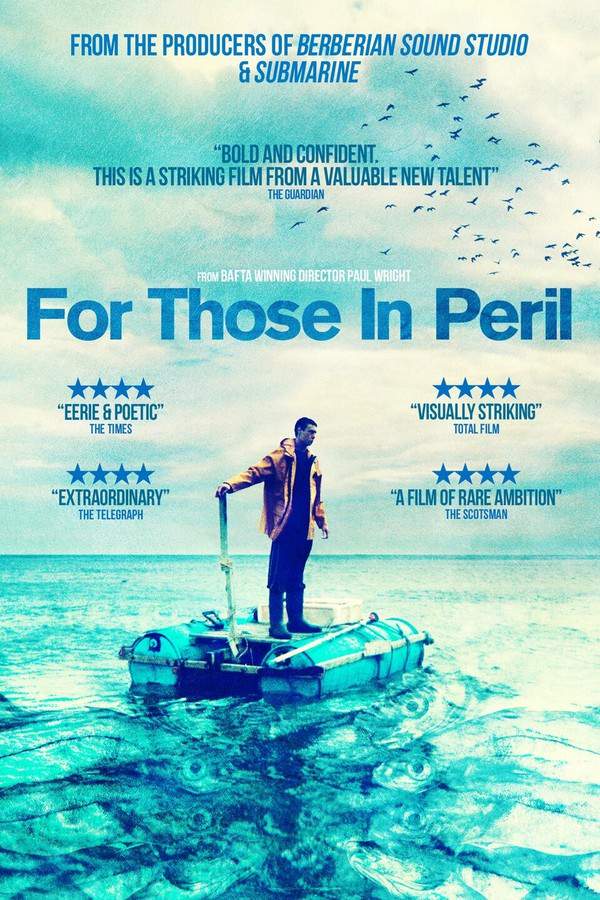
For Those in Peril (2014) movie poster

Plot Summary

For Those in Peril (2014) Plot Summary Explained

Release, runtime and language
2014 · 92 min · English
JustWatch #29,415 4
Directed by
Paul Wright

In a secluded Scottish village, a young man named Aaron struggles to cope with the tragic loss of his brother and four other fishermen in a devastating accident. Consumed by grief and suspicion, he becomes increasingly obsessed with uncovering the truth behind the disaster. As he delves deeper, superstition and local folklore intertwine with his desperate search for answers, pushing him to the edge of madness and challenging his perception of reality.

On this page (6)
  1. 1 Where to watch
  2. 2 What happens: full plot
  3. 3 Plot questions answered
  4. 4 Movie threads
  5. 5 Movies like For Those in Peril
  6. 6 Every angle

Where to watch

Where to Watch For Those in Peril (2014)

Where can you watch For Those in Peril? Stream, rent or buy it in the US, including on fuboTV, FlixHouse and Kanopy: current JustWatch availability with up-to-date prices.

Streaming availability powered by JustWatch

Full plot summary · contains spoilers

What Happens in For Those in Peril: Full Plot Summary

The whole story of For Those in Peril (2014) explained, from the opening scene to the final frame: every key event, every twist and what it all adds up to. Read it as a quick recap before the sequel, to check a scene you missed, or to finally understand what really happened.

Aaron, a young misfit living in a remote Scottish fishing community, is the lone survivor of a strange fishing accident that claimed the lives of five men, including his older brother, Michael. No one knows what became of the others, and Aaron insists that he can remember nothing of the incident. Treated as an outcast, Aaron begins behaving erratically, insisting that the others are not dead and that he must find them. Meanwhile, Aaron's mother Cathy must mourn for her lost son while protecting the son she has left.

Aaron becomes obsessed with finding Michael, looking for him everywhere. He frequently goes to the seashore calling Michael's name. The only person who will talk to him is Michael's girlfriend, Jane. He forms a romantically charged relationship with her and tries to enlist her help in finding Michael. This causes rifts with Jane's father and the local community, who increasingly accuse Aaron of being responsible for the fishermen's deaths.

Flashbacks to home movies reveal that Aaron hung around Michael and Jane constantly, and his relationship with Michael was more antagonistic than it at first seemed. We see Aaron raging in anger and running a knife along the sides of his neck. He gets into a series of violent confrontations with Jane's father, Jane herself, and several local youths. Now completely ostracized, he sets out himself on the ocean with a makeshift raft and spear to locate Michael, using bait fish as a lure, but finds nothing. In another attempt, he kidnaps a local youth and drags him into the ocean to use as bait, but a local ship rescues his captive before he finds anything.

Cathy is forced to submit her son to mental health treatment in lieu of criminal charges. On the night before he's to depart, Aaron asks Cathy to tell him the bedtime story he remembers from his childhood. The story goes that the Devil took the form of a giant red fish that swallowed up all the children of the village, but a young boy found the fish and rescued all of the children so that they could live together forever in happiness. In the middle of the night, Aaron sneaks away, uses a knife to slice gills into his neck, and dives into the ocean. The next morning, Cathy awakens and follows sounds of commotion to the beach, where she finds a giant red fish washed up onto the shore. Michael, alive and well, rests his head on Aaron's shoulder.

Last updated: October 09, 2025 at 16:21

Was this helpful?

Plot questions answered

For Those in Peril Plot Explained: Your Questions Answered

The questions people ask most about For Those in Peril (2014): what happens in the confusing scenes, why the characters do what they do, the twists, hidden details and what the ending means. Each answer contains spoilers.

Q1

Why does Aaron believe Michael is still alive after the fishing accident?

Aaron's belief that Michael survived stems from his inability to cope with the traumatic loss. As the sole survivor with no memory of the incident, he clings to denial rather than accept his brother's death. This denial manifests as an obsessive search, with Aaron convinced that Michael is somehow alive and waiting to be found. The community's suspicion and ostracization only intensify his fixation, as he retreats further into a fantasy where recovery is still possible.

  • aaron
  • michael
  • grief
  • denial
  • survivor
Q2

What happened to the other four fishermen who died in the accident?

The film never reveals what became of the other four fishermen. Their fate remains completely ambiguous, they are simply gone, with no bodies recovered and no explanation given. This mystery haunts the village and fuels speculation about what truly happened that night. Aaron's search for Michael never uncovers any trace of the others, leaving their deaths as an unresolved void at the center of the tragedy.

  • fishermen
  • accident
  • deaths
  • missing
Q3

Why does Aaron become violent toward Jane and her father?

Aaron's violence stems from a volatile combination of grief, guilt, and frustration. Flashbacks reveal his deep-seated antagonism toward Michael, resentment mixed with jealousy over Michael's relationship with Jane. As the community ostracizes him and accuses him of causing the deaths, Aaron's restraint shatters. His confrontations with Jane's father represent his aggression toward anyone who doubts his mission, while attacks on Jane itself may reflect displaced anger at Michael and his own guilt about surviving.

Foreshadowing: Flashbacks show Aaron raging at Michael and even threatening himself with a knife, foreshadowing his later violence.

  • aaron
  • violence
  • jane
  • confrontations
Q4

What does the bedtime story about the red fish mean in the film?

The bedtime story about a giant red fish that swallows children, only to be rescued by a boy who allows them to live together forever, serves as a central allegory. It mirrors Aaron's desperate belief that Michael can be found and saved from death. The story also foreshadows Aaron's final transformation, when he cuts gills into his neck and enters the sea, he becomes like the red fish, merging with the mythic narrative. The story bridges folklore, Aaron's psychological state, and the film's ambiguous resolution.

  • red fish
  • story
  • folklore
  • allegory
  • transformation
Q5

Is Michael actually alive at the end of the film?

The film's ending is deliberately ambiguous. When Cathy discovers the giant red fish washed ashore, Michael appears alive with his head on Aaron's shoulder. However, given Aaron's psychological state, his prior delusions, and the fantastical nature of the discovery, the scene strongly suggests this may be another manifestation of his fantasy, possibly a vision occurring as he dies. The film never confirms whether Michael truly survived or if this is Aaron's final, tragic hallucination.

  • michael
  • ending
  • alive
  • ambiguous
  • resolution
Q6

Why does Aaron cut gills into his neck before going into the ocean?

Aaron's act of slicing gills into his neck represents his complete psychological transformation and desperate identification with the mythological red fish. Unable to save Michael in the physical world, he attempts to become part of the sea legend, becoming the fish itself to reach his brother. This surreal act marks his surrender to delusion and his final, fatal attempt at rescue, blending suicide with a supernatural transformation that the film's ending leaves ambiguous.

  • aaron
  • gills
  • neck
  • transformation
  • sea
Q7

What was Aaron's relationship with his brother Michael?

The flashbacks reveal that Aaron and Michael's relationship was far more complicated than initially presented. Aaron clearly harbored resentment toward his older brother, showing rage and antagonism that suggests jealousy over Michael's status in the family and community. Aaron's behavior around Michael and Jane hints at deep-seated feelings of inadequacy and rivalry. This antagonistic dynamic complicates Aaron's supposed mission to save Michael and raises questions about what really happened during the accident.

  • aaron
  • michael
  • brothers
  • relationship
  • tension
Q8

Why does the village community blame Aaron for the fishermen's deaths?

The community blames Aaron primarily because he was the sole survivor of an unexplained tragedy that claimed five lives. With no memory of the incident, speculation turns to him as either a culprit or someone who somehow caused the disaster. Aaron's increasingly erratic behavior, his obsessive searching, violent outbursts, and insistence that the dead are alive, confirms their suspicions in their eyes. This collective blame drives his isolation and fuels his descent into psychological turmoil.

  • community
  • village
  • blame
  • suspicion
  • ostracization
Q9

Is the ending real or is Aaron hallucinating?

The evidence strongly suggests the ending is a hallucination or supernatural fantasy rather than literal reality. Aaron has spent the entire film in a delusional state, convinced Michael survives despite all evidence to the contrary. His final act of cutting gills into his neck and diving into the sea appears to be a suicide, not a transformation. The miraculous appearance of Michael alive next to a mythical red fish aligns with the bedtime story Aaron requested, a final, grief-fueled fantasy that provides the resolution his broken mind demanded.

  • ending
  • hallucination
  • delusion
  • ambiguous
  • reality
Q10

What does the giant red fish symbolize at the end of the film?

The giant red fish represents the boundary between life and death, reality and fantasy. It embodies the folklore story that has haunted Aaron's consciousness, the creature that swallows the lost and can potentially return them. At the film's end, the fish appears as both literal creature and symbolic manifestation of Aaron's psychological state. Whether it is real or a construct of his breaking mind, it serves as the vehicle for the film's central question: can the dead be returned, or is that only a fantasy?

  • red fish
  • symbolism
  • folklore
  • death
  • fantasy

Movie threads

More Movies Like For Those in Peril, by Mood & Story

Curated lists built around what makes For Those in Peril tick: the same mood, the same kind of story or the same emotional payoff. Each list explains why these movies belong together.

Movies about grief and madness like For Those in Peril

Stories where profound loss pushes a solitary character to the edge of sanity. If you were captivated by the intense psychological unraveling in For Those in Peril, this collection features similar movies about grief, isolation, and the fragile nature of reality. Find other slow-burn dramas where characters grapple with trauma, pushing them towards a disturbing loss of self.

  • melancholic
  • oppressive
  • anxious
  • somber
  • lonely
  • haunting
  • Tone: dark, melancholic, oppressive
  • Pacing: slow, deliberate, character-driven
Why these movies?

The story pattern: These narratives follow a character in the immediate aftermath of a traumatic event, usually a personal loss. The plot is driven not by external events but by the protagonist's internal struggle, as they become increasingly isolated and obsessed, often leading to a break from reality or an ambiguous psychological outcome.

Why they belong together: They are grouped together because they share a heavy emotional core centered on grief and a dark, atmospheric tone that explores psychological fragility. The pacing is deliberately slow to build a suffocating sense of isolation, and the intensity is high due to the relentless focus on mental anguish.


Atmospheric coastal dramas like For Those in Peril

Moody tales where isolated seaside towns are steeped in local lore and tension. For viewers who appreciated the haunting Scottish coastline and folkloric undertones of For Those in Peril, this thread gathers movies with a similar vibe. Discover other slow-burn stories set in superstitious coastal communities where the environment plays a key role in the drama.

  • atmospheric
  • haunting
  • somber
  • oppressive
  • folkloric
  • isolated
  • Tone: dark, haunting, somber
  • Pacing: slow, atmospheric, mood-driven
Why these movies?

The story pattern: The narrative often revolves around an outsider or a troubled local confronting the secrets and ingrained beliefs of a closed-off coastal community. The conflict arises from the clash between rational inquiry and local folklore, with the harsh, beautiful environment amplifying feelings of isolation and dread.

Why they belong together: They share a specific atmospheric quality defined by their coastal settings and the integration of local superstition into the plot. The pacing is consistently slow to build mood, the tone is dark and melancholic, and they often feature a moderate complexity as reality and myth intertwine.

If you liked this

Movies Like For Those in Peril

Similar movies to For Those in Peril: the same genre, themes or kind of story. Each one comes with its own plot summary, timeline and ending explained.

Browse all movie summaries

Every angle

For Those in Peril (2014) Explained: Plot, Timeline & Characters

Everything about For Those in Peril in one place: what happens in the plot summary, the timeline in chronological order, the characters and meaning and a spoiler-free summary. What's After the Movie adds the cast, box office and post-credit scenes.

Coming soon on iOS and Android

The Plot Explained Movie Summary App

Plot summaries, endings explained and timelines on your phone. Catch up on any movie in minutes, save your favorites and never miss a twist again.

Be the first to know when we launch. Your email stays private, always.

Learn more about the app