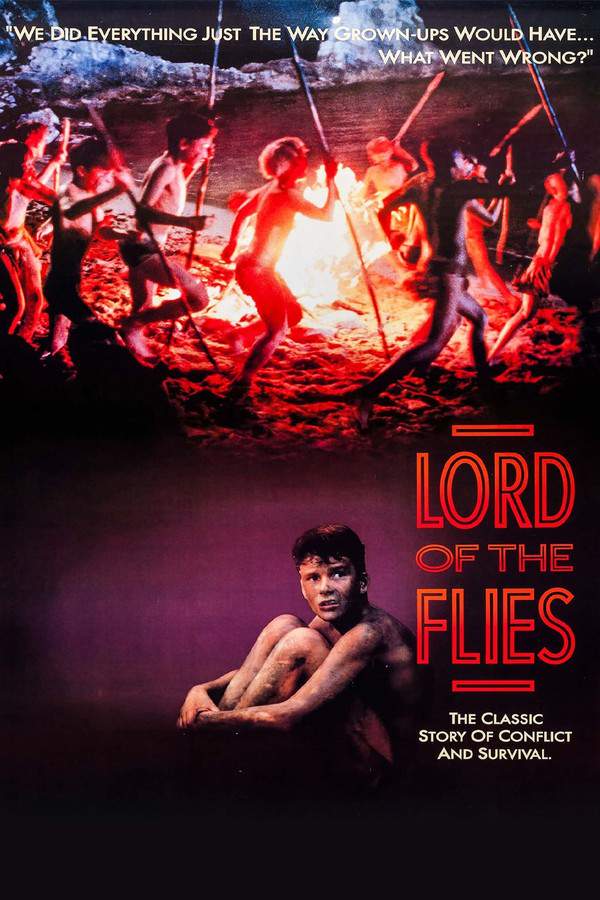
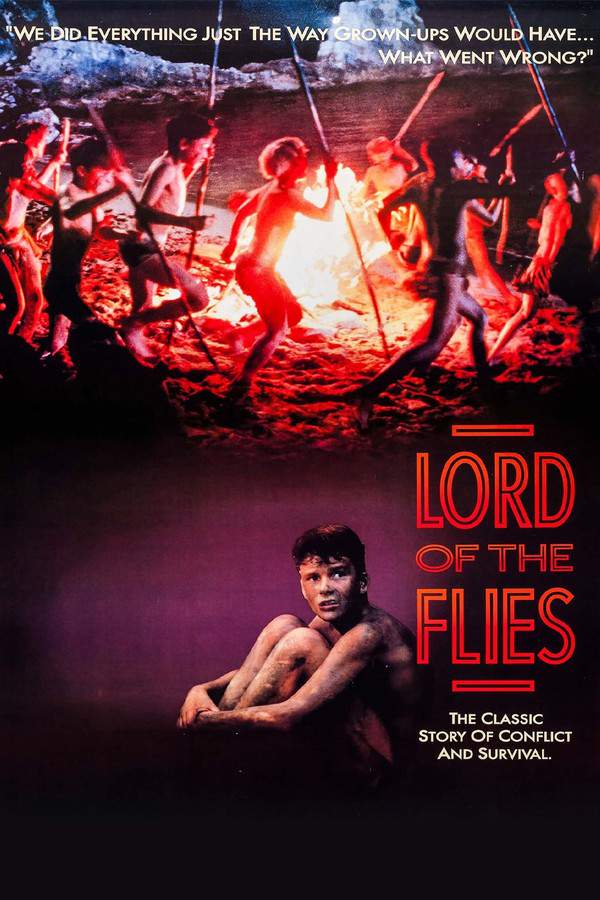
After a plane crash leaves a group of British schoolboys stranded on a deserted island, they attempt to govern themselves. Ralph is elected leader, but his authority is challenged by the charismatic Jack, who prioritizes hunting and primal instincts. As the boys struggle to maintain order and face their fears, their attempts at civilization erode, revealing a descent into savagery and a frightening glimpse into the darker aspects of human nature.
Find where to stream, rent, or buy Lord of the Flies (1963) in the US with current JustWatch availability, up-to-date pricing, and platform listings for subscription, rental, and digital purchase options.
Warning: spoilers below!
Haven’t seen Lord of the Flies yet? This summary contains major spoilers. Bookmark the page, watch the movie, and come back for the full breakdown. If you're ready, scroll on and relive the story!
Read the complete plot breakdown of Lord of the Flies (1963), including all key story events, major twists, and the ending explained in detail. Discover what really happened, and what it all means.
As a British aircraft crashes on a remote island in the Pacific, a band of young survivors discovers themselves isolated amidst the madness of war. Two boys, Ralph and Piggy, happen upon a conch shell, which they use as a makeshift horn to gather their peers. Ralph’s inherent leadership qualities shine as he leverages the conch to assert his dominance, earning him the title of “chief” within the group.
At first, the boys unite in their efforts to create order and stability on the island. They establish three main objectives: to enjoy their newfound freedom, to endure the challenging environment, and to maintain a constant smoke signal to attract any passing ships. Ralph, along with Jack and Simon, utilizes Piggy’s glasses to ignite a signal fire, marking the commencement of their struggle for survival.
Yet, as time drags on, the initial excitement begins to fade, leading to an unsettling complacency in their island paradise. Fear and dread seep in as they give life to an imaginary monster, referred to as “the beast,” which soon becomes an obsession. Ralph’s attempts to rationally discuss the nonexistence of this creature are ignored, while Jack’s proclamation of hunting and killing the beast garners him a growing number of followers.
Tensions mount as Jack organizes a frantic hunt for wild boar, leaving only a handful of boys to tend to the vital signal fire. Their negligence results in the extinguishing of the flames, eliminating the chance to signal a passing ship and deepening Ralph’s frustration. He confronts Jack over their reckless choices and contemplates relinquishing his leadership, but Piggy’s wise words persuade him to remain firm.
One harrowing evening, a fierce air battle erupts above the island, and a fighter pilot’s body parachutes down, landing among the boys. Mistaken for the terrifying beast, Sam and Eric send Ralph, Jack, and Roger into a panic. This traumatic experience marks a significant turning point for Ralph’s leadership as Jack seizes the chance to alienate Ralph and form his own faction.
As twilight shrouds the forest, Jack’s tribe gathers for a warped ritualistic dance. A horrific sacrifice, a pig’s head swarming with flies, is presented before them - a ghastly homage to the “Lord of the Flies,” a mythical figure born from Simon’s vivid imagination. Often wandering into the shadows alone, Simon encounters this grotesque head, engaging in a surreal dialogue where it ominously foretells that his companions will betray him. That night, Ralph and Piggy infiltrate Jack’s domain, only to be confronted by a disturbing display of savagery and primal instincts. Unbeknownst to them, Simon has uncovered the truth: the so-called beast is merely a deceased pilot, lost within the island’s wilderness.
As the moon casts a ghostly light over the woods, Jack’s tribe forcibly takes Piggy’s glasses, the only means of producing fire on the island. Ralph, joined by Sam and Eric, bravely navigates the darkness to confront Jack and reclaim their stolen property. However, destiny intervenes—Roger’s reckless behavior sparks a series of tragic events that lead to Piggy’s heartbreaking death, forcing Sam and Eric to pledge their allegiance to Jack’s wild group.
Under the veil of night, Ralph discreetly speaks with his former allies, who caution him of Jack’s malicious plans. At dawn, Jack’s followers unleash a destructive wave across the forest, igniting it in flames. As the inferno blazes, Ralph narrowly escapes and collides with a British naval officer, whose disapproving demeanor reflects the tragedy that has unfolded among these once innocent boys. As tears stream down their cheeks, Jack, Ralph, and their comrades come to grips with the loss of their childhood, while the officer gazes pensively at the cruiser waiting for him offshore—a haunting reminder of the civilized world that lies beyond their island nightmare.
Last updated: November 22, 2024 at 18:21
Explore frequently asked questions about Lord of the Flies (1963) with spoiler-rich answers covering the full plot summary, major story beats, character motivations, hidden details, and ending meaning. This movie summary FAQ helps explain confusing scenes, plot twists, and narrative decisions in clear, searchable detail.
Ralph becomes leader because he uses the conch shell to gather the boys and assert his leadership qualities. When he calls the first meeting, his calm demeanor and clear thinking impress the group. While Jack is charismatic and attracts followers through his hunting abilities, Ralph is elected as chief because he represents order and rational decision-making, focusing on survival priorities like the signal fire and shelter.
The conch shell serves as a symbol of civilization and order on the island. It is used as a horn to gather the boys for meetings, and whoever holds the conch has the right to speak. The conch initially gives Ralph his authority as chief, representing democratic governance and structure. Its eventual destruction marks the complete collapse of order.
The boys develop an irrational fear of the beast as time passes on the island. Their initial excitement fades, leaving them with idle time and growing anxiety. Unable to cope with the unknown dangers of their environment and their own内在的恐惧, they project their fears onto an imaginary monster. This collective hysteria represents the breakdown of rational thought and the appeal of scapegoating as a way to channel their terror.
The Lord of the Flies is the pig's head that Jack's tribe offers as a sacrifice to the beast. It symbolizes the inherent evil and savagery within human nature. In Simon's hallucination, the pig's head speaks to him, telling him that the boys cannot escape their own darkness. The title references Satan, suggesting that the boys have invited evil into their midst through their abandonment of civilization's rules.
Simon engages in a surreal conversation with the pig's head while in a dissociative state, brought on by his seizures and isolation. During this hallucination, the Lord of the Flies tells Simon that the boys will betray him. This psychological encounter foreshadows Simon's murder at the hands of the tribe, as he tries to bring truth to a group that has rejected reason and embraced savagery.
Jack steals Piggy's glasses because they are the only means of producing fire on the island. This act represents Jack's seizure of power and control over essential resources. By taking the glasses, Jack forces Ralph's group to depend on him for fire, demonstrating how the hunt for survival tools became intertwined with the struggle for authority between the two factions.
Piggy dies when Roger pushes a boulder down from the castle rock onto him during a confrontation. While Ralph and Piggy attempt to reason with Jack and reclaim the stolen glasses, Roger acts on impulse and releases the boulder, striking Piggy in the head. This tragic moment represents the complete collapse of any remaining moral constraints among the boys and marks the loss of the last voice of reason.
The signal fire represents the boys' hope for rescue and their connection to civilization. Ralph insists on maintaining the fire because it is their only means of attracting passing ships. When the fire goes out during Jack's hunt, it symbolizes the boys' abandonment of their chance for salvation in favor of primal pleasures. This neglect creates deep tension between Ralph's commitment to rescue and Jack's focus on hunting.
The descent into savagery is triggered by the gradual erosion of structure and the boys' failure to maintain order. As time passes, the initial excitement of freedom gives way to fear and primal instincts. Jack's hunting provides excitement and belonging that Ralph's rational leadership cannot match. The breakdown is accelerated by the beast hysteria, the stolen glasses, and the death of Piggy, each event stripping away another layer of civilization.
Jack challenges Ralph because he represents a different kind of leadership that appeals to the boys' primal desires. While Ralph focuses on long-term survival and rescue through boring but necessary tasks, Jack offers excitement through hunting and freedom from rules. Jack's charisma and his ability to provide food make him an attractive alternative leader, especially as the boys grow restless with Ralph's restrictions.
The beast is revealed to be the corpse of a fighter pilot from an earlier air battle that crashed on the other side of the island. Simon discovers this truth while wandering in the forest. The boys mistake the parachute and body for a monster because of their paranoid state and the creature's movements in the wind. This revelation is crucial because it shows the beast was never a real threat, the boys created their own terror.
Discover curated groups of movies connected by mood, themes, and story style. Browse collections built around emotion, atmosphere, and narrative focus to easily find films that match what you feel like watching right now.
Stories where the veneer of civilization is stripped away by survival.If you liked Lord of the Flies, explore these movies about the descent into savagery. This collection features similar survival stories and group dynamics where characters struggle to maintain order, leading to terrifying glimpses into the darker aspects of human nature.
The narrative pattern typically begins with a group attempting to establish order after a catastrophic event or in an isolated setting. A power struggle emerges between characters representing order and chaos, leading to a steady escalation of conflict where primal instincts overwhelm reasoned cooperation, culminating in a bleak outcome.
Movies are grouped here for their shared focus on the psychological and moral collapse of a micro-society. They share a dark tone, steady pacing that builds dread, high intensity from internal conflict, and a heavy emotional weight derived from the loss of innocence and descent into brutality.
Claustrophobic tales where a confined setting breeds paranoia and violence.Find movies like Lord of the Flies that trap characters in confined spaces. These similar thrillers and dramas use isolation to explore group dynamics, power struggles, and the descent into madness, creating an oppressive and paranoid atmosphere.
The narrative is defined by a confined or inescapable setting—an island, a bunker, a remote outpost—that forces characters into intense proximity. Internal group dynamics, rather than an external monster, become the primary source of conflict, leading to fractured loyalties, mob mentality, and tragic consequences.
These films are united by their use of a contained world to generate relentless psychological pressure. They share an oppressive and anxious mood, a steady pacing that allows tension to simmer and boil over, and a high intensity derived from the characters being trapped with their own worst impulses.
Don't stop at just watching - explore Lord of the Flies in full detail. From the complete plot summary and scene-by-scene timeline to character breakdowns, thematic analysis, and a deep dive into the ending - every page helps you truly understand what Lord of the Flies is all about. Plus, discover what's next after the movie.
Track the full timeline of Lord of the Flies with every major event arranged chronologically. Perfect for decoding non-linear storytelling, flashbacks, or parallel narratives with a clear scene-by-scene breakdown.
Discover the characters, locations, and core themes that shape Lord of the Flies. Get insights into symbolic elements, setting significance, and deeper narrative meaning - ideal for thematic analysis and movie breakdowns.
Discover movies like Lord of the Flies that share similar genres, themes, and storytelling elements. Whether you’re drawn to the atmosphere, character arcs, or plot structure, these curated recommendations will help you explore more films you’ll love.
Lord of the Flies (1963) Scene-by-Scene Movie Timeline
Lord of the Flies (1963) Movie Characters, Themes & Settings
Lord of the Flies (1963) Spoiler-Free Summary & Key Flow
Movies Like Lord of the Flies – Similar Titles You’ll Enjoy
White Squall (1996) Movie Recap & Themes
Lord of the Flies (1990) Plot Summary & Ending Explained
Stranded (1000) Full Summary & Key Details
King of the Lost World (2005) Full Summary & Key Details
Treasure Island (1986) Complete Plot Breakdown
The Island (1980) Story Summary & Characters
Lost Flight (1970) Detailed Story Recap
if… (1968) Movie Recap & Themes
Outcast of the Islands (1951) Complete Plot Breakdown
The Blue Lagoon (1949) Movie Recap & Themes
The Savage Is Loose (1974) Story Summary & Characters
Robinson Crusoe (1997) Full Summary & Key Details
Four Frightened People (1934) Full Movie Breakdown
Sinners in Paradise (1938) Full Summary & Key Details
The Lost Tribe (2009) Full Movie Breakdown