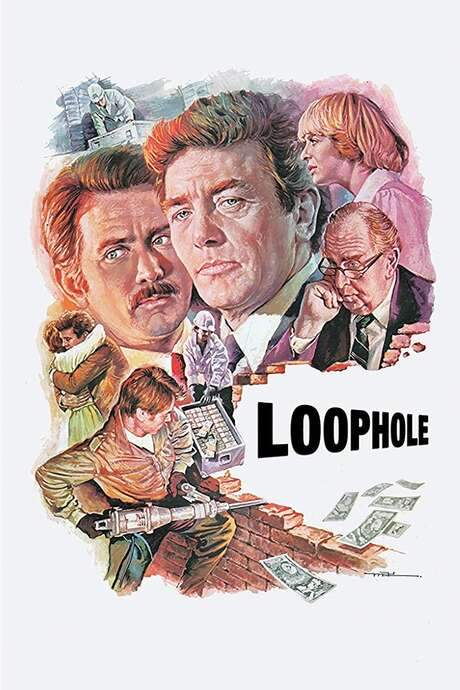
The film opens with a bank heist that yields far less than the robbers expected, setting a slower burn of tension than a typical flashy break-in. Daniels [Albert Finney] is the mastermind behind the plan, driven by the discovery that the main subterranean vault, long thought impregnable, sits within a short radius of a major sewer. With a steady hand and a careful eye, he recruits a crew and secures the tools they’ll need by enlisting a boat-dealer for specialized equipment. His target is Booker [Martin Sheen], an architect whose precise skill is essential to pinpoint the vault’s exact underground location.
Booker is initially resistant, troubled by professional risk and personal finances, including pressure from a bank manager [Robert Morley] and the need to support a new business venture pursued by his wife [Susannah York]. Yet Daniels’ pitch is persuasive enough to sway him, as long as the plan remains non-violent and strictly professional. The arrangement hinges on Booker’s exacting expertise to map the underground route, a critical thread that ties the whole operation together.
Gardner [Colin Blakely], who keeps watch from a rented nearby office, helps coordinate the crew from the periphery, ensuring the operation stays hidden from nearby eyes. The gang exploits the sewer access to enter the vault from beneath, triggering the vault alarms as they begin to empty the contents. When the police arrive, a tense, almost clinical moment unfolds as the officers opt to treat the alarms as defective and effectively turn them off for the night, buying the robbers precious minutes.
As the crew prepares to depart, a heavy downpour pounds the city and floods the sewer system, turning the underworld route into a treacherous current. The robbers struggle against a raging torrent while still lugging their stolen goods. Booker, however, makes a stubborn choice to stay inside the vault, hoping the water will recede before normal business hours. In the chaos, one of Daniels’ associates, Harry [Alfred Lynch], appears to have been overcome by sewer gas and is later seen floating away, leaving the fate of the group uncertain and the operation morally unsettled.
The film closes on Booker’s solitary moment in his studio, where the consequences of the night’s events linger in the air. Daniels returns to offer him another job, a quiet reminder of the perilous line they walked between ingenuity and excess, and of how the plan’s fragile logic could always be rebuilt—or undone—by a single, unpredictable twist of fate.