Year: 2008
Runtime: 91 min
Language: English
Director: Jonathan Blitstein
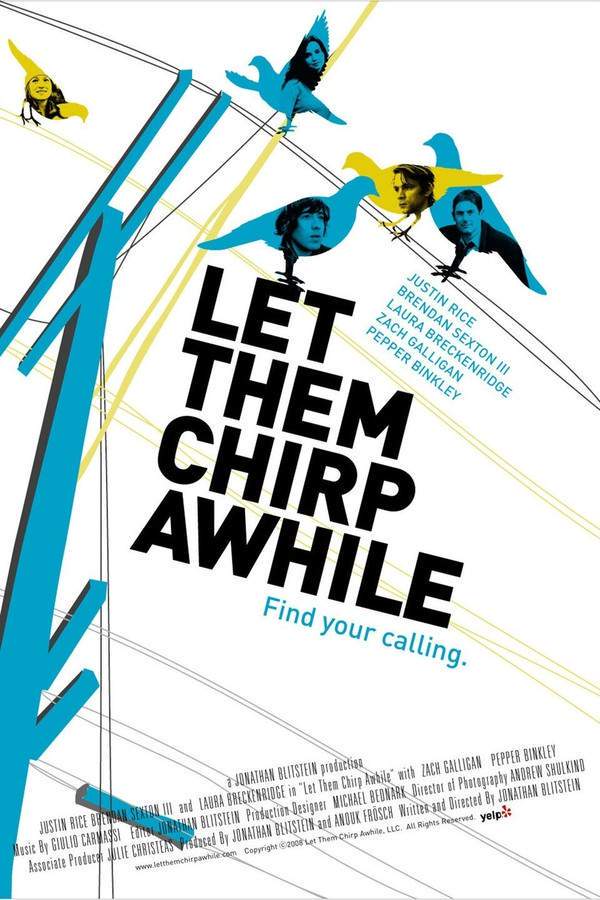
A struggling screenwriter named Bobby attempts to impress a friend by taking care of a dog, all while wrestling with a creative block concerning a script centered around talkative pigeons. Sharing his unusual idea with a depressed musician, Scott, inadvertently leads to Bobby’s nemesis, the successful but critically derided playwright Hart, learning about it. As tensions rise and creative frustrations mount, this quirky comedy explores themes of identity, ambition, and self-discovery within a generation grappling with its own aspirations.
Warning: spoilers below!
Haven’t seen Let Them Chirp Awhile yet? This summary contains major spoilers. Bookmark the page, watch the movie, and come back for the full breakdown. If you're ready, scroll on and relive the story!
Trace every key event in Let Them Chirp Awhile (2008) with our detailed, chronological timeline. Perfect for unpacking nonlinear stories, spotting hidden connections, and understanding how each scene builds toward the film’s climax. Whether you're revisiting or decoding for the first time, this timeline gives you the full picture.
Last updated: November 17, 2024 at 18:11
Find frequently asked questions about the Let Them Chirp Awhile (2008) timeline, including chronological order, nonlinear jumps, cause-and-effect links, and scene sequence clarifications. This timeline FAQ helps explain when key events happen, how moments connect, and why the story unfolds in that specific order.
Bobby agreed to dog-sit because he still had unresolved feelings for his ex-girlfriend Deirdre. When she asked him to look after her dog before moving to Los Angeles, he saw it as an opportunity to stay connected to her and possibly rekindle their relationship. His hope of winning her back motivated him to accept the awkward situation that followed.
Earlier, the summary mentions Bobby's turbulent relationship with the NYU student, showing he struggles with commitment.
Bobby directly shared his promising screenplay idea about talkative pigeons with his friend Scott. Since Hart was a mutual friend in their circle, Scott likely told Hart about the idea, either intentionally or casually. Hart then stole the concept for his own play, "Death of a Banker."
The timeline notes Bobby's desire to collaborate with Scott, which led him to share the idea prematurely.
Bobby was dating a young NYU student but felt self-conscious about their significant age gap. This insecurity made him emotionally distant and prevented him from fully committing to the romance, creating tension in their relationship even though he was genuinely interested in her.
The summary establishes Bobby as plagued by self-doubt, which manifests in his romantic life.
Hart is described as Bobby's nemesis, a successful but critically derided playwright. His motivation was likely professional jealousy and opportunism. Despite his success, Hart faced criticism, and stealing a fresh, creative concept from an aspiring writer gave him a way to produce new work without the creative struggle he lacked.
The competitive tension between Bobby and Hart is established early in the summary.
"Death of a Banker" was Hart's play that explored themes of identity and redemption in the aftermath of the September 11 attacks. It featured Anthony Rapp and was staged off-Broadway. The play dealt with how individuals process trauma and rebuild their sense of self after tragedy.
Bobby's own struggles with identity and self-doubt mirror the play's themes.
According to the timeline, Bobby eventually reached a moment of reflection and sought to reconnect with Scott in hopes of reigniting their artistic collaboration. This push toward reconciliation shows Bobby choosing personal growth over lingering resentment, though the summary doesn't specify the outcome of this reconciliation attempt.
The confrontation between Bobby and Scott escalates before this resolution point.
The title references Bobby's screenplay idea about talkative pigeons, literally letting the birds "chirp." Thematically, it suggests creative expression and allowing unconventional ideas to flourish. It also reflects the film's whimsical, observational tone about artists finding their voice.
The movie description mentions the script is 'centered around talkative pigeons.'
While preparing for Deirdre's absence by taking care of her dog, Bobby found himself in a humorous and awkward situation at a clothing store. The exact details aren't specified in the summary, but it was significant enough to be mentioned as a key moment revealing "layers of complexity in his character."
This event occurs during Bobby's preparation to dog-sit for Deirdre.
Bobby's creative block intensified because the betrayal triggered a new wave of self-doubt and emotional turmoil. Learning that Hart stole his original concept made Bobby question his own creativity even more. The combination of personal betrayal, professional theft, and his existing insecurities created a perfect storm that froze his ability to write.
The summary states Bobby was already 'plagued by self-doubt' before this betrayal.
Hart was Bobby's nemesis, a successful playwright who was critically derided. The conflict stemmed from professional rivalry: Hart had already achieved success that Bobby desperately wanted, yet Hart lacked the creative integrity Bobby aspired to. When Hart stole Bobby's original screenplay concept, it represented a final betrayal in an already tense competitive dynamic.
The summary introduces Hart as Bobby's nemesis from the beginning.
Reconnecting with Deirdre forced Bobby to confront his unresolved feelings about the past. Since she was moving to Los Angeles, her departure represented another loss and another instance of Bobby failing to commit to something meaningful in his life. This emotional thread highlighted his pattern of self-sabotage and insecurity.
Bobby's struggles with commitment are established through his NYU student relationship.
Discover curated groups of movies connected by mood, themes, and story style. Browse collections built around emotion, atmosphere, and narrative focus to easily find films that match what you feel like watching right now.
Offbeat comedies following creative souls wrestling with ambition and identity.If you liked the quirky, low-key humor of Let Them Chirp Awhile, you'll enjoy these other movies about struggling artists. Discover similar comedies and dramedies that explore creative blocks, artistic rivalry, and the search for identity with a gentle, observant touch.
Stories in this thread typically follow a protagonist, often in a creative field, who is grappling with a lack of inspiration or professional jealousy. The plot drives forward through character interactions, romantic missteps, and small-scale conflicts that force a reckoning with their own ambitions and sense of self, often leading to personal growth rather than external victory.
These movies are grouped by their shared focus on the creative process and the anxieties of a specific generation. They balance lighthearted, quirky humor with genuinely reflective moments, creating a vibe that is both amusing and relatable for anyone who has ever pursued a passion.
Observant stories of twenty and thirty-somethings figuring life out in the city.Find movies similar to Let Them Chirp Awhile that capture the vibe of a generation grappling with ambition. These character-driven comedies feature relatable protagonists, witty dialogue, and a focus on the awkward and humorous realities of life and relationships in a modern city.
The narrative pattern involves a central character or group of friends who are somewhat lost, professionally and personally. The plot is episodic, built from scenes of conversation, minor crises, and social interactions that slowly push the characters toward a greater, if subtle, understanding of themselves and what they want from life.
This thread unites movies that share a very specific mood and setting: a low-intensity, character-focused look at post-college life and early adulthood anxieties. The similarity comes from the combination of a specific urban milieu, a talky and reflective style, and a gentle, often bittersweet sense of humor.
Don't stop at just watching - explore Let Them Chirp Awhile in full detail. From the complete plot summary and scene-by-scene timeline to character breakdowns, thematic analysis, and a deep dive into the ending - every page helps you truly understand what Let Them Chirp Awhile is all about. Plus, discover what's next after the movie.
Read a complete plot summary of Let Them Chirp Awhile, including all key story points, character arcs, and turning points. This in-depth recap is ideal for understanding the narrative structure or reviewing what happened in the movie.
Discover the characters, locations, and core themes that shape Let Them Chirp Awhile. Get insights into symbolic elements, setting significance, and deeper narrative meaning - ideal for thematic analysis and movie breakdowns.
Discover movies like Let Them Chirp Awhile that share similar genres, themes, and storytelling elements. Whether you’re drawn to the atmosphere, character arcs, or plot structure, these curated recommendations will help you explore more films you’ll love.
Let Them Chirp Awhile (2008) Plot Summary & Movie Recap
Let Them Chirp Awhile (2008) Scene-by-Scene Movie Timeline
Let Them Chirp Awhile (2008) Spoiler-Free Summary & Key Flow
Movies Like Let Them Chirp Awhile – Similar Titles You’ll Enjoy
Dog Park (1999) Story Summary & Characters
Dog Days (2018) Spoiler-Packed Plot Recap
P.S. Your Cat Is Dead! (2003) Film Overview & Timeline
Loitering with Intent (2015) Plot Summary & Ending Explained
Love Birds (2012) Spoiler-Packed Plot Recap
Dog (2017) Ending Explained & Film Insights
PawParazzi (2018) Complete Plot Breakdown
Ping! (2001) Detailed Story Recap
The Dog Problem (2006) Complete Plot Breakdown
Doggy Bank (1000) Plot Summary & Ending Explained
The Sidelong Glances of a Pigeon Kicker (1970) Full Movie Breakdown
My Dog, the Thief (1969) Full Movie Breakdown
The Night We Got the Bird (1960) Movie Recap & Themes
Dog Heaven (1927) Movie Recap & Themes
In the Doghouse (1962) Ending Explained & Film Insights