Year: 2005
Runtime: 123 min
Language: English
Director: Wim Wenders
Budget: $15M
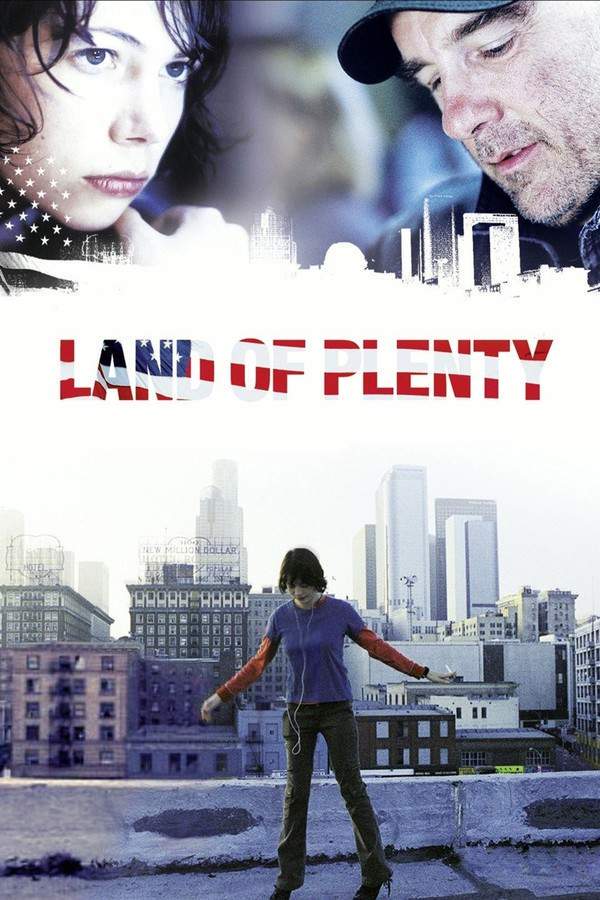
Following her time in the Middle East, missionary Lana returns to America and seeks comfort working at a Los Angeles homeless shelter in the aftermath of September 11th. Simultaneously, her uncle Paul, a Vietnam veteran struggling with his past, becomes consumed by a personal mission to identify potential Islamic terrorist threats. Their reunion is strained as they grapple with differing viewpoints and a fragile connection. A sudden act of violence compels them to confront their deeply rooted beliefs and the complexities of their relationship.
Find where to stream, rent, or buy Land of Plenty (2005) in the US with current JustWatch availability, up-to-date pricing, and platform listings for subscription, rental, and digital purchase options.
Warning: spoilers below!
Haven’t seen Land of Plenty yet? This summary contains major spoilers. Bookmark the page, watch the movie, and come back for the full breakdown. If you're ready, scroll on and relive the story!
Read the complete plot breakdown of Land of Plenty (2005), including all key story events, major twists, and the ending explained in detail. Discover what really happened, and what it all means.
As the camera sweeps across the landscape of post-9/11 America, we meet Lana, an American girl whose worldview has been profoundly influenced by her upbringing alongside her missionary parents in Africa and the Middle East. Recently back from an extended stay in the West Bank, she finds herself in Los Angeles, now committed to aiding a local homeless mission.
In this new environment, Lana seeks to reconnect with her last remaining family member in the United States—her uncle, Paul. A Vietnam veteran, Paul is burdened by the haunting memories of his past. His daily life is marked by a compulsive need to surveil and document Arabs or those who resemble them, driven by a fear that they may be conspiring against America.
In sharp contrast to her uncle, Lana emerges from her foreign experiences with a deep awareness of the tragic repercussions of war. She holds a belief that often diverges from mainstream perspectives—an empathy for the struggles faced by those in the Third World, which allows her to draw stark connections between the impoverished regions she has witnessed overseas and the inner-city hardships of Los Angeles.
The narrative takes a significant turn with the murder of a young Pakistani man just outside the mission, which compels both Lana and Paul to undertake the difficult task of returning his lifeless body to his grieving family. This poignant journey is not only a physical road trip but also a profound emotional expedition, providing both Paul and Lana with a unique opportunity to understand each other’s struggles more deeply. Ultimately, this journey intertwines their lives, challenging their perspectives and prompting them to face the complexities of their shared experiences.
Last updated: November 21, 2024 at 13:11
Explore frequently asked questions about Land of Plenty (2005) with spoiler-rich answers covering the full plot summary, major story beats, character motivations, hidden details, and ending meaning. This movie summary FAQ helps explain confusing scenes, plot twists, and narrative decisions in clear, searchable detail.
Paul's surveillance behavior stems from his traumatic experiences as a Vietnam veteran. The events of 9/11 have triggered his deep-seated paranoia, causing him to obsessively document and watch individuals who appear to be of Arab descent. He believes they may be conspiring against America, though this suspicion is rooted more in his psychological wounds than in any actual evidence.
Lana's time in the West Bank with her missionary parents profoundly shaped her worldview. She developed deep empathy for people suffering from war and poverty in Third World countries. Returning to America, she sees a direct connection between the impoverished communities she witnessed overseas and the homeless population in Los Angeles, motivating her to serve others in need.
After the young Pakistani man is murdered outside the homeless mission, both Lana and Paul feel compelled to take action. Lana's empathy drives her to help the grieving family, while Paul sees it as an opportunity to confront the consequences of the violence that has affected his own life. Their joint decision to return the body becomes a pivotal moment that forces them to face their biases together.
The murder occurs as a direct result of the post-9/11 tensions that Paul himself has been perpetuating through his surveillance.
The murder is a consequence of the heightened anti-Arab sentiment in post-9/11 America. While the specific perpetrator is not detailed in the summary, the atmosphere of fear and suspicion that Paul embodies and that pervades society creates the conditions for this tragic act of violence against an innocent man.
Paul's obsessive surveillance and the general climate of fear he participates in directly contribute to the environment that makes such violence possible.
The journey to return the young man's body becomes an emotional expedition that forces Paul and Lana to confront their differences. Through shared stories and reflections during the travels, they gain insight into each other's pain and struggles. This difficult experience forges a fragile bond between them and challenges their preconceived notions, ultimately leading to a deeper understanding despite their opposing worldviews.
Earlier scenes establish their strained relationship and conflicting perspectives, which the road trip directly challenges.
Paul's paranoia is rooted in his experiences as a Vietnam veteran, which left him with lasting psychological trauma. The 9/11 attacks triggered a resurfacing of his fear and hypervigilance, causing him to project his wartime anxieties onto Arab-looking individuals in Los Angeles. His compulsive surveillance is a manifestation of unresolved trauma rather than a rational response to actual threats.
His daily routine of documenting people reveals the compulsive nature of his trauma-driven behavior.
When they arrive at the young Pakistani man's family home, Lana and Paul witness the devastating grief caused by his senseless murder. This confrontational experience forces Paul to see the human cost of the fear and suspicion that dominate his thinking. The sorrow of the family challenges his preconceived notions and helps him realize the harmful impact of his surveillance mentality.
The decision to return the body was specifically designed to bring Paul face-to-face with the reality of his prejudices.
Lana's experiences in Africa and the Middle East with her missionary parents exposed her to severe Third World poverty and suffering. When she returns to Los Angeles, she recognizes similar patterns of hardship and marginalization in the city's homeless population. This perspective allows her to see beyond American affluence and understand the common humanity shared by impoverished communities worldwide.
Her reflection on cultural differences during her work at the mission establishes this worldview.
Lana and Paul's reunion is strained because they represent opposing perspectives on America and the world. Lana returns with empathetic views shaped by her missionary background and firsthand experience of war's impact. Paul is consumed by fear and paranoia rooted in his Vietnam trauma. Their conflicting worldviews create tension as they struggle to understand each other's experiences and beliefs.
The timeline establishes their relationship difficulty from the moment Lana arrives seeking to reconnect.
By the end of their journey, both Paul and Lana undergo significant transformations. Paul begins to recognize the destructive nature of his surveillance mentality and the biases it perpetuates. Lana gains a deeper understanding of her uncle's pain while maintaining her commitment to empathy. Together, they develop a fragile but meaningful reconciliation based on their shared humanity and mutual understanding of suffering.
The 'Change of Heart' and 'Lessons Learned' timeline points directly lead to this transformation.
The murder serves as the catalyst that brings Lana and Paul together and forces them to confront their differing viewpoints. It represents the tragic consequence of the fear and division that pervade post-9/11 America. The act of violence pushes both characters out of their isolation, Lana from her idealistic volunteer work and Paul from his paranoid solitary surveillance, and onto a shared journey of healing and understanding.
The 'Tipping Point' in the timeline identifies this murder as the moment that dramatically shifts the entire narrative.
Discover curated groups of movies connected by mood, themes, and story style. Browse collections built around emotion, atmosphere, and narrative focus to easily find films that match what you feel like watching right now.
Characters travel across a country divided by politics and grief.Movies like Land of Plenty that use a road trip narrative to explore a divided America. If you enjoyed the journey through a landscape of post-9/11 fear and ideological conflict, you'll find similar emotionally heavy dramas here.
Stories in this thread typically begin with characters in a state of personal or political crisis, who then embark on a journey that forces them to confront the realities of their country and their own beliefs. The narrative unfolds as a series of encounters and revelations, leading to a climax that often redefines their relationships and worldviews.
These movies are grouped by their shared use of the American landscape as a character, reflecting internal and national conflicts. They share a melancholic, contemplative mood, a steady pacing that allows for deep reflection, and a focus on the heavy emotional weight of navigating a fractured society.
Intimate portraits of individuals grappling with the aftermath of collective trauma.Find movies similar to Land of Plenty that delve into the psychological impact of major events on individuals. If you liked its tense, heavy exploration of post-9/11 trauma and strained family bonds, this thread offers more character-driven dramas.
The narrative pattern revolves around characters whose lives are directly or indirectly shattered by a large-scale traumatic event. The plot follows their attempts to rebuild, often manifesting as obsession, paranoia, or a search for connection, leading to strained relationships and a bittersweet reckoning with their new reality.
These films are united by their intense focus on the psychological fallout of trauma, a tense or melancholic tone, and a steady pacing that allows for deep character exploration. They share themes of grief, prejudice, and the heavy emotional burden of moving forward, often culminating in a bittersweet resolution.
Don't stop at just watching - explore Land of Plenty in full detail. From the complete plot summary and scene-by-scene timeline to character breakdowns, thematic analysis, and a deep dive into the ending - every page helps you truly understand what Land of Plenty is all about. Plus, discover what's next after the movie.
Track the full timeline of Land of Plenty with every major event arranged chronologically. Perfect for decoding non-linear storytelling, flashbacks, or parallel narratives with a clear scene-by-scene breakdown.
Discover the characters, locations, and core themes that shape Land of Plenty. Get insights into symbolic elements, setting significance, and deeper narrative meaning - ideal for thematic analysis and movie breakdowns.
Discover movies like Land of Plenty that share similar genres, themes, and storytelling elements. Whether you’re drawn to the atmosphere, character arcs, or plot structure, these curated recommendations will help you explore more films you’ll love.
Land of Plenty (2005) Scene-by-Scene Movie Timeline
Land of Plenty (2005) Movie Characters, Themes & Settings
Land of Plenty (2005) Spoiler-Free Summary & Key Flow
Movies Like Land of Plenty – Similar Titles You’ll Enjoy
The Land of Steady Habits (2018) Spoiler-Packed Plot Recap
Land (2021) Complete Plot Breakdown
Promised Land (2012) Story Summary & Characters
Landline (2017) Ending Explained & Film Insights
Freedomland (2006) Full Movie Breakdown
The Lucky Ones (2008) Movie Recap & Themes
In the Land of Women (2007) Complete Plot Breakdown
Land of the Blind (2006) Full Summary & Key Details
Dreamland (2006) Story Summary & Characters
The Land (2016) Spoiler-Packed Plot Recap
The Dry Land (2010) Spoiler-Packed Plot Recap
Land of Bad (2024) Movie Recap & Themes
’Merika (1984) Spoiler-Packed Plot Recap
Land of the Free (1998) Plot Summary & Ending Explained
Happy Land (1943) Film Overview & Timeline