Year: 2004
Runtime: 85 min
Language: Portuguese
Director: Vicente Amorim
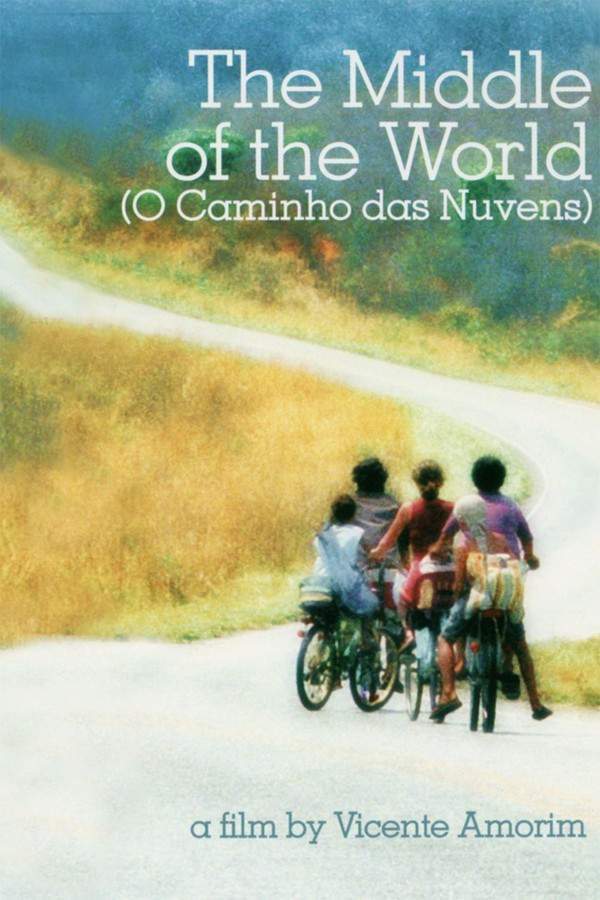
Facing unemployment, a truck driver and his family undertake a challenging 2,000-mile journey across the country by bicycle. They are searching for a new life and opportunities that can restore dignity and prosperity to their family. The arduous trip tests their resilience and determination as they navigate the open road.
Warning: spoilers below!
Haven’t seen The Middle of the World yet? This summary contains major spoilers. Bookmark the page, watch the movie, and come back for the full breakdown. If you're ready, scroll on and relive the story!
Read the complete plot breakdown of The Middle of the World (2004), including all key story events, major twists, and the ending explained in detail. Discover what really happened, and what it all means.
Romão Wagner Moura and Rose Cláudia Abreu are a poor couple living in Paraíba, in search of a job that pays around R$1,000 a month—the amount Romão believes is the minimum needed to feed his children. They decide to embark on a bicycle journey to Rio de Janeiro with their five children: Antônio Ravi Ramos Lacerda (the teenager); Rodney (Manoel Sebastião Alves Filho); Clévis (Felipe Newton Silva Rodrigues); Suelena (Cícera Cristina Almino de Lima); and newborn Cícero (Cícero Wesley A. Ferreira).
Along the way, they earn a little money washing cars and performing Roberto Carlos songs. They chase a string of opportunities, but none pan out. They are first offered a job by a criminal who warns that he can only hire “sons of bitches.” Later, a councilman from São Bento named Severino promises work, but the promise drags on, and the family decides to move on.
They stop by the Juazeiro do Norte statue of Father Cícero to pray, where Romão hears about the “table of Padre Cícero,” a supposed blessing for anyone who can lift it. He gives it a try, lifts the table, and then faints. A lone traveler named Gideão tells them to head to Filadélfia to find Neguiça. That night, Antônio and Clévis stumble upon a church and accidentally smash a cash box full of money; Antônio gives in to temptation and pockets the bills.
In Filadélfia, Neguiça offers shelter but no steady work. Antônio tries to go to a local night party but flees, unsettled by the unfamiliar surroundings.
In Feira de Santana, Antônio buys bus tickets to Rio for everyone, but when asked where the money came from, he admits it was stolen from the church; Romão tears up the tickets in anger. The family then encounters Panamá and Callado, a pair looking for men, women, and children for a “great opportunity,” with no particular skills required. Romão reluctantly agrees to let Panamá take the bikes on a truck bound for the opportunity, and to bring along three other family members who weren’t selected.
The opportunity turns out to be a sham Pataxó ritual in a Porto Seguro club. Romão and three of his children are dressed as Pataxó, while Panamá poses as the foreign owner of Caminho das Nuvens (Path of the Clouds). Antônio sneaks into the club; when Romão spots him, he leaves in the middle of the ritual, and the rest of the family leaves as well. Frustrated, Romão orders Rose not to arrange such jobs again.
Still in Porto Seguro, Antônio meets Sereia, who hands out Caminho das Nuvens flyers. He later reconnects with Neguiça and Gideão, and they take him to a local party where he meets Sereia again and shares a quick photo with her. The next morning, Rose scolds him for disappearing, and Antônio decides to stay in Porto Seguro while Romão accepts and leaves with the rest of the family. That night, he sees Sereia with Panamá; when Antônio spills a drink on Panamá’s face, Sereia pushes him to the ground. The family gathers again soon after.
Upon arriving in Rio de Janeiro, Romão tries to arrange a bricklayer job for Antônio in a city far from Rio; he agrees to stay and says a final goodbye to his family. In Rio, they visit Christ the Redeemer. Romão asks a man for directions to Brasília, while Rose makes it clear she is not going back to the long road.
Last updated: November 22, 2025 at 15:58
Explore frequently asked questions about The Middle of the World (2004) with spoiler-rich answers covering the full plot summary, major story beats, character motivations, hidden details, and ending meaning. This movie summary FAQ helps explain confusing scenes, plot twists, and narrative decisions in clear, searchable detail.
Romão attempts to lift the table as a test of faith, believing that whoever can lift it will receive a blessing. The legend promises prosperity to those who prove their worth through this physical challenge. After lifting the table, Romão faints, which he and his family interpret as either a sign of divine intervention or a personal omen for their journey ahead.
Earlier in the journey, the family has been surviving on minimal earnings, making them desperate for any sign of hope or miracle.
Antônio, a teenager under immense pressure from poverty, succumbs to temptation when he and his brother Clévis accidentally discover a cash box full of money in the church. The family's constant struggle and lack of steady income create the conditions for his moment of weakness. He rationalizes the theft as a way to help his family reach Rio de Janeiro faster.
The family has been struggling to earn money washing cars and singing, barely surviving each day.
When Romão asks Antônio where he got the money for the bus tickets, Antônio confesses it was stolen from the church. Romão, morally opposed to theft, tears up the tickets in anger rather than let his family benefit from stolen money. This act reinforces Romão's strong moral character despite their desperate circumstances and forces the family to continue their grueling bicycle journey.
Antônio's theft in Filadélfia has created a moral dilemma that was always going to surface.
Desperate and exhausted after months on the road with no stable income, the family agrees when Panamá and Callado offer a great opportunity requiring no special skills. The promise of quick money and a shortcut to their dreams blinds them to the obvious red flags. Romão reluctantly agrees partly because he feels trapped and partly because he hopes this could finally be the break they need.
Earlier, a criminal offered work but with exploitative conditions, and councilman Severino made empty promises, both foreshadowing how the vulnerable are preyed upon.
Antônio decides to stay in Porto Seguro after meeting Sereia, a girl his own age who hands out flyers for Caminho das Nuvens. The teenage rebellion and desire for independence, combined with his conflict with his father over the stolen money, push him toward staying. When Rose scolds him for disappearing, he chooses to remain rather than continue the difficult journey with his family.
Antônio has already shown rebellious tendencies, stealing money, sneaking into the club during the ritual, and feeling out of place in unfamiliar surroundings.
When the family finally reaches Rio de Janeiro, Romão asks a man for directions to Brasília rather than to their final destination. This signals that even after completing their original journey, Romão cannot stop searching for a better life. Brasília represents another opportunity, another path forward, demonstrating how the endless pursuit of prosperity has become ingrained in his mindset.
The entire journey has been about searching for the next opportunity; arriving in Rio doesn't end that quest.
Rose declares she is not going back to the long road upon arriving in Rio, marking a pivotal moment of exhaustion and resistance. After months of bicycle travel, poverty, and watching her family be exploited, she refuses to continue this life of constant movement and hardship. Her statement represents a breaking point and a demand for stability, even though their future in Rio remains uncertain.
Rose has endured the journey silently but her patience reaches its limit at the final moment.
The criminal's offer to hire only sons of bitches is a test of willingness to abandon dignity for survival. He exploits the family's desperation by forcing them to either accept degrading terms or refuse and continue suffering. This moment establishes the pervasive exploitation the family faces throughout their journey.
This early encounter establishes the pattern of predators targeting vulnerable families searching for work.
Neguiça provides shelter but has no steady employment to offer the family. Filadélfia represents another dead end in their search, hospitality exists but economic opportunity does not. This forces Antônio to seek entertainment at a local party, where he feels out of place and returns to his family.
The pattern of false hope continues: people offer help but cannot provide actual jobs.
Antônio uses the stolen church money to buy bus tickets to Rio, believing this would give his family a faster and easier journey. His intention appears genuine, he wants to help ease their suffering. However, the source of the money ultimately invalidates his good intentions when Romão discovers the truth.
This act sets up the moral confrontation that fractures the family's unity.
Romão leaves the fake Pataxó ritual when he spots Antônio sneaking into the club. His son's presence confirms that this entire scheme is wrong and dangerous. Romão's departure triggers the family's exit, marking one of the few moments he asserts moral authority over desperate circumstances.
Earlier, Romão reluctantly agreed to let Panamá take the bikes and three family members, showing his desperation, but seeing Antônio changes everything.
When the family nears Rio, Romão arranges a bricklayer job for Antônio in a distant city. This represents Romão's attempt to give his son a stable, honest future despite their fractured relationship. By separating Antônio from the family but ensuring he has legitimate work, Romão tries to redirect his son's life toward respectability.
The stolen money incident and Antônio's decision to stay in Porto Seguro have already damaged their relationship.
Discover curated groups of movies connected by mood, themes, and story style. Browse collections built around emotion, atmosphere, and narrative focus to easily find films that match what you feel like watching right now.
Arduous physical journeys that test the spirit and bonds of ordinary people.If you liked The Middle of the World, explore more movies about arduous physical journeys that test the human spirit. These films feature ordinary people pushed to their limits, searching for a better life on the open road against a backdrop of hardship and determination.
These stories follow a linear, often episodic structure as characters move from point A to point B. The primary conflict is external—the environment, poverty, distance—but its true impact is internal, revealing character flaws and strengths. The journey itself is the plot, with each milestone bringing new hardships and small, hard-won victories.
They are grouped by their shared focus on a physical quest as a metaphor for survival. The mood is consistently somber and desperate, punctuated by moments of resilience. The pacing is steady and deliberate, mirroring the long, grueling nature of the trip, and the emotional weight is consistently heavy.
Families clinging to dignity while navigating systems of poverty and exploitation.Find movies similar to The Middle of the World that explore themes of economic hardship and family resilience. These dramas depict the struggle for dignity against poverty, often featuring a bittersweet ending where survival comes with a personal cost.
Narratives typically follow a downward spiral or a difficult quest where the characters are vulnerable to forces beyond their control. The central tension is between hope and despair, with victories feeling partial and losses feeling profound. The ending is often ambiguous or bittersweet, acknowledging the struggle more than a clear triumph.
They share a heavy, melancholic mood driven by themes of poverty and the fragility of the family unit. The pacing is steady, building a somber reality. The emotional journey is defined by a mix of desperate determination and the sobering reality of systemic hardship, culminating in a conclusion that is poignant rather than purely happy or sad.
Don't stop at just watching - explore The Middle of the World in full detail. From the complete plot summary and scene-by-scene timeline to character breakdowns, thematic analysis, and a deep dive into the ending - every page helps you truly understand what The Middle of the World is all about. Plus, discover what's next after the movie.
Track the full timeline of The Middle of the World with every major event arranged chronologically. Perfect for decoding non-linear storytelling, flashbacks, or parallel narratives with a clear scene-by-scene breakdown.
Discover the characters, locations, and core themes that shape The Middle of the World. Get insights into symbolic elements, setting significance, and deeper narrative meaning - ideal for thematic analysis and movie breakdowns.