Year: 1971
Runtime: 153 mins
Language: Hindi
Director: Sushil Majumdar
Raja Kumar Bahadur, aka Gyan Shankar Rai, has long abstained from alcohol, women and vice. He falls for a young woman, Saudamani, learns her background, essentially buys her freedom and brings her to his mansion, where he starts drinking, courts her as “Madhuri”, but does not marry her. Later he meets the beautiful Sumita, half his age, repays her parents’ debts and marries her.
Warning: spoilers below!
Haven’t seen Lal Patthar yet? This summary contains major spoilers. Bookmark the page, watch the movie, and come back for the full breakdown. If you're ready, scroll on and relive the story!
Read the complete plot breakdown of Lal Patthar (1971), including all key story events, major twists, and the ending explained in detail. Discover what really happened—and what it all means.
During a family picnic at Fatehpur Sikri, an old man warns that every stone in the fort is steeped in a story written with blood, and that only by seeking out the red stone, Lal Patthar, will they glimpse the fort’s dark past. The family laughs it off, but the old man’s paranoid eyes flicker with warnings—he even says blood can be seen in a glass of plain water. As he speaks, he unravels the saga of Rai Nagar, a lineage haunted by a centuries-old curse.
Raja Raghav Shankar Rai, the kingdom’s first ruler, is introduced as a bandit who commits a brutal act against a peasant woman named Sonmai and takes her as his wife. Sonmai’s fate, after this violence, is to unleash a curse that dooms the entire family to insanity. In the long arc of generations, the tale narrows to Gyan Shankar, the lone male heir in the seventh generation, while his grandfather Raja Ram Shankar Rai is described as mentally unstable. As a boy, Gyan intervenes when his drunken father Anand Shankar attempts to assault a maid, and the boy is sent away to Allahabad, where he studies history and psychology before returning home with Chhotu, his trusted servant.
To claim the throne, Gyan contemplates marriage, yet he fears that marriage could unravel the life of any woman under Sonmai’s curse. The story then shifts to the hunt in the jungle, where Gyan—Raaj Kumar—goes in search of a man-eating tiger. After the kill, he helps fend off a band of attackers who are fleeing with a palanquin. In the aftermath, he discovers a woman named Saudamani, the widow of Gokul, concealed inside the palanquin. Saudamani, who would later be known as Madhuri, becomes entangled with Gyan: he brings her back to the palace and, drawn to her beauty, treats her with a mixture of care and domination. Saudamani is introduced to the court as a lower-class woman who gradually gains influence in the grand house, while Gyan’s initial fascination gives way to a complicated dynamic where he tries to educate and shape her, only to realize she possesses a stubborn, practical outlook that cannot be “taught” in the traditional sense.
Ten years pass, and Gyan leaves behind the palace life. He encounters a younger woman named Sumita, Rakhee Gulzar, at a singing event. Sumita’s father Harishchandra Chakraborty is a gambler in heavy debt, and he arranges a marriage between Sumita and Gyan to secure money. Sumita arrives in India from London, accompanied by her mother Madhu, Dulari, who is strongly opposed to the union. Sumita’s former life includes a childhood sweetheart, Shekhar, Vinod Mehra, who taught her music. Madhuri, still a powerful presence in the palace, grows jealous and begins to sow doubt about Sumita’s intentions, insinuating that Sumita and Shekhar were once close.
Gyan attempts to balance both Sumita and Madhuri, often leaving them disappointed. He senses Madhuri’s jealousy when she appears to suspect Sumita of infidelity with Shekhar, and the tension boils over when Madhuri manipulates a situation by guiding Shekhar to Sumita’s room under Gyan’s supposed orders. In response, Gyan confronts Madhuri’s mounting jealousy, ultimately driving her away from the palace after a brutal exchange in which he scars her face.
Seeking a fresh start, Gyan escorts Sumita to Agra, where Sumita visits the grave of Maulana Salim Chisti, hoping for a child. Gyan, convinced that Sumita and Shekhar still share a bond, writes to Shekhar and asks him to come to Agra. When Shekhar arrives, Gyan feigns illness and sends them to view the Taj Mahal, then follows. He catches only fragments of their conversation and becomes convinced that Sumita and Shekhar remain connected in their feelings.
On a full moon night, Gyan invites Shekhar to explore Fatehpur Sikri’s fort and stage a supernatural encounter to confirm his suspicions. He uses blanks to threaten a ghostly figure, then replaces them with real bullets, turning the act into a deadly confrontation. Sumita, who had been invited as part of the ruse, becomes the target and dies. In the chaos, Gyan shoots Shekhar, and his rival dies as the curse of Sonmai seems to be fulfilled. Gyan is left wandering the fort, waiting for Sumita’s ghost to appear on every full moon night.
Yet the twist reveals that Madhuri—alive all along—has been living under an assumed role, quietly playing Sumita’s part to provide solace to Gyan. The legend of Rai Nagar ends with a haunting sense that the past’s blood-soaked tales continue to echo through the stones of Fatehpur Sikri.
Last Updated: October 05, 2025 at 12:16
Discover curated groups of movies connected by mood, themes, and story style. Browse collections built around emotion, atmosphere, and narrative focus to easily find films that match what you feel like watching right now.
Stories of family curses, obsessive love, and inescapable tragic fates.If you enjoyed the fatalistic atmosphere and tragic unraveling of Lal Patthar, explore this collection of movies like it. These similar films feature obsessive relationships, psychological manipulation, and a haunting, gothic feel that builds steadily towards an inevitable, bleak ending.
This thread groups stories that follow a descent into tragedy, often triggered by an inherited curse or a fatal character flaw. The narrative typically builds with a steady, deliberate pace, escalating psychological tension and obsessive relationships until they culminate in ruin and despair, offering no redemption.
These movies are grouped together because they share a dark, oppressive mood, a fatalistic worldview, and a focus on the destructive power of obsession. They deliver a heavy emotional experience through themes of madness, jealousy, and inescapable doom.
Explores toxic relationships built on control, wealth, and psychological manipulation.For viewers who appreciated the complex power dynamics and psychological games in Lal Patthar, this list highlights similar movies. Discover other heavy dramas exploring toxic relationships, manipulation across class divides, and the high-stakes emotional turmoil that follows.
The narrative pattern involves a powerful, often older, figure using their status or wealth to entrap a younger partner, creating a relationship defined by control rather than equality. The story delves into the psychological manipulation, jealousy, and deep-seated tensions that ultimately destroy the characters involved.
These films are connected by their exploration of dark romance, where love is intertwined with possession and control. They share a high emotional weight, complex character motivations, and a steady pacing that allows the toxic dynamics to unfold with devastating effect.
Don't stop at just watching — explore Lal Patthar in full detail. From the complete plot summary and scene-by-scene timeline to character breakdowns, thematic analysis, and a deep dive into the ending — every page helps you truly understand what Lal Patthar is all about. Plus, discover what's next after the movie.
Track the full timeline of Lal Patthar with every major event arranged chronologically. Perfect for decoding non-linear storytelling, flashbacks, or parallel narratives with a clear scene-by-scene breakdown.
Discover the characters, locations, and core themes that shape Lal Patthar. Get insights into symbolic elements, setting significance, and deeper narrative meaning — ideal for thematic analysis and movie breakdowns.
Get a quick, spoiler-free overview of Lal Patthar that covers the main plot points and key details without revealing any major twists or spoilers. Perfect for those who want to know what to expect before diving in.
Visit What's After the Movie to explore more about Lal Patthar: box office results, cast and crew info, production details, post-credit scenes, and external links — all in one place for movie fans and researchers.
Discover movies like Lal Patthar that share similar genres, themes, and storytelling elements. Whether you’re drawn to the atmosphere, character arcs, or plot structure, these curated recommendations will help you explore more films you’ll love.
Lal Patthar (1971) Scene-by-Scene Movie Timeline
Lal Patthar (1971) Movie Characters, Themes & Settings
Lal Patthar (1971) Spoiler-Free Summary & Key Flow
Movies Like Lal Patthar – Similar Titles You’ll Enjoy
Gadar: Ek Prem Katha (2001) Story Summary & Characters
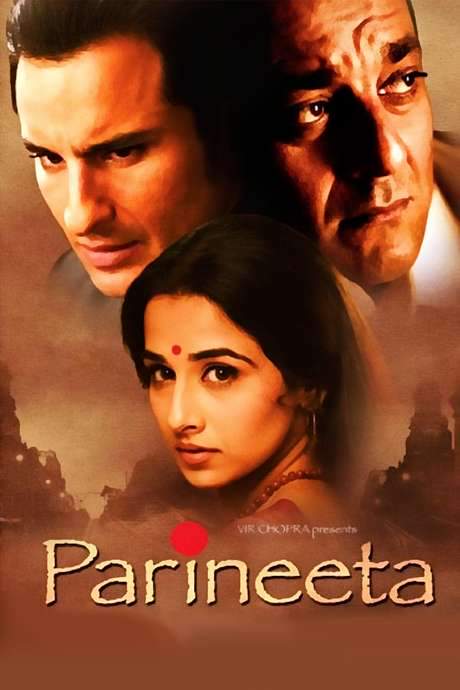
Parineeta (2005) Movie Recap & Themes
Lal Salam (1990) Ending Explained & Film Insights
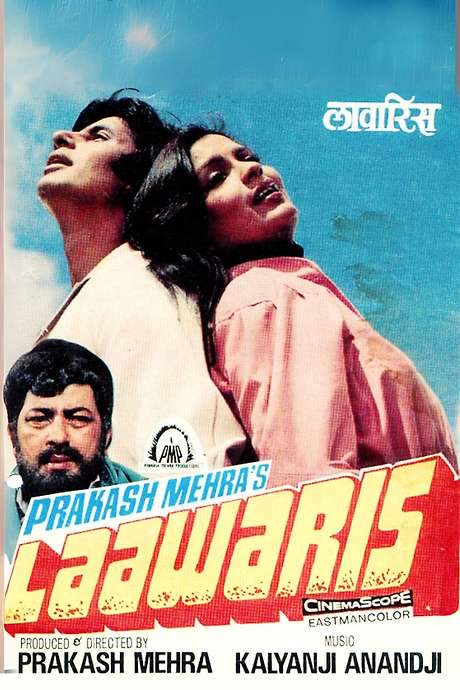
Laawaris (1981) Full Movie Breakdown
Patthar Ke Phool (1991) Detailed Story Recap
Katha (1982) Full Movie Breakdown
Patthar Ke Sanam (1967) Detailed Story Recap
Adalat (1976) Full Summary & Key Details
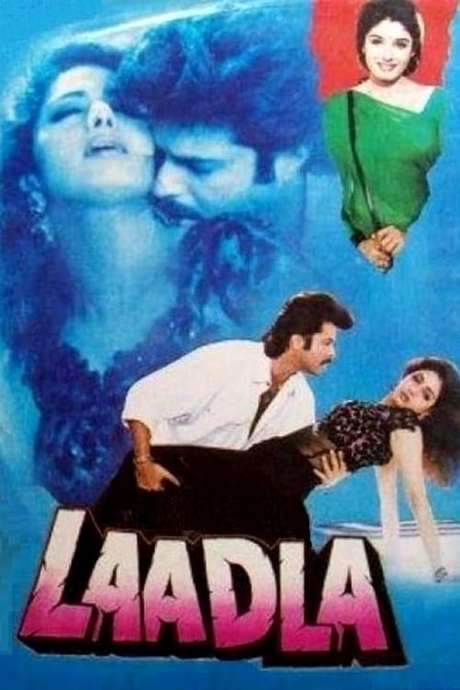
Laadla (1994) Plot Summary & Ending Explained
Kati Patang (1971) Film Overview & Timeline
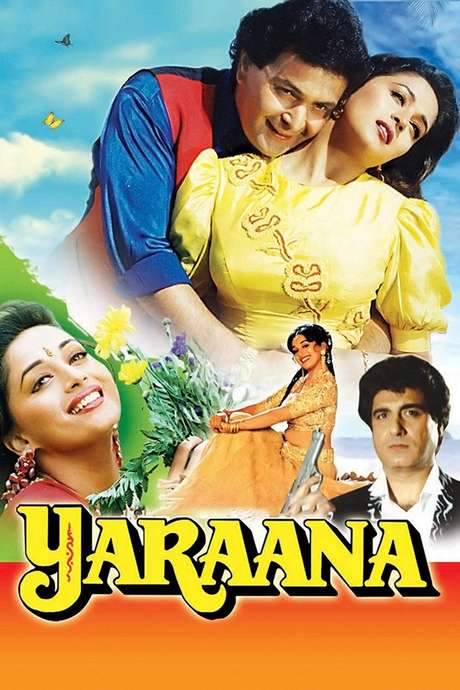
Yaraana (1995) Plot Summary & Ending Explained
Phool Aur Patthar (1966) Complete Plot Breakdown
Haath Ki Safai (1974) Ending Explained & Film Insights
Lal Baadshah (1999) Plot Summary & Ending Explained
Madhumati (1958) Film Overview & Timeline