Year: 1982
Runtime: 141 mins
Language: Hindi
Director: Sai Paranjape
A modern retelling of the classic hare‑and‑tortoise fable, set in contemporary life. Diligent but shy Rajaram harbors a secret crush on his neighbour, yet his timid nature holds him back. Just as he musters the courage to confess, the charismatic, fast‑talking Bashu bursts onto the scene, turning the romance into a lively rivalry.
Warning: spoilers below!
Haven’t seen Katha yet? This summary contains major spoilers. Bookmark the page, watch the movie, and come back for the full breakdown. If you're ready, scroll on and relive the story!
Read the complete plot breakdown of Katha (1982), including all key story events, major twists, and the ending explained in detail. Discover what really happened—and what it all means.
A modern retelling of a classic fable, reimagined through a Mumbai chawl
Based on S.G. Sathye’s Marathi play Sasa Aani Kasav (Hare and Tortoise), this film offers a nuanced, character-driven twist on the traditional hare-and-tortoise story, turning a timeless moral into a contemporary drama about ambition, vulnerability, and loyalty in everyday life.
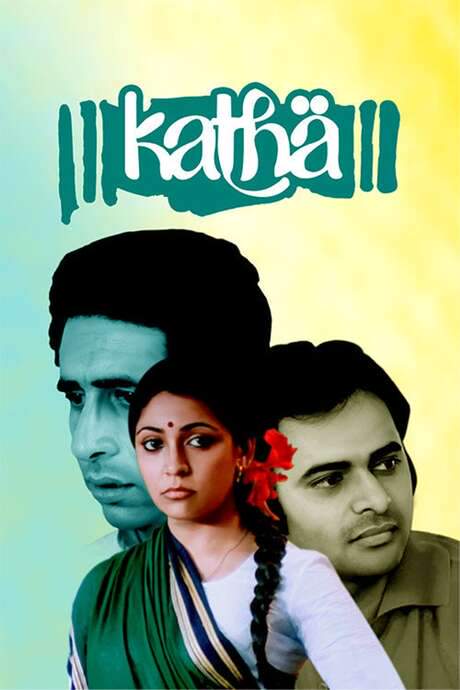
The tortoise — Rajaram P. Joshi, Naseeruddin Shah — is a gentle, hardworking middle-class clerk who makes his home in a crowded chawl. He harbors a quiet, unspoken love for his neighbor Sandhya Sabnis, Deepti Naval, and his timidity often keeps him from speaking his heart. In this close-knit, shared-space world, Rajaram’s sincerity and decency make him a steady, if overlooked, presence as colleagues and neighbors alike lean on his good nature.
Enter Bashudev, widely known as Bashu — a smooth-talking, roguish figure who arrives as a house guest and instantly captivates the room with his charm, larger-than-life stories of success, and a magnetism that borderlines charisma and recklessness. Farooque Shaikh embodies Bashu’s confident, image-conscious energy, a spark that unsettles the delicate balance of the chawl.
Bashu begins courting Sandhya, and she finds herself drawn to his bold, carefree facade. He also ingratiates himself with Rajaram’s employer, Footprint Shoes, spinning tales of work in “good ol’ England” and a newfound love of golf to win over the skeptical owner, Mr. Dhindhoria. He turns his attention toward Dhindhoria’s wife Anuradha, a role rich with complexity, played by Mallika Sarabhai, as well as toward Dhindhoria’s daughter Jojo. The dynamic he creates is a delicate dance of desire, admiration, and risk.
Within the Sabnis family, the plan to marry Sandhya to Bashu gathers momentum, much to Rajaram’s shock and heartbreak. On the day of the engagement, Bashu vanishes, choosing the lure of freedom over commitment. Seizing the moment, Rajaram steps forward and offers to marry Sandhya, even as she hints at a tarnished sense of worth due to her intimacy with Bashu. Yet Rajaram’s enduring love prevails, and the couple marries, a quiet triumph of patience and integrity over impulsive desire. Bashu, ever the wanderer, secures a contract with an Arab employer and sails off to the Middle East, leaving behind questions about loyalty, responsibility, and the price of chasing the next moonlit dream.
The film’s ensemble threads through the story with a lived-in warmth: Sarika appears as herself, adding a reflective, almost mythic layer to the narrative; cameos from Tinnu Anand and Jalal Agha punctuate the world with familiar faces; Leela Mishra contributes the grandmotherly gravity of Dadi Amma; and Yatin Karyekar appears as a dancer, enriching the film’s texture and sense of community.
In tone, the movie favors observant, humane storytelling over didactic preaching, inviting viewers to feel the weight of each choice. It asks how kindness and vulnerability can coexist with strength, and how the old lesson of perseverance can reveal itself in new, nuanced forms within a modern life.
Last Updated: October 09, 2025 at 14:42
Discover curated groups of movies connected by mood, themes, and story style. Browse collections built around emotion, atmosphere, and narrative focus to easily find films that match what you feel like watching right now.
Character-driven stories of hope and heartbreak in everyday city life.Find more movies like Katha that explore the tender and bittersweet sides of romance and rivalry in a middle-class setting. These gentle dramas balance heartbreak with humor, offering a reflective look at everyday life.
These narratives often follow a straightforward, character-centric path, where personal growth and emotional realizations are earned through modest challenges. The focus is less on grand events and more on the subtle interplay of relationships and social dynamics, typically leading to an ending that feels earned yet realistically tempered.
They are grouped by their shared bittersweet tone, steady pacing, and medium emotional weight, creating a coherent viewing experience of observant, intimate storytelling that finds drama in the nuances of daily life.
Where steadfast patience and integrity triumph over flashy charm.Discover movies like Katha where a gentle, sincere underdog competes for love against a charismatic rival. These stories celebrate the quiet victory of integrity and patience over flashy charm in romantic rivalries.
This thread follows a classic narrative pattern: a timid but good-hearted individual must overcome their insecurities and compete with a more outwardly impressive rival. The conflict is internal and social, focusing on vulnerability and self-worth, culminating in a victory that feels satisfying because it is rooted in authentic personal growth.
They share a core plot archetype and emotional journey—the triumph of steadfastness over superficiality—combined with a bittersweet, reflective tone that makes the victory feel earned and realistic rather than purely fantastical.
Don't stop at just watching — explore Katha in full detail. From the complete plot summary and scene-by-scene timeline to character breakdowns, thematic analysis, and a deep dive into the ending — every page helps you truly understand what Katha is all about. Plus, discover what's next after the movie.
Track the full timeline of Katha with every major event arranged chronologically. Perfect for decoding non-linear storytelling, flashbacks, or parallel narratives with a clear scene-by-scene breakdown.
Discover the characters, locations, and core themes that shape Katha. Get insights into symbolic elements, setting significance, and deeper narrative meaning — ideal for thematic analysis and movie breakdowns.
Get a quick, spoiler-free overview of Katha that covers the main plot points and key details without revealing any major twists or spoilers. Perfect for those who want to know what to expect before diving in.
Visit What's After the Movie to explore more about Katha: box office results, cast and crew info, production details, post-credit scenes, and external links — all in one place for movie fans and researchers.
Discover movies like Katha that share similar genres, themes, and storytelling elements. Whether you’re drawn to the atmosphere, character arcs, or plot structure, these curated recommendations will help you explore more films you’ll love.
Katha (1982) Scene-by-Scene Movie Timeline
Katha (1982) Movie Characters, Themes & Settings
Katha (1982) Spoiler-Free Summary & Key Flow
Movies Like Katha – Similar Titles You’ll Enjoy
Toilet: Ek Prem Katha (2017) Ending Explained & Film Insights
Katha Nayagan (2017) Full Summary & Key Details
Kathbirali (2020) Spoiler-Packed Plot Recap
Kadakh (2020) Story Summary & Characters
Katha Parayumbol (2007) Ending Explained & Film Insights
Kathir (2022) Movie Recap & Themes
Ratha Kanneer (1954) Full Movie Breakdown
Kadhala Kadhala (1998) Ending Explained & Film Insights
Khatta Meetha (1978) Spoiler-Packed Plot Recap
Kadhalar Dhinam (1999) Spoiler-Packed Plot Recap
Satyaprem Ki Katha (2023) Full Movie Breakdown
Prema Katha (1999) Plot Summary & Ending Explained
Lal Patthar (1971) Story Summary & Characters
Kaathuvaakula Rendu Kaadhal (2022) Ending Explained & Film Insights
Kathal (2023) Full Movie Breakdown