





Plot Explained Spoilers guaranteed!
Plot Explained

Browse by genre

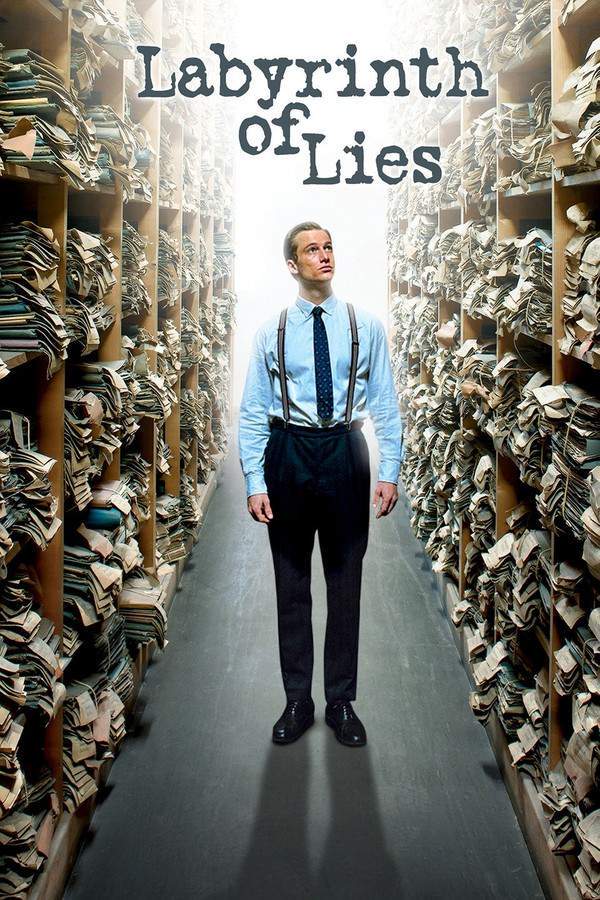
Labyrinth of Lies (2015) movie poster

Timeline

Labyrinth of Lies (2015) Timeline Explained – Every Event in Order

Release, runtime and language
2015 · 124 min · German
Directed by
Giulio Ricciarelli
Starring
Alexander Fehling, Johannes Krisch, André Szymanski, Friederike Becht

In post-war Germany, 1958, Public Prosecutor Johann Radmann investigates a teacher accused of being an Auschwitz guard. His pursuit of justice is met with resistance as he uncovers a widespread network of deceit and denial surrounding the concentration camp. As Radmann delves deeper, he finds himself facing a complex web of lies, where confronting the past is deeply uncomfortable for many. Risking everything, he is determined to uncover the truth and expose the nation’s reckoning with its dark history.

On this page (6)
  1. 1 Where to watch
  2. 2 Events in order (15)
  3. 3 Timeline questions answered
  4. 4 Movie threads
  5. 5 Movies like Labyrinth of Lies
  6. 6 Every angle

Where to watch

Where to Watch Labyrinth of Lies (2015)

Where can you watch Labyrinth of Lies? Stream, rent or buy it in the US, including on Amazon Video, Apple TV Store and Google Play Movies: current JustWatch availability with up-to-date prices.

Streaming availability powered by JustWatch

15 events in order · contains spoilers

Labyrinth of Lies Timeline: Events in Chronological Order

Every key event of Labyrinth of Lies (2015) in order, scene by scene, with when and where it takes place. Use it to untangle flashbacks, time jumps and parallel storylines, to refresh your memory before the sequel or to find the exact scene you are thinking of.

  1. Johann Radmann Takes on the Case

    In 1958, Johann Radmann, a zealous public prosecutor, decides to pursue the case of Charles Schulz, a former Auschwitz commander now living as an educator. Radmann's commitment to justice highlights the challenges he will face due to the entrenched Nazi influence within the German government.

    When
    1958
    Where
    Frankfurt am Main
  2. Mentorship and Investigation Begins

    Radmann receives guidance from his superior, Fritz Bauer, and embarks on an investigation into the 8,000 individuals who worked at Auschwitz. With access to crucial files provided by the U.S. occupation, he begins uncovering significant documentation related to the atrocities committed.

  3. Shift to Josef Mengele

    As the investigation progresses, Radmann shifts his focus towards Josef Mengele, who has escaped to Argentina. However, when he returns to West Germany for a family visit, he faces obstruction in securing an arrest warrant, which highlights the systemic resistance he is up against.

    Where
    West Germany
  4. Mossad's Involvement and Eichmann's Capture

    The investigation sees a turning point when the department calls upon Mossad representatives, leading to the capture of Adolf Eichmann. Eichmann is subsequently tried for his crimes against humanity, marking a significant moment in the pursuit of justice against Nazi officials.

    Where
    Argentina
  5. Radmann's Romance

    Amid the investigation, Radmann develops a romantic relationship with Marlene, a successful dress designer. Their bond is initially bolstered by her connections in the industry, but underlying tensions arise due to their shared familial links to the Nazi regime.

  6. Revelation of Family Ties

    Radmann confronts a shocking truth about his father's affiliation with the Nazi party, prompting an intense discussion with Marlene. As he shares this haunting revelation, he learns that she too has a family connection, creating a rift in their relationship that complicates their feelings.

  7. Resignation and Moral Dilemma

    Facing immense pressure, Radmann resigns from his official role and accepts a position with a major industrialist. However, he soon discovers that one of his new colleagues has defended a former Nazi, presenting him with a difficult moral dilemma about his professional integrity.

  8. Choosing Integrity

    Torn between personal gain and ethical obligations, Radmann ultimately chooses to uphold his moral principles. He steps away from the troubling situation, reaffirming his commitment to seek truth and justice amid a pervasive bureaucratic system intent on protecting its own.

  9. Challenges of the Bureaucratic System

    Throughout his journey, Radmann’s idealism is confronted by a bureaucratic system that often prioritizes conformity over justice. He becomes increasingly aware that accountability is a distant goal in a society still grappling with the horrors of its past.

  10. Auschwitz Pilgrimage

    After a deeply reflective pilgrimage to Auschwitz, Radmann honors the lives lost during the Holocaust. This somber visit catalyzes a transformation within him, invigorating his sense of purpose and strengthening his resolve to seek justice against those who perpetuated the atrocities.

    Where
    Auschwitz
  11. Return to the Prosecutor's Office

    The West German state prosecutor's office, once characterized by its bureaucratic disconnect, calls Radmann back to fulfill his duty. He prepares to confront the lingering forces responsible for millions of lives lost and seeks to ensure accountability.

    Where
    West Germany
  12. Trial Begins

    As Radmann returns to the courtroom, he stands unwaveringly ready to deliver justice for the atrocities committed at Auschwitz. The trial starts, with numerous defendants facing the consequences of their actions, revealing humanity's capacity for evil.

    Where
    Courtroom
  13. Pursuit of Truth and Justice

    With the trial underway, Radmann remains dedicated to uncovering the truth and ensuring that those responsible are held accountable. He focuses on honoring the personal stories of the victims, understanding that justice involves acknowledging the pain of the past.

  14. Radmann's Transformation

    Through his harrowing journey, Radmann’s understanding of justice evolves. He realizes that seeking mere legal retribution is insufficient; instead, true healing and resolution come from deeply understanding and honoring the experiences of the victims.

  15. A Commitment to Rectify Injustices

    With a more nuanced grasp of human nature and justice, Radmann commits himself to rectify the injustices that may have been overlooked in his earlier fervor. He emerges from this experience not only as a prosecutor but as an advocate for truth and healing.

Last updated: November 22, 2024 at 11:37

Was this helpful?

Timeline questions answered

Labyrinth of Lies Timeline Explained: Your Questions Answered

When does it happen, and why in that order? The questions people ask about the chronology of Labyrinth of Lies (2015): time jumps, flashbacks, cause and effect between scenes and the correct order of events, each answered with spoilers.

Q1

Why does Johann Radmann focus on Charles Schulz instead of more notorious Nazi criminals?

Radmann chooses Schulz because the case is brought to him directly by a teacher who recognized the former Auschwitz commander working as an educator in Frankfurt. While Schulz is less infamous than Eichmann or Mengele, his presence as a teacher among ordinary Germans represents the uncomfortable reality that Nazi perpetrators lived openly in postwar society. Radmann's idealism drives him to pursue any case of injustice rather than waiting for high-profile targets.

Foreshadowing: Early in the film, Radmann's mentor Fritz Bauer notes that pursuing famous war criminals will face massive obstacles, suggesting Radmann should start with smaller cases.

  • charles schulz
  • auschwitz
  • prosecutor
  • nazi criminal
  • west germany
Q2

How does Fritz Bauer help Radmann's investigation into Auschwitz staff?

Fritz Bauer, the Prosecutor-General, serves as Radmann's mentor and provides crucial support by granting him access to U.S. occupation files containing documentation on Auschwitz personnel. Bauer uses his authority to authorize Radmann's investigation into the 8,000 individuals who worked at the camp, essentially legitimizing what would otherwise be a controversial probe into Germany's recent past.

Foreshadowing: Bauer's initial mentorship establishes the institutional tension between seeking justice and protecting former Nazis in government.

  • fritz bauer
  • mentor
  • investigation
  • auschwitz files
  • prosecutor general
Q3

Why can't West Germany arrest Josef Mengele when he visits from Argentina?

When Mengele returns to West Germany for a family visit, Radmann attempts to secure an arrest warrant but faces obstruction from German authorities. The government deliberately blocks the arrest because pursuing Mengele would force confrontation with powerful former Nazis still embedded in the judicial and political systems. Even when Mengele is within reach, the institutional resistance proves insurmountable.

Foreshadowing: Earlier scenes establish that many former Nazis hold positions of influence in West Germany's bureaucracy.

  • josef mengele
  • arrest warrant
  • argentina
  • west germany
  • obstruction
Q4

What impact does the Eichmann capture have on Radmann's investigation?

Mossad's capture of Adolf Eichmann in Argentina represents a major breakthrough that validates Radmann's efforts. The successful trial and execution of Eichmann demonstrates that Nazi criminals can be held accountable, strengthening Radmann's resolve. However, Israel chooses not to pursue Mengele, leaving that avenue closed and forcing Radmann to focus on other perpetrators.

Foreshadowing: The Mossad operation shows that international cooperation can bring Nazi criminals to justice, contrasting with German domestic resistance.

  • adolf eichmann
  • mossad
  • capture
  • argentina
  • trial
  • execution
Q5

Why does Radmann's relationship with Marlene end?

Radmann's relationship with Marlene collapses when both discover their families had Nazi affiliations. Radmann learns his father was a member of the Nazi party, and when he confides this to Marlene, she reveals her own family also had ties to the regime. The shared guilt and complicity creates an unbridgeable rift between them, ending their romance despite their earlier connection.

Foreshadowing: Marlene's success in the fashion industry is partly enabled by post-war networks that included former Nazis.

  • marlene
  • relationship
  • family
  • nazi party
  • guilt
  • rift
Q6

Why does Johann Radmann resign from the prosecutor's office?

Radmann resigns because of overwhelming frustration with the systemic obstruction he faces. The bureaucratic system consistently protects former Nazis, and his investigations are constantly blocked. He accepts a position with a prominent industrialist, hoping to achieve justice through different means, though this choice leads to another moral crisis.

Foreshadowing: The repeated obstruction from authorities throughout the film builds toward Radmann's decision to leave.

  • resignation
  • prosecutor office
  • industrialist
  • bureaucracy
  • obstruction
Q7

What moral dilemma does Radmann face at the industrialist's company?

After joining the industrialist's company, Radmann discovers that a colleague has defended a former Nazi under investigation. This presents him with a choice between personal advancement and his ethical principles. Radmann ultimately chooses integrity and walks away from the lucrative position, reaffirming his commitment to pursuing justice despite the personal cost.

Foreshadowing: This dilemma tests whether Radmann will compromise his values for material success.

  • industrialist
  • moral dilemma
  • former nazi
  • integrity
  • corruption
Q8

How does Radmann's pilgrimage to Auschwitz change him?

Radmann's visit to Auschwitz serves as a profound turning point. Rather than simply seeking legal retribution, he gains deeper understanding of the victims' stories and the personal impact of the Holocaust. This experience transforms his approach to justice from procedural pursuit to honoring individual human experiences, ultimately making him more effective when he returns to the prosecutor's office.

Foreshadowing: The film explicitly frames this visit as the moment Radmann's purpose evolves beyond courtroom victories.

  • auschlwitz
  • pilgrimage
  • memorial
  • honor victims
  • transformation
Q9

How does the film depict systemic protection of former Nazis in West Germany?

The film shows that many former Nazis retained positions in West Germany's government, judiciary, and bureaucracy after the war. These individuals actively obstruct investigations into war criminals, creating a "labyrinth of lies" where justice is systematically blocked. Radmann faces resistance not from random obstacles but from an institutional network designed to protect perpetrators.

Foreshadowing: The title itself references this systematic concealment of Nazi criminals.

  • systemic protection
  • bureaucracy
  • former nazis
  • west germany
  • institutional resistance
Q10

What does the ending imply about achieving justice for Auschwitz crimes?

The ending shows Radmann returning to the prosecutor's office to begin the trial of Auschwitz perpetrators, representing a step toward accountability. However, the tone remains bittersweet, the trial cannot undo the crimes, many perpetrators remain free, and Radmann has lost both his career progress and his relationship. The film suggests justice is possible but incomplete and comes at tremendous personal cost.

Foreshadowing: The entire narrative builds toward this courtroom moment as the culmination of Radmann's struggle.

  • trial
  • auschwitz
  • justice
  • defendants
  • bittersweet ending

Movie threads

More Movies Like Labyrinth of Lies, by Mood & Story

Curated lists built around what makes Labyrinth of Lies tick: the same mood, the same kind of story or the same emotional payoff. Each list explains why these movies belong together.

Historical Reckoning Movies Like Labyrinth of Lies

Solemn dramas about individuals forcing a nation to confront its buried past. If you were captivated by Labyrinth of Lies, this collection features similar historical dramas about uncovering buried truths. These films follow determined individuals battling systemic denial in post-conflict societies, focusing on moral persistence and the heavy cost of facing a dark past. Find more movies like Labyrinth of Lies that explore national guilt and the pursuit of justice.

  • solemn
  • historical
  • investigative
  • morally complex
  • unsettling
  • resolute
  • Tone: tense, grim, resolute
  • Pacing: steady, investigative
Why these movies?

The story pattern: Stories in this thread typically involve a lone investigator or small group methodically piecing together evidence of historical crimes against a backdrop of official resistance and public indifference. The protagonist's journey is often one of increasing isolation and obsession, as the scale of the hidden truth becomes overwhelming, culminating in a bittersweet victory that acknowledges justice is incomplete.

Why they belong together: These films are grouped by their shared focus on a specific type of moral quest: the investigation of state-sanctioned atrocities after the fact. They create a coherent experience through their solemn tone, heavy emotional weight, and thematic exploration of truth, memory, and the individual's role in upholding justice against overwhelming odds.

Procedural Investigation Movies Similar to Labyrinth of Lies

Methodical investigations that expose a web of lies protected by powerful institutions. Fans of the investigative process in Labyrinth of Lies will appreciate this selection of films. These stories follow a similar pattern of a steady, methodical unraveling of complex lies protected by powerful systems. Discover movies with a tense pace and heavy themes, where the search for truth is a central, driving force, much like in Labyrinth of Lies.

  • tense
  • investigative
  • procedural
  • unsettling
  • complex
  • grim
  • Tone: tense, unsettling
  • Pacing: steady, methodical
Why these movies?

The story pattern: The narrative pattern involves a protagonist, often a journalist, lawyer, or official, following a paper trail and testimonies that lead from a single case to a much larger network of corruption or denial. The structure is incremental, with each discovery raising the stakes and increasing the personal risk, leading to a climax that exposes the system but often at great personal cost.

Why they belong together: Movies here share a specific plot mechanics and pacing: a steady, evidence-driven narrative that exposes systemic wrongs. They are united by a tense atmosphere created by institutional resistance, a focus on the granular details of an investigation, and the catharsis of slowly dismantling a fortress of lies.

If you liked this

Movies Like Labyrinth of Lies

Similar movies to Labyrinth of Lies: the same genre, themes or kind of story. Each one comes with its own plot summary, timeline and ending explained.

Browse all movie summaries

Every angle

Labyrinth of Lies (2015) Explained: Plot, Timeline & Characters

Everything about Labyrinth of Lies in one place: what happens in the plot summary, the timeline in chronological order, the characters and meaning and a spoiler-free summary. What's After the Movie adds the cast, box office and post-credit scenes.

Coming soon on iOS and Android

The Plot Explained Movie Summary App

Plot summaries, endings explained and timelines on your phone. Catch up on any movie in minutes, save your favorites and never miss a twist again.

Be the first to know when we launch. Your email stays private, always.

Learn more about the app