Plot Explained Spoilers guaranteed!
Plot Explained

Browse by genre

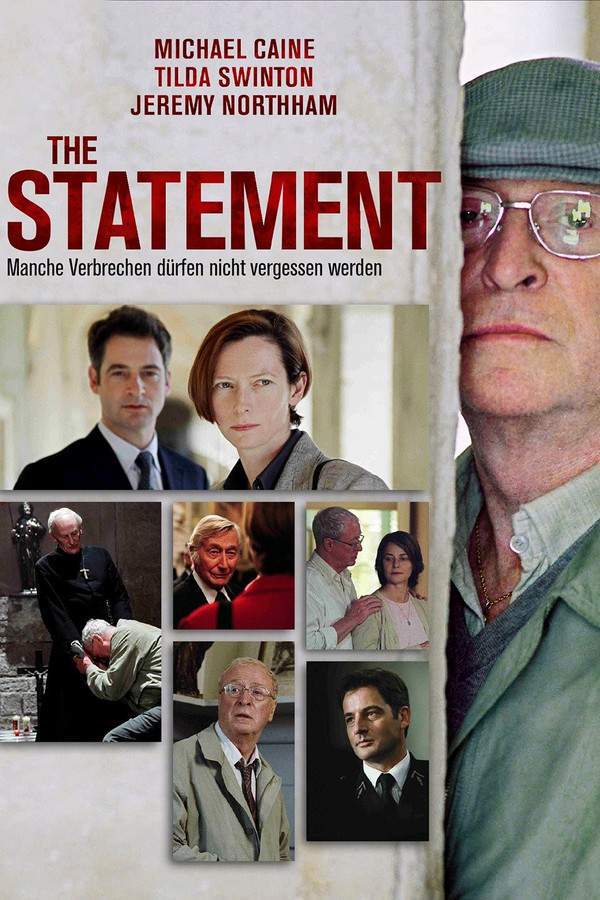
The Statement (2003) movie poster

Plot Summary

The Statement (2003) Plot Summary Explained

Release, runtime and language
2003 · 120 min · English
Loading streaming availability…
Directed by
Norman Jewison
Starring
Tilda Swinton, Michael Caine, Alan Bates, Jeremy Northam
Budget
$27M

Following the aftermath of war, a determined magistrate and a resolute colonel launch a dangerous mission to apprehend a former collaborator who has concealed their identity. Their pursuit exposes long-buried secrets and challenges their convictions as they confront complex moral questions. As the truth emerges, loyalties are questioned, and the distinction between justice and potential redemption becomes increasingly unclear in this suspenseful drama.

On this page (7)
  1. 1 Where to watch
  2. 2 What happens: full plot
  3. 3 Plot questions answered
  4. 4 The book behind the movie
  5. 5 Movie threads
  6. 6 Movies like The Statement
  7. 7 Every angle
Loading streaming availability…

Full plot summary · contains spoilers

What Happens in The Statement: Full Plot Summary

The whole story of The Statement (2003) explained, from the opening scene to the final frame: every key event, every twist and what it all adds up to. Read it as a quick recap before the sequel, to check a scene you missed, or to finally understand what really happened.

Pierre Brossard, a French Nazi collaborator, is responsible for ordering the execution of seven Jews during World War II. Fast forward nearly four decades, and he finds himself the target of David Manenbaum, a hitman tasked with eliminating Brossard while leaving behind a printed statement declaring the act as vengeance for the Jewish lives lost in 1944. In a twist of fate, Brossard manages to kill Manenbaum, hiding the body and uncovering his pursuer's use of a Canadian passport. For years, Brossard sought refuge among the Traditionalist Catholic community in southern France, relying on long-time allies who operate covertly to shield him and supply him with funds. However, their assistance brings new scrutiny that makes them uneasy.

The murder of Manenbaum draws the attention of local law enforcement, particularly the determined Investigating Judge Annemarie Livi. Undeterred by the lack of cooperation from official channels, Livi becomes deeply invested in the case. She partners with the equally committed Colonel Roux, a key investigator in the French Gendarmerie. Initially, they suspect that Manenbaum may have been involved in a Jewish assassination scheme. As their investigation unfolds, they uncover a history of previous inquiries into Brossard that have gone unresolved for over 40 years. The walls start to close in as Livi and Roux uncover clandestine resources and increase the pressure on Brossard, who begins to feel the betrayal of those he once trusted.

In a moment of desperation, Brossard unexpectedly visits his estranged wife Nicole, a maid struggling with life in Marseille, who is apprehensive about their reunion. Meanwhile, his allies, including several priests and a former wartime colleague now holding significant power within the French government, become increasingly anxious about the relentless probing from Livi and Roux. Facing an impending crisis and uncertainty about whom he can trust, Brossard seeks new identity documents and funds to escape France for good. On the fateful night set for his departure, however, he is fatally shot by his handler Pochon, acting on orders from former government supporters who fear Brossard could expose them if he is captured.

In the aftermath of Brossard's demise, Livi and Roux track the conspiracy that safeguarded him back to a high-ranking government official, ultimately leading to his arrest on charges of treason.

Last updated: November 08, 2024 at 02:41

Was this helpful?

Plot questions answered

The Statement Plot Explained: Your Questions Answered

The questions people ask most about The Statement (2003): what happens in the confusing scenes, why the characters do what they do, the twists, hidden details and what the ending means. Each answer contains spoilers.

Q1

Why was Pierre Brossard targeted by the hitman in 1982?

David Manenbaum was hired to kill Brossard as an act of vengeance for the seven Jewish lives Brossard ordered executed in 1944 during World War II. The hit was specifically designed to leave behind a printed statement declaring the killing as retribution for the Holocaust victims.

  • david manenbaum
  • hitman
  • vengeance
  • 1944
  • jewish execution
  • revenge
Q2

How did Brossard manage to kill the professional hitman?

Brossard successfully defended himself against Manenbaum, killing the hitman instead of becoming his victim. He then hid Manenbaum's body and discovered that his pursuer had been using a Canadian passport to track him down, revealing how Manenbaum had located Brossard after nearly four decades.

  • manenbaum killed
  • self-defense
  • canadian passport
  • hide body
  • fugitive
Q3

Who killed Pierre Brossard on the night he planned to escape?

Brossard was killed by his own handler, Pochon, who acted on orders from former government supporters who protected Brossard for decades. These conspirators feared that if Brossard were captured, he might expose them and their roles in shielding a Nazi collaborator.

Foreshadowing: The timeline shows Brossard's allies growing increasingly anxious about the investigation, foreshadowing their betrayal.

  • pochon
  • handler
  • betrayal
  • government conspirators
  • escape night
  • assassinated
Q4

Why did Brossard visit his estranged wife Nicole in Marseille?

In a moment of desperation and vulnerability, Brossard visited his estranged wife Nicole, who worked as a maid in Marseille. Their reunion was fraught with tension and reluctance on her part, revealing the emotional toll his decades of hiding had taken on both of them and showing his isolation before his final attempt to escape.

  • nicole
  • estranged wife
  • marseille
  • reunion
  • desperate visit
Q5

What does the title "The Statement" refer to?

The title refers to the printed statement left behind by hitman David Manenbaum after his failed assassination attempt. The statement declared that Brossard's killing was intended as vengeance for the Jewish lives lost in 1944, framing the entire operation as an act of justice for Holocaust victims.

  • the statement
  • title meaning
  • vengeance
  • printed statement
  • justification
Q6

Who was the high-ranking government official arrested for treason?

After Brossard's death, Judge Livi and Colonel Roux traced the conspiracy protecting him to a high-ranking government official who had been a former wartime colleague of Brossard. This official was ultimately arrested on charges of treason for his role in the decades-long scheme to shield a Nazi collaborator.

  • government official
  • treason arrest
  • conspiracy
  • high-ranking
  • colonel roux
  • judge livi
Q7

Why was Judge Livi so determined to pursue Brossard's case?

Investigating Judge Annemarie Livi became deeply invested in the case despite lacking cooperation from official channels. She recognized that Manenbaum's murder had connects to unresolved inquiries into Brossard that had stalled for over 40 years, and she partnered with Colonel Roux to piece together the truth behind the conspiracy.

  • annemarie livi
  • investigating judge
  • determination
  • colonel roux
  • investigation
Q8

How did Brossard remain hidden for so many years after the war?

Brossard found refuge among the Traditionalist Catholic community in southern France, where long-time allies, including priests and a powerful former wartime colleague, covertly protected him, supplied funds, and helped maintain his false identity for nearly four decades.

  • traditionalist catholic
  • southern france
  • hidden
  • allies
  • priests
  • protection
  • funding
Q9

Why did Brossard's own allies betray him?

Brossard's allies, fearing that the relentless investigation by Livi and Roux would expose their roles in protecting him, orchestrated his elimination through his handler Pochon. They chose to kill Brossard rather than risk him being captured and potentially revealing their identities and complicity.

Foreshadowing: Earlier in the timeline, Brossard's allies grow increasingly anxious about the investigation, showing their growing willingness to sacrifice him for their own protection.

  • betrayal
  • allies
  • priests
  • pochon
  • conspiracy
  • protection
  • fear exposure
Q10

What happened to the previous investigations into Brossard?

The timeline reveals that there had been unresolved inquiries into Brossard's wartime activities for over 40 years before the events of the film. These previous investigations had gone nowhere, blocked by the network of complicity that protected him, until Livi and Roux finally began making progress.

  • previous inquiries
  • 40 years
  • unsolved
  • investigations
  • blocked
  • complicity

Movie threads

More Movies Like The Statement, by Mood & Story

Curated lists built around what makes The Statement tick: the same mood, the same kind of story or the same emotional payoff. Each list explains why these movies belong together.

Movies about investigating historical crimes like The Statement

Investigations into historical atrocities that uncover systemic corruption and moral decay. For viewers who liked The Statement, this list features similar movies about uncovering historical atrocities and war crimes. These tense investigative thrillers explore the grim legacy of the past, political cover-ups, and the moral ambiguity of seeking justice decades later.

  • tense
  • methodical
  • grim
  • paranoid
  • determined
  • historical
  • Tone: tense, grim, morally complex
  • Pacing: steady, methodical
Why these movies?

The story pattern: Narratives typically involve a present-day investigation that gradually peels back layers of official secrecy and personal denial surrounding a historical event. The protagonist faces institutional resistance and personal danger, leading to a climax that often reveals the widespread nature of the crime and the fragility of justice.

Why they belong together: These movies are grouped together because they share a central focus on the process of investigating a dark historical event, generating suspense from the uncovering of secrets rather than action. They feature a heavy emotional weight, a tense tone, and often a bittersweet or bleak conclusion about the nature of truth and redemption.

Morally complex chase thrillers like The Statement

Pursuits where the chase raises more ethical questions than it answers. If you enjoyed the tense cat-and-mouse game and moral dilemmas in The Statement, explore these films. They feature determined pursuers hunting elusive fugitives, but the chase is complicated by questions of guilt, redemption, and the corrupt systems that protect the guilty.

  • suspenseful
  • tense
  • paranoid
  • methodical
  • grim
  • ethical dilemma
  • Tone: tense, suspenseful, morally ambiguous
  • Pacing: steady, escalating
Why these movies?

The story pattern: The narrative structure is a classic cat-and-mouse chase, but it is deepened by parallel character arcs. The pursuer's convictions are tested, while the fugitive's past and humanity are gradually revealed. The conflict forces all parties to confront difficult truths, leading to an ending that questions the very nature of the justice being sought.

Why they belong together: Movies in this thread are united by their use of the pursuit thriller format to explore weighty themes of guilt, complicity, and justice. They share a high-intensity, tense atmosphere, a steady pacing that builds suspense, and a conclusion that leans towards the bittersweet or ambiguous, prioritizing thematic resolution over tidy closure.

If you liked this

Movies Like The Statement

Similar movies to The Statement: the same genre, themes or kind of story. Each one comes with its own plot summary, timeline and ending explained.

Browse all movie summaries

Every angle

The Statement (2003) Explained: Plot, Timeline & Characters

Everything about The Statement in one place: what happens in the plot summary, the timeline in chronological order, the characters and meaning and a spoiler-free summary. What's After the Movie adds the cast, box office and post-credit scenes.

Coming soon on iOS and Android

The Plot Explained Movie Summary App

Plot summaries, endings explained and timelines on your phone. Catch up on any movie in minutes, save your favorites and never miss a twist again.

Be the first to know when we launch. Your email stays private, always.

Learn more about the app