Plot Explained Spoilers guaranteed!
Plot Explained

Browse by genre

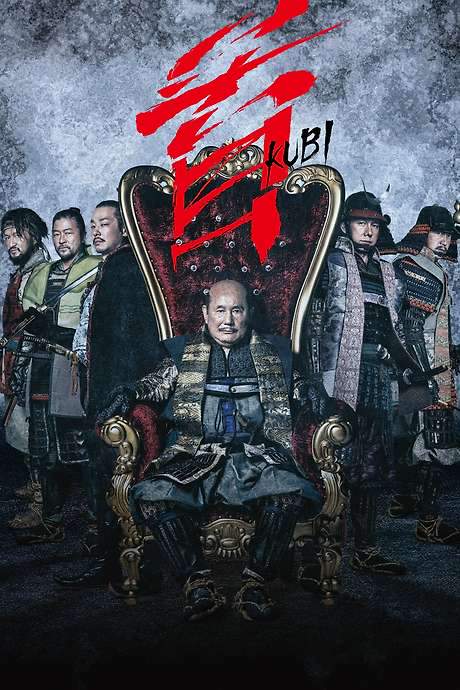
Kubi (2023) movie poster

Plot Summary

Kubi (2023) Plot Summary Explained

Release, runtime and language
2023 · 131 mins · Japanese
Loading streaming availability…
Starring
Susumu Terajima, Hidetoshi Nishijima, Ken'ichi Yajima, Masanobu Katsumura, Takeshi Kitano, Ryo Kase

Amidst the power struggles of feudal Japan, Lord Oda Nobunaga seeks to unify the nation through military conquest against competing clans. A crisis arises when Araki Murashige, a key vassal, leads a rebellion and vanishes, threatening Nobunaga’s ambitions and plunging the region into further turmoil. The search for the traitorous Murashige becomes paramount to maintaining order and achieving ultimate control.

On this page (6)
  1. 1 Where to watch
  2. 2 What happens: full plot
  3. 3 Plot questions answered
  4. 4 Movie threads
  5. 5 Movies like Kubi
  6. 6 Every angle
Loading streaming availability…

Full plot summary · contains spoilers

What Happens in Kubi: Full Plot Summary

The whole story of Kubi (2023) explained, from the opening scene to the final frame: every key event, every twist and what it all adds up to. Read it as a quick recap before the sequel, to check a scene you missed, or to finally understand what really happened.

Spanning from the 1579 Siege of Arioka Castle to the aftermath of the Battle of Yamazaki in 1582, the film presents a gritty reimagining of Japanese history. The narrative focuses on the toxic power dynamics within the officer corps of Ryo Kase as Oda Nobunaga, who maintains control over his generals through a combination of sexual domination and psychological intimidation. Nobunaga lures his subordinates with promises of succession while secretly plotting to eliminate potential threats, including Kaoru Kobayashi as Tokugawa Ieyasu and Takeshi Kitano as Hashiba Hideyoshi.

The tension peaks when Ken'ichi Endô as Araki Murashige revolts due to paranoia and jealousy. Although Nobunaga orders Hidetoshi Nishijima as Akechi Mitsuhide to execute him, it is revealed that Mitsuhide and Murashige share a secret romantic relationship. Mitsuhide hides Murashige while quietly orchestrating his own rebellion. Meanwhile, Hideyoshi—the only general without sexual ties to Nobunaga—plays the role of a harmless subordinate while gathering intelligence and leveraging connections with Ittoku Kishibe as Sen no Rikyu and the strategist Tadanobu Asano as Kuroda Kanbei.

The film portrays the ruling class with a callous disregard for bushido, favoring violence and deception. This is exemplified by Ieyasu's use of disposable body doubles and the desperate struggle of Shido Nakamura as Naniwa Mosuke, a peasant attempting to climb the social ladder through murder and theft.

The climax occurs at the Honno-ji Temple. In a subversive twist, Nobunaga is not killed by seppuku but is beheaded by the abused Jun Soejima as Yasuke, who steals the head to deny Mitsuhide his trophy. In the ensuing chaos, Hideyoshi executes a rapid military march to confront Mitsuhide at Yamazaki. Following his defeat, a fleeing Mitsuhide is cornered by Mosuke; Mitsuhide commits seppuku and offers his head to Mosuke for a promotion, only for Mosuke to be stabbed to death by fellow robbers. The story concludes with Hideyoshi coldly dismissing the decomposed heads of both men, viewing them as insignificant now that his victory is absolute.

Last updated: November 01, 2026 at 15:35

Was this helpful?

Plot questions answered

Kubi Plot Explained: Your Questions Answered

The questions people ask most about Kubi (2023): what happens in the confusing scenes, why the characters do what they do, the twists, hidden details and what the ending means. Each answer contains spoilers.

Q1

Why does Araki Murashige rebel against Nobunaga?

Araki Murashige rebels because Nobunaga's unpredictable treatment has made him paranoid and jealous of his own standing. In Kubi, the revolt begins at the Siege of Arioka Castle as Murashige strikes back at the ruler who has made him feel constantly threatened. Nobunaga's forces crush it, but the failed uprising exposes how unstable his control of the officer corps is.

Foreshadowing: Nobunaga's unpredictable treatment of Murashige is an early warning that his loyalty has already begun to fracture.

  • araki murashige
  • oda nobunaga
  • arioka castle
  • rebellion
  • jealousy
  • paranoia
Q2

Why does Nobunaga order Mitsuhide to execute Murashige?

Nobunaga orders Akechi Mitsuhide to execute Murashige to punish the failed revolt and test his loyalty. The assignment becomes impossible on a personal level because Nobunaga does not know that Mitsuhide and Murashige are secret lovers. Mitsuhide hides Murashige, appears to carry out the order, and quietly begins orchestrating his own rebellion.

  • akechi mitsuhide
  • araki murashige
  • execution order
  • secret relationship
  • loyalty test
  • rebellion
Q3

What is the secret relationship between Mitsuhide and Murashige?

They are secret lovers, and their relationship is separate from the sexual ties each man has with Nobunaga. Their bond explains why Mitsuhide shelters Murashige instead of executing him, but it does not outweigh his political ambitions when Murashige becomes a liability.

Foreshadowing: Mitsuhide's anguish over the execution assignment hints that the supposedly simple task is personal for him.

  • mitsuhide and murashige
  • secret romance
  • lovers
  • hidden loyalty
  • execution order
Q4

Why is Nobunaga beheaded instead of committing seppuku?

Nobunaga is beheaded by Yasuke, the African retainer he has abused, rather than dying by the ceremonial seppuku expected of a defeated lord. Yasuke takes the head as he escapes, denying Mitsuhide the trophy that would prove his victory. Kubi's reversal gives Nobunaga's cruelty toward his retainer a direct consequence and strips his death of the honor he expected.

Foreshadowing: Yasuke's repeated abuse at Nobunaga's hands foreshadows why he responds with such violence.

  • oda nobunaga
  • yasuke
  • beheading
  • honno-ji
  • severed head
  • seppuku
Q5

How does Hideyoshi take power so quickly after Nobunaga's death?

Hideyoshi seizes the opening created by Nobunaga's death and force-marches his army from Takamatsu to Yamazaki. The speed of the march prevents Mitsuhide from consolidating power and forces the rivals into a decisive battle before his new regime can stabilize. Hideyoshi's victory at Yamazaki then gives him the strongest claim to succeed Nobunaga.

Foreshadowing: The hidden network Hideyoshi builds while posing as harmless makes the sudden force march possible.

  • hashiba hideyoshi
  • force march
  • takamatsu
  • yamazaki
  • battle of yamazaki
  • succession
Q6

Why does Nobunaga promise succession to generals he secretly plans to eliminate?

In Kubi, the succession promise is both motivation and a trap. Nobunaga uses it to push his generals to conquer territory and compete for his favor, while sexual domination and intimidation keep them obedient. At the same time, he secretly plots to eliminate the most capable men, including Tokugawa Ieyasu and Hashiba Hideyoshi, because their success would make them dangerous.

Foreshadowing: The succession prize he offers early becomes the central bait in the later struggle for power.

  • nobunaga succession
  • territorial conquest
  • tokugawa ieyasu
  • hashiba hideyoshi
  • sexual domination
  • political trap
Q7

Why does Mitsuhide betray Murashige?

Mitsuhide abandons Murashige as he prepares his assault on Honno-ji, throwing his caged lover off a cliff. Murashige has become a liability and could compromise the rebellion if discovered, so Mitsuhide discards their bond to protect his political future. The reversal shows how readily the film's power brokers sacrifice loyalty when an ally stops being useful.

Foreshadowing: Sheltering Murashige after the failed revolt makes this later abandonment a deliberate reversal.

  • akechi mitsuhide
  • araki murashige
  • betrayal
  • honno-ji
  • cliff
Q8

Why does Hideyoshi pretend to be harmless to Nobunaga?

Hideyoshi presents himself as a deferential, harmless subordinate because he is the only major general without a sexual tie to Nobunaga. That apparent lack of threat lets him move around both Nobunaga and Ieyasu while quietly gathering leverage for his own ascent. His restraint contrasts with Nobunaga's overt threats and Mitsuhide's open assault.

Foreshadowing: Hideyoshi's lack of a sexual tie to Nobunaga lets his deferential posture pass as harmless while he builds power.

  • hashiba hideyoshi
  • harmless facade
  • political ambition
  • oda nobunaga
  • tokugawa ieyasu
Q9

How does Hideyoshi build his intelligence network?

Hideyoshi builds influence through a broad network of ninja clans, peasant recruits, tea master Sen no Rikyu, and strategist Kuroda Kanbei. Rikyu gives him access to influential social connections, while Kanbei handles dangerous or compromising assignments. The network supplies both information and practical support, allowing Hideyoshi to prepare without openly challenging Nobunaga.

Foreshadowing: The alliances Hideyoshi builds while appearing harmless become the foundation of the force he brings to Yamazaki.

  • hideyoshi intelligence network
  • sen no rikyu
  • kuroda kanbei
  • ninja clans
  • peasant recruits
Q10

Why does Tokugawa Ieyasu use body doubles?

Ieyasu uses expendable kagemusha as decoys so assassins strike disposable men instead of him. The body doubles are deliberately placed in danger, making his survival a calculated routine built on other people's lives. This sharply contrasts with the film's rhetoric of loyalty and honor by showing how casually the power structure treats subordinate lives.

  • tokugawa ieyasu
  • kagemusha
  • body doubles
  • assassination
  • political survival
Q11

Why does Nobunaga pass over Nobutada for succession?

Nobunaga passes over his son Nobutada because he considers him incompetent and instead rewards the generals who conquer the most territory. Succession in Kubi is therefore treated as a prize for military usefulness, not straightforward family inheritance. Nobutada's exclusion also shows how completely Nobunaga's personal judgment determines who can rise.

Foreshadowing: Choosing conquest over family status sets up the later race among Nobunaga's generals.

  • nobutada
  • oda nobunaga
  • succession
  • military conquest
  • family inheritance
Q12

Why does Mosuke want Mitsuhide's head?

Naniwa Mosuke pursues Mitsuhide because the defeated general's head offers a promotion and a path from peasant outlaw toward samurai status. After climbing through theft and murder, Mosuke treats the head as the final exchange that can buy him entry into the warrior class. The scene reverses the old hierarchy by showing a once-dominant general hunted by commoners.

Foreshadowing: Mosuke's earlier murders and attempts to rise from peasant status foreshadow his willingness to claim the general's head.

  • naniwa mosuke
  • akechi mitsuhide
  • severed head
  • samurai promotion
  • social ascent
Q13

Why is Mosuke killed after claiming Mitsuhide's head?

Mosuke is stabbed by members of the same robber band that helped hunt Mitsuhide. His promised reward never materializes because the group turns on him as soon as their shared target is dead. His death ends the peasant's attempt to use a deposed general's body to elevate himself.

Foreshadowing: The robber band's fluid loyalty while hunting Mitsuhide foreshadows its immediate turn on Mosuke.

  • naniwa mosuke
  • robber band
  • mitsuhide head
  • betrayal
  • yamazaki aftermath
Q14

Why does Hideyoshi dismiss the severed heads at the end?

Hideyoshi dismisses the decomposed heads because Mitsuhide and Mosuke no longer matter once he has won at Yamazaki. Their severed heads were useful as proof of military triumph, but victory has made the trophies politically insignificant. The cold dismissal in Kubi marks Hideyoshi's complete takeover and his indifference to defeated men whose loss no longer threatens his rule.

Foreshadowing: The earlier promise of promotion attached to a severed head makes Hideyoshi's rejection of the same kind of trophy a deliberate reversal.

  • hideyoshi judgment
  • mitsuhide head
  • mosuke head
  • yamazaki victory
  • political aftermath

Movie threads

More Movies Like Kubi, by Mood & Story

Curated lists built around what makes Kubi tick: the same mood, the same kind of story or the same emotional payoff. Each list explains why these movies belong together.

Movies like Kubi: betrayal, power struggles, and unification

Rulers chase unification while betrayal turns every alliance into a lethal gamble. If you liked Kubi, explore dark historical dramas where rulers pursue unification, trusted vassals rebel, and shifting alliances turn court intrigue into warfare. These movies pair complex factional plotting with brutal consequences, focusing on ambition, authority, betrayal, and the costly pursuit of control.

  • power struggle
  • betrayal
  • political intrigue
  • warfare
  • oppressive
  • volatile
  • Tone: dark, ominous, volatile
  • Pacing: measured intrigue, sudden escalation
Why these movies?

The story pattern: Usually, an ambitious ruler tries to consolidate authority over divided factions, only for the struggle to turn inward through rebellion and suspected betrayal. Suspicion spreads, rivals vanish or regroup, and overlapping schemes drive the conflict toward open war. The arc turns political unity into a brutal contest in which loyalty, obedience, and succession are violently renegotiated.

Why they belong together: These films are united by intricate factional politics, coercive leadership, shifting alliances, and rebellion threatening a larger campaign. Their plots reward viewers who enjoy complex power dynamics, with court intrigue regularly erupting into violence and ambition portrayed as a corrupting force rather than a heroic aspiration.

Movies like Kubi: brutal court intrigue and bleak historical violence

Coercive rulers and grotesque violence expose the hollow cost of conquest. If you enjoyed Kubi, find similar dark historical dramas where political power is maintained through intimidation, sexual coercion, murder, and macabre spectacle. These tense stories use measured intrigue, sudden violence, grim humor, and bleak outcomes to show victory as emotionally hollow rather than triumphant.

  • visceral
  • grim
  • oppressive
  • macabre
  • intimidating
  • morally bleak
  • Tone: bleak, brutal, oppressive
  • Pacing: variable, punctuated by sudden violence
Why these movies?

The story pattern: Stories in this thread alternate between calculated confrontations and eruptions of brutality. Authority is tested through intimidation, coercion, murder, execution, and macabre spectacle; even dark jokes fail to puncture the menace for long. Victories arrive without moral clarity or emotional relief, leaving the surviving victor isolated, emotionally vacant, or confronted by the consequences of conquest.

Why they belong together: The grouping is driven by a shared atmosphere of oppressive hierarchy, sudden bodily violence, disturbing imagery, and sustained menace. These are grim, high-intensity experiences whose bleak endings deny the satisfaction of a clean triumph, while occasional gallows humor keeps the darkness volatile rather than solemn.

If you liked this

Movies Like Kubi

Similar movies to Kubi: the same genre, themes or kind of story. Each one comes with its own plot summary, timeline and ending explained.

Browse all movie summaries

Every angle

Kubi (2023) Explained: Plot, Timeline & Characters

Everything about Kubi in one place: what happens in the plot summary, the timeline in chronological order, the characters and meaning and a spoiler-free summary. What's After the Movie adds the cast, box office and post-credit scenes.

Coming soon on iOS and Android

The Plot Explained Movie Summary App

Plot summaries, endings explained and timelines on your phone. Catch up on any movie in minutes, save your favorites and never miss a twist again.

Be the first to know when we launch. Your email stays private, always.

Learn more about the app