Plot Explained Spoilers guaranteed!
Plot Explained

Browse by genre

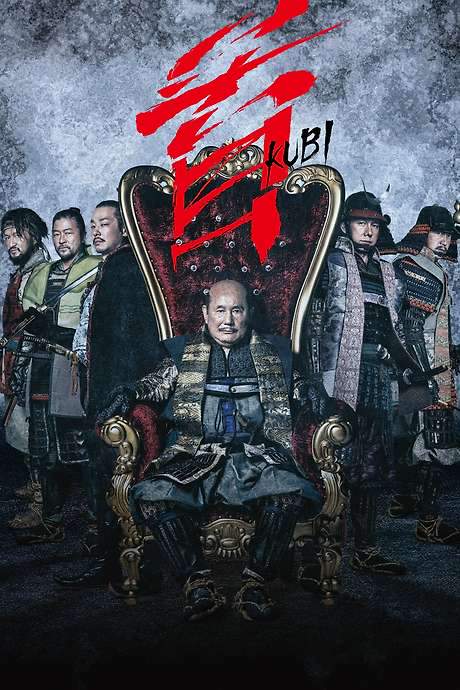
Kubi (2023) movie poster

Spoiler-Free Summary

Kubi (2023) Spoiler-Free Summary – What It's About

Release, runtime and language
2023 · 131 mins · Japanese
Loading streaming availability…
Starring
Susumu Terajima, Hidetoshi Nishijima, Ken'ichi Yajima, Masanobu Katsumura, Takeshi Kitano, Ryo Kase

Amidst the power struggles of feudal Japan, Lord Oda Nobunaga seeks to unify the nation through military conquest against competing clans. A crisis arises when Araki Murashige, a key vassal, leads a rebellion and vanishes, threatening Nobunaga’s ambitions and plunging the region into further turmoil. The search for the traitorous Murashige becomes paramount to maintaining order and achieving ultimate control.

On this page (7)
  1. 1 Where to watch
  2. 2 What it is about
  3. 3 Is it worth watching?
  4. 4 After you watch
  5. 5 Movie threads
  6. 6 Movies like Kubi
  7. 7 Every angle
Loading streaming availability…

Spoiler-free summary · safe to read

What Is Kubi About? (No Spoilers)

The plot of Kubi (2023) without spoilers: what it is about, who it follows and where it takes place, told without the twists or the ending. Enough to decide whether it is your next watch, not enough to ruin it.

Against the fractured landscape of feudal Japan, Oda Nobunaga pursues a ruthless vision of unity, treating military conquest, political discipline, and personal authority as inseparable. His court is a place where loyalty is tested constantly and power depends on reading both rivals and allies correctly. Nobunaga’s severity gives the film a tense, oppressive center: even those nearest him must perform deference while quietly protecting their own ambitions. The world around him is similarly unsettled, with great daimyo, hardened commanders, and lesser rivals all seeking leverage in a hierarchy that offers advancement but little security.

Among his most important lieutenants is Araki Murashige, a proud and forceful vassal whose usefulness makes him central to Nobunaga’s plans. Their relationship carries an intimate, coercive dimension, adding psychological unease to the political struggle. Murashige appears as a man of pride, ambition, and mounting resentment, while Nobunaga’s need to dominate every exchange makes trust feel conditional and unstable. Around them, ambitious retainers cultivate dangerous reputations, cautious ones hide their intentions, and ordinary followers watch for openings in the elite’s conflicts. The result is an atmosphere of martial hierarchy in which honor is repeatedly invoked but rarely dependable.

The crisis begins when Murashige turns against his lord and vanishes, turning a challenge to Nobunaga’s authority into a much wider disturbance. With the balance of power suddenly open to doubt, finding the missing rebel becomes essential: it is both a search for a dangerous opponent and a test of control over the realm. Nobunaga’s campaign for national unity now collides with the suspicion, rivalry, and fragmented loyalties of his own inner circle. Kubi thus presents feudal Japan as a brutal chessboard where every oath may conceal calculation and every apparent victory can deepen the suspicion of those who witness it. Its mood is grim, charged, and relentlessly uneasy, building toward a portrait of power in which closeness to the ruler offers prestige without guaranteeing safety.

Last updated: November 01, 2026 at 14:59

Was this helpful?

What to expect

Is Kubi Worth Watching? What It Feels Like

Is it dark, sad, slow, intense or confusing? The mood of Kubi (2023) in a few tags, without a word about how it ends. Each tag opens a list of movies that feel the same.

After you watch

Seen Kubi? Now Read the Spoilers

Once you have watched Kubi (2023), come back for the full story: the plot summary with spoilers, the timeline in chronological order, the characters and meaning.

Movie threads

More Movies Like Kubi, by Mood & Story

Curated lists built around what makes Kubi tick: the same mood, the same kind of story or the same emotional payoff. Each list explains why these movies belong together.

Movies like Kubi: betrayal, power struggles, and unification

Rulers chase unification while betrayal turns every alliance into a lethal gamble. If you liked Kubi, explore dark historical dramas where rulers pursue unification, trusted vassals rebel, and shifting alliances turn court intrigue into warfare. These movies pair complex factional plotting with brutal consequences, focusing on ambition, authority, betrayal, and the costly pursuit of control.

  • power struggle
  • betrayal
  • political intrigue
  • warfare
  • oppressive
  • volatile
  • Tone: dark, ominous, volatile
  • Pacing: measured intrigue, sudden escalation
Why these movies?

The story pattern: Usually, an ambitious ruler tries to consolidate authority over divided factions, only for the struggle to turn inward through rebellion and suspected betrayal. Suspicion spreads, rivals vanish or regroup, and overlapping schemes drive the conflict toward open war. The arc turns political unity into a brutal contest in which loyalty, obedience, and succession are violently renegotiated.

Why they belong together: These films are united by intricate factional politics, coercive leadership, shifting alliances, and rebellion threatening a larger campaign. Their plots reward viewers who enjoy complex power dynamics, with court intrigue regularly erupting into violence and ambition portrayed as a corrupting force rather than a heroic aspiration.

Movies like Kubi: brutal court intrigue and bleak historical violence

Coercive rulers and grotesque violence expose the hollow cost of conquest. If you enjoyed Kubi, find similar dark historical dramas where political power is maintained through intimidation, sexual coercion, murder, and macabre spectacle. These tense stories use measured intrigue, sudden violence, grim humor, and bleak outcomes to show victory as emotionally hollow rather than triumphant.

  • visceral
  • grim
  • oppressive
  • macabre
  • intimidating
  • morally bleak
  • Tone: bleak, brutal, oppressive
  • Pacing: variable, punctuated by sudden violence
Why these movies?

The story pattern: Stories in this thread alternate between calculated confrontations and eruptions of brutality. Authority is tested through intimidation, coercion, murder, execution, and macabre spectacle; even dark jokes fail to puncture the menace for long. Victories arrive without moral clarity or emotional relief, leaving the surviving victor isolated, emotionally vacant, or confronted by the consequences of conquest.

Why they belong together: The grouping is driven by a shared atmosphere of oppressive hierarchy, sudden bodily violence, disturbing imagery, and sustained menace. These are grim, high-intensity experiences whose bleak endings deny the satisfaction of a clean triumph, while occasional gallows humor keeps the darkness volatile rather than solemn.

If you liked this

Movies Like Kubi

Similar movies to Kubi: the same genre, themes or kind of story. Each one comes with its own plot summary, timeline and ending explained.

Browse all movie summaries

Every angle

Kubi (2023) Explained: Plot, Timeline & Characters

Everything about Kubi in one place: what happens in the plot summary, the timeline in chronological order, the characters and meaning and a spoiler-free summary. What's After the Movie adds the cast, box office and post-credit scenes.

Coming soon on iOS and Android

The Plot Explained Movie Summary App

Plot summaries, endings explained and timelines on your phone. Catch up on any movie in minutes, save your favorites and never miss a twist again.

Be the first to know when we launch. Your email stays private, always.

Learn more about the app