Plot Explained Spoilers guaranteed!
Plot Explained

Browse by genre

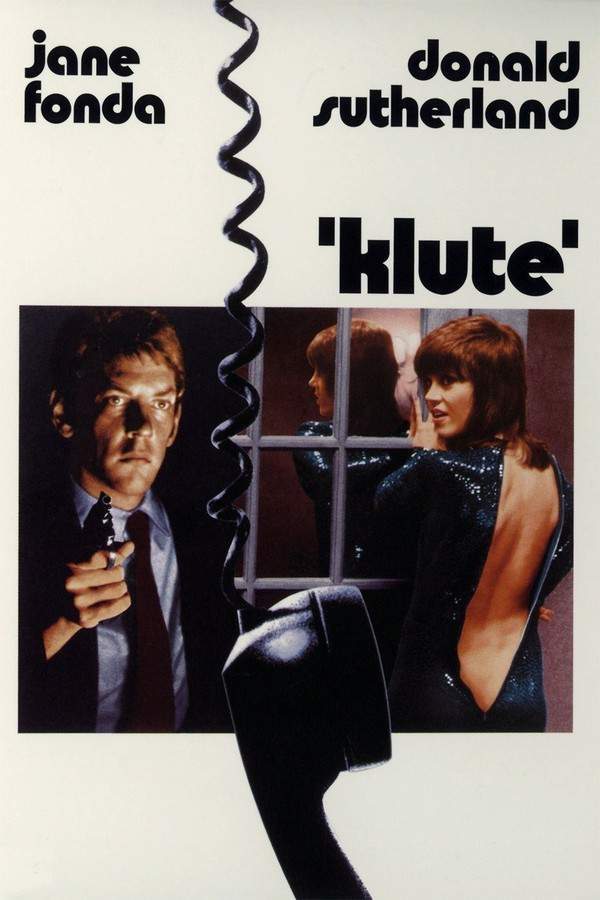
Klute (1971) movie poster

Plot Summary

Klute (1971) Plot Summary Explained

Release, runtime and language
1971 · 114 min · English
Directed by
Alan J. Pakula
Starring
Jane Fonda, Roy Scheider, Donald Sutherland, Barry Snider, Charles Cioffi, Dorothy Tristan

A resourceful call girl, Bree Daniel, finds her life complicated by a high-stakes investigation into a missing man. Detective John Klute is tasked with uncovering the truth, and as he delves deeper, he becomes increasingly drawn to Bree. However, their connection is threatened by a mysterious and dangerous force that seems to be watching Bree’s every move, putting them both in peril.

On this page (6)
  1. 1 Where to watch
  2. 2 What happens: full plot
  3. 3 Plot questions answered
  4. 4 Movie threads
  5. 5 Movies like Klute
  6. 6 Every angle

Where to watch

Where to Watch Klute (1971)

Where can you watch Klute? Stream, rent or buy it in the US, including on Kanopy, Plex and Tubi TV: current JustWatch availability with up-to-date prices.

Streaming availability powered by JustWatch

Full plot summary · contains spoilers

What Happens in Klute: Full Plot Summary

The whole story of Klute (1971) explained, from the opening scene to the final frame: every key event, every twist and what it all adds up to. Read it as a quick recap before the sequel, to check a scene you missed, or to finally understand what really happened.

Bree Daniels, portrayed by Jane Fonda, is a New York City prostitute with dreams of becoming a model and actress. She previously worked with Jane McKenna and Arlyn Page under the control of her pimp, Roy Scheider. After a frightening encounter with a violent client, Bree decides to leave her life of full-time prostitution behind.

The film opens with Tom Gruneman and his wife hosting a social gathering at their home in Tuscarora, Pennsylvania. Among the guests are Tom's colleague, Peter Cable, and his friend, the policeman John Klute.

Suddenly, Tom disappears without a clue, prompting an investigation by the authorities. During their search, they discover a lewd letter addressed to Bree at Tom’s office. When contacted, Bree confirms she’s received multiple letters but fails to recognize Tom from a photo presented to her. She's subsequently arrested for prostitution but, upon her release, she severs ties with her pimp and starts to work independently. She relocates from Park Avenue to a more modest apartment, growing increasingly paranoid that someone is trailing her.

After six months with no leads on Tom Gruneman’s case, the police hit a wall. Consequently, Peter Cable engages John Klute to journey to New York and resume the investigation. Klute takes up residency in the same building as Bree, tapping her phone to gather evidence. He later reaches out to her for assistance in uncovering the mystery of Gruneman's disappearance. Although she is initially hesitant, Bree’s cooperation grows as Klute offers her protection against the unknown stalker.

She attempts to seduce Klute to exert control over him, yet soon develops genuine feelings for him when he aids her in escaping from her former life. As Klute digs deeper, he discovers troubling links between Bree and two other former prostitutes, Jane McKenna and Arlyn Page. Both women have met tragic fates, with Jane apparently committing suicide while Arlyn is found dead after Klute tries to track her down.

As Klute pieces together the puzzle, it becomes evident that Bree, Jane, and Arlyn were all victims of the same man who exploited them. This individual not only used Tom Gruneman's identity while with the women but is also suspected of murdering them.

Ultimately, Klute’s investigation leads him to uncover Peter Cable as the likely culprit, indicated by distinct typing errors found in the obscene letters sent to Bree. Viewers learn that Cable has been observing the horrific acts through recordings, building a chilling portrait of a twisted psyche.

Toward the film's climax, Cable confesses to Bree that Tom had caught him with Arlyn, leading him to plant the letter in Tom’s desk to mislead the investigation. However, it remains unknown why he would enlist Klute to continue when police efforts had stalled, or if he subsequently killed Gruneman.

In a final confrontation, Cable attempts to murder Bree, but Klute intervenes just in time, resulting in Cable’s fatal tumble from a window. With newfound hope, Bree prepares to leave her apartment to start a life with Klute, who she has grown to love, though she harbors doubts about leaving her past behind for a conventional future.

Last updated: November 15, 2024 at 17:49

Was this helpful?

Plot questions answered

Klute Plot Explained: Your Questions Answered

The questions people ask most about Klute (1971): what happens in the confusing scenes, why the characters do what they do, the twists, hidden details and what the ending means. Each answer contains spoilers.

Q1

What triggered Bree to leave her life as a prostitute?

Bree decided to leave prostitution after a frightening encounter with a violent client. This traumatic experience made her realize she could no longer continue in that line of work, prompting her to seek a different life and pursue her dreams of becoming a model and actress.

  • bree daniels
  • prostitution
  • leaving
  • violent client
  • escape
Q2

Why did Peter Cable target Tom Gruneman?

Peter Cable targeted Tom Gruneman because he was caught in a compromising situation with Arlyn Page, one of Cable's former victims. When Tom discovered Cable with Arlyn, Cable murdered him to keep his crimes secret and then planted a lewd letter in Tom's desk to mislead the investigation.

  • tom gruneman
  • peter cable
  • murder
  • arlyn page
  • cover-up
Q3

How did John Klute connect Bree to the other murdered women?

Klute discovered that Bree, Jane McKenna, and Arlyn Page were all connected through Peter Cable, who had been exploiting them. Both Jane and Arlyn had tragic fates - Jane apparently committed suicide while Arlyn was murdered. Klute found disturbing links between the three women through his investigation.

  • john klute
  • jane mckenna
  • arlyn page
  • peter cable
  • connection
Q4

Why did Peter Cable hire Klute to investigate when he was guilty?

This remains one of the film's ambiguities. Cable likely assumed the police investigation had stalled and that hiring an outsider would appear legitimate while actually keeping control over the direction of the inquiry. His confidence in evading detection may have led him to believe he could manipulate the investigation while appearing helpful.

  • peter cable
  • john klute
  • hiring
  • investigation
  • manipulation
Q5

What clue led police to identify Peter Cable as the culprit?

Distinct typing errors found in the obscene letters sent to Bree matched Peter Cable's typing. These unique errors connected Cable to the letters and ultimately to the crimes against Bree, Jane McKenna, and Arlyn Page.

Foreshadowing: Earlier scenes show Bree receiving mysterious letters, establishing them as important evidence.

  • typing errors
  • letters
  • evidence
  • peter cable
  • identification
Q6

Why was Bree being stalked and watched?

Peter Cable had been secretly recording his encounters with Bree, Jane McKenna, and Arlyn Page. He was obsessed with监控 his victims, building a twisted psychological profile through these recordings. His stalking of Bree was part of his pattern of exploitation and control over the women he preyed upon.

  • stalking
  • recordings
  • surveillance
  • peter cable
  • obsession
Q7

How did Bree's relationship with Klute evolve from professional to romantic?

Initially, Bree attempted to seduce Klute to maintain control over him, using the only survival skills she knew. However, as Klute offered her genuine protection against her stalker and helped her escape her past, Bree developed real feelings for him, transforming their relationship from transactional to genuinely emotional.

  • bree daniels
  • john klute
  • relationship
  • seduction
  • genuine feelings
Q8

What happened to Jane McKenna and Arlyn Page?

Both women were victims of Peter Cable. Jane McKenna apparently committed suicide, while Arlyn Page was murdered by Cable. Their tragic fates were connected to the same exploitation ring that Cable had been running, using Tom Gruneman's identity while with the women.

  • jane mckenna
  • arlyn page
  • murder
  • suicide
  • peter cable
Q9

Why did Peter Cable confess to Bree about Tom's disappearance?

Cable confessed to Bree in a chilling moment because he wanted to unburden himself to his victim. His confession revealed that Tom Gruneman had caught him with Arlyn, prompting Cable to murder Tom and plant the letter as a cover-up. The confession was part of his twisted psychological need to be acknowledged.

  • confession
  • peter cable
  • tom gruneman
  • arlyn page
  • revelation
Q10

Did Bree leave with Klute at the end of the film?

At the film's end, Bree prepares to leave her apartment to start a life with Klute, whom she has grown to love. However, she harbors doubts about leaving her past behind for a conventional future, making the resolution bittersweet rather than completely hopeful.

  • ending
  • bree daniels
  • john klute
  • leaving
  • doubts
Q11

Why was Bree arrested in the film?

Bree was arrested for prostitution after being contacted by police investigating Tom Gruneman's disappearance. The authorities discovered a lewd letter addressed to her at Tom's office, which led them to question her and ultimately arrest her on prostitution charges.

  • arrest
  • prostitution
  • police
  • letter
  • tom gruneman
Q12

How did Peter Cable die in the climax?

In the final confrontation, Cable attempted to murder Bree, but Klute intervened just in time. During the struggle, Cable fell from a window to his death, ending the immediate threat to Bree and bringing closure to the investigation.

  • peter cable
  • death
  • climax
  • fall
  • window

Movie threads

More Movies Like Klute, by Mood & Story

Curated lists built around what makes Klute tick: the same mood, the same kind of story or the same emotional payoff. Each list explains why these movies belong together.

Paranoid thrillers like Klute set in a gritty world

Moody stories of characters stalked by unseen threats in atmospheric cities. If you liked the tense, atmospheric dread of Klute, you'll find similar movies here. These stories feature characters under surveillance or stalked by an unknown threat, creating a constant feeling of anxiety within a gritty, realistic urban setting. This thread captures the specific mood of psychological unease and urban alienation.

  • paranoid
  • atmospheric
  • gritty
  • suspenseful
  • melancholic
  • alienating
  • Tone: tense, paranoid, melancholic
  • Pacing: steady, methodical build
Why these movies?

The story pattern: The narrative typically follows a lone individual, often isolated or on the fringes of society, who becomes the target of an obsessive antagonist. The plot is a slow unraveling of mystery and fear, where the investigation or pursuit reveals darker truths about the world and the characters within it, culminating in a confrontation that leaves deep emotional scars.

Why they belong together: Movies in this thread are grouped by their shared ability to generate a palpable sense of paranoid anxiety. They feature a similar tone of tense melancholy, a steady pacing that builds dread, and a focus on the psychological unraveling of a protagonist in a hostile and watchful environment.

Movies with bittersweet endings after heavy trauma like Klute

Stories where survival is achieved but at a deep emotional cost. This thread is for viewers who appreciated the emotionally complex conclusion of Klute. It groups films where characters survive a deeply harrowing ordeal, but the ending is bittersweet, blending a flicker of hope with the undeniable weight of their trauma. If you like endings that feel realistic and psychologically resonant, explore these similar stories.
  • melancholic
  • psychological
  • heavy
  • bittersweet
  • grim
  • emotionally complex
  • Tone: heavy, bittersweet, psychologically complex
  • Pacing: steady, character-focused
Why these movies?

The story pattern: The journey centers on a character grappling with extreme circumstances—violence, obsession, or psychological torment. The central conflict is as much internal as external. The climax resolves the physical danger but leaves the protagonist to confront the emotional aftermath, resulting in an ending that is hopeful yet profoundly altered, suggesting a difficult path forward rather than a simple happy-ever-after.

Why they belong together: These films are connected by their shared emotional trajectory: a heavy, traumatic narrative leading to a bittersweet resolution. They prioritize psychological realism over tidy conclusions, leaving the audience with a powerful and lingering emotional weight that reflects the complexity of healing.

If you liked this

Movies Like Klute

Similar movies to Klute: the same genre, themes or kind of story. Each one comes with its own plot summary, timeline and ending explained.

Browse all movie summaries

Every angle

Klute (1971) Explained: Plot, Timeline & Characters

Everything about Klute in one place: what happens in the plot summary, the timeline in chronological order, the characters and meaning and a spoiler-free summary. What's After the Movie adds the cast, box office and post-credit scenes.

Coming soon on iOS and Android

The Plot Explained Movie Summary App

Plot summaries, endings explained and timelines on your phone. Catch up on any movie in minutes, save your favorites and never miss a twist again.

Be the first to know when we launch. Your email stays private, always.

Learn more about the app