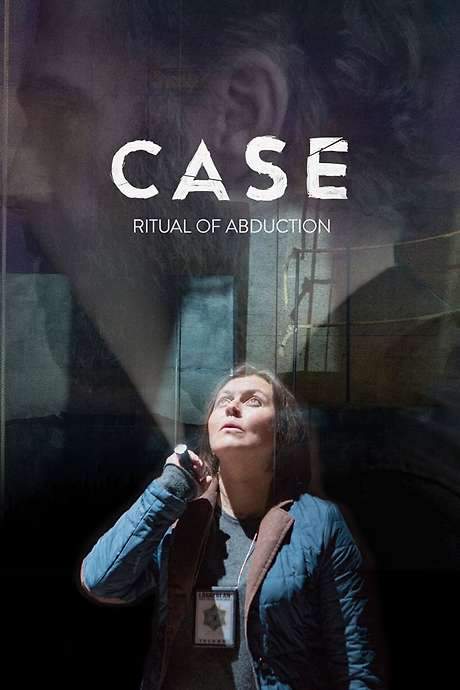
Luca, Claudio Santamaria, an Italian musician who lives in Prague and teaches at an elementary school, is in the grip of uncontrollable jealousy toward his girlfriend Klára, Laura Chiatti, an art history student about to graduate. He grows suspicious of the ambiguous bond she shares with Pavel, Miroslav Šimůnek, her university tutor, and, to guard against his fears, he hires a detective, Denis, Iain Glen, to monitor her. The first stakeout, carried out with the help of sophisticated technologies, marks the start of a morally complex game: the detective begins to withhold some evidence he considers unimportant, almost as if to protect his client from tormenting himself with unfounded suspicions.
That choice drags the two men into a refined dance of roles, where each starts to borrow elements and feelings from the other—traits that neither saw in themselves before. Denis’s professional calm begins to fray as the personal world he keeps with his wife Ruth, Paulina Němcová, and his growing attachment to Nina, his assistant at the agency, Kierston Wareing, intrude on the case. The situation tightens as Luca’s passion keeps him alert but more calculating, and the investigation edge sharpens the tension between trust and manipulation, turning proximity into a quiet battlefield.
In Prague and beyond, the emotional weather shifts as Luca’s fixation deepens. He remains patient, methodical, and utterly focused on Klára, while the detective finds himself pulled further into the emotional orbit of the people he is supposed to observe. The professional boundaries begin to blur, and the line between protector and possessor becomes increasingly hard to distinguish. The tension isn’t just about surveillance; it’s about the cost of doubt and how fear can rewrite how people treat one another.
The pursuit leads to a study trip to Venice, where Pavel is present and the underlying tensions surface in new light. In this city, Denis, still playing his part, moves closer to Klára in disguise and finally confronts the hidden truths that lie beneath the outward calm of everyday relationships. What he uncovers is not simply a matter of who is involved with whom, but a deeper, singular truth about loyalty, control, and the fragility of trust when desire and responsibility collide.
By the film’s end, what began as a carefully managed watch becomes a dissection of how jealousy can distort ethics, how surveillance can erode personal boundaries, and how truth often emerges only when someone dares to look beyond convenient explanations. The characters are left to reckon with the consequences of their choices, and the audience is invited to ponder the delicate balance between care and possession, between love and coercion.