











Plot Explained Spoilers guaranteed!
Plot Explained

Browse by genre

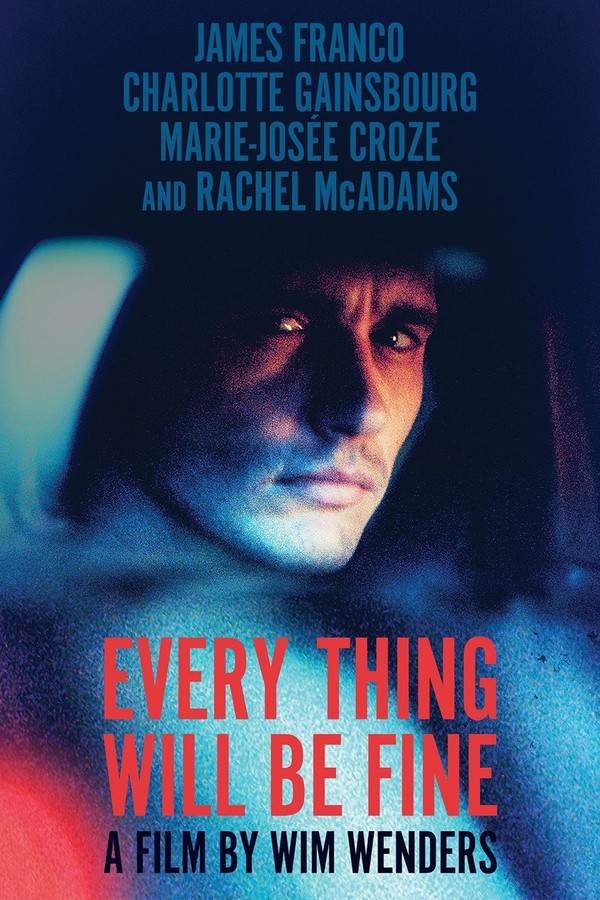
Every Thing Will Be Fine (2015) movie poster

Plot Summary

Every Thing Will Be Fine (2015) Plot Summary Explained

Release, runtime and language
2015 · 118 min · English
JustWatch #22,592 9
Directed by
Wim Wenders

Following an argument with his girlfriend, a writer aimlessly drives until he accidentally hits and kills a child. The devastating accident and its aftermath leave him deeply traumatized. He struggles to cope with the tragedy and attempt to move forward with his life, but the event haunts him. Each time he looks in the mirror, he is confronted with the image of a killer, deepening his psychological distress and forcing him to confront the weight of his actions.

On this page (6)
  1. 1 Where to watch
  2. 2 What happens: full plot
  3. 3 Plot questions answered
  4. 4 Movie threads
  5. 5 Movies like Every Thing Will Be Fine
  6. 6 Every angle

Where to watch

Where to Watch Every Thing Will Be Fine (2015)

Where can you watch Every Thing Will Be Fine? Stream, rent or buy it in the US, including on AMC+, Philo and Sundance Now: current JustWatch availability with up-to-date prices.

Streaming availability powered by JustWatch

Full plot summary · contains spoilers

What Happens in Every Thing Will Be Fine: Full Plot Summary

The whole story of Every Thing Will Be Fine (2015) explained, from the opening scene to the final frame: every key event, every twist and what it all adds up to. Read it as a quick recap before the sequel, to check a scene you missed, or to finally understand what really happened.

In the serene, snow-blanketed countryside of Quebec, Tomas Eldan, a dedicated novelist, and his partner Sara found themselves ensnared in a web of domestic strife. While Sara longed for the comfort of a conventional life filled with marriage and children, Tomas remained absorbed in his literary pursuits, inadvertently neglecting their relationship. This growing chasm was tragically deepened by an unforeseen incident that would irreversibly change both their lives.

On a chilling winter’s night, as Tomas drove along the winding roads, a toboggan carrying two young brothers, Christopher (only 5 years old) and Nicholas, collided violently with his vehicle, resulting in the heartbreaking loss of Nicholas. Although Christopher emerged physically unscathed, the emotional repercussions of that night cast a long shadow over Tomas, leaving deep psychological scars.

In the wake of this distressing event, the already fragile bond between Tomas and Sara disintegrated, spiraling downwards as Tomas fell prey to his demons, indulging in alcohol and substances to escape his overwhelming guilt. His journey through despair was punctuated by a harrowing suicide attempt that required hospitalization. Yet, from the depths of his despair, Tomas gradually channeled his pain into his writing, achieving critical acclaim; however, the emotional wounds remained evident.

As he endeavored to reconstruct his life, fleeting interactions with Kate (Nicholas' mother) served as a painful reminder of the shadow cast by the tragedy. In time, he formed a new relationship with Ann, a colleague from his publishing house, embracing her daughter Mina and attempting to forge a more traditional family life.

Fast forward eleven years after that fateful accident, and an unexpected letter arrived from Christopher, now a troubled 16-year-old referred to as a "problem child." After discussions with his school psychologist, Christopher was encouraged to reach out to Tomas, unraveling a complex emotional tapestry as they confronted the ghosts of their shared past. Through this intricate exchange, Tomas and Christopher gradually discovered healing, finding solace and understanding in each other's similar struggles, as they each fought to reclaim their lives.

Last updated: November 18, 2024 at 20:18

Was this helpful?

Plot questions answered

Every Thing Will Be Fine Plot Explained: Your Questions Answered

The questions people ask most about Every Thing Will Be Fine (2015): what happens in the confusing scenes, why the characters do what they do, the twists, hidden details and what the ending means. Each answer contains spoilers.

Q1

Why did Tomas start drinking heavily after the accident?

Tomas turned to alcohol and substances to escape the overwhelming guilt of accidentally killing Nicholas. The weight of knowing he caused a child's death became unbearable, and substance abuse became his destructive coping mechanism. This behavior further deteriorated his relationship with Sara, who watched him spiral deeper into addiction.

Foreshadowing: Earlier in the film, Tomas was already emotionally distant from Sara due to his absorption in writing, suggesting he was prone to unhealthy coping mechanisms when faced with stress.

  • alcohol
  • guilt
  • substance abuse
  • coping mechanism
  • addiction
Q2

Why did Tomas attempt suicide?

Tomas attempted suicide because the guilt from killing Nicholas became psychologically intolerable. After months of substance abuse and emotional isolation, he saw no way out of his suffering. His suicide attempt required hospitalization and marked the lowest point in his emotional decline.

Foreshadowing: The descent into alcohol and substances following the accident built progressively toward this breaking point.

  • suicide
  • guilt
  • mental health
  • hospitalization
  • despair
Q3

Why did Tomas and Sara separate after the accident?

The accident accelerated the existing fracture in their relationship. Sara had already felt neglected because Tomas prioritized his writing over building a family. After the tragedy, Tomas pushed her away through his substance abuse and emotional unavailability, making it impossible to maintain their bond.

Foreshadowing: Early scenes showed Sara yearning for marriage and children while Tomas remained absorbed in his literary work, establishing the fundamental incompatibility that the accident would ultimately expose.

  • relationship
  • Sara
  • separation
  • neglect
  • emotional distance
Q4

Why did Christopher contact Tomas after 11 years?

Christopher, now a troubled 16-year-old, reached out after discussing his trauma with his school psychologist. Encouraged by the psychologist to confront his emotional struggles rather than suppress them, Christopher decided to contact the man at the center of his brother's death. This was his attempt to process the unresolved grief and anger he had carried for over a decade.

Foreshadowing: Christopher survived the accident but lost his brother Nicholas, leaving him with unspoken trauma that festered throughout his childhood.

  • Christopher
  • letter
  • psychologist
  • teenage trauma
  • closure
Q5

Why did Tomas start writing about his trauma?

After recovering from his suicide attempt, Tomas began using his writing as an outlet for his pain. He transformed his guilt and suffering into literature, which eventually gained critical acclaim. Writing became his way of processing the accident, though the emotional wounds remained visible in his work.

Foreshadowing: Tomas was established as a dedicated novelist whose identity was deeply tied to his literary pursuits from the beginning.

  • writing
  • trauma
  • guilt
  • publishing
  • artistic expression
Q6

Why did Tomas meet with Kate, Nicholas' mother?

Tomas had fleeting encounters with Kate as he attempted to rebuild his life. Each meeting served as a painful reminder of the tragedy he caused. These interactions forced him to confront the human consequences of his actions and kept his guilt alive, making it impossible to fully escape what he had done.

Foreshadowing: Kate's presence in his life represented the unavoidable connection between Tomas and the family he destroyed.

  • Kate
  • Nicholas' mother
  • guilt
  • confrontation
  • grief
Q7

How did Tomas meet Ann and start a new family?

Tomas met Ann, a colleague from his publishing house, and eventually formed a romantic relationship with her. Together with Ann's daughter Mina, they attempted to create a more traditional family life. This represented Tomas's effort to move forward and find normalcy after years of emotional turmoil.

Foreshadowing: Tomas's desire to rebuild his life was established during his recovery period after the suicide attempt.

  • Ann
  • Mina
  • new relationship
  • family
  • moving forward
Q8

Why was Christopher labeled a problem child?

Christopher developed behavioral issues as a result of the traumatic accident that killed his brother Nicholas. Growing up carrying the weight of surviving while his brother died, combined with the absence of proper emotional processing, manifested in his troubled behavior. His school psychologist recognized these symptoms as unresolved trauma.

Foreshadowing: Christopher emerged physically unharmed but was clearly emotionally traumatized in the immediate aftermath of the accident.

  • Christopher
  • problem child
  • trauma
  • behavioral issues
  • psychology
Q9

How did Tomas and Christopher find healing through their letters?

Through heartfelt exchanges spanning eleven years after the accident, Tomas and Christopher discovered their shared pain connected them. As they confronted the ghosts of their past together, each discussion allowed them to unpack their feelings. Their mutual understanding of suffering became a pathway to reclaiming their lives, though the healing was tempered by the irreversible loss they shared.

Foreshadowing: The film suggests both characters were carrying unprocessed trauma that needed external resolution.

  • healing
  • connection
  • forgiveness
  • understanding
  • closure
Q10

Why did Christopher's psychologist recommend he contact Tomas?

Christopher's school psychologist encouraged him to reach out to Tomas because the teenager had been suppressing his trauma for years, which manifested as behavioral problems. Professional guidance recognized that confronting the source of his emotional pain was necessary for recovery, rather than continuing to avoid it.

Foreshadowing: The psychologist's recommendation came after Christopher was identified as a problem child, suggesting years of unaddressed emotional struggle.

  • psychologist
  • therapy
  • trauma treatment
  • professional help
  • recommendation

Movie threads

More Movies Like Every Thing Will Be Fine, by Mood & Story

Curated lists built around what makes Every Thing Will Be Fine tick: the same mood, the same kind of story or the same emotional payoff. Each list explains why these movies belong together.

Movies about life-shattering accidents and guilt like Every Thing Will Be Fine

When a single moment shatters a life, forcing a painful, years-long journey. If you were moved by the heavy emotional journey in Every Thing Will Be Fine, explore these similar dramas. This collection features movies about ordinary people grappling with the aftermath of a tragic mistake, focusing on long-term psychological trauma and the difficult path toward some form of acceptance.

  • guilt-ridden
  • traumatic
  • somber
  • psychological
  • heavy
  • introspective
  • Tone: melancholic, somber, guilt-ridden
  • Pacing: slow, deliberate, character-focused
Why these movies?

The story pattern: The narrative pattern in these stories begins with an inciting incident—often an accident—that irrevocably destroys the protagonist's world. The plot then unfolds slowly, focusing less on external events and more on the internal psychological deterioration, the strain on relationships, and the arduous, often incomplete, process of rebuilding a shattered sense of self.

Why they belong together: These films are grouped together because they share a core focus on a character's intense psychological suffering following a life-altering mistake. They prioritize emotional realism over plot, feature a melancholic tone, heavy emotional weight, and a slow pacing that allows the full depth of the trauma to be felt.
Slow burn introspective dramas with heavy emotion like Every Thing Will Be Fine

Stories that sit with profound sadness and the heavy weight of memory. For viewers who appreciated the quiet, heavy intensity of Every Thing Will Be Fine, this list highlights similar melancholic dramas. Discover films that share a slow pacing, a focus on internal psychological states, and a deeply somber tone, often exploring themes of grief, guilt, and the long road to healing.

  • somber
  • introspective
  • melancholic
  • quiet
  • heavy
  • psychological
  • Tone: melancholic, somber, introspective
  • Pacing: slow burn, deliberate, meditative
Why these movies?

The story pattern: Narratives in this thread are defined by their internal focus. The plot is secondary to the character's emotional journey, which is often non-linear and revolves around processing a past trauma. The structure is frequently minimalist, relying on quiet moments, subdued performances, and an atmosphere of pervasive sadness to convey its emotional weight.

Why they belong together: These movies are grouped by their shared cinematic language: a slow, deliberate pace; a melancholic or bleak tone; a focus on heavy themes like grief and trauma; and a overall feeling of quiet intensity. They offer a similar viewing experience of deep emotional immersion and contemplative sadness.

If you liked this

Movies Like Every Thing Will Be Fine

Similar movies to Every Thing Will Be Fine: the same genre, themes or kind of story. Each one comes with its own plot summary, timeline and ending explained.

Browse all movie summaries

Every angle

Every Thing Will Be Fine (2015) Explained: Plot, Timeline & Characters

Everything about Every Thing Will Be Fine in one place: what happens in the plot summary, the timeline in chronological order, the characters and meaning and a spoiler-free summary. What's After the Movie adds the cast, box office and post-credit scenes.

Coming soon on iOS and Android

The Plot Explained Movie Summary App

Plot summaries, endings explained and timelines on your phone. Catch up on any movie in minutes, save your favorites and never miss a twist again.

Be the first to know when we launch. Your email stays private, always.

Learn more about the app