Richter Boudreau, Eric Stoltz, is a perpetual loser and slacker from a privileged Tulsa background who works as a movie reviewer at a local newspaper—a job his mother, Mary Tyler Moore, pulled strings to secure. The opening panorama of his life paints a man who is deeply dissatisfied with the direction of his days: he’s about to be fired for missing deadlines, lives in a dilapidated farmhouse that mirrors his financial decay, and moves through a tainted world of drugs and small-scale hustling just to scrape by. An electricity cut-off punctuates his latest misfortune, a cruel reminder that his privileges have never quite translated into responsibility. The failed blind date that follows—set up with a neurotic gold-digger named Trudy, Cameron Diaz—exposes the fragility of his charm and the brittle surface of his improvisational life.
The trouble spirals when Richter becomes entangled with money and danger he did not seek. He owes money to Ronnie Stover, a volatile and abusive drug dealer, James Spader, whose black heart is matched only by his manipulative appetite for control. Ronnie is married to Vicky Michaels Stover, a woman who has been disowned by her socially prominent family for her choice of partner but who remains undaunted by public opinion. Vicky, Deborah Kara Unger, is the emotional fulcrum around which these dramas turn. She is the sister of Keith Michaels, a misogynistic alcoholic whose vast inheritance cannot quiet the loneliness, anger, and depression that gnaw at him. The stark contrast between the money that surrounds Keith and the internal void he cannot fill makes him a volatile force in Richter’s precarious orbit. The tension intensifies with Cherry, an exotic dancer from Chicago who buys drugs from Ronnie and becomes romantically entangled with Richter, Joanna Going, drawing Richter further into a web of competing loyalties and old wounds.
As the story digs deeper, Cherry reveals a crucial thread: she has information that Bedford Shaw, the son of a socially prominent businessman, Harmon Shaw, intends to threaten with blackmail. The revelation sparks Ronnie’s plan to leverage Richter’s access to newspapers and influence to squeeze Bedford for money or favors, creating a dangerous triangle of power, publicity, and corruption. Bedford Shaw, Marco Perella, stands at the center of this clandestine scheme, a figure whose actions in a motel room have already set off a chain reaction—in Cherry’s telling, Bedford murdered a friend, a stripper or prostitute, and photographed the crime. The very idea that someone so ostensibly respected could be capable of such a deed adds a chilling layer of hypocrisy to the film’s world.
Yet Richter does not want any part of Ronnie’s blackmail plot. He sees through the manipulation and tries to disengage, hoping to reclaim some sense of autonomy in a life that has repeatedly eroded his judgment. His attempt to disengage, however, only tightens the noose as old loyalties and fresh betrayals collide. The deeper he gets into the affair between Vicky and himself, the more Keith’s awareness grows, and the consequences crystallize in a brutal moment of exposure. When Keith discovers that Richter has been sleeping with Vicky, the fragile balance shatters, and the distance between affection and resentment becomes a fault line that could pull all involved into a much darker reckoning.
What unfolds is a study in how privilege, need, and addiction intersect with ambition and reputations. The city’s quiet nights and the farmhouse’s creaking floors become a stage for a cast of characters whose choices ripple outward in unpredictable ways. Richter, caught between congenial nostalgia and a present that refuses to forgive him, confronts the limits of luck and the heavy gravity of his decisions. Vicky, torn between loyalty and desire, embodies a conflict between social expectations and personal truth, while Ronnie’s relentless push for control exposes how easily people can be drawn into schemes that promise money but cost dignity. Cherry’s perspective adds a layer of grit and vulnerability, reminding the audience that appearances can hide brutal realities. Harmon Shaw’s shadow looms over the entire affair, a reminder that wealth and influence can cast long, unforgiving shadows.
Throughout, the dialogue threads a careful balance of wit and menace, with the screenplay never rushing the audience to judge but inviting contemplation of motive and consequence. The film’s rhythm moves between the micro-dramas of individual relationships and the macro-dynamics of power, where a black pouch and a journalist’s connections can alter trajectories in ways that are at once petty and catastrophic. The tone remains measured and neutral, presenting events without melodrama while allowing the rawness of human error to surface in unflinching, human terms.
In the end, the story leaves a mark not simply through its plot twists but through its insistence on honesty about flawed people and the cost of their choices. It is a film about getting by on borrowed time, about the precarious line between luck and fate, and about how a single tangled decision can unleash a cascade of personal and relational consequences. The characters linger in memory not as perfect heroes or villains, but as people whose desires, fears, and missteps illuminate a world where power, affection, and consequence are never neatly aligned.
Note: The first-time mentions of key characters link to their respective actors’ pages as requested:
- Richter Boudreau — Eric Stoltz
- Cynthia Boudreau — Mary Tyler Moore
- Trudy — Cameron Diaz
- Ronnie Stover — James Spader
- Vicky Michaels Stover — Deborah Kara Unger
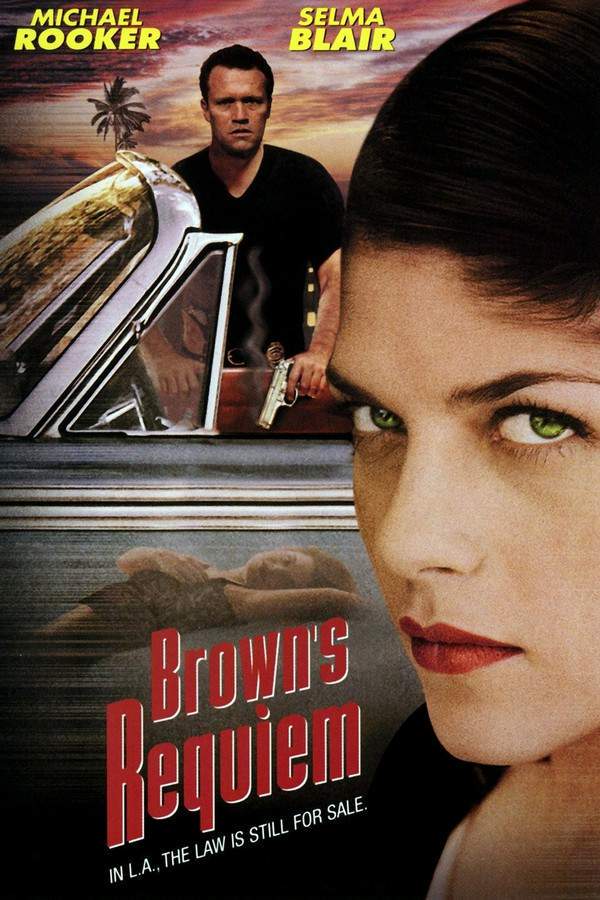
- Keith Michaels — Michael Rooker
- Cherry — Joanna Going
- Bedford Shaw — Marco Perella
- Harmon Shaw — James Coburn