Plot Explained Spoilers guaranteed!
Plot Explained

Browse by genre

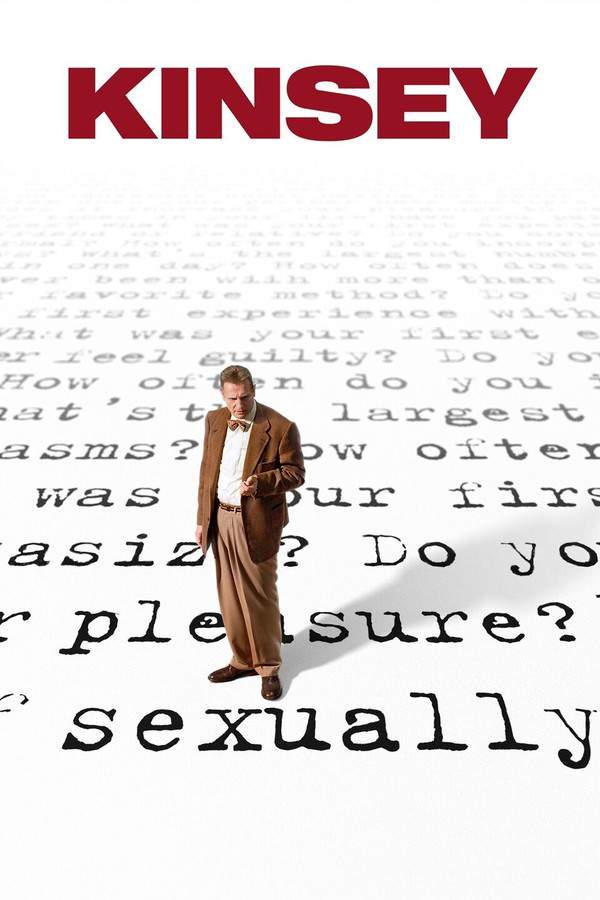
Kinsey (2004) movie poster

Timeline

Kinsey (2004) Timeline Explained – Every Event in Order

Release, runtime and language
2004 · 118 min · English
Loading streaming availability…
Directed by
Bill Condon
Starring
Liam Neeson, Chris O'Donnell, Laura Linney
Budget
$11M

Alfred Kinsey, a biology professor at Indiana University, becomes fascinated with human sexuality and begins a groundbreaking research project. He collects personal accounts and experiences, compiling vast amounts of data that challenge conventional beliefs and societal norms. His work sparks controversy and faces resistance as he strives to understand and document the complexities of human desire and relationships, ultimately seeking greater acceptance and knowledge.

On this page (7)
  1. 1 Where to watch
  2. 2 Events in order (12)
  3. 3 Timeline questions answered
  4. 4 Movie threads
  5. 5 Movies like Kinsey
  6. 6 Categories
  7. 7 Every angle
Loading streaming availability…

12 events in order · contains spoilers

Kinsey Timeline: Events in Chronological Order

Every key event of Kinsey (2004) in order, scene by scene, with when and where it takes place. Use it to untangle flashbacks, time jumps and parallel storylines, to refresh your memory before the sequel or to find the exact scene you are thinking of.

  1. Professor Alfred Kinsey's Struggles

    Alfred Kinsey, a professor specializing in zoology, struggles to understand human sexuality, despite his deep knowledge of insect behavior. His expertise in observing insect mating rituals highlights the complexity of human sexual nature, which intrigues and challenges him.

  2. Marriage to Clara McMillen

    Kinsey marries Clara McMillen, who becomes a crucial partner in his journey to explore human sexuality. Together, they navigate the complexities of marital life, with Clara providing insight that helps Kinsey reconsider traditional research methods.

  3. Challenging Student Questions

    Kinsey's routine is disrupted when newlywed students pose a provocative question about human sexual behavior. This inquiry serves as a catalyst for Kinsey, prompting him to delve deeper into the mysteries of human sexuality beyond his initial study of insects.

  4. Initiating the Research Study

    Determined to maintain his scientific integrity, Kinsey starts an ambitious study into sexual behaviors, initiating this process with a questionnaire aimed at his students. This decision marks the beginning of a groundbreaking exploration into human sexuality.

  5. Adapting Research Methods

    Recognizing the limitations of written questionnaires, Clara wisely advises Kinsey to conduct face-to-face interviews for more honest answers. This shift in methodology substantially broadens the scope and potential impact of his research.

  6. Expanding the Research Team

    Kinsey assembles a dedicated research team at Indiana University, recruiting members from diverse backgrounds. Their collaboration is fueled by funding from the Rockefeller Foundation, facilitating a comprehensive examination of sexual behaviors across the nation.

    Where
    Indiana University
  7. The Cloud of McCarthyism

    As Kinsey’s research progresses, the oppressive climate of McCarthyism looms over his work. Doubt and fear arise regarding the nature of his studies, putting pressure on Kinsey’s support from both the University and the Rockefeller Foundation.

  8. Publication of Groundbreaking Male Sexuality Research

    In 1948, Kinsey publishes his revolutionary findings in his first book focusing on male sexuality. This publication challenges societal norms and elevates the conversation around human sexual behavior in America.

    When
    1948
  9. Exploration of Female Sexuality

    Following the success of his first book, Kinsey publishes his significant work on female sexuality in 1953. This further cements his position as a pioneer in sexual studies, contributing to a broader understanding of women's sexual experiences.

    When
    1953
  10. Cultural Shift and Sexual Revolution

    Kinsey's publications play a pivotal role in shifting cultural attitudes towards sexuality, laying the groundwork for the sexual revolution of the 1960s. His research prompts society to reassess traditional views on sexual behavior and acceptance.

  11. Uncovering Sexual Practices

    Throughout his inquiry, Kinsey and his team uncover a broad spectrum of 'acceptable' sexual practices. Their findings lead to an ongoing dialogue about sexual norms, provoking both acceptance and controversy in society.

  12. Personal Journeys of Researchers

    As the research progresses, Kinsey and his team grapple with their own evolving sexual identities. This introspective journey often yields surprising and unsettling consequences, reflecting the complex interplay between personal and professional lives.

Last updated: November 03, 2024 at 21:23

Was this helpful?

Timeline questions answered

Kinsey Timeline Explained: Your Questions Answered

When does it happen, and why in that order? The questions people ask about the chronology of Kinsey (2004): time jumps, flashbacks, cause and effect between scenes and the correct order of events, each answered with spoilers.

Q1

Why did Alfred Kinsey switch from studying insects to researching human sexuality?

Kinsey was a zoology professor who specialized in insect mating behavior, but he realized that human sexuality was far more complex than he initially understood. His turning point came when newly married students asked him a direct question about human sexual behavior that he couldn't answer, exposing gaps in his knowledge despite his scientific expertise.

Foreshadowing: Earlier scenes show Kinsey confidently discussing insect mating rituals, making his subsequent confusion more striking.

  • alfred kinsey
  • insect research
  • sexual behavior research
  • career change
Q2

What question from students prompted Kinsey to start his research?

A pair of newlywed students asked Kinsey about human sexual behavior, specifically regarding what constituted 'normal' sexual practices. This simple yet profound question stumped him and revealed that scientific knowledge about human sexuality was severely lacking, prompting him to investigate the topic rigorously.

  • students
  • newlyweds
  • normal sexual behavior
  • research catalyst
Q3

Why did Kinsey switch from questionnaires to face-to-face interviews for his research?

Clara Kinsey pointed out that students would not answer honestly on paper questionnaires due to embarrassment or fear of disclosure. She recognized that people would be more candid in private, face-to-face conversations, which led Kinsey to adopt this more personal methodology that significantly improved the honesty and depth of responses.

  • questionnaires
  • interviews
  • research methods
  • clara kinsey
Q4

How did McCarthyism affect Kinsey's research work?

McCarthyism created a hostile environment that put pressure on both Indiana University and the Rockefeller Foundation to withdraw support from Kinsey's controversial research. The era's anti-communist fervor made his studies on sexual behavior seem suspect and morally questionable, threatening the funding and institutional backing his work depended on.

  • mccarthyism
  • funding
  • rockefeller foundation
  • political pressure
Q5

Why was Kinsey's sexual research considered so controversial?

Kinsey's research challenged fundamental societal beliefs about acceptable sexual behavior by documenting the actual breadth of human sexual practices. His findings revealed that many behaviors considered 'abnormal' by society were actually more common than previously acknowledged, directly contradicting prevailing moral standards and making his work threatening to religious and social institutions.

  • controversy
  • societal norms
  • sexual behavior
  • public reaction
Q6

What impact did Kinsey's publications have on American society?

Kinsey's 1948 book on male sexuality and his 1953 book on female sexuality sparked major cultural controversy and fundamentally shifted public discourse about sex. His research helped lay the groundwork for the sexual revolution of the 1960s by challenging taboos and providing scientific data that encouraged society to reconsider traditional views on sexual behavior and acceptance.

  • publications
  • sexual revolution
  • cultural impact
  • 1948
  • 1953
Q7

How did working on Kinsey's research affect the team members?

Working on Kinsey's exhaustive study of sexual behavior had profound personal effects on the research team members. The extensive interviews and exposure to diverse sexual experiences caused many researchers to confront and reconsider their own sexual identities, leading to surprising and sometimes unsettling personal transformations that blurred the lines between scientific observation and lived experience.

  • research team
  • personal transformation
  • sexual identity
  • team members
Q8

Why did the Rockefeller Foundation fund Kinsey's controversial research?

The Rockefeller Foundation provided funding because they saw scientific merit in Kinsey's rigorous, data-driven approach to studying human sexuality. Despite the controversial nature of the subject, the foundation recognized the groundbreaking academic value of creating comprehensive scientific documentation of sexual behaviors that had never been systematically studied before.

  • rockefeller foundation
  • funding
  • scientific research
  • academic support
Q9

What role did Clara Kinsey play in her husband's research?

Clara McMillen was not only Kinsey's wife but also an instrumental partner in his work. She provided crucial insights that shaped his methodology, such as recommending face-to-face interviews over written questionnaires to obtain more honest responses. Her contributions helped improve the research's accuracy and depth throughout the project.

  • clara mcmillen
  • wife
  • research partner
  • methodology
Q10

How did Kinsey's research change him personally?

The research process transformed Kinsey from a conservative zoologist into someone who openly explored and documented the full spectrum of human sexual experience. His work not only challenged society's views but also forced him to confront his own assumptions about sexuality, leading to significant personal evolution throughout the years of conducting interviews and analyzing data.

  • personal change
  • transformation
  • alfred kinsey
  • self-discovery

Movie threads

More Movies Like Kinsey, by Mood & Story

Curated lists built around what makes Kinsey tick: the same mood, the same kind of story or the same emotional payoff. Each list explains why these movies belong together.

Movies about groundbreaking thinkers like Kinsey

Stories of brilliant minds whose controversial work challenges the established order. If you liked Kinsey, explore other films about pioneering scientists and researchers who challenge societal conventions. These movies share a steady pace, intellectual focus, and the dramatic tension that comes from pushing the boundaries of knowledge.

  • intellectual
  • controversial
  • groundbreaking
  • methodical
  • challenging
  • curious
  • Tone: neutral, intellectual, challenging
  • Pacing: steady, methodical
Why these movies?

The story pattern: The narrative typically follows a brilliant but often obsessive individual who embarks on a methodical, groundbreaking study. They face professional skepticism, public controversy, and personal turmoil as their work progresses, culminating in a legacy that fundamentally changes how we see the world.

Why they belong together: Movies in this thread are grouped by their shared focus on intellectual discovery as a dramatic force. They feature a neutral-to-serious tone, methodical pacing that mirrors research, and a central conflict between new ideas and entrenched societal norms.

Character-driven biographical dramas like Kinsey

Character-driven portraits that explore both the public legacy and private life. Find movies similar to Kinsey that offer nuanced portraits of real-life figures. These biopics balance professional triumphs with personal struggles, creating a compelling and humanizing look at complex individuals within their historical context.

  • biographical
  • observational
  • nuanced
  • humanizing
  • thoughtful
  • personal
  • Tone: neutral, observational, humanizing
  • Pacing: steady, linear
Why these movies?

The story pattern: The plot follows a linear progression through key events in the subject's life, intertwining their public achievements with their private relationships and internal conflicts. The narrative structure is straightforward to moderately complex, aiming for a balanced and insightful rather than hagiographic portrayal.

Why they belong together: This thread connects films that share a steady, observational approach to biography. They avoid sensationalism, instead focusing on a neutral tone and medium emotional weight to present a thoughtful examination of a life, warts and all.

If you liked this

Movies Like Kinsey

Similar movies to Kinsey: the same genre, themes or kind of story. Each one comes with its own plot summary, timeline and ending explained.

Browse all movie summaries

Categories

Movie Lists Featuring Kinsey

Kinsey appears in these hand-built movie categories. Each one groups movies by a specific mood, theme or story type, with their plot summaries and endings explained.

View all movie categories

Every angle

Kinsey (2004) Explained: Plot, Timeline & Characters

Everything about Kinsey in one place: what happens in the plot summary, the timeline in chronological order, the characters and meaning and a spoiler-free summary. What's After the Movie adds the cast, box office and post-credit scenes.

Coming soon on iOS and Android

The Plot Explained Movie Summary App

Plot summaries, endings explained and timelines on your phone. Catch up on any movie in minutes, save your favorites and never miss a twist again.

Be the first to know when we launch. Your email stays private, always.

Learn more about the app