Plot Explained Spoilers guaranteed!
Plot Explained

Browse by genre

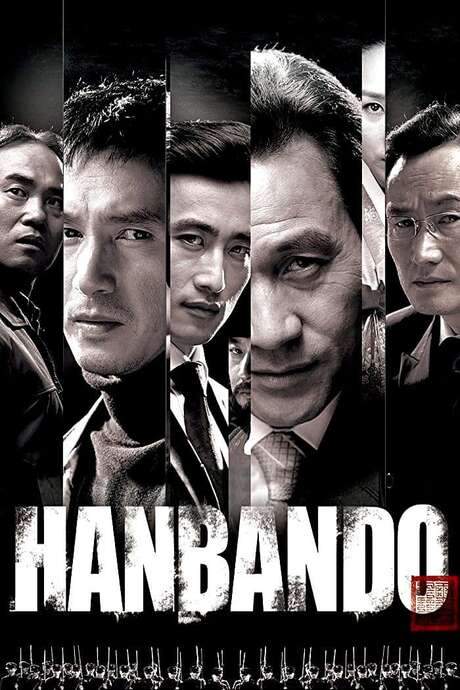
Hanbando (2006) movie poster

Plot Summary

Hanbando (2006) Plot Summary Explained

Release, runtime and language
2006 · 147 mins · Korean
Directed by
Kang Woo-suk
Starring
Kim Eung-soo, Ahn Sung-ki, Choi Jung-woo, Min Young, Choi Il-hwa, Kang Soo-youn

A nation’s history is overturned when the South Korean president races against time to expose a forged seal allegedly belonging to the late King Gojong. He orders outspoken historian Choi Min‑jae and royal descendant Kim Yu‑shik to locate the genuine seal, aiming to disprove Japan’s claim to the railroads—a claim that threatens the reunification of the two Koreas.

On this page (5)
  1. 1 What happens: full plot
  2. 2 Plot questions answered
  3. 3 Movie threads
  4. 4 Movies like Hanbando
  5. 5 Every angle

Full plot summary · contains spoilers

What Happens in Hanbando: Full Plot Summary

The whole story of Hanbando (2006) explained, from the opening scene to the final frame: every key event, every twist and what it all adds up to. Read it as a quick recap before the sequel, to check a scene you missed, or to finally understand what really happened.

The North and South Korean governments stand on the brink of reopening the Kyungui Railroad, a historic link that could symbolize a new chapter in reunification. The South Korean President Ahn Sung-ki steers a delicate path, aiming to advance dialogue while facing Japan’s firm refusal to concede rights to the railway lines, citing documents stamped with the imperial seal of Emperor Gojong of Joseon — Kim Sang-joong. This tension between sovereignty, memory, and the hope for reconciliation threads through every negotiation and public statement as the protagonists weigh the future of a divided peninsula.

As the plot unfolds, an age-old conspiracy surfaces: the imperial seal used to validate those documents may be a forgery. In response, the President mobilizes two key figures to sift truth from legend: the outspoken historian Choi Min-jae, Cho Jae-hyun, and the descendant of the Joseon royal bloodline Kim Yu-shik, Kang Shin-il. Together they embark on a high-stakes quest to locate the authentic seal and prevent a repeat of the occupation’s dark history. Their mission takes them through political corridors, underground networks, and tense impromptu negotiations, all while the clock ticks and competing agendas press in from every direction.

The pressure outside the palace thickens as Japan enforces economic sanctions that fracture the South Korean government and drive elements of its armed forces to the border, presenting a direct threat to sovereignty. Within this volatile landscape, the hunt for the genuine seal becomes a test of resolve, integrity, and the ability to read the lingering shadows of a painful past. Behind the scenes, figures from the security and intelligence spheres maneuver to balance competing interests and keep the search on track, including the Director of National Intelligence Cho Il-hwa, whose role is to coordinate information and strategy as the crisis deepens.

Ultimately, the revelation comes: the authentic royal seal is uncovered, and Japan issues an apology for its occupation. The narrative moves toward a hopeful denouement, where diplomatic ingenuity and concrete historical truth converge to alter a fraught legacy. The film closes on a quiet note that even after years of tension, accountability and dialogue can open pathways toward greater cooperation and a more stable future for Korea.
Last updated: February 20, 2026 at 12:09

Was this helpful?

Plot questions answered

Hanbando Plot Explained: Your Questions Answered

The questions people ask most about Hanbando (2006): what happens in the confusing scenes, why the characters do what they do, the twists, hidden details and what the ending means. Each answer contains spoilers.

Q1

Why does Japan claim rights to the Kyungui Railroad?

Japan claims rights to the railway based on documents stamped with the imperial seal of Emperor Gojong of Joseon. These documents, allegedly from the Joseon era, were used to justify Japanese control over the railway lines during the colonial period. The South Korean government suspected these documents might be fraudulent, which would invalidate Japan's claims.

Foreshadowing: Early in the film, Japan firmly refuses to concede railway rights, citing these imperial seal documents as legal basis.

  • japan claim
  • railroad rights
  • imperial seal
  • emperor gojong
  • occupation
Q2

Why is the imperial seal important in the film?

The imperial seal serves as official royal authentication for government documents. If the seal used in Japan's claimed documents is authentic, then Japan's historical rights to the railways would appear legally valid. However, if the seal is proven to be a forgery, Japan's entire claim collapses, allowing Korea to assert sovereignty over the railroad and strengthen reunification efforts.

Foreshadowing: The controversy over the seal's authenticity becomes the turning point that shifts the political debate from recent negotiations to historical legitimacy.

  • imperial seal
  • forgery
  • authentication
  • royal seal
  • joseon
Q3

Why was Choi Min-jae chosen to find the authentic seal?

President Ahn tasked Choi Min-jae because he is an outspoken historian known for his expertise in Korean history and his willingness to challenge official narratives. His reputation made him ideal for a high-stakes investigation that would face political resistance. Additionally, his academic credibility was essential for whatever findings the team would eventually present to the public and international community.

Foreshadowing: The President approaches Choi directly at the Blue House, emphasizing the national importance and confidentiality of the mission.

  • choi min-jae
  • historian
  • blue house
  • investigation
Q4

Why does Kim Yu-shik join the search for the seal?

Kim Yu-shik is the descendant of the Joseon royal bloodline, giving him unique access to royal archives and intimate knowledge about the seal's provenance that no one else possesses. His lineage provides both legitimacy and practical access to historical records that could verify the seal's authenticity. Together with Choi Min-jae, he bridges academic research with royal inheritance knowledge.

Foreshadowing: Kim's royal ancestry is introduced as the key to unlocking secrets that only a direct descendant could access.

  • kim yu-shik
  • royal descendant
  • joseon bloodline
  • archives
Q5

How does finding the authentic seal change the situation?

Once the authentic royal seal is located and verified at the National Archives, it proves that Japan's claimed documents were based on a forged seal. This historical evidence invalidates Japan's legal basis for railway claims, fundamentally shifting the diplomatic leverage. The verified seal becomes concrete proof that Japan had manipulated historical documents to justify occupation-era rights.

Foreshadowing: The search intensifies as officials realize the truth could rewrite recent history and restore Korea's credibility.

  • authentic seal
  • verification
  • national archives
  • diplomacy
Q6

Why does Japan apologize after the seal is verified?

Japan apologizes because the discovery of the authentic seal exposes that their claimed documents were based on a forgery, undermining their entire legal and historical argument. With the truth revealed, Japan faces international pressure and loses diplomatic credibility. The formal apology acknowledges past wrongs and represents a gesture toward healing the historical wounds caused by colonization.

Foreshadowing: The apology follows directly from the verification of the authentic seal, which reshapes the entire diplomatic crisis.

  • japan apology
  • occupation
  • historical truth
  • colonization
Q7

Why do economic sanctions deepen divisions in South Korea?

Japan imposes economic sanctions that put pressure on South Korea's economy, creating internal conflict within the South Korean government. Coalition partners clash over how to respond, some advocate for compromise while others push for standing firm. These divisions threaten to derail the unified response needed to pursue the seal investigation and resist Japanese pressure.

Foreshadowing: Domestic politics begin to fracture as the sanctions take effect, complicating the President's leadership.

  • economic sanctions
  • domestic politics
  • japan
  • korea relations
Q8

Why do border tensions escalate during the seal crisis?

Border tensions escalate because the crisis threatens South Korea's sovereignty at a time when military posturing becomes a test of national resolve. Armed forces appear at the border as a show of strength, and military advisers warn of rising tensions. This reflects how the historical dispute becomes intertwined with immediate national security concerns, raising the stakes of the diplomatic standoff.

Foreshadowing: Military positioning at the border coincides with the peak of the investigation, underscoring the gravity of potential failure.

  • border tensions
  • military
  • sovereignty
  • korean peninsula
Q9

How does the Kyungui Railroad relate to Korean reunification?

The Kyungui Railroad represents a symbolic link between North and South Korea, reopening it would demonstrate tangible progress toward reunification. Japan using the disputed railway rights threatens to derail this hopeful cooperation. By proving Japan's claims are based on forgery, Korea removes a major obstacle to the railroad's operation and the broader reunification dialogue, allowing the two Koreas to advance practical cooperation.

Foreshadowing: The film's opening establishes the railroad reopening as a historic step toward reconciliation between the two Koreas.

  • kyungui railroad
  • reunification
  • north south korea
  • symbolic
Q10

What conspiracy emerges about the imperial seal?

The conspiracy is that the imperial seal used in Japan's documents validating railway claims may be a forgery created during or after the occupation period. This suggests Japan deliberately manufactured false historical evidence to maintain control over Korean infrastructure. The revelation that the seal could be forged shifts the entire political debate from contemporary negotiations to the legitimacy of Japan's colonial-era claims.

Foreshadowing: Historians and intelligence circles begin questioning the seal's authenticity early, triggering the investigation.

  • conspiracy
  • forgery
  • occupation documents
  • imperial seal

Movie threads

More Movies Like Hanbando, by Mood & Story

Curated lists built around what makes Hanbando tick: the same mood, the same kind of story or the same emotional payoff. Each list explains why these movies belong together.

Historical Conspiracy Thrillers like Hanbando

Races against time to uncover secrets that rewrite a nation's history. Discover movies like Hanbando, where the search for a hidden truth from history becomes a race against time with dire consequences for a nation's sovereignty and identity.

  • historical
  • suspenseful
  • political
  • urgent
  • investigation
  • conspiracy
  • Tone: tense, suspenseful
  • Pacing: fast, urgent
Why these movies?

The story pattern: These stories typically follow researchers, journalists, or government agents who piece together clues from archives, artifacts, and testimonies, facing opposition from powerful antagonists trying to keep the past buried. The plot is driven by a central mystery that escalates into a national or international crisis.

Why they belong together: Movies in this thread share a compelling mix of historical investigation and urgent political thriller elements. They create suspense by exploring how the past directly impacts the present, centered on a tangible goal like finding a specific object or document.

Patriotic Thrillers with National Stakes like Hanbando

Crises that test national resolve and end in triumphant vindication. If you liked Hanbando, explore more movies where the fate of a nation hangs in the balance, driven by patriotic duty and culminating in a clear, triumphant victory.

  • patriotic
  • urgent
  • anxious
  • triumphant
  • political
  • diplomatic
  • Tone: tense, patriotic
  • Pacing: fast
Why these movies?

The story pattern: The narrative revolves around a challenge to a country's integrity—be it territorial, economic, or historical. Protagonists, often working on behalf of the state, must gather evidence and outmaneuver adversaries to avert disaster, leading to a climactic resolution that affirms national pride.

Why they belong together: These films are grouped by their heavy emotional weight centered on national identity, their fast-paced, high-stakes plots, and their ultimately uplifting conclusions where the nation's honor is restored.

If you liked this

Movies Like Hanbando

Similar movies to Hanbando: the same genre, themes or kind of story. Each one comes with its own plot summary, timeline and ending explained.

Browse all movie summaries

Every angle

Hanbando (2006) Explained: Plot, Timeline & Characters

Everything about Hanbando in one place: what happens in the plot summary, the timeline in chronological order, the characters and meaning and a spoiler-free summary. What's After the Movie adds the cast, box office and post-credit scenes.

Coming soon on iOS and Android

The Plot Explained Movie Summary App

Plot summaries, endings explained and timelines on your phone. Catch up on any movie in minutes, save your favorites and never miss a twist again.

Be the first to know when we launch. Your email stays private, always.

Learn more about the app