







Plot Explained Spoilers guaranteed!
Plot Explained

Browse by genre

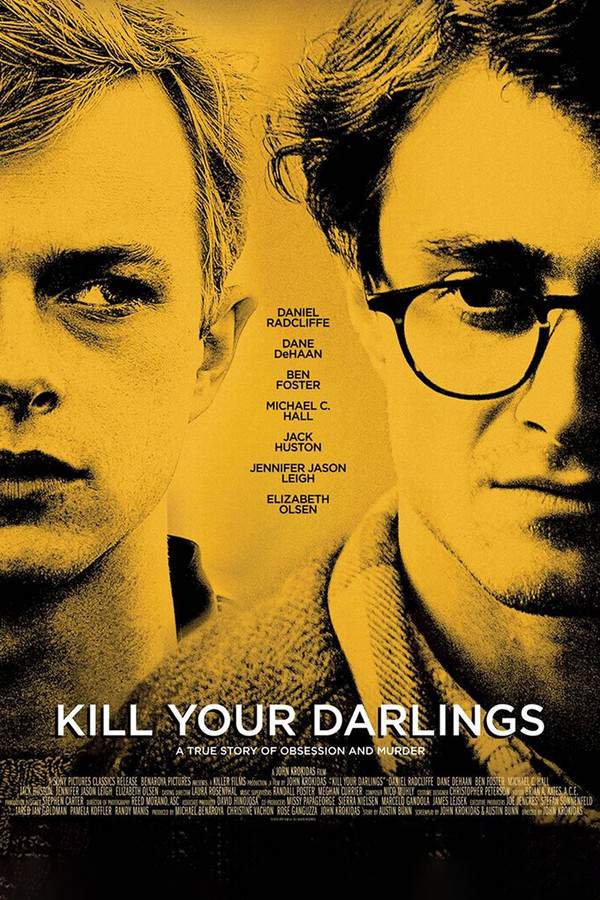
Kill Your Darlings (2013) movie poster

Timeline

Kill Your Darlings (2013) Timeline Explained – Every Event in Order

Release, runtime and language
2013 · 104 min · English
JustWatch #7,844 12
Directed by
John Krokidas
Starring
Elizabeth Olsen, Ben Foster, Daniel Radcliffe, Michael C. Hall, Jennifer Jason Leigh, David Cross

In 1944, a young Allen Ginsberg experiences a transformative encounter with the charismatic Lucien Carr. Their intense rivalry ignites a dangerous obsession, complicated by the allure of the New York literary scene. A tragic death among their circle throws the group into turmoil, blurring the boundaries of friendship and love. The ensuing trial reveals the dark side of artistic ambition and exposes a shocking truth about the lives of these burgeoning poets.

On this page (6)
  1. 1 Where to watch
  2. 2 Events in order (13)
  3. 3 Timeline questions answered
  4. 4 Movie threads
  5. 5 Movies like Kill Your Darlings
  6. 6 Every angle

Where to watch

Where to Watch Kill Your Darlings (2013)

Where can you watch Kill Your Darlings? Stream, rent or buy it in the US, including on Amazon Video, Apple TV Store and Fandango At Home: current JustWatch availability with up-to-date prices.

Streaming availability powered by JustWatch

13 events in order · contains spoilers

Kill Your Darlings Timeline: Events in Chronological Order

Every key event of Kill Your Darlings (2013) in order, scene by scene, with when and where it takes place. Use it to untangle flashbacks, time jumps and parallel storylines, to refresh your memory before the sequel or to find the exact scene you are thinking of.

  1. Ginsberg arrives at Columbia University

    In 1944, Allen Ginsberg arrives in New York City to begin his freshman year at Columbia. He quickly meets Lucien Carr, a charismatic, anti-establishment figure who pulls him into a tight-knit circle of ambitious young writers. The group is poised to reshape their world through literature and rebellion.

    When
    1944
    Where
    Columbia University, New York City
  2. Kammerer’s influence on Carr’s Columbia tenure

    Ginsberg learns that Carr’s stay at Columbia depends on Kammerer, a janitor-turned-professor who writes Carr’s term papers. Kammerer is deeply obsessed with Carr and exerts pressure on him with both mentorship and coercion. Carr’s continued presence at Columbia hinges on Kammerer’s favor.

    When
    1944
    Where
    Columbia University, New York City
  3. Ginsberg meets Burroughs and Kerouac

    Ginsberg meets William S. Burroughs and Jack Kerouac, two eager outsiders drawn to experimentation and drugs. The trio imagines a new literary movement called The New Vision that defies rules and institutions. They position themselves as rebels against campus order and against professor Steeves.

    When
    1944
    Where
    Columbia University, New York City
  4. Romance grows between Ginsberg and Carr

    As the circle tightens, Ginsberg begins developing romantic feelings for Carr. The attraction complicates the dynamics of their intense, improvisational creative partnership. The shifting emotions pull him deeper into the group’s risky lifestyle.

    When
    1944
    Where
    Columbia University, New York City
  5. Carr cuts ties with Kammerer and recruits help

    Carr tells Kammerer he is done with him and recruits Ginsberg to write his term papers. The arrangement binds Ginsberg to the behind-the-scenes power plays shaping Carr’s academic future. The move marks a turning point, exposing Ginsberg to Kammerer’s influence and the group’s fragile bonds.

    When
    1944
    Where
    Columbia University, New York City
  6. Kammerer retaliates against Kerouac

    In retaliation, Kammerer is involved in an act against Kerouac by placing Kerouac’s cat in the oven, prompting Kerouac to rescue it in the middle of the night. The incident underscores the volatile, dangerous nature of their circle. This event foreshadows the escalating conflicts surrounding Carr.

    When
    1944
    Where
    New York City
  7. Carr and Kammerer confront each other; Kammerer dies

    A confrontation between Carr and Kammerer ends with Kammerer being stabbed and killed. Carr is arrested as the central figure in the death, thrusting the group into a sudden crisis. The case becomes a focal point for the campus and the press.

    When
    1944
    Where
    New York City
  8. Ginsberg drafts Carr’s deposition

    Kammerer’s death leads Carr to ask Ginsberg to draft his deposition. Ginsberg hesitates at first, but discovers new evidence that reframes the motive and alleged self-defense. He composes a piece titled The Night in Question that emphasizes Carr’s emotional experience.

    When
    late 1944
    Where
    New York City
  9. Revelations about Kammerer’s past

    Carr’s mother reveals that Kammerer had seduced Carr when he was younger in Chicago, adding another layer to the relationship’s power dynamics. The testimony from family sources influences the trial’s narrative. The revelation deepens the prosecutorial and personal tensions surrounding Carr.

    When
    late 1944
    Where
    Chicago
  10. Trial verdict: self-defense and manslaughter

    During the trial, Carr testifies that the attack occurred in self-defense against a predatory Kammerer. He is not convicted of murder and receives only a short manslaughter sentence. The verdict allows Carr to return to a constrained life while the others’ reputations are left in tatters.

    When
    late 1944
    Where
    New York City courtroom
  11. The Night in Question submitted as final paper

    Ginsberg submits The Night in Question as his final term paper. The controversial piece raises the stakes of his academic future and his potential expulsion for deviating from the norm. The campus weighs the consequences of his writing against the call to conform.

    When
    late 1944
    Where
    Columbia University, New York City
  12. Ginsberg faces expulsion and chooses writing

    Facing possible expulsion, Ginsberg chooses to resist establishment values and to pursue his writing instead. He leaves his manuscript behind at Columbia as part of the decision. The aftermath foreshadows his future path as a working writer rather than a conventional student.

    When
    late 1944
    Where
    Columbia University, New York City
  13. manuscript returns with encouragement

    A week or two later, Ginsberg receives the Night in Question manuscript by mail, accompanied by an encouraging letter from his professor urging him to continue writing. The moment vindicates his resolve and seeds his future literary career. The professor’s faith helps him step into a broader literary world.

    When
    a week or two later
    Where
    Columbia University, New York City

Last updated: October 09, 2025 at 16:21

Was this helpful?

Timeline questions answered

Kill Your Darlings Timeline Explained: Your Questions Answered

When does it happen, and why in that order? The questions people ask about the chronology of Kill Your Darlings (2013): time jumps, flashbacks, cause and effect between scenes and the correct order of events, each answered with spoilers.

Q1

Why did Lucien Carr kill David Kammerer?

Carr killed Kammerer during a confrontation after years of enduring Kammerer's predatory control. Kammerer had been ghostwriting Carr's term papers to keep him at Columbia and had been sexually pursuing Carr since Carr was a teenager in Chicago. When Carr finally tried to break free, Kammerer retaliated by harming Kerouac's cat, and the confrontation escalated into violence. Carr testified it was self-defense against a man who had stalked and abused him for years.

Foreshadowing: Earlier scenes show Kammerer's obsessive behavior and his grip on Carr's academic future, building to the inevitable confrontation.

  • lucien carr
  • david kammerer
  • murder
  • self-defense
  • killing
Q2

What was the relationship between Lucien Carr and David Kammerer?

Kammerer was a janitor-turned-professor who had become obsessed with Carr years earlier in Chicago, where he was the first person to seduce Carr when Carr was still a teenager. At Columbia, Kammerer ghostwrote Carr's papers to keep him enrolled and used this power to exert coercive control over him. The relationship was explicitly described as predatory and abusive, with Kammerer using both mentorship and coercion to maintain his hold.

Foreshadowing: The film establishes early that Carr's Columbia tenure depends entirely on Kammerer's favor, revealing the unequal power dynamic.

  • lucien carr
  • david kammerer
  • abuse
  • predator
  • control
Q3

Why was Allen Ginsberg expelled from Columbia?

Ginsberg was facing expulsion because he submitted "The Night in Question" as his final term paper, a controversial piece about the Kammerer murder that explored the emotional truth of the events. Rather than rewrite it to conform to academic standards, Ginsberg refused to compromise his artistic integrity and chose to leave, accepting potential expulsion over betraying his voice as a writer.

Foreshadowing: The deposition Carr rejected as "fiction" foreshadows Ginsberg's willingness to risk everything for truthful writing.

  • allen ginsberg
  • expulsion
  • columbia
  • the night in question
  • writing
Q4

What is "The Night in Question"?

"The Night in Question" is the piece Ginsberg wrote, first as Carr's deposition, then as his own term paper. It was an emotionally raw account of the events surrounding Kammerer's death, attempting to capture the human truth of what happened. Carr initially asked Ginsberg to write his deposition but rejected it as "fiction," fearing it would damage his trial defense. Ginsberg later submitted it as his final paper, choosing artistic truth over academic conformity.

Foreshadowing: The title itself suggests the pivotal night of the murder is the central question the film explores.

  • the night in question
  • deposition
  • term paper
  • ginsberg
Q5

What happened to Lucien Carr after the trial?

Carr was convicted of manslaughter rather than murder and received a short prison sentence. He testified that the attack was self-defense, claiming he acted to protect himself from Kammerer's years of predatory behavior. The relatively light sentence reflected the court's recognition of the abusive relationship, though Carr's life remained constrained by the conviction.

  • lucien carr
  • trial
  • manslaughter
  • verdict
  • prison
Q6

Why did Allen Ginsberg agree to write Carr's deposition?

Ginsberg initially hesitated due to loyalty and fear, but he agreed partly because of his deepening feelings for Carr and partly because he wanted to understand the truth. As he investigated, he uncovered evidence about Kammerer's predatory history, including the revelation from Carr's mother that Kammerer had seduced Carr years earlier in Chicago. This context shaped the emotional reality of his deposition, though Carr rejected it.

Foreshadowing: Ginsberg's romantic feelings for Carr complicate his ability to be objective, creating tension throughout the narrative.

  • allen ginsberg
  • lucien carr
  • deposition
  • loyalty
  • evidence
Q7

What was the "New Vision" literary movement in the film?

The New Vision was the name Ginsberg, Carr, Burroughs, and Kerouac gave to their emergent literary philosophy. It was a rebel movement against traditional literary rules, institutions, and conformity, positioning themselves against Columbia's professors like Steeves. Their vision embraced experimentation, drugs, and breaking free from conventional morality to create new forms of expression.

Foreshadowing: The group's early intellectual debates establish the ideological foundation that will be tested by the murder and its aftermath.

  • new vision
  • beat generation
  • literary movement
  • rebellion
Q8

Why did David Kammerer put Kerouac's cat in the oven?

Kammerer placed Kerouac's cat in the oven as retaliation after Carr broke off their relationship and told Kammerer he was done with him. It was a threatening, violent act meant to intimidate Carr and demonstrate the consequences of defying Kammerer's control. The incident escalated the group's fragile situation and directly contributed to the final confrontation.

Foreshadowing: This aggressive act marks the point of no return, showing Kammerer will use any means to maintain power.

  • david kammerer
  • cat
  • oven
  • retaliation
  • threat
Q9

What did Lucien Carr's mother reveal about Kammerer?

Carr's mother revealed that Kammerer was the first person to seduce Carr when Carr was much younger, back in Chicago. This bombshell added critical context to the predatory nature of their relationship and supported Carr's self-defense claim at trial, showing Kammerer had been pursuing and abusing Carr for years before the fatal confrontation.

Foreshadowing: This revelation comes during the deposition process, fundamentally reshaping Ginsberg's understanding of the case.

  • carrs mother
  • chicago
  • seduction
  • abuse
  • history
Q10

Why did Ginsberg choose writing over staying at Columbia?

Ginsberg chose writing because submitting "The Night in Question" as his term paper meant facing expulsion for defying academic norms. Rather than rewrite it to satisfy the administration, he chose to pursue his artistic voice regardless of the cost. This decision marked his transition from student to writer, embracing rebellion over conformity, a choice that ultimately defined his future as a poet.

Foreshadowing: His earlier involvement with the New Vision movement foreshadows this rejection of institutional authority.

  • allen ginsberg
  • writing
  • choice
  • expulsion
  • artistic voice
Q11

What were Allen Ginsberg's feelings toward Lucien Carr?

Ginsberg developed romantic feelings for Carr that grew more complicated as their friendship deepened. What began as intellectual admiration transformed into an intimate complicity, blending mentorship with something deeper and more personal. This emotional attachment influenced many of his decisions throughout the film, including agreeing to write the deposition.

Foreshadowing: Ginsberg's romantic interest is established early, coloring his perspective on Carr and the group's dynamics.

  • allen ginsberg
  • lucien carr
  • romance
  • feelings
  • attraction
Q12

What happened to Ginsberg's manuscript after he left Columbia?

After Ginsberg left his "Night in Question" manuscript at Columbia, it was returned to him a week or two later accompanied by an encouraging letter from a professor who urged him to continue writing. This small act of support helped vindicate his choice and planted the seeds for his future literary career.

Foreshadowing: The professor's encouragement represents the opposite of institutional rejection, a mentor believing in Ginsberg's voice.

  • manuscript
  • letter
  • professor
  • encouragement
  • future

Movie threads

More Movies Like Kill Your Darlings, by Mood & Story

Curated lists built around what makes Kill Your Darlings tick: the same mood, the same kind of story or the same emotional payoff. Each list explains why these movies belong together.

Movies about artistic obsession like Kill Your Darlings

Young creators drawn into destructive dynamics that forge their artistic voice. If you liked the dark, transformative journey in Kill Your Darlings, explore more movies like it. These films feature young artists, writers, and musicians whose dangerous obsessions and volatile relationships become the painful catalyst for their creative awakening and self-discovery.

  • obsessive
  • atmospheric
  • troubled
  • transformative
  • melancholic
  • intense
  • Tone: dark, obsessive
  • Pacing: steady, character driven
Why these movies?

The story pattern: These narratives follow a protagonist's seduction by a charismatic but morally ambiguous figure or group. The initial allure of artistic freedom leads to increasingly destructive and obsessive dynamics, culminating in a crisis that forces the protagonist to confront harsh truths, ultimately solidifying their identity and artistic vision at a great personal cost.

Why they belong together: This thread groups films that share a heavy emotional weight, a dark tone, and a focus on the sinister side of artistic inspiration. They explore how turbulent, often predatory, relationships can be the crucible for genius, resulting in a bittersweet ending where artistic victory is shadowed by personal loss.


Literary crime thrillers with moral ambiguity like Kill Your Darlings

Intellectual circles unraveled by a violent crime, exposing dark secrets. Fans of Kill Your Darlings will find similar tension in these literary crime stories. Discover movies where a murder disrupts an intellectual circle, leading to a tense trial that reveals the dark side of friendship, ambition, and artistic rebellion among promising young minds.

  • tense
  • claustrophobic
  • atmospheric
  • melancholic
  • mysterious
  • troubled
  • Tone: tense, dark
  • Pacing: steady build
Why these movies?

The story pattern: The plot typically begins by establishing an insular, cerebral world before a violent incident—often a murder—shatters the peace. The narrative then methodically examines the event's aftermath, focusing on the psychological strain, moral quandaries, and legal consequences faced by the group, revealing that the crime was the culmination of hidden tensions and toxic dynamics.

Why they belong together: These films are united by a high-tension, atmospheric mood and a steady pacing that builds towards a crime and its repercussions. They blend the drama of intellectual pursuit with the thrills of a criminal investigation, exploring how a single violent act exposes the fragile morality within seemingly enlightened circles.

If you liked this

Movies Like Kill Your Darlings

Similar movies to Kill Your Darlings: the same genre, themes or kind of story. Each one comes with its own plot summary, timeline and ending explained.

Browse all movie summaries

Every angle

Kill Your Darlings (2013) Explained: Plot, Timeline & Characters

Everything about Kill Your Darlings in one place: what happens in the plot summary, the timeline in chronological order, the characters and meaning and a spoiler-free summary. What's After the Movie adds the cast, box office and post-credit scenes.

Coming soon on iOS and Android

The Plot Explained Movie Summary App

Plot summaries, endings explained and timelines on your phone. Catch up on any movie in minutes, save your favorites and never miss a twist again.

Be the first to know when we launch. Your email stays private, always.

Learn more about the app