



Plot Explained Spoilers guaranteed!
Plot Explained

Browse by genre

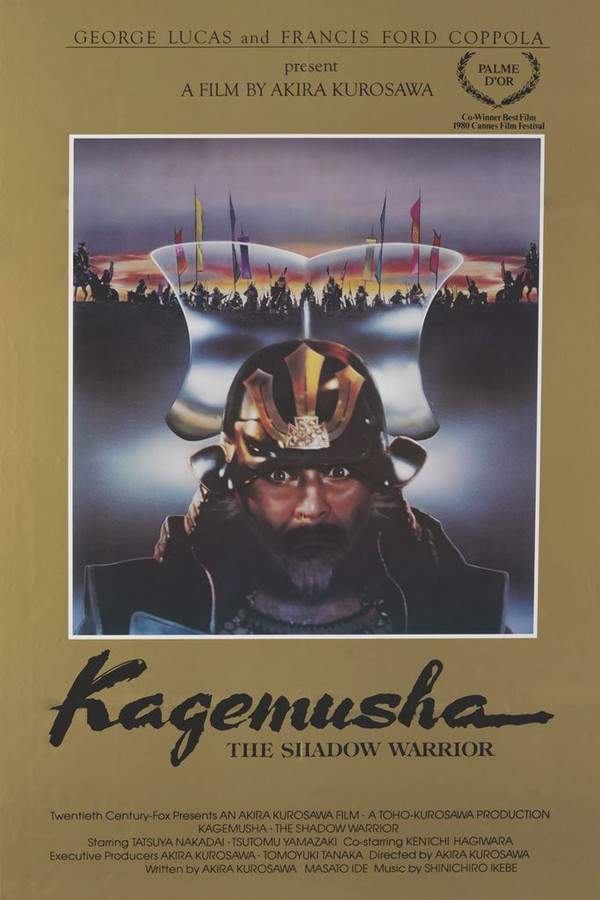
Kagemusha (1980) movie poster

Characters & Themes

Kagemusha (1980) Characters, Setting & Themes Explained

Release, runtime and language
1980 · 180 min · Japanese
Directed by
Akira Kurosawa
Starring
Daisuke Ryû, Jinpachi Nezu, Tatsuya Nakadai, Tsutomu Yamazaki, Hideji Ôtaki, Hideo Murota
Budget
$6M

During a time of war, a petty criminal’s uncanny resemblance to a deceased powerful warlord leads him to be recruited to impersonate the man. As the Kagemusha, or "shadow warrior," he’s tasked with deceiving enemies and maintaining the illusion of the warlord’s continued presence. However, he soon finds himself entangled in genuine political intrigue and must grapple with the immense responsibility and danger of his deception, all while fearing exposure and the consequences it would bring.

On this page (8)
  1. 1 Where to watch
  2. 2 Characters explained (4)
  3. 3 Where & when it takes place
  4. 4 Themes & meaning (3)
  5. 5 Character & meaning questions
  6. 6 Movie threads
  7. 7 Movies like Kagemusha
  8. 8 Every angle

Where to watch

Where to Watch Kagemusha (1980)

Where can you watch Kagemusha? Stream, rent or buy it in the US, including on Google Play Movies, YouTube and Apple TV Store: current JustWatch availability with up-to-date prices.

Streaming availability powered by JustWatch

4 main characters · contains spoilers

Kagemusha Characters Explained: Who Is Who

The main characters of Kagemusha (1980), heroes and villains: what drives them, how they change over the course of the story and what each of them reveals about the film's bigger ideas.

  • Takeda Shingen (Tatsuya Nakadai)

    Takeda Shingen is a formidable daimyō whose reputation precedes him as a strategic and charismatic leader. Often caught in the political machinations of the Sengoku period, his untimely death sets off a chain of events that test the loyalty and ingenuity of those around him. His larger-than-life persona looms over the characters, impacting both allies and enemies alike.

    • ⚔️ Warlord
    • 🏯 Leader
  • Nobukado (Daisuke Ryû)

    Nobukado is the loyal brother of Takeda Shingen, whose compassion leads him to save a thief, ultimately resulting in a risky yet strategic decision to use the man as a kagemusha. He embodies loyalty and practicality, often serving as a stabilizing force in chaotic times, even as he grapples with the moral implications of deception in warfare.

    • 💔 Loyalty
    • 🧠 Strategist
  • Katsuyori

    Katsuyori is the ambitious son of Takeda Shingen, eager to lead but struggling with the constraints imposed by his father's legacy. His frustration leads to impulsive decisions that ultimately jeopardize the clan's future. His character arc reflects the tension between ambition and wisdom, illustrating the perilous nature of leadership during the era.

    • 👶 Ambitious
    • 🚀 Impulsive
  • The Kagemusha

    Initially a thief, the kagemusha embodies the complexities of identity as he navigates the intricacies of masquerading as Takeda Shingen. His journey reveals the struggles of understanding leadership and the weight of expectation placed upon him. Ultimately, his character serves as a poignant reminder of the fragile nature of power.

    • 🤥 Impostor
    • 🎭 Disguise

Last updated: October 22, 2024 at 21:25

Was this helpful?

Setting

Where and When Does Kagemusha Take Place?

The setting of Kagemusha (1980): the year and time period, the places and locations, and how they shape the characters, the mood and the tension of the story.

Time period

1571-1575

The movie is set during the Sengoku period, a time of intense military conflict and power struggles among feudal lords in Japan. Key historical figures emerged during this era, such as Oda Nobunaga and Tokugawa Ieyasu, as ambitious leaders sought to expand their territories and consolidate power.

Location

Takeda territory, Lake Suwa, Nagashino

The Takeda territory is a stronghold during the Sengoku period, known for its strategic importance and military prowess. Lake Suwa serves as a backdrop for significant events, including a ritual that misleads enemy spies. Nagashino is notorious as a battleground where Takeda forces face devastating resistance from Oda’s arquebusier troops.

  • 🏰 Castle
  • 🌊 Lake
  • ⚔️ Battlefield

Last updated: October 22, 2024 at 21:25

Was this helpful?

3 major themes

Kagemusha Meaning: Themes & Message Explained

What is Kagemusha (1980) really about? The emotional, social and philosophical themes the film keeps returning to, its symbolism and the message beneath the surface.

  • Identity

    The theme of identity is central to the film, illustrated through the kagemusha's role as a political decoy. As the impostor adopts the persona of Takeda Shingen, he grapples with notions of selfhood and authenticity. This theme raises questions about the masks people wear and the consequences of deception in war and leadership.

  • War

    War is depicted as a brutal and chaotic force that shapes the destinies of characters and clans alike. The battles throughout the movie illustrate not only the tactics employed by the warring factions but also the personal sacrifices made by individuals. The relentless pursuit of power amidst the violence underscores the high stakes of this tumultuous era.

  • Leadership

    Leadership, and the burdens it carries, is scrutinized through the character of the kagemusha and his attempts to fill the role of Shingen. The struggle between Nobukado and Katsuyori over who should lead after Shingen's death highlights differing philosophies about governance, loyalty, and the qualities that define a true leader.

Last updated: October 22, 2024 at 21:25

Was this helpful?

Character & theme questions

Kagemusha Characters & Meaning: Your Questions Answered

The questions people ask about Kagemusha (1980): who the characters really are, their relationships, what the symbols mean, where it takes place and what the movie is really about. Each answer contains spoilers.

Q1

What is a kagemusha?

A kagemusha is a political decoy or double, literally meaning 'shadow warrior.' In the film, a petty criminal is recruited to impersonate the deceased warlord Takeda Shingen to prevent enemies from learning of his death and to maintain the clan's political stability.

Foreshadowing: The film opens by introducing the real Takeda Shingen, establishing his intimidating presence before the audience learns of his death.

  • kagemusha
  • double
  • decoy
  • impersonator
  • shadow warrior
Q2

Where is Kagemusha set?

The movie is set in the Takeda territory during Japan's Sengoku period. Key locations include the Takeda stronghold, Lake Suwa (used for a ritual to mislead enemy spies), and Nagashino, the site of a devastating battle where Takeda forces face Oda's arquebusier troops.

  • takeda territory
  • setting
  • nagashino
  • lake suwa
  • japan
Q3

When does Kagemusha take place?

Kagemusha is set between 1571 and 1575 during the Sengoku period, a time of intense military conflict among feudal lords in Japan. This era saw the rise of figures like Oda Nobunaga and Tokugawa Ieyasu as they fought to unify Japan.

  • sengoku period
  • 1570s
  • historical era
  • japan
Q4

What is the theme of identity in Kagemusha?

Identity is the central theme of the film. The kagemusha grapples with questions of selfhood and authenticity as he adopts the persona of Takeda Shingen. The film explores the masks people wear and the consequences of deception in war and leadership, ultimately showing how the impostor loses his own identity in the role.

Foreshadowing: Early scenes establish the kagemusha's criminal past, creating contrast with the noble persona he must eventually embody.

  • identity
  • selfhood
  • deception
  • persona
  • mask
Q5

How does Kagemusha portray war?

War in Kagemusha is depicted as a brutal and chaotic force that shapes the destinies of characters and clans. The film illustrates both the tactical aspects of warfare and the personal sacrifices individuals make. The relentless pursuit of power amid violence underscores the high stakes of the Sengoku period.

  • war
  • battle
  • violence
  • conflict
  • Sengoku warfare
Q6

What does Kagemusha say about leadership?

The film scrutinizes leadership through the kagemusha's struggle to fill Shingen's role. The conflict between Nobukado and Katsuyori over who should lead after Shingen's death highlights different philosophies about governance, loyalty, and what defines a true leader. The kagemusha ultimately discovers the immense burden of leadership.

  • leadership
  • burden
  • governance
  • loyalty
  • authority
Q7

Who is Takeda Shingen in Kagemusha?

Takeda Shingen is a powerful daimyō (feudal lord) whose strategic and charismatic leadership made the Takeda clan formidable during the Sengoku period. His untimely death sets the film's events in motion, as his retainers recruit a double to impersonate him. His larger-than-life presence looms over the entire film even after his death.

Foreshadowing: The film establishes Shingen's commanding presence through early scenes before revealing his death.

  • takeda shingen
  • daimyō
  • warlord
  • leader
Q8

Who is Nobukado in Kagemusha?

Nobukado is the loyal brother of Takeda Shingen. His compassion leads him to save a thief, and he makes the strategic decision to use this man as a kagemusha. He embodies loyalty and practicality, serving as a stabilizing force while grappling with the moral implications of deception in warfare.

  • nobukado
  • takeda brother
  • retainer
  • loyal
Q9

Who is Katsuyori in Kagemusha?

Katsuyori is the ambitious son of Takeda Shingen, eager to claim leadership but constrained by his father's legacy. His impatience and impulsive decisions ultimately jeopardize the clan's future, illustrating the tension between ambition and wisdom in leadership.

  • katsuyori
  • takeda son
  • heir
  • ambition
Q10

Is Kagemusha historically accurate?

Kagemusha is inspired by real historical events. The Takeda clan was a powerful daimyō family during the Sengoku period, and Takeda Shingen was a real historical figure who died in 1573. The film dramatizes the use of doubles, which was a real practice in feudal Japan, though the specific events are fictionalized.

  • historical accuracy
  • takeda clan
  • based on true story

Movie threads

More Movies Like Kagemusha, by Mood & Story

Curated lists built around what makes Kagemusha tick: the same mood, the same kind of story or the same emotional payoff. Each list explains why these movies belong together.

Movies about reluctant impostors like Kagemusha

Ordinary individuals trapped in dangerous webs of lies, forced to become someone they're not. If you liked Kagemusha's story of a criminal forced to impersonate a warlord, explore these movies about similar deceptions. This collection features films where ordinary people must maintain a dangerous lie, leading to stories filled with political intrigue, personal sacrifice, and intense psychological tension.

  • tense
  • anxious
  • claustrophobic
  • somber
  • psychological
  • high-stakes
  • Tone: tense, melancholic
  • Pacing: steady, deliberate
Why these movies?

The story pattern: The narrative follows an unlikely protagonist who must take on a powerful identity, often against their will. The story unfolds with a steady buildup of pressure as the deception becomes more complex, forcing the character to grow into their role while grappling with the moral and emotional weight of their actions, typically culminating in a tragic or bittersweet conclusion.

Why they belong together: These films are grouped together because they share a core premise of forced impersonation, creating a unique blend of psychological tension, character-driven drama, and high-stakes situational conflict. The shared experience is one of claustrophobic pressure and an exploration of identity under duress.


Somber historical war epics like Kagemusha

Grand-scale historical conflicts depicted with a heavy, melancholic focus on tragedy and sacrifice. For viewers who appreciated Kagemusha's melancholic and oppressive portrayal of feudal warfare, this list highlights similar epic war dramas. These movies share a bleak outlook on conflict, focusing on honor, duty, and the tragic futility of war rather than glorifying battle.

  • somber
  • tragic
  • oppressive
  • epic
  • reflective
  • heavy
  • Tone: melancholic, bleak, tragic
  • Pacing: steady, epic
Why these movies?

The story pattern: Stories in this thread unfold on a large canvas, following military leaders or key figures through pivotal historical conflicts. The narrative is less about individual heroism and more about the strategic, political, and personal tragedies that unfold. The pacing is steady, building towards climactic battles that often result in devastating losses, emphasizing the bleak realities of war.

Why they belong together: These movies are united by their shared tone and thematic focus. They possess a consistent melancholic and somber atmosphere, a high level of emotional weight, and a steadfast commitment to exploring the tragic, rather than heroic, aspects of warfare and leadership.

If you liked this

Movies Like Kagemusha

Similar movies to Kagemusha: the same genre, themes or kind of story. Each one comes with its own plot summary, timeline and ending explained.

Browse all movie summaries

Every angle

Kagemusha (1980) Explained: Plot, Timeline & Characters

Everything about Kagemusha in one place: what happens in the plot summary, the timeline in chronological order, the characters and meaning and a spoiler-free summary. What's After the Movie adds the cast, box office and post-credit scenes.

Coming soon on iOS and Android

The Plot Explained Movie Summary App

Plot summaries, endings explained and timelines on your phone. Catch up on any movie in minutes, save your favorites and never miss a twist again.

Be the first to know when we launch. Your email stays private, always.

Learn more about the app