Plot Explained Spoilers guaranteed!
Plot Explained

Browse by genre

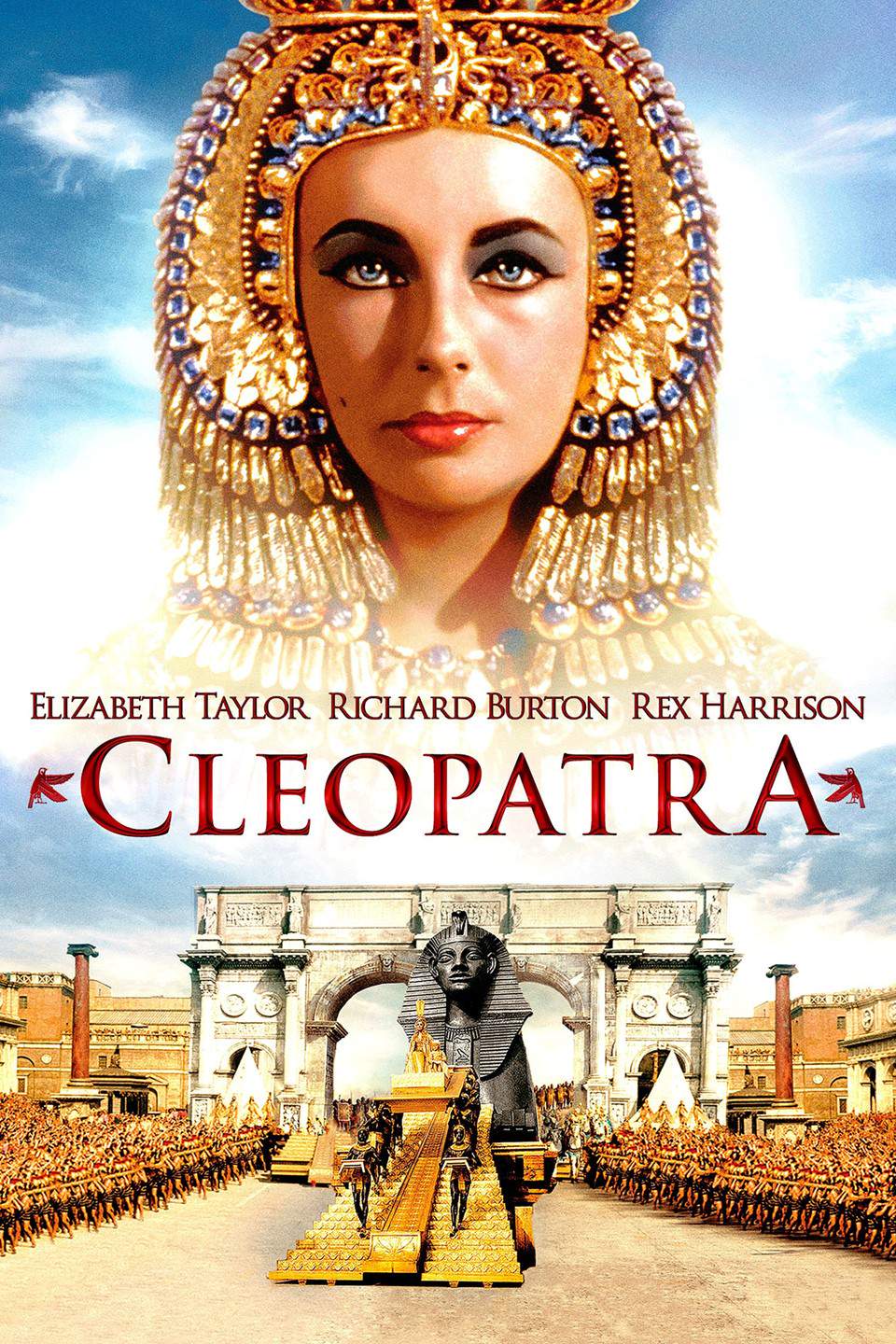
Cleopatra (1963) movie poster

Plot Summary

Cleopatra (1963) Plot Summary Explained

Release, runtime and language
1963 · 192 min · Malayalam
Directed by
Joseph L. Mankiewicz
Starring
Hume Cronyn, Pamela Brown, Elizabeth Taylor, Richard Burton, Cesare Danova, Martin Landau
Budget
$44M

This biographical film explores the life of Cleopatra, the last pharaoh of Egypt, and her passionate relationships with Julius Caesar and Mark Antony. The story follows her ambitions and struggles as she navigates political intrigue and fights to maintain her kingdom's independence during a period of Roman expansion. Witness her legendary charm and formidable strength in this sweeping historical drama.

On this page (6)
  1. 1 Where to watch
  2. 2 What happens: full plot
  3. 3 Plot questions answered
  4. 4 Movie threads
  5. 5 Movies like Cleopatra
  6. 6 Every angle

Where to watch

Where to Watch Cleopatra (1963)

Where can you watch Cleopatra? Stream, rent or buy it in the US, including on Amazon Video, Apple TV Store and Fandango At Home: current JustWatch availability with up-to-date prices.

Streaming availability powered by JustWatch

Full plot summary · contains spoilers

What Happens in Cleopatra: Full Plot Summary

The whole story of Cleopatra (1963) explained, from the opening scene to the final frame: every key event, every twist and what it all adds up to. Read it as a quick recap before the sequel, to check a scene you missed, or to finally understand what really happened.

After the pivotal Battle of Pharsalus in 48 BC, Julius Caesar (Rex Harrison) emerges as the undisputed ruler of Rome after defeating Pompey's forces. At his side is his slave Flavious (George Cole). News comes from Canidius ([Andrew Faulds]), a general in Anthony's cavalry, that Pompey has escaped, presumably on his way to Egypt. Setting his sights on the land of the Pharaohs, Julius pretends to take up the role of executor for the will of the late father of the young Pharaoh Ptolemy XIII ([Richard O'Sullivan]) and his sister Cleopatra (Elizabeth Taylor).

Caught in the throes of a fierce rivalry, Ptolemy and Cleopatra are embroiled in a destructive war against one another that endangers the grain supply crucial for Rome. Julius dispatches Mark Antony back to Rome to govern in his absence, while he while traveling to Egypt with Germanicus ([Robert Stephens]), Agrippa (Andrew Keir), and Rufio (Martin Landau).

As Julius arrives in Alexandria, he encounters attempts at indignation from Ptolemy, who insists on humiliating him by forcing him to navigate through crowds to reach the palace. Not surprisingly, Ptolemy relays claims that Cleopatra aimed to kill him, leading to escalating tensions. Meanwhile, Theodotus of Chios ([Herbert Berghof]) serves as Ptolemy's advisor and Achillas ([John Doucette]), commands his personal guard.

In a playful twist of fate, Ptolemy seeks to prevent Julius from reinstating Cleopatra as co-ruler of Egypt, presenting instead the severed head of Pompey, which only angers Julius; a Roman should never be treated as such, especially by a conquered Egyptian. On her part, Cleopatra attempts to gain Julius' favor by secretly entering Alexandria and appealing for her throne, claiming her brother is in the thrall of malevolent advisors and promising a steady grain supply to Rome in exchange for her reinstatement. There’s an urgency as Cleopatra warns Julius that Ptolemy may plot against him, obtaining insights into Julius' own vulnerabilities.

Amidst this political chaos, Cleopatra employs seduction by inviting Julius to an audience during her bathing hours. In a dramatic turn of events, as Achillas mobilizes his forces to crush Julius, the Roman military leader responds by ordering the destruction of the Egyptian fleet, inadvertently causing a fire that engulfs the famed Library of Alexandria.

This incident breeds frustration between the two powerful leaders. In the height of conflict, Cleopatra holds her ground, asserting that Achillas's armies far outnumber Julius' forces. However, he successfully fends off the attack using a clever turtle formation.

Seizing control of the kingdom, Julius executes Pothinus ([Grégoire Aslan])—who had planned Cleopatra's murder—and sends Ptolemy to the eastern desert to fend for himself. Following these events, Cleopatra is crowned Queen of Egypt and nurtures grandiose dreams of ruling alongside Julius. The two eventually marry; Cleopatra persuades him of the necessity of an heir, and their son Caesarion is born, leading Julius to publicly declare him his legal heir.

However, upon returning to Rome, Julius, now dictator for life, finds unrest rising within the Senate, fueled by fears that he wishes to become a king, instigated by Cleopatra's presence. Recognizing the rising tensions, Antony warns Julius of the potential fallout and the implications of Cleopatra's ambitions.

In a shocking twist, on the Ides of March in 44 BC, a conspiracy culminates in Julius' assassination at the hands of former allies, including Brutus (Kenneth Haigh). Cleopatra, angered by Julius's will, which recognizes Octavian ([Roddy McDowall]) over her son Caesarion, flees back to Egypt amid the ensuing chaos.

As the political landscape shifts, Antony seeks Cleopatra in Egypt and becomes embroiled in a passionate affair, unsure of his footing in the fluctuating alliances. The complexities of love and power intertwine as Antony navigates alliances that leave him at the mercy of Octavian.

The rivalry culminates in the Battle of Actium, where under Agrippa's command, Octavian achieves a decisive victory over Antony's forces. In turmoil, Cleopatra devises a plan to secure her son’s future but ultimately faces betrayal from those once loyal to Antony.

As Antony spirals into despair, he succumbs to tragic circumstances, ultimately taking his life in the poignant embrace of Cleopatra. In a final act of defiance, Cleopatra chooses to end her life rather than live as a captive, committing suicide with an asp, leaving a legacy of passion, power, and tragedy. Octavian, sealed within his victory, approaches the deserted tomb too late—a haunting conclusion to an epic saga of love and ambition.

Last updated: November 02, 2024 at 13:19

Was this helpful?

Plot questions answered

Cleopatra Plot Explained: Your Questions Answered

The questions people ask most about Cleopatra (1963): what happens in the confusing scenes, why the characters do what they do, the twists, hidden details and what the ending means. Each answer contains spoilers.

Q1

Why did Caesar go to Egypt after defeating Pompey?

After winning the Battle of Pharsalus in 48 BC, Caesar learned that Pompey had escaped to Egypt. He also received news that the civil war between Ptolemy XIII and Cleopatra was threatening Rome's grain supply, which depended on Egyptian wheat. These combined reasons motivated Caesar to travel to Egypt to secure his power and protect Rome's interests.

  • julius caesar
  • egypt
  • pompey
  • grain supply
  • battle of pharsalus
Q2

Why was Ptolemy opposed to Cleopatra becoming queen?

Ptolemy XIII and Cleopatra were siblings who ruled Egypt jointly, but they were engaged in a bitter civil war for control of the throne. Ptolemy's advisors, particularly Pothinus and Theodotus, encouraged him to eliminate his sister to consolidate power. Ptolemy feared that if Caesar supported Cleopatra's reinstatement, he would lose his position as ruler of Egypt.

  • ptolemy xiii
  • cleopatra
  • egyptian throne
  • civil war
  • pothinus
Q3

How did the Library of Alexandria burn down?

When Achillas led Ptolemy's forces against Caesar in Alexandria, Caesar ordered his troops to destroy the Egyptian fleet to prevent them from being used against him. However, the fire spread from the burning ships to the nearby harbor and ultimately consumed the legendary Library of Alexandria, destroying one of the ancient world's greatest repositories of knowledge.

Foreshadowing: The tension between Caesar and Ptolemy's forces earlier in Alexandria sets the stage for this destructive confrontation.

  • library of alexandria
  • caesar
  • fire
  • egyptian fleet
  • achillas
Q4

Why did Caesar side with Cleopatra against Ptolemy?

Several factors led Caesar to support Cleopatra: first, Ptolemy insulted him by presenting Pompey's severed head, which offended Caesar's sense of Roman dignity. Second, Cleopatra secretly appealed to Caesar, promising a steady grain supply to Rome and claiming her brother was controlled by evil advisors. Third, Ptolemy's attempt to assassinate Caesar through Achillas's forces made the choice clear.

  • julius caesar
  • cleopatra
  • ptolemy
  • grain supply
  • political alliance
Q5

Why did Caesar name Caesarion as his legal heir?

After marrying Cleopatra, Caesar agreed to have children with her to secure an heir to both Egypt and Rome. Their son Caesarion was born in 47 BC. Caesar publicly declared Caesarion his legal heir, recognizing him as his successor. This decision was politically motivated, Cleopatra convinced Caesar that their child would unite the Roman and Egyptian empires under one dynasty.

  • caesarion
  • julius caesar
  • cleopatra
  • heir
  • dynasty
Q6

Why was Caesar assassinated on the Ides of March?

Roman senators, including Brutus and Cassius, feared Caesar had become too powerful. They believed he wanted to become king, which would end the Roman Republic. Cleopatra's presence in Rome and Caesar's declaration of Caesarion as his heir fueled these fears. On March 15, 44 BC, a group of senators stabbed Caesar to death in the Theatre of Pompey, believing they were saving the Republic.

Foreshadowing: Antony had warned Caesar about the political dangers of Cleopatra's ambitions and the Senate's growing opposition.

  • julius caesar
  • ides of march
  • assassination
  • brutus
  • roman senate
Q7

Why did Cleopatra flee Rome after Caesar's assassination?

When Caesar was assassinated, Cleopatra was in Rome. She was furious because Caesar's will named his adopted son Octavian as his heir, not her son Caesarion. Fearing for her safety in the chaotic aftermath and seeing no future for her son's claim in Rome, Cleopatra returned to Egypt to protect herself and secure her dynasty's future.

  • cleopatra
  • octavian
  • caesarion
  • caesar's will
  • rome
Q8

Why did Antony pursue a relationship with Cleopatra?

After Caesar's death, Antony was left to govern Rome's eastern territories. He traveled to Egypt seeking Cleopatra's support and resources to build his power base. The two became lovers, and Antony relied heavily on Cleopatra's wealth and naval power. Their relationship was both passionate and politically motivated, each needed the other to challenge Octavian.

  • mark antony
  • cleopatra
  • egypt
  • octavian
  • political alliance
Q9

What led to the Battle of Actium?

The Battle of Actium in 31 BC was the final confrontation between Octavian and the forces of Antony and Cleopatra. Antony had allied himself with Cleopatra and openly lived with her in Egypt, which Octavian used against him in Rome. When Antony divorced Octavian's sister to be with Cleopatra, Octavian declared war. The battle was fought at sea near Greece, where Octavian's forces under Agrippa achieved a decisive victory.

  • battle of actium
  • octavian
  • antony
  • cleopatra
  • agrippa
Q10

Why did Cleopatra choose to kill herself rather than be captured?

After Antony died in her arms, Cleopatra learned that Octavian planned to parade her through Rome as a prisoner. Rather than endure that humiliation, she chose to end her life. According to the film, she killed herself with an asp (snake), viewing death as a more dignified end than captivity. Octavian arrived at her tomb too late to prevent her suicide.

Foreshadowing: Throughout the film, Cleopatra demonstrates she would rather die than lose her royal dignity or be controlled by others.

  • cleopatra
  • octavian
  • suicide
  • asp
  • captivity
  • antony

Movie threads

More Movies Like Cleopatra, by Mood & Story

Curated lists built around what makes Cleopatra tick: the same mood, the same kind of story or the same emotional payoff. Each list explains why these movies belong together.

Epic Historical Tragedies like Cleopatra

Sweeping stories where immense ambition and love lead to an inevitable, devastating fall. If you were captivated by the grand scale and tragic fate of Cleopatra, explore more movies like it. This collection features sweeping historical dramas and biopics where powerful figures' ambition and passion lead to a devastating, melancholic conclusion. Discover similar stories of rise and fall set against a backdrop of political intrigue and epic romance.

  • epic
  • tragic
  • melancholic
  • grandiose
  • passionate
  • oppressive
  • Tone: melancholic, tragic, passionate
  • Pacing: steady, epic build
Why these movies?

The story pattern: The narrative pattern is a classic rise-and-fall arc centered on a larger-than-life protagonist. The story unfolds on a vast canvas, involving political machinations, pivotal historical events, and intense personal relationships. The plot's steady progression accumulates consequences, making the tragic ending feel both shocking and fated, often stemming from the protagonist's own flaws or the immutable forces of history.

Why they belong together: Movies in this thread share a specific mix of high emotional weight, a melancholic tone, and a bleak ending feel, all set within a grandiose historical context. They are united by their focus on the tragic cost of power and passion, offering a similarly heavy, cathartic viewing experience.

Bleak Political Epics like Cleopatra

Complex tales of power struggles where alliances shift and loyalty leads to ruin. For viewers who appreciated the intricate political intrigue and devastating betrayals in Cleopatra, this list curates similar movies. Find complex historical and political dramas where characters navigate treacherous power dynamics, leading to bleak outcomes. If you liked the high-stakes political maneuvering and sense of impending doom, explore these recommendations.

  • political intrigue
  • betrayal
  • complex
  • tense
  • melancholic
  • strategic
  • Tone: tense, melancholic, bleak
  • Pacing: steady, intricate
Why these movies?

The story pattern: Narratives in this thread are defined by their complex political landscapes. The plot revolves around shifting power dynamics, strategic marriages, clandestine meetings, and the constant threat of assassination or revolt. The pacing is steady, allowing tension to build through a series of calculated moves and countermoves. The emotional journey is one of increasing paranoia and isolation, as characters discover that in the game of power, no victory is permanent and trust is the ultimate vulnerability.

Why they belong together: These films are grouped by their high complexity in plotting, a tone of tense melancholia, and a central theme of political intrigue that ends bleakly. They offer a similar intellectual and emotional experience: the fascination with strategic power plays combined with the沉重weight of their tragic consequences.

If you liked this

Movies Like Cleopatra

Similar movies to Cleopatra: the same genre, themes or kind of story. Each one comes with its own plot summary, timeline and ending explained.

Browse all movie summaries

Every angle

Cleopatra (1963) Explained: Plot, Timeline & Characters

Everything about Cleopatra in one place: what happens in the plot summary, the timeline in chronological order, the characters and meaning and a spoiler-free summary. What's After the Movie adds the cast, box office and post-credit scenes.

Coming soon on iOS and Android

The Plot Explained Movie Summary App

Plot summaries, endings explained and timelines on your phone. Catch up on any movie in minutes, save your favorites and never miss a twist again.

Be the first to know when we launch. Your email stays private, always.

Learn more about the app